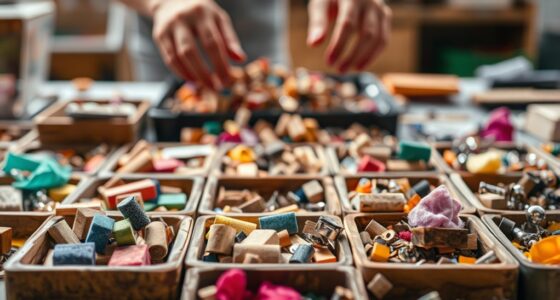
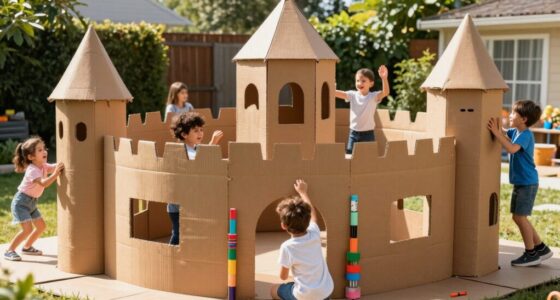
Loose parts play teaches your kids essential skills through open-ended exploration that sparks their creativity, improves sensory awareness, and encourages problem-solving. As they manipulate different materials, they develop confidence, decision-making, and physical coordination. This type of play also nurtures emotional resilience and cognitive flexibility, helping children learn from both successes and setbacks. If you want to discover more about how loose parts play supports their growth, keep exploring what these activities can truly reveal.

Get baby and family essentials delivered free — and shop member deals
- Fast, free delivery on millions of items
- Access to Prime Big Deal Days deals on October 6–7
- Prime Video, Amazon Music and more included
Key Takeaways
- Encourages creativity and problem-solving through open-ended exploration and experimentation.
- Develops sensory awareness by engaging touch, sight, and sound with various textures and shapes.
- Enhances physical skills like coordination, balance, and spatial awareness through active manipulation.
- Fosters cognitive flexibility and emotional resilience via trial, error, and independent decision-making.
- Promotes natural, unscripted play that supports discovery, confidence, and a sense of ownership.
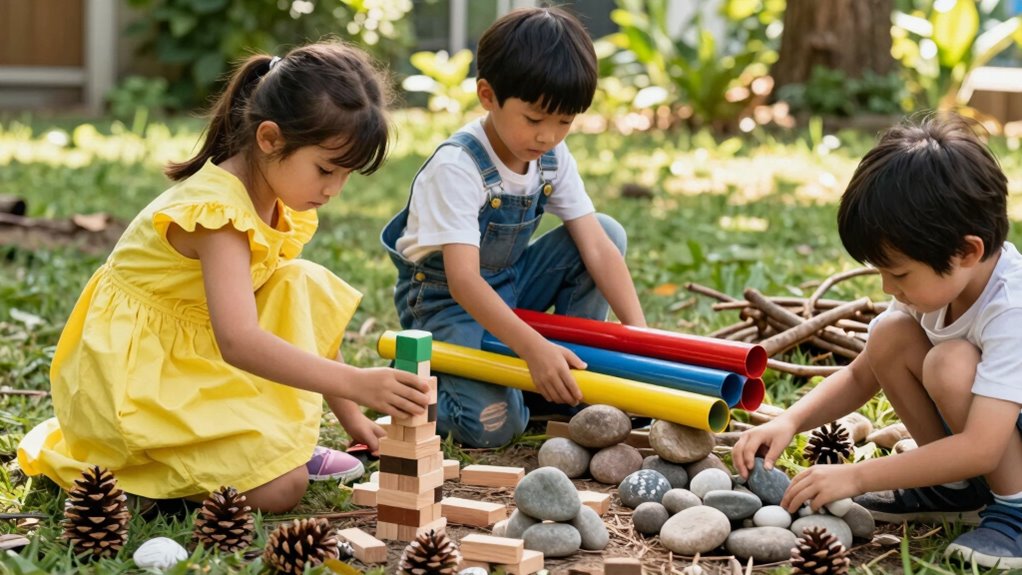
Loose parts play is a simple yet powerful way to encourage creativity, problem-solving, and physical activity in children. When you give kids open-ended materials like blocks, stones, shells, or fabric, you create a space where they can explore and experiment freely. This type of play fosters creative problem solving because children are constantly figuring out how to build, balance, or connect their loose parts. They learn to think critically about what works, what doesn’t, and how to adapt their ideas to overcome challenges. Instead of following strict rules, kids develop their ability to brainstorm solutions and innovate on the spot, which boosts their confidence in tackling new problems.
Loose parts play sparks creativity, problem-solving, and confidence through open-ended exploration and hands-on experimentation.
At the same time, loose parts play significantly enhances sensory development. As children manipulate different textures, shapes, and weights, they engage multiple senses — touch, sight, and even sound. For example, handling smooth stones or rough wood pieces helps sharpen their tactile awareness, while observing how their constructions change with different materials improves visual perception. This sensory input is vital for their overall development because it helps them process information more effectively and build stronger neural connections. Plus, the unpredictable nature of loose parts makes every play session unique, encouraging kids to be more attentive to sensory details and more curious about their environment. Incorporating sensory-rich materials can amplify these benefits, making each session even more engaging. Recognizing the importance of sensory integration can further support their development.
What makes loose parts play even more impactful is its ability to promote active engagement. You’ll notice children moving around, bending, reaching, and balancing as they create and modify their structures. This physical activity isn’t just good for their bodies; it also supports their spatial awareness and motor skills. As they decide where to place a piece or how to stabilize a structure, they’re practicing important coordination and planning skills. The open-ended nature of loose parts means children can take their play in countless directions, fostering independence and decision-making. They learn to trust their instincts, experiment with new ideas, and persevere through frustrations, all of which are essential life skills. Additionally, allowing children to choose their materials intentionally can nurture their decision-making skills and sense of ownership over their play.
In essence, when you introduce loose parts into a child’s play routine, you teach them much more than just how to build or create. You guide them toward developing cognitive flexibility, sensory acuity, and physical confidence. These lessons build a sturdy foundation for future learning, problem-solving, and emotional resilience. Additionally, understanding the importance of unscripted play can help caregivers create environments that support natural exploration and skill development. It’s a simple approach that unlocks a world of discovery and growth, making play not just fun but also deeply enriching.
As an affiliate, we earn on qualifying purchases.
Frequently Asked Questions
How Do Loose Parts Promote Creativity in Children?
Loose parts promote creativity in children by encouraging open-ended exploration and unstructured creativity. When you provide versatile materials, kids imagine new uses and combinations, turning simple objects into anything they envision. They learn to problem-solve and innovate without strict rules, fostering confidence. This freedom to experiment helps children develop their unique ideas, build resilience, and enjoy the process of discovery, making play both educational and endlessly engaging.
What Safety Precautions Are Needed During Loose Parts Play?
Think of loose parts play as building a sturdy bridge—you need safety gear and supervision to keep everyone safe. Always guarantee children wear appropriate safety gear like helmets or gloves when necessary. Follow supervision guidelines to monitor play closely, especially with small or heavy objects. Regularly inspect loose parts for damage or hazards. By doing so, you create a safe environment where kids can explore and learn confidently.
At What Age Can Children Start Loose Parts Play?
You can start loose parts play with children as young as toddlers, around 12 months, with age-appropriate accessories that suit their developmental stage. As they grow, you’ll want to focus on playroom organization to keep materials safe and accessible. Always supervise early play, and gradually introduce more complex loose parts to challenge their creativity. This approach helps children develop problem-solving, fine motor skills, and imaginative thinking from a young age.
How Can Parents Encourage Imaginative Use of Loose Parts?
You can encourage imaginative use of loose parts by actively participating and providing creative prompts that spark your child’s ideas. Get involved in their play, suggest new ways to use objects, and ask open-ended questions to inspire their imagination. Your parental involvement signals that their creativity is valued, motivating them to explore and invent with loose parts freely. This approach nurtures confidence and critical thinking in their imaginative play.
Are There Recommended Types of Loose Parts for Different Ages?
Think of it as planting seeds—different ages need different tools. For younger kids, opt for material versatility with soft, large, and safe items like fabric pieces, blocks, or rubber toys. Older children benefit from age-appropriate options like nuts, bolts, or small building sets that challenge their fine motor skills. Choosing the right loose parts guarantees safe, engaging play, fostering creativity and development at every stage.
Conclusion
As you watch kids engage with loose parts, it’s almost like the universe is guiding their creativity. Their spontaneous ideas often lead to surprising inventions, reminding you that play isn’t just fun — it’s a natural way for children to learn and grow. Sometimes, it’s funny how the simplest materials spark the most incredible adventures, almost as if the universe conspires to release their imagination. Truly, loose parts play teaches lessons that stick with kids long after the toys are put away.
Fall Picks
fall essentials
As an affiliate, we earn on qualifying purchases.