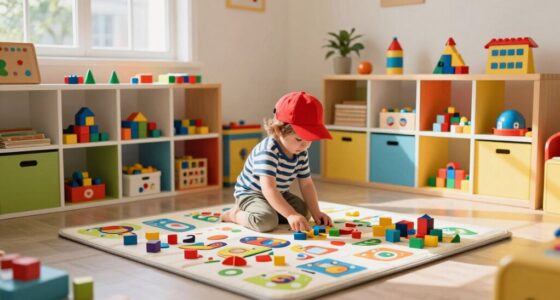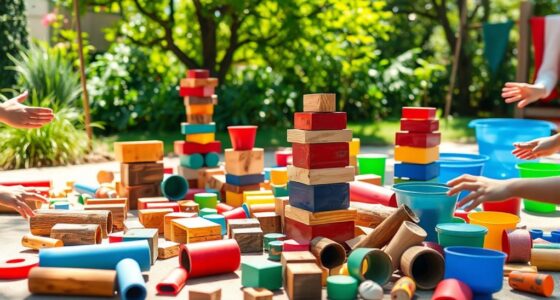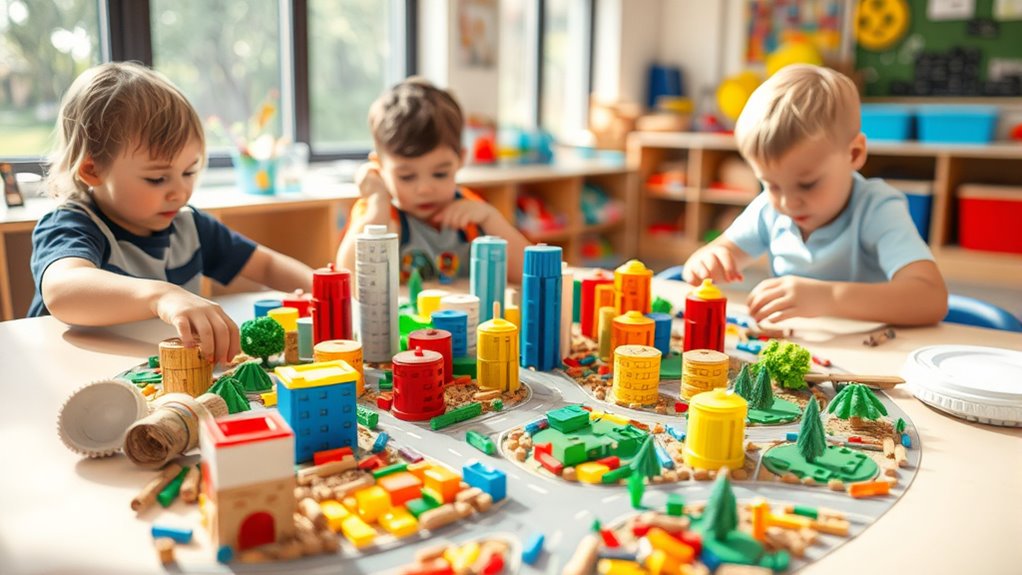

Building a mini-city with loose parts offers preschoolers a dynamic way to explore urban planning while fostering creativity, teamwork, and environmental responsibility. By encouraging children to reuse and recycle materials like blocks, bottles, and fabric scraps, you help them develop resourcefulness and sustainability awareness from an early age. This approach also promotes social skills as kids collaborate on city features like parks and roads, helping them understand community concepts. Keep exploring to discover how you can blend play, learning, and sustainable development in your setting.

Get baby and family essentials delivered free — and shop member deals
- Fast, free delivery on millions of items
- Access to Prime Big Deal Days deals on October 6–7
- Prime Video, Amazon Music and more included
Key Takeaways
- Promotes creative, sustainable urban planning concepts through preschooler-led mini-city projects using recycled loose parts.
- Enhances social skills and community engagement by encouraging collaboration and shared decision-making among young children.
- Educates about environmental responsibility and resourcefulness by repurposing everyday materials in city building activities.
- Demonstrates the importance of accessible public spaces, transportation, and community features in urban development.
- Fosters early responsibility and critical thinking, laying the foundation for future community-minded and sustainable urban planning approaches.
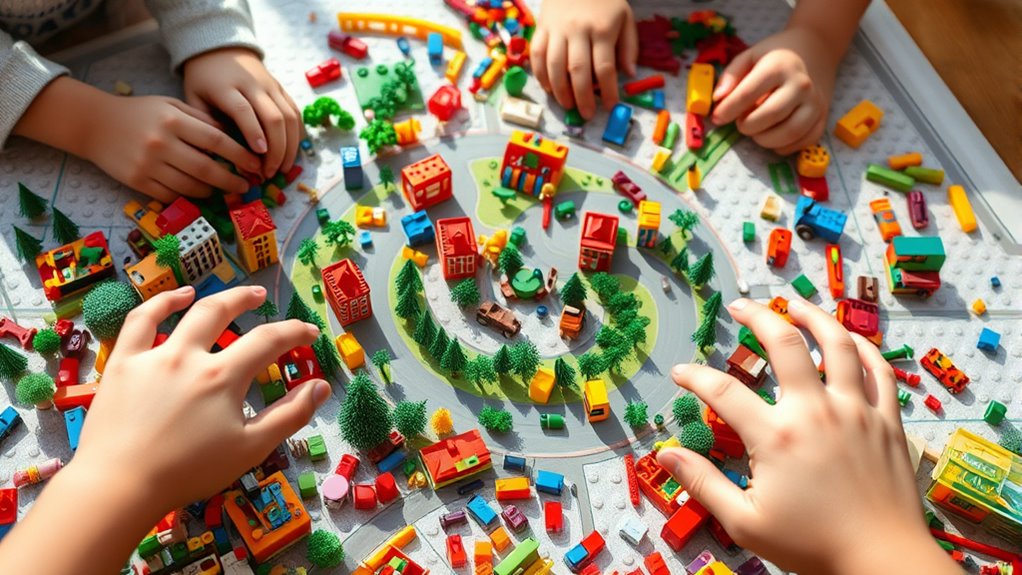
Ever wondered how simple materials can spark endless creativity? When you introduce loose parts into a preschool setting for mini-city building, you’re not just encouraging imaginative play—you’re fostering a deeper understanding of sustainable development and community engagement. These small, versatile objects like blocks, bottles, caps, and fabric scraps serve as the foundation for children to design their own urban landscapes, helping them grasp the importance of resourcefulness and environmental responsibility from an early age.
Using loose parts promotes sustainable development because it emphasizes reuse and recycling. Instead of relying on plastic toys or mass-produced building sets, you provide children with materials that have multiple uses and can be repurposed in countless ways. This approach instills a sense of environmental stewardship, showing kids that building and creating don’t have to come at the expense of the planet. They learn to see materials not as waste but as valuable resources, encouraging them to think critically about consumption and waste reduction. Plus, by involving children in selecting and gathering these materials, you empower them to make decisions that benefit both their play and the environment.
Promoting reuse and recycling through loose parts nurtures environmental stewardship and critical thinking in young learners.
Community engagement also plays a crucial role in mini-city building projects. When you involve preschoolers in designing their urban spaces, you’re creating opportunities for collaboration, communication, and shared decision-making. Children learn that their ideas matter and that working together can produce something meaningful. You might encourage them to discuss what features their city needs—parks, roads, houses—and facilitate discussions that foster respect for diverse perspectives. This participatory process helps children develop social skills and a sense of ownership over their environment, laying the groundwork for active, engaged citizens in the future.
As they construct their mini cities, children become more aware of how different parts of a community fit together. They see the importance of accessible public spaces, transportation, and shared resources. These lessons extend beyond play, helping them understand the basics of urban planning in a way that’s accessible and engaging. When you incorporate community engagement into the activity, you’re also creating a bridge between the preschool environment and the real-world community, emphasizing that everyone has a role in shaping their surroundings.
In the end, mini-city building with loose parts isn’t just about creating fun structures—it’s about nurturing a mindset that values sustainability and community. You’re guiding children to see their world as interconnected, teaching them that thoughtful use of resources and active participation are key to building a better future. This simple activity becomes a powerful tool for laying the foundation of responsible, community-minded thinking from a young age.
Frequently Asked Questions
How Does Loose Parts Play Enhance Preschoolers’ Social Skills?
You see, loose parts play boosts preschoolers’ social skills by encouraging peer collaboration and conflict resolution. As children work together to build and create, they learn to share ideas and negotiate roles. When disagreements happen, they practice resolving conflicts calmly and respectfully. This kind of play helps them develop essential social abilities, making them more confident in interacting with others and understanding different perspectives.
What Safety Considerations Are Necessary for Outdoor Mini-City Building?
When planning outdoor mini-city building activities, you need to conduct a thorough hazard assessment to identify potential risks. Make certain you supervise children closely and encourage safe behaviors. Provide protective gear like helmets and gloves to prevent injuries. Keep the play area clear of sharp objects or debris, and ensure the surface is soft and safe for falls. These steps help create a secure environment where preschoolers can explore and build confidently.
How Can Parents Encourage Creativity During Loose Parts Urban Planning?
You can encourage creativity during loose parts urban planning by suggesting kids explore recycling habits, transforming everyday items into building materials. Get involved in community projects, like neighborhood clean-ups, to inspire resourcefulness and environmental awareness. Allow children to experiment freely, offering guidance when needed, and celebrate their unique ideas. This approach fosters imaginative thinking, teamwork, and a sense of community, making the mini-city-building experience both fun and educational.
What Materials Are Best for Long-Lasting Mini-City Models?
You should choose sustainable materials and recycled resources for long-lasting mini-city models. Opt for durable items like wood scraps, plastic containers, or metal pieces that can withstand play over time. These options not only last longer but also teach kids about sustainability. Avoid fragile or single-use materials. By selecting eco-friendly, recycled materials, you create resilient mini-cities that promote environmental awareness while encouraging creative exploration.
How Does This Activity Integrate With Preschool Curriculum Standards?
Like a painter blending colors, you integrate this activity into preschool curriculum standards by aligning it with key learning goals. You foster skill integration through hands-on planning, problem-solving, and creativity, which mirror real-world urban concepts. This activity supports curriculum alignment by reinforcing developmental milestones in fine motor skills, spatial awareness, and teamwork. It encourages critical thinking and collaboration, making learning engaging and meaningful, just as a well-structured city reflects thoughtful planning.
Conclusion
By encouraging preschoolers to build mini-cities with loose parts, you foster creativity, problem-solving, and spatial awareness. This playful approach supports their natural curiosity and helps them understand urban planning basics in a fun, hands-on way. When you let kids experiment freely, you tap into their imagination and develop essential skills. Ultimately, nurturing their early interest in building and planning can inspire future city innovators and thoughtful citizens.
Fall Picks
fall essentials
As an affiliate, we earn on qualifying purchases.