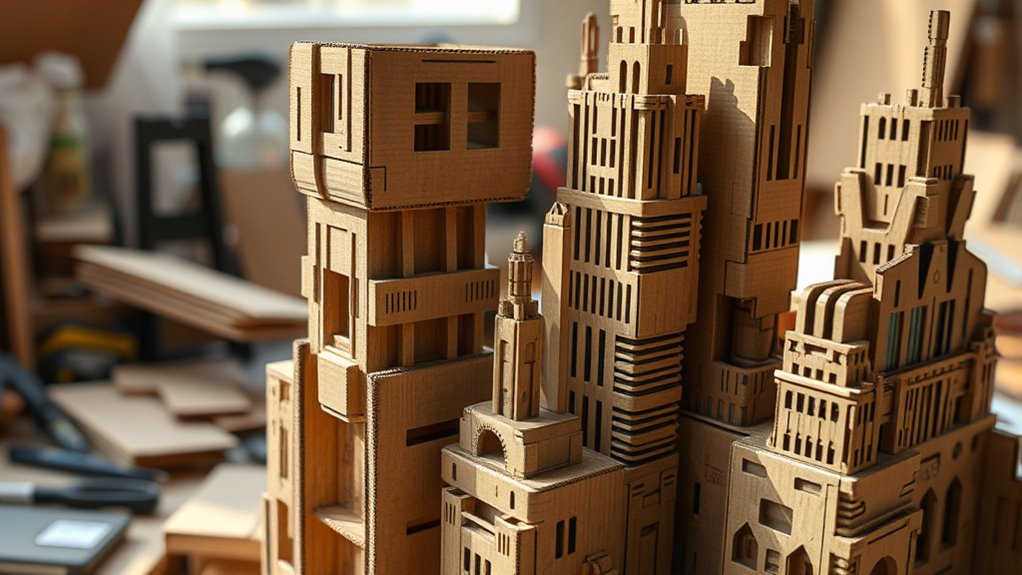

With cardboard engineering, you can create impressive, large-scale structures using only recycled materials and a small budget. You’ll transform simple boxes into sturdy, innovative designs by cutting, folding, and reinforcing them. This approach promotes sustainability, reduces waste, and encourages creative problem-solving. Cardboard’s versatility lets you experiment and build affordably, making it ideal for projects of all scales. Keep exploring to discover how you can turn everyday waste into incredible structures with ease.
Key Takeaways
- Use layered, folded, and reinforced cardboard to create strong, large-scale structures affordably.
- Repurpose discarded boxes to design eco-friendly, innovative projects that minimize costs and waste.
- Leverage the lightweight and versatile properties of cardboard for easy cutting, folding, and assembling.
- Develop practical skills in problem-solving and resource management through hands-on cardboard construction.
- Combine creativity and sustainability to build impressive structures with minimal financial investment.
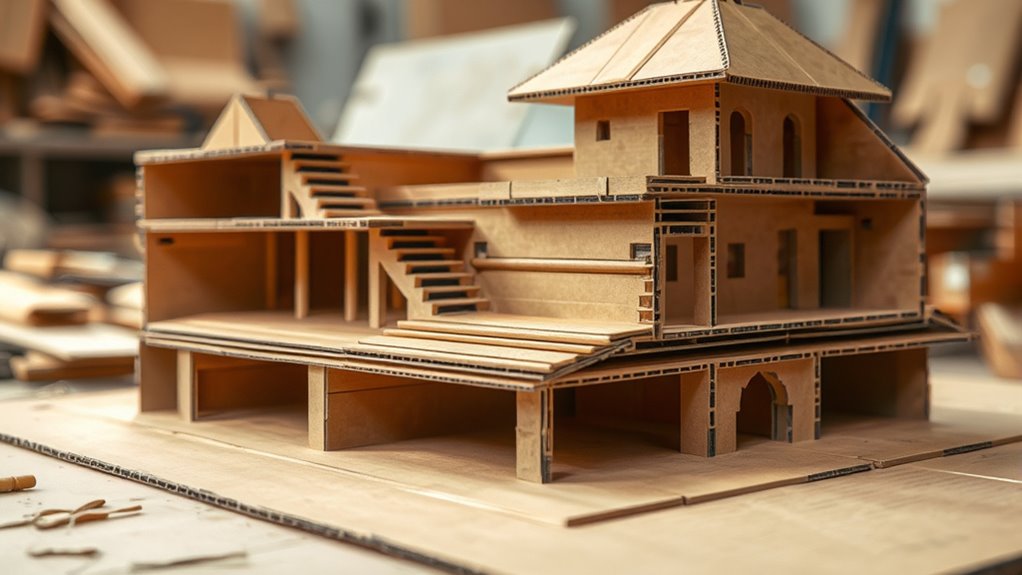
Have you ever wondered how simple cardboard can be transformed into impressive structures and functional creations? The beauty of cardboard engineering lies in its accessibility and versatility, making it a perfect medium for exploring sustainable design and creative reuse. When you start thinking about cardboard as more than just packaging material, you release endless possibilities to build big on a small budget. Instead of discarding used boxes or waste, you can repurpose them into something innovative and useful, reducing waste and minimizing environmental impact. This approach not only saves money but also promotes a mindset of sustainability, encouraging you to see everyday items as potential building blocks rather than trash.
Transform used cardboard into innovative, eco-friendly creations—building big on a small budget with sustainable reuse.
By embracing sustainable design, you focus on creating structures that are eco-friendly and resource-efficient. Cardboard is biodegradable, renewable, and easy to work with, making it an ideal choice for projects that prioritize environmental responsibility. When you design with sustainability in mind, you learn to optimize material use, cutting down on excess and waste. For instance, you can layer and fold cardboard to reinforce strength or cut precise shapes to minimize scraps. This kind of creative reuse demonstrates how you can turn what might seem like disposable waste into durable, functional, or even artistic pieces. It’s about seeing potential in what others might overlook, transforming discarded boxes into everything from furniture to architectural models.
As you work with cardboard, you’ll discover that its flexibility allows for inventive solutions. You can cut, fold, glue, and tape it into complex forms or simple structures, depending on your project’s needs. This encourages a hands-on, experimental approach that fosters innovation. Whether you’re building a prototype, a display stand, or a small shelter, cardboard’s lightweight yet sturdy qualities make it manageable and adaptable. Plus, it’s an affordable material, so you can test ideas without a significant investment, giving you the freedom to iterate and refine your designs. This affordability and ease of use make cardboard engineering accessible to everyone, from students and hobbyists to professionals seeking sustainable alternatives. Additionally, understanding the importance of sustainable design can help you create more environmentally responsible projects that align with eco-friendly principles.
Ultimately, by engaging in creative reuse and emphasizing sustainable design, you learn to see cardboard as more than just waste—it’s a resource. You develop skills in problem-solving, resource management, and environmental consciousness. This mindset not only helps you craft impressive structures on a modest budget but also contributes positively to the planet. Cardboard engineering proves that with a little ingenuity, you can build big dreams while keeping your footprint small. It’s a rewarding process that combines creativity, sustainability, and practicality into projects that are as functional as they are inspiring.
Frequently Asked Questions
What Are the Safety Precautions When Working With Cardboard?
When working with cardboard, you should always follow safety precautions like using proper cutting techniques to avoid injuries. Always wear protective gloves and safety glasses, especially when cutting or reinforcing with tools. Use sharp blades carefully and cut away from your body. Reinforcement methods, like taping or gluing, should be done in a well-ventilated area. Stay focused and take your time to make certain a safe, successful project.
How Long Does a Typical Cardboard Project Last?
A typical cardboard project lasts anywhere from a few days to several weeks, depending on your project’s durability and material longevity. If you reinforce your design with proper adhesives and coatings, it can withstand more wear and tear, extending its lifespan. You should regularly check for damage and make repairs if needed. Ultimately, how long your project lasts depends on how carefully you build and maintain it.
Can Cardboard Engineering Support Weight or Structural Loads?
You might worry that cardboard can’t support weight, but with proper design, it can. Cardboard engineering can support load-bearing capacity and maintain structural integrity, especially with reinforced joints and strategic layering. By carefully calculating weight distribution and selecting sturdy materials, you can create impressive, load-bearing structures. So, yes, cardboard can support significant weight when built thoughtfully, proving it’s a versatile and surprisingly strong building material.
What Tools Are Essential for Advanced Cardboard Constructions?
You’ll need precision cutting tools like craft knives or laser cutters to achieve accurate shapes, guaranteeing your structure’s stability. Reinforcing your cardboard with extra layers or internal supports strengthens the load-bearing capacity of advanced constructions. Additionally, a ruler or straight edge helps keep cuts precise, while glue or tape ensures secure joints. Combining these tools allows you to create more complex, durable cardboard structures that support weight effectively.
How Environmentally Sustainable Is Cardboard Engineering?
Think of cardboard engineering as a green garden thriving with recyclability benefits. It’s highly sustainable because you can reuse and recycle the material easily, reducing ecological impact. When you design with eco-conscious intentions, you minimize waste and energy use, making your projects environmentally friendly. This approach promotes a circular lifecycle, helping protect the planet while allowing you to create innovative, eco-smart structures that are both functional and sustainable.
Conclusion
Explore the delightful world of cardboard construction, where creativity and cost come together. By blending bold ideas with basic materials, you’ll build big on a small budget. Remember, with a bit of bravery and a lot of brainstorming, you can turn simple sheets into spectacular structures. So, start shaping, stacking, and sculpting—because with cardboard, your boundless imagination becomes your best blueprint. Embrace the fun, forge your future, and let your cardboard creations conquer!