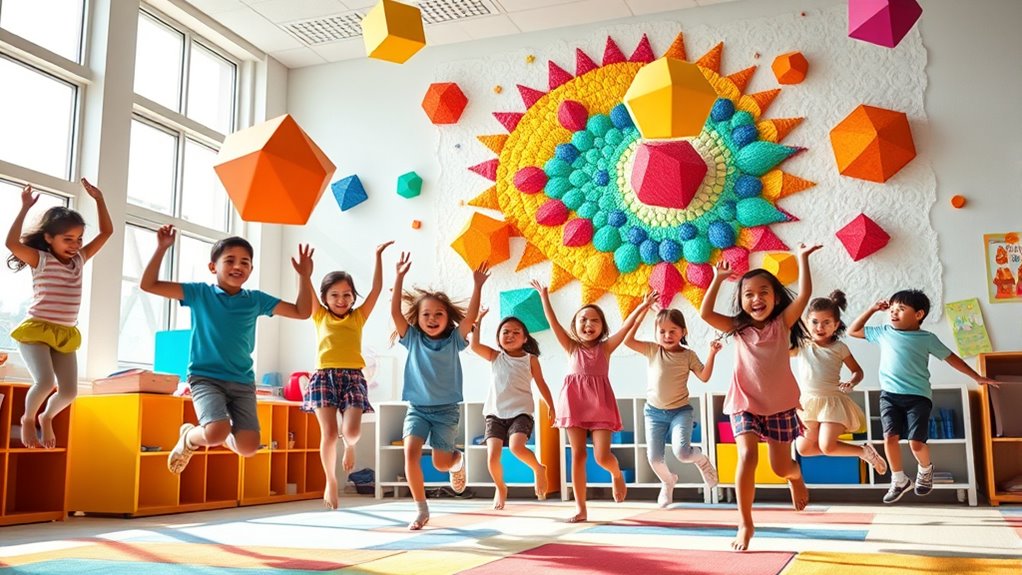

Using storytelling and movement in math makes learning active, engaging, and memorable. By turning concepts into stories, you help relate math ideas to real-life situations, making them easier to understand and recall. Adding physical actions, like acting out problems or gestures, reinforces those concepts and boosts retention. When you combine these techniques, math becomes a lively experience that captures attention and deepens understanding. Keep exploring how to turn math into an interactive adventure.

Turn the school run and nap time into listening time
- Thousands of audiobooks, podcasts and originals
- Listen on your phone, tablet or Echo — also offline
- Cancel anytime
Key Takeaways
- Combining storytelling with movement creates engaging, multisensory math lessons that improve understanding and retention.
- Using characters and scenarios makes abstract math concepts relatable and easier to visualize.
- Physical actions reinforce mathematical operations and relationships through kinesthetic learning.
- Movement helps solidify concepts by creating memorable, active learning experiences.
- Integrating stories and gestures encourages creative thinking and makes math more fun and meaningful.
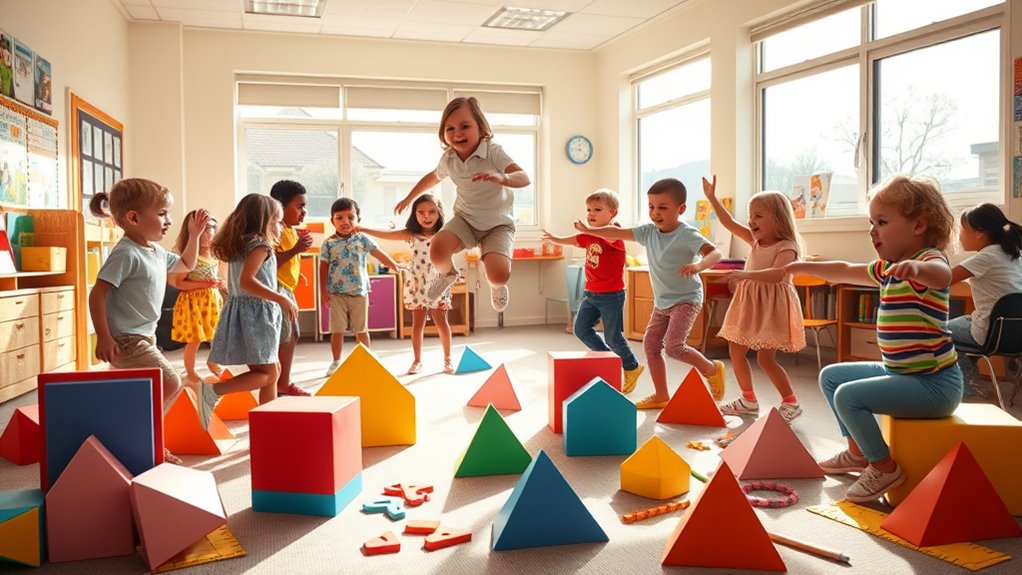
Imagine learning math becomes more engaging and memorable when you combine storytelling and movement. When you incorporate storytelling techniques into your lessons, you turn abstract concepts into relatable, vivid narratives that stick with you. Instead of just memorizing formulas or rules, you’re transported into a story where each character and event helps you understand the math behind it. This approach taps into your natural affinity for stories, making complex ideas easier to grasp and recall. When you tell a story around a math problem, you’re giving it context, which enhances your comprehension and retention. For example, imagining a story about a pizza party can help you understand fractions, as you visualize slicing and sharing slices among friends. The story isn’t just a distraction; it’s a powerful tool that bridges the gap between theory and reality. Incorporating celebrity lifestyle insights can also inspire creative ways to visualize math concepts in everyday situations. Alongside storytelling techniques, kinesthetic learning plays a *vital* role in making math come alive. Moving your body while learning helps reinforce concepts in a way that passive listening or reading can’t match. When you physically act out problems—like stepping forward for addition or jumping back for subtraction—you engage multiple senses, which boosts memory. Movement creates a multisensory experience, anchoring math concepts more firmly in your mind. For instance, acting out multiplication as groups of objects or using gestures to represent geometric shapes can help you understand and remember these ideas more deeply. Kinesthetic learning transforms abstract symbols into tangible actions, making it easier to see patterns and relationships in math.
Frequently Asked Questions
How Can Parents Incorporate Movement-Based Math Activities at Home?
You can incorporate movement-based math activities at home by engaging your child in interactive games like hopscotch with numbers or relay races that involve counting. Use sensory activities such as sorting objects by size or weight, encouraging physical movement while practicing math skills. These activities make learning fun and active, helping your child develop a stronger understanding of math concepts through hands-on, movement-based experiences.
What Age Groups Benefit Most From Storytelling in Math Learning?
You’ll find early childhood students benefit most from storytelling in math learning, as it helps build foundational skills through engaging narratives. For example, a preschooler learning about counting might enjoy a story about animals in a zoo. Middle schoolers also gain from storytelling, as it makes abstract concepts relatable. Both age groups develop stronger problem-solving skills when math is connected to stories, making learning more meaningful and memorable for you and your child.
Are There Specific Stories or Themes That Enhance Math Understanding?
You’ll find that stories with themes like problem-solving, patterns, and growth enhance math understanding. Using narrative techniques such as characters facing challenges or sequential events makes concepts relatable and easier to grasp. When your stories incorporate these themes, you engage learners’ imagination and reasoning, helping them connect math ideas to real-life situations. Focus on creating stories that are vivid, structured, and interactive to maximize comprehension and retention.
How Do Movement Activities Improve Long-Term Math Retention?
Think of movement activities as the key to unblocking long-term math retention. Kinetic learning, through gestures and physical engagement, helps your brain create stronger memory pathways. When you move, you’re not just learning—you’re embodying concepts, making abstract ideas tangible. This active involvement boosts retention because your muscles and mind work together, turning fleeting facts into lasting understanding. So, get moving, and let your body help your brain remember better!
Can These Methods Be Adapted for Students With Learning Disabilities?
Yes, you can adapt these methods for students with learning disabilities by incorporating multi-sensory techniques and adaptive strategies. Use tactile, visual, and auditory activities to engage different learning styles, making math concepts more accessible. Adjust the difficulty level and provide additional support when needed. This personalized approach helps students with learning disabilities grasp math concepts more effectively, fostering confidence and long-term retention through engaging, inclusive activities.
Conclusion
By integrating story and movement into math, you open a world where numbers come alive, making learning feel like an adventure that could fill the universe. This approach transforms abstract concepts into tangible experiences, igniting your curiosity and confidence. As you embrace these playful methods, you’ll discover that understanding math becomes as effortless as breathing—an unstoppable force that propels you to new heights of knowledge and joy. Get ready to conquer math with unstoppable enthusiasm!
Fall Picks
fall essentials
As an affiliate, we earn on qualifying purchases.