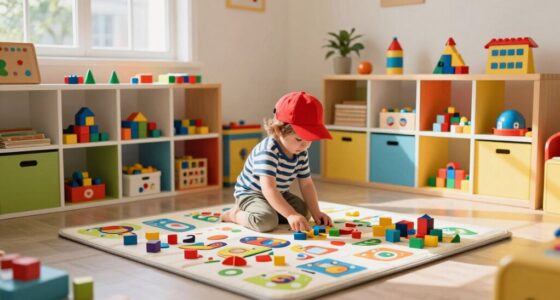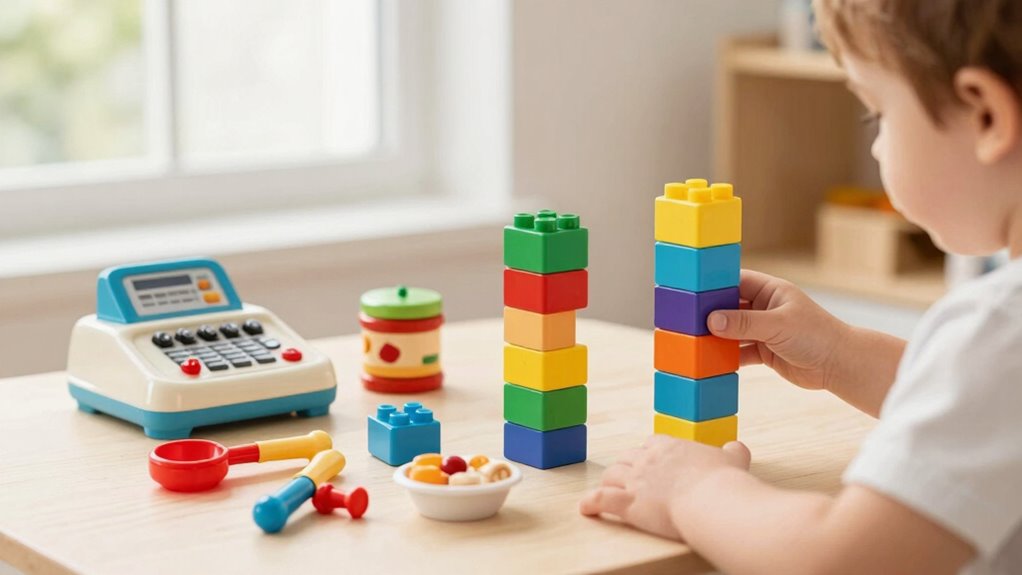

Combining building toys with pretend play tools creates richer, more engaging experiences by sparking creativity and encouraging kids to explore ideas beyond simple construction. This integrated play helps children develop critical thinking, cognitive skills, and social abilities like communication and teamwork. As they build and role-play together, kids learn to express emotions, solve problems, and negotiate. Keep exploring how these play styles work together to open even more developmental benefits for your child.

Get baby and family essentials delivered free — and shop member deals
- Fast, free delivery on millions of items
- Access to Prime Big Deal Days deals on October 6–7
- Prime Video, Amazon Music and more included
Key Takeaways
- Combining building and pretend toys fosters richer, more imaginative scenarios that enhance creativity and storytelling skills.
- Integrated play promotes critical thinking by connecting construction with narrative development.
- Collaborative play with both toy types improves communication, negotiation, and social skills among children.
- Using building structures within pretend scenarios develops problem-solving and emotional resilience.
- Merging these toys creates engaging, meaningful experiences that support cognitive, social, and emotional growth.
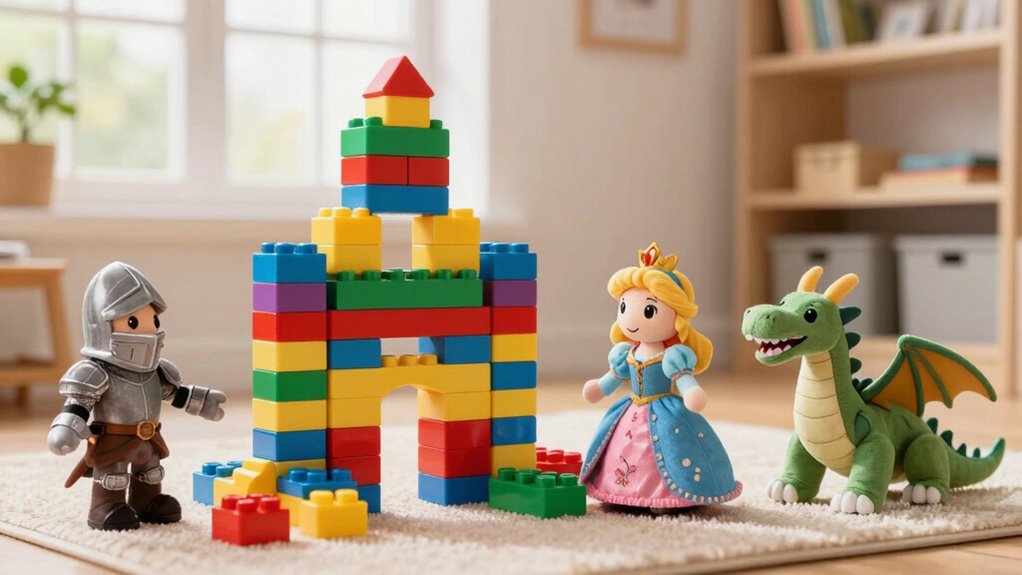
Building and pretend toys may seem like separate worlds, but when combined, they create richer, more engaging play experiences. You’ll notice that mixing these types of toys sparks more creative play, allowing your child to explore ideas, scenarios, and stories that go beyond simple construction or role-playing. You’ll notice that mixing these types of toys sparks more creative play, allowing your child to explore ideas, scenarios, and stories that go beyond simple construction or role-playing. When children use building toys to create structures and pretend toys to act out scenes, they develop a deeper understanding of how the world works and how to navigate it. This blend encourages them to think imaginatively while also honing their problem-solving skills, making play both fun and educational.
Combining building and pretend toys sparks creativity, understanding, and problem-solving through imaginative, engaging play.
As you watch your child combine building blocks with pretend figures or vehicles, you’ll see how their play becomes more dynamic and meaningful. Instead of just stacking blocks or acting out stories separately, they start to see how these elements can work together. For example, a child might build a fortress and then pretend it’s a castle under siege, calling on their imagination to develop a story. This kind of creative play helps children practice storytelling, sequencing, and expressing their ideas confidently. It also gives them a chance to experiment with different roles and scenarios, fostering a sense of independence and resourcefulness. Building and pretend toys together can also help children develop a stronger understanding of cognitive development by encouraging them to think critically about how their creations and stories connect. Incorporating integrated play can further enhance their ability to see connections and develop complex narratives.
One of the biggest benefits of integrating building and pretend toys is the development of social skills. When your child engages in play that involves building and acting out roles, they often do so with siblings, friends, or even you. This shared play encourages communication, negotiation, and cooperation. They learn how to articulate their ideas, listen to others, and compromise to create a shared story or structure. These interactions are essential for building empathy and understanding social cues, which are foundational skills for lifelong relationships. Additionally, engaging in such play can enhance their social and emotional development**** by promoting teamwork and empathy.
Furthermore, combining the two types of toys supports emotional development. As children invent stories and construct worlds, they gain confidence in their ideas and feelings. They learn to express themselves clearly and to navigate conflicts that might arise during play. You’ll notice that your child becomes more resilient as they experiment with different scenarios, learning how to manage setbacks or unexpected outcomes in their play narratives. Incorporating creative thinking into play is vital for nurturing adaptable and innovative minds.
Additionally, incorporating educational benefits like these can make playtime even more meaningful, as children are actively engaging both their minds and emotions in a fun and constructive way. In essence, when you encourage the integration of building and pretend toys, you’re providing your child with a powerful tool for growth. Their creative play becomes more complex and rewarding, and their social skills flourish as they collaborate and communicate. This harmonious blend of construction and imagination doesn’t just make playtime more enjoyable — it lays the groundwork for cognitive, social, and emotional development that lasts well beyond childhood.
building blocks and pretend play set
As an affiliate, we earn on qualifying purchases.
As an affiliate, we earn on qualifying purchases.
Frequently Asked Questions
How Do Building Toys Enhance Imaginative Play?
Building toys enhance your imaginative play by encouraging creative storytelling and expanding spatial reasoning skills. As you construct structures, you visualize new worlds and scenarios, bringing your ideas to life. These toys challenge you to think critically about how pieces fit together, boosting spatial awareness. This process fuels your creativity, making pretend play more engaging and dynamic, as you transform simple blocks into elaborate stories and imaginative adventures.
Are There Safety Concerns When Combining These Toys?
You should always keep toy safety in mind when combining building and pretend toys. While they fuel creativity, be aware of choking hazards, especially with small parts that could pose a risk to younger children. It’s a fine line to walk, and safety measures are essential to prevent accidents. Always supervise playtime, check for damaged parts, and age-appropriate recommendations to guarantee everyone stays safe and has fun.
What Age Groups Benefit Most From Combining Toys?
You’ll find that children aged 3 to 7 benefit most from combining building and pretend toys. During this stage, their developing skills in creativity, problem-solving, and social play thrive with toy compatibility that encourages imaginative scenarios. This combination enhances developmental benefits like fine motor skills and cognitive growth. By choosing age-appropriate, safe toys, you support their learning and guarantee they enjoy engaging, versatile play experiences that foster both creativity and critical thinking.
Can Combining Toys Improve Problem-Solving Skills?
Yes, combining toys acts like a key opening new pathways in your mind. Toy collaboration sparks creativity, guiding you to see connections and solve problems more effectively. As you organize blocks and act out stories, your cognitive development accelerates, sharpening your critical thinking skills. This playful synergy trains your brain to approach challenges with confidence, turning everyday play into a powerful tool for growth and problem-solving mastery.
How Do I Encourage Creative Integration at Home?
You can encourage creative integration at home by setting up dedicated play spaces where building toys and pretend toys coexist. Encourage your child to invent stories that involve constructing with building sets and acting out scenarios with pretend toys. Join in their creative play, offering prompts or new ideas. This not only sparks their imagination but also promotes creative play and effective toy integration, making playtime more engaging and enriching.
Conclusion
When you combine building toys with pretend toys, it’s like blending two vibrant colors into a masterpiece—your child’s imagination blossoms in every stroke. These toys work together like best friends, sparking creativity and problem-solving while keeping playtime exciting. By mixing the two, you’re opening a world where ideas build on ideas, and dreams take shape. So, watch as your child’s playroom transforms into a bustling hub of innovation and fun—where anything is possible.
Cold & flu season Picks
humidifiers
As an affiliate, we earn on qualifying purchases.