Choosing a MacBook Pro for data science and AI means balancing memory, processing headroom, screen size, portability, and software compatibility. My lead pick is the 16-inch M5 Pro with 48GB unified memory for larger local datasets and multitasking; the 14-inch M5 Pro is the more portable modern workstation; and the 2021 14-inch M1 Pro remains a capable older option when you want a strong chip and 1TB SSD without moving to an Intel-era machine.

Turn the school run and nap time into listening time
- Thousands of audiobooks, podcasts and originals
- Listen on your phone, tablet or Echo — also offline
- Cancel anytime
The differences matter more than the shared Pro name. For notebooks, data wrangling, and moderate model experiments, memory and a current Apple silicon chip can make work smoother. For bigger models, large data pipelines, or GPU-specific frameworks, a Mac may still need to hand off jobs to cloud or dedicated compute. The renewed 2017 Intel models are inexpensive in capability rather than necessarily in purchase cost: they suit light coding and remote work, but their dual-core CPUs, small SSDs, and older software support limit their usefulness for modern AI workloads.
Complete the kit


Key Takeaways
- The 16-inch M5 Pro’s 48GB unified memory makes it the strongest fit here for running several data tools or larger datasets locally.
- The 14-inch M5 Pro keeps the newer chip generation and Thunderbolt 5 in a more compact package, but its 24GB memory gives less room for large local workloads.
- The 2021 14-inch M1 Pro combines a 10-core CPU, 16-core GPU, and 1TB SSD, making it a more credible data-science laptop than either renewed dual-core Intel option.
- Both 2017 Intel listings have 16GB memory but only dual-core processors; they are better suited to introductory coding and remote servers than demanding local model training.
- The Touch Bar Intel listing has four Thunderbolt 3 ports, but conflicting memory details and an older operating system make it a riskier buy than the non-Touch Bar alternative.
| Apple 2026 MacBook Pro Laptop with M5 Pro Chip, 16.2-inch Liquid Retina XDR Display, 48GB RAM, 1TB SSD, Space Black |  | Best Overall for Local Data Work | Chip: Apple M5 Pro, 18-core CPU and 20-core GPU | Display: 16.2-inch Liquid Retina XDR | Memory: 48GB unified memory | VIEW ON AMAZON | See Our Full Breakdown |
| Apple 2026 MacBook Pro Laptop with M5 Pro Chip, 14.2-inch Liquid Retina XDR Display, 24GB RAM, 1TB SSD, Wi-Fi 7, Space Black |  | Best Compact Current-Generation Workstation | Chip: Apple M5 Pro, 15-core CPU and 16-core GPU | Display: 14.2-inch Liquid Retina XDR | Memory: 24GB unified memory | VIEW ON AMAZON | See Our Full Breakdown |
| Apple MacBook Pro 14-inch (2021, M1 Pro, 16GB RAM, 1TB SSD, Space Gray) |  | Best Older Apple Silicon Option | Model year: 2021 | Chip: Apple M1 Pro, 10-core CPU and 16-core GPU | Display: 14-inch Liquid Retina XDR | VIEW ON AMAZON | See Our Full Breakdown |
| Apple MacBook Pro 13-inch (2017, Non-Touch Bar), Intel Core i5 2.3GHz, 16GB RAM, 256GB SSD, Silver (Renewed) | 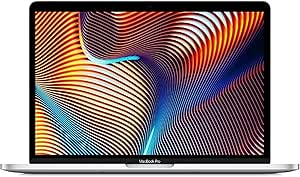 | Best for Light Coding on a Legacy Intel Mac | Model: 2017 MacBook Pro, non-Touch Bar | Processor: 2.3GHz dual-core Intel Core i5 | Memory: 16GB DDR3 SDRAM | VIEW ON AMAZON | See Our Full Breakdown |
| Apple MacBook Pro 13.3-inch with Touch Bar, Intel Core i5 3.1GHz, 16GB RAM, 256GB SSD, Space Gray (Renewed) |  | Best Port Selection Among the Older Intel Picks | Processor: 3.1GHz dual-core Intel Core i5, Turbo Boost up to 3.5GHz | Memory: Listing conflict: description says 16GB; raw specifications also list 8GB | Storage: 256GB SSD | VIEW ON AMAZON | See Our Full Breakdown |
| macbook pro for data science and ai | Display | Memory | Storage | Ports |
|---|---|---|---|---|
| Apple 2026 MacBook Pro Laptop | 16.2-inch Liquid Retina XDR | 48GB unified memory | 1TB SSD | Thunderbolt 5, MagSafe 3, SDXC, HDMI, headphone jack |
| Apple 2026 MacBook Pro Laptop | 14.2-inch Liquid Retina XDR | 24GB unified memory | 1TB SSD | Three Thunderbolt 5, MagSafe 3, SDXC, HDMI, headphone jack |
| Apple MacBook Pro 14-inch | 14-inch Liquid Retina XDR | 16GB unified memory | 1TB SSD | — |
| Apple MacBook Pro 13-inch | 13.3-inch Retina, 2560 × 1600 | 16GB DDR3 SDRAM | 256GB SSD | Two Thunderbolt 3 ports |
| Apple MacBook Pro 13.3-inch wi | 13.3-inch Retina LED, up to 2560 × 1600 | Listing conflict: description says 16GB; raw specifications also list 8GB | 256GB SSD | Four Thunderbolt 3 ports |
More Details on Our Top Picks
Apple 2026 MacBook Pro Laptop with M5 Pro Chip, 16.2-inch Liquid Retina XDR Display, 48GB RAM, 1TB SSD, Space Black
I rank this first because its 48GB unified memory gives data-science users more room to keep notebooks, IDEs, browser tabs, and data tools open without hitting the limits as quickly as the 24GB 14-inch model. The M5 Pro configuration also has an 18-core CPU and 20-core GPU, making it the most capable machine in this group on paper for parallel work and compatible GPU-accelerated tasks. Its 1TB SSD is a sensible starting point for code, environments, and working datasets, though larger collections still call for external or network storage.
The 16.2-inch XDR display favors desk-based analysis: plots, tables, notebooks, and side-by-side windows have more space than on either 14-inch system. Compared with the 14-inch M5 Pro, this model offers twice the listed memory and a larger screen, but it is the less convenient travel companion. The M1 Pro is lighter on newer-generation capabilities and memory, while both Intel models are far behind for sustained local workloads. I would still treat the Mac as a development and inference machine, not a replacement for a CUDA workstation when a project requires that ecosystem or substantial model training.
The main compromises are bulk and platform fit. Apple silicon works best when the libraries and tools you need support macOS and its acceleration paths; a Linux or Windows workflow may need adaptation. The listing says all-day battery life without giving a workload-specific duration, so I would not assume heavy computation will run unplugged for a full working day.
Pros:- 48GB unified memory offers the most headroom in this selection.
- 18-core CPU and 20-core GPU suit demanding compatible workloads.
- Large 16.2-inch XDR display helps with notebooks, charts, and split-screen work.
- Thunderbolt 5, HDMI, SDXC, and MagSafe 3 provide a versatile port selection.
Cons:- Larger chassis is less convenient to carry than the 14-inch options.
- Apple silicon and macOS may not suit CUDA-dependent or platform-specific workflows.
- The stated all-day battery claim does not specify runtime under heavy computation.
Best for: Data scientists who want the most memory and screen space in this lineup for local analysis, multitasking, and compatible AI development.
Not ideal for: Travel-first buyers, people who need CUDA-specific workflows, or users who expect to train very large models entirely on a laptop.
- Chip:Apple M5 Pro, 18-core CPU and 20-core GPU
- Display:16.2-inch Liquid Retina XDR
- Memory:48GB unified memory
- Storage:1TB SSD
- Ports:Thunderbolt 5, MagSafe 3, SDXC, HDMI, headphone jack
- Wireless:Wi-Fi 7 and Bluetooth 6
- Camera:12MP Center Stage
- Audio:Six speakers with Spatial Audio and Dolby Atmos
Our verdict“I would choose the 16-inch M5 Pro when local memory headroom and a roomy workspace matter more than portability.”
Apple 2026 MacBook Pro Laptop with M5 Pro Chip, 14.2-inch Liquid Retina XDR Display, 24GB RAM, 1TB SSD, Wi-Fi 7, Space Black
This is my pick for someone who wants a current-generation MacBook Pro but does not want the 16-inch machine’s footprint. The M5 Pro with a 15-core CPU and 16-core GPU supplies a modern foundation for data preparation, coding, and compatible AI tools, while the 1TB SSD gives more working space than either renewed Intel laptop. Its 14.2-inch XDR screen is still a substantial step up from the older 13-inch Retina models, though long sessions with multiple charts or panes will feel tighter than on the 16-inch M5 Pro.
The central tradeoff is 24GB of unified memory. It should suit many individual analysts and developers, but it offers half the capacity of the 16-inch option. If you routinely hold large datasets in memory, run several containers, or keep many development services active, I would move up to the 48GB model rather than rely on closing applications. Against the 2021 M1 Pro, this 14-inch model has a newer chip generation and a more current connectivity set, while the M1 Pro listing also offers 1TB storage and may remain a reasonable choice for buyers who do not need the newest platform.
Its Thunderbolt 5 ports, HDMI, SDXC, and MagSafe 3 make it easier to build a desk setup without living on adapters. The machine is not a cure for framework compatibility limits: confirm that your libraries support Apple silicon and macOS before treating it as a local AI training system. For cloud-backed work and moderate local development, the compact size and newer platform make a more balanced choice than either Intel model.
Pros:- M5 Pro platform with a 15-core CPU and 16-core GPU.
- Compact 14.2-inch size is easier to carry than the 16-inch model.
- 1TB SSD provides more workspace than the renewed Intel options.
- Thunderbolt 5, HDMI, SDXC, and MagSafe 3 support varied desk setups.
Cons:- 24GB memory leaves less headroom than the 48GB 16-inch configuration.
- Smaller screen offers less room for simultaneous charts and code panes.
- Mac-specific software support may rule it out for some AI workflows.
Best for: Students, analysts, and developers who need a portable modern Mac for notebooks, data preparation, and moderate compatible AI workloads.
Not ideal for: Users who frequently work with large in-memory datasets, need more than 24GB of memory, or rely on CUDA-based tooling.
- Chip:Apple M5 Pro, 15-core CPU and 16-core GPU
- Display:14.2-inch Liquid Retina XDR
- Memory:24GB unified memory
- Storage:1TB SSD
- Ports:Three Thunderbolt 5, MagSafe 3, SDXC, HDMI, headphone jack
- Wireless:Wi-Fi 7 and Bluetooth 6
- Camera:12MP Center Stage
- Audio:Six speakers with Spatial Audio and Dolby Atmos
Our verdict“I would pick this for a portable, current Mac workflow when 24GB memory is enough for the datasets and tools you actually run.”
Apple MacBook Pro 14-inch (2021, M1 Pro, 16GB RAM, 1TB SSD, Space Gray)
The 2021 M1 Pro is the strongest reason not to assume that only the newest generation belongs on a data-science shortlist. Its 10-core CPU and 16-core GPU, combined with 16GB unified memory, give it a more credible local development profile than either dual-core Intel MacBook here. The 1TB SSD is especially useful for keeping project files, environments, and intermediate datasets on the machine. For coding, notebooks, data cleaning, and moderate compatible inference, this configuration has a clearer role than the older Intel alternatives.
Compared with the 14-inch M5 Pro, it has less memory and an older chip, and it lacks the newer connectivity listed for that model. The M5 Pro should be the better fit for someone prioritizing current hardware and extra memory, while this M1 Pro can make sense for buyers whose workloads fit within 16GB and who value the 1TB capacity. Against the 16-inch M5 Pro, it also gives up both memory headroom and display space, but the 14-inch form factor is easier to carry.
The supplied specs list up to 17 hours of battery life, though demanding computation can draw power faster than light use. More importantly, the product details do not identify a current macOS version or guarantee compatibility with every present-day package. I would check operating-system support and the condition of this specific older listing before purchase. It is not the right machine for large local training jobs, but it stands clearly above the dual-core Intel systems for many modern coding tasks.
Pros:- 10-core M1 Pro CPU and 16-core GPU are more capable for this use than the listed dual-core Intel chips.
- 1TB SSD offers useful room for projects and datasets.
- 14-inch Liquid Retina XDR screen balances workspace and portability.
- Listed battery life reaches up to 17 hours for suitable usage.
Cons:- 16GB unified memory is below both M5 Pro configurations.
- Older chip generation and unspecified current OS support require compatibility checks.
- No supplied details about condition or battery health.
Best for: Buyers seeking a capable older Apple silicon laptop for coding, notebooks, data preparation, and compatible moderate workloads.
Not ideal for: People needing 48GB memory, a newer platform, guaranteed support for every current package, or serious local model training.
- Model year:2021
- Chip:Apple M1 Pro, 10-core CPU and 16-core GPU
- Display:14-inch Liquid Retina XDR
- Memory:16GB unified memory
- Storage:1TB SSD
- Battery:Up to 17 hours, as listed
- Camera:1080p FaceTime HD
- Audio:Six-speaker sound system
Our verdict“I would choose the M1 Pro as the sensible older-silicon pick when 16GB memory is adequate and the listed condition checks out.”
Apple MacBook Pro 13-inch (2017, Non-Touch Bar), Intel Core i5 2.3GHz, 16GB RAM, 256GB SSD, Silver (Renewed)
This renewed 2017 model is a narrow-use choice rather than a modern AI workstation. Its 16GB RAM is more useful than the 8GB listed for some older entry configurations, and the 13.3-inch Retina display is adequate for code editing and remote terminal sessions. But the dual-core Intel Core i5 is a clear bottleneck beside the M1 Pro and M5 Pro machines, especially when work involves parallel data processing, multiple local services, or repeated model experiments.
The machine’s strongest fit is a learner who writes Python or R locally but sends heavy computation to a remote server or cloud environment. Its 256GB SSD can hold a modest development setup, yet it leaves less room for datasets and environments than the 1TB systems in this list. It also has only two Thunderbolt 3 ports, so an external display and other peripherals may call for a hub. Compared with the Touch Bar 2017 listing, this non-Touch Bar version has a straightforward configuration in the supplied details, while the Touch Bar model offers four ports but conflicting memory information.
Because this is a renewed laptop, I would check the listing’s return terms, battery condition, and included accessories before relying on it for daily work. The stated operating system is macOS 10.14 Mojave, an old version that may not support current development tools or security expectations. It is the least convincing choice for running AI locally, and I would skip it if a current software stack is a firm requirement.
Pros:- 16GB memory supports basic multitasking better than an 8GB configuration.
- Retina display provides a clear workspace for code and remote sessions.
- Lightweight 3-pound design is suited to carrying between classes or work locations.
- Two Thunderbolt 3 ports support compatible peripherals and external displays.
Cons:- Dual-core processor is substantially less suitable for demanding local workloads than Apple silicon models.
- 256GB SSD limits room for datasets and multiple environments.
- Listed macOS 10.14 Mojave is dated for many current development tools.
Best for: A budget-conscious learner who needs a basic coding laptop and will run data-heavy work on a remote machine.
Not ideal for: Anyone planning local model training, large dataset processing, modern container-heavy work, or a current macOS development environment.
- Model:2017 MacBook Pro, non-Touch Bar
- Processor:2.3GHz dual-core Intel Core i5
- Memory:16GB DDR3 SDRAM
- Storage:256GB SSD
- Display:13.3-inch Retina, 2560 × 1600
- Graphics:Integrated Intel Iris Plus Graphics 640
- Ports:Two Thunderbolt 3 ports
- Operating system:macOS 10.14 Mojave, as listed
- Condition:Renewed
Our verdict“I would consider this only for introductory coding with remote compute, not as a serious local data-science or AI machine.”
Apple MacBook Pro 13.3-inch with Touch Bar, Intel Core i5 3.1GHz, 16GB RAM, 256GB SSD, Space Gray (Renewed)
This renewed Touch Bar model has one practical advantage over the non-Touch Bar 2017 option: four Thunderbolt 3 ports instead of two. That can make a desk setup with an external display, storage, and other accessories less dependent on a hub. It also has a 13.3-inch Retina display and a listed 3.1GHz dual-core Intel Core i5. For basic code editing, coursework, and remote access to a stronger server, those features can still cover a limited role.
For data science and AI, however, the port advantage does not change the central limitation. The dual-core CPU and integrated graphics fall well behind the M1 Pro and M5 Pro options for local computation and compatible acceleration. The 256GB SSD is also much smaller than the 1TB drives in the three Apple silicon picks. The listing is particularly hard to assess because its description says 16GB RAM while its raw specification also lists 8GB; I would confirm the actual memory configuration before treating it as a purchase candidate.
The Touch Bar and Touch ID add convenience, not meaningful compute power. The stated operating system, macOS 10.12 Sierra, is old, and the renewed condition means battery health, packaging, and accessories may differ from a new laptop. Compared with the other Intel pick, this one has more ports but less clarity around memory and an older stated OS. I would place it last unless those ports and a confirmed configuration matter more than performance and software currency.
Pros:- Four Thunderbolt 3 ports provide more connection flexibility than the two-port Intel alternative.
- Touch ID offers convenient local authentication.
- Retina display and thin design suit basic portable coding.
- Supplier-backed guarantee is listed for at least 90 days.
Cons:- Dual-core Intel processor and integrated graphics are weak for modern local AI workloads.
- Memory listing conflicts between 16GB and 8GB.
- 256GB SSD and listed macOS 10.12 Sierra are restrictive for current development.
Best for: A buyer who specifically wants an older Intel Mac with several Thunderbolt 3 ports for light coding and remote compute.
Not ideal for: Data scientists who want local AI capability, dependable modern software support, or an unambiguous memory configuration.
- Processor:3.1GHz dual-core Intel Core i5, Turbo Boost up to 3.5GHz
- Memory:Listing conflict: description says 16GB; raw specifications also list 8GB
- Storage:256GB SSD
- Display:13.3-inch Retina LED, up to 2560 × 1600
- Graphics:Intel Iris Plus Graphics 640
- Ports:Four Thunderbolt 3 ports
- Operating system:macOS 10.12 Sierra, as listed
- Condition:Renewed
- Guarantee:At least 90-day supplier-backed guarantee
Our verdict“I would buy this only after confirming its memory and software fit, and only for light work that relies on remote compute.”

How We Picked
I ranked these machines by how well their stated hardware supports real data-science workflows: editing code, running notebooks, managing datasets, using development tools, and handling AI experiments. Memory capacity, processor generation, GPU capability, and SSD space carry the most weight because they shape whether a workload fits locally and how much room remains for everyday multitasking. I also considered screen size, ports, portability, and the age or condition of each listing.
This is a comparison of the supplied configurations, not a claim that every framework or model will run equally well on macOS. Apple silicon can be a good fit for compatible tools and local inference, but some packages, CUDA-dependent workflows, and larger training jobs are better served by cloud compute or a dedicated workstation. I ranked the 48GB M5 Pro first for its headroom, then the 24GB M5 Pro for its newer platform and portability, and the M1 Pro next as a capable older system. The renewed Intel options sit below those because their dual-core processors and dated configurations are harder to recommend for current AI work.
| macbook pro for data science and ai | Chip | Ports | Audio |
|---|---|---|---|
| Apple 2026 MacBook Pro Laptop | Apple M5 Pro, 18-core CPU and 20-core GPU | Thunderbolt 5, MagSafe 3, SDXC, HDMI, headphone jack | Six speakers with Spatial Audio and Dolby Atmos |
| Apple 2026 MacBook Pro Laptop | Apple M5 Pro, 15-core CPU and 16-core GPU | Three Thunderbolt 5, MagSafe 3, SDXC, HDMI, headphone jack | Six speakers with Spatial Audio and Dolby Atmos |
| Apple MacBook Pro 14-inch | Apple M1 Pro, 10-core CPU and 16-core GPU | — | Six-speaker sound system |
| Apple MacBook Pro 13-inch | — | Two Thunderbolt 3 ports | — |
| Apple MacBook Pro 13.3-inch wi | — | Four Thunderbolt 3 ports | — |
Factors to Consider When Choosing Macbook Pro For Data Science And Ai
I would choose by the size of the work you plan to run locally, then check whether your tools support macOS and Apple silicon. A model name alone does not tell you whether a dataset, framework, or training job will fit.Memory determines how much can stay in play
For data science, memory is shared by the operating system, notebooks, dataframes, browser tabs, and any containers or services running at once. The 48GB M5 Pro is the clear choice here for larger local workloads and heavy multitasking. The 24GB M5 Pro is a more portable middle ground, while the M1 Pro’s 16GB can still suit focused coding and moderate analysis. Both renewed Intel listings claim or suggest 16GB, but their processors and small drives remain limiting factors.
Unified memory cannot be upgraded after purchase, so I would match it to the largest dataset or model I expect to keep in active memory, not just my usual day-to-day workload. If that workload is uncertain, more memory provides more flexibility; if it is far beyond laptop capacity, cloud or workstation compute is the more practical answer.
Separate development from model training
A MacBook can be a strong environment for writing code, preparing data, testing notebooks, and running some compatible models locally. That does not make every Mac a good training machine. CUDA-dependent libraries are tied to NVIDIA hardware, and support for Apple’s acceleration tools varies by framework and task. Before choosing, I would check the exact package versions and deployment target used by my team or course.
For large-scale training, a laptop may serve best as a development client connected to cloud GPUs or a remote server. In that case, portability, screen comfort, memory for the local workflow, and reliable connectivity may matter more than raw local GPU capacity. The 2017 Intel models only make sense under this remote-compute pattern and with careful checks on software support.
Choose screen size for the way you work
The 16.2-inch display on the 48GB M5 Pro gives more room for an editor, notebook, terminal, and charts without frequent window changes. That advantage is useful for analysis sessions at a desk, but the larger laptop is less convenient to carry. The 14-inch models split the difference: enough space for focused work and easier movement between locations. The older 13-inch Intel machines are compact, but their narrower workspace is more noticeable when comparing plots or keeping code and output visible together.
An external display can reduce the screen-size gap at a fixed desk. If I expect to travel often, though, I would judge the built-in screen as my primary workspace and choose the 14-inch model unless the extra memory of the 16-inch machine is more valuable.
Storage is a working-space decision
The three Apple silicon configurations in this roundup include a 1TB SSD, while both renewed Intel options list 256GB. Local datasets, cached model files, virtual environments, and project outputs can fill storage quickly. A smaller drive can still work if data stays on a server or external storage, but it creates more housekeeping and may complicate offline work.
I would keep active projects and environments on internal storage where possible, then use external or network drives for archives and large source data. Check how much space your current environment already consumes before deciding that 256GB is enough; model caches can grow beyond what a basic coding setup needs.
Treat renewed Intel listings as conditional buys
Both 2017 models are renewed and list older macOS versions. That raises practical questions beyond processor speed: confirm the actual memory, supported operating system, battery condition, return terms, and supplied accessories. The Touch Bar listing has a conflicting memory specification, while the non-Touch Bar version lists two ports and macOS Mojave. Neither should be chosen on the assumption that every current data-science tool will install cleanly.
If a renewed Intel laptop is only a remote terminal and basic editor, its limits may be manageable. If the machine needs to run contemporary notebooks and local AI experiments, I would favor Apple silicon among these choices, with the M1 Pro as the older-generation alternative.
Frequently Asked Questions
Which MacBook Pro in this roundup is best for data science and AI?
I rank the 16-inch M5 Pro with 48GB unified memory first because it combines the largest memory capacity here with a high-core-count CPU and GPU and a 1TB SSD. It is the strongest fit for substantial local multitasking and compatible AI experiments. Buyers who value portability more should compare it with the 14-inch M5 Pro, while users of CUDA-specific tools should check whether a Mac fits their software stack at all.
Is 24GB of unified memory enough for data science?
24GB can be enough for coding, notebooks, data cleaning, and moderate local workloads, especially when larger data lives on remote storage or compute. It leaves less headroom than the 48GB 16-inch model for large in-memory datasets, several containers, and simultaneous development tools. I would choose based on the size of the data and models I expect to keep active rather than the language or editor alone.
Can I train AI models on these MacBook Pro models?
You can develop and run some models locally when the framework supports the Mac’s hardware and acceleration tools, but these laptops are not universal substitutes for GPU servers. The M5 Pro models have the most headroom in this group; the M1 Pro can handle more modest compatible tasks. CUDA-dependent projects and large-scale training may call for an NVIDIA workstation or cloud GPU, so I would verify framework requirements before buying.
Is the 2021 M1 Pro still a reasonable data-science choice?
The 2021 M1 Pro remains a reasonable option for focused coding, data preparation, notebooks, and compatible moderate workloads, helped by its 10-core CPU, 16-core GPU, and 1TB SSD. It gives up memory capacity and newer hardware features compared with the M5 Pro models, and the supplied listing does not specify current operating-system support or condition details. I would verify those points and confirm that the tools I need run on it.
Should I buy one of the renewed 2017 Intel MacBook Pro models?
I would buy one only for basic coding, study, or remote access to stronger compute, and only after checking the listing’s condition and software support. Both have dual-core processors and 256GB SSDs, which constrain local data work; the Touch Bar model also has inconsistent memory details. Their smaller size and ports may suit a narrow use case, but the M1 Pro is a much stronger starting point for current local development.
Conclusion
For the most capable local setup in this group, I recommend the 16-inch M5 Pro with 48GB memory; it is the best match for larger analysis workflows and multitasking when portability is secondary. If you carry your laptop often and your workload fits 24GB, the 14-inch M5 Pro is my compact current-generation pick. For a capable older Apple silicon option, choose the 2021 M1 Pro after checking condition and software compatibility. I would reserve either 2017 Intel model for light coding with remote compute, and skip both for demanding local AI work.
Halloween Picks
halloween
As an affiliate, we earn on qualifying purchases.