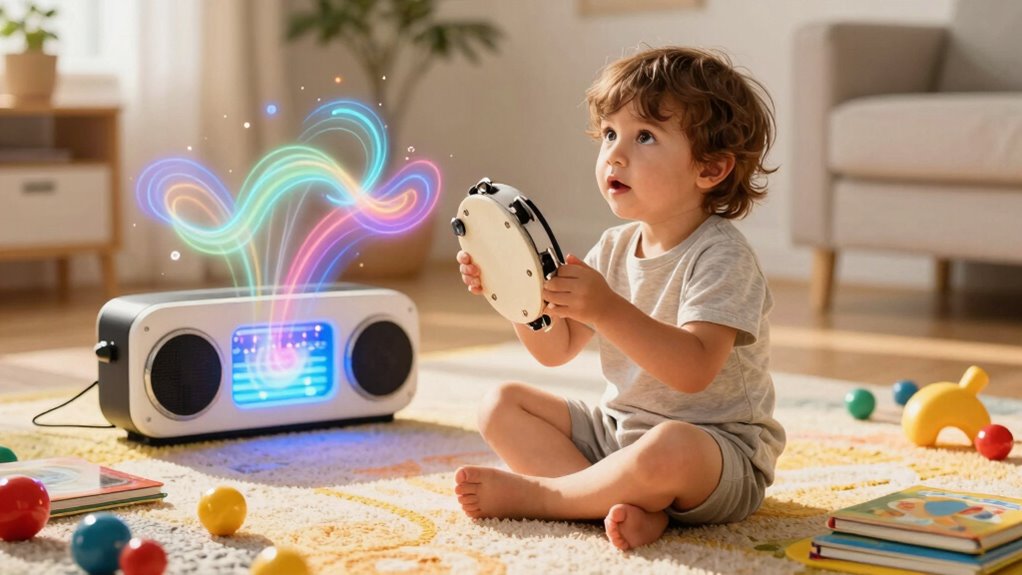

Music sparks your child’s imagination by encouraging storytelling, movement, and cultural exploration. When they respond to melodies, rhythms, and sounds, they create stories, act out characters, and explore new worlds. Using simple instruments or natural sounds, you can help them connect with music in playful ways. These activities deepen emotional and cognitive skills, turning playtime into vibrant adventures. Keep exploring these ideas to discover more ways music can inspire endless imaginative fun.

Get baby and family essentials delivered free — and shop member deals
- Fast, free delivery on millions of items
- Access to Prime Big Deal Days deals on October 6–7
- Prime Video, Amazon Music and more included
Key Takeaways
- Music encourages storytelling and role-playing by using melodies to inspire characters and scenes.
- Rhythmic movement with music enhances emotional engagement and develops coordination and spatial awareness.
- Diverse musical styles evoke vivid environments, stimulating visual imagination and creative responses.
- Natural and cultural soundscapes inspire stories about wildlife, environments, and different traditions.
- Simple instruments and singing integrate musical play into daily routines, fostering curiosity and cognitive growth.

Music has a unique way of sparking children’s imaginations, transforming simple sounds into entire worlds of adventure and creativity. When you introduce music into play, you’re opening a door for your child to explore stories, emotions, and environments in dynamic ways. One powerful method is through musical storytelling, where you use songs and melodies to convey a narrative. Instead of just listening passively, your child can become part of the story—acting out characters, imagining scenes, or even creating their own tales inspired by the music. This active engagement helps develop their storytelling skills while fueling their imagination.
Music sparks children’s imagination by turning sounds into stories, encouraging active storytelling and creative play.
Rhythmic movement is another key element that enhances imaginative play through music. When your child moves in time with a beat—clapping, dancing, or mimicking motions—they connect physically with the music, which deepens their emotional and cognitive involvement. Rhythmic movement encourages them to interpret sounds creatively, translating musical patterns into their own expressive gestures. This kinesthetic activity not only makes play more fun but also helps develop coordination, spatial awareness, and timing. As they experiment with different movements, they explore new ways to express themselves and bring their imaginative worlds to life.
You can facilitate this by playing a variety of musical styles—classical, folk, percussion-based, or even improvised sounds—and encouraging your child to respond through movement or storytelling. For example, a lively drumbeat might inspire a jungle adventure, with your child acting as an explorer *guiding* through the jungle’s sounds and rhythms. Alternatively, slow melodies can evoke calming scenes, like a peaceful lake or a starry night, prompting your child to create stories or movements that match the mood. These activities stimulate their creative thinking, helping them connect sounds with visual images and actions. Recognizing the importance of biodiversity and the diverse sounds of nature can further enrich their imaginative experiences, inspiring stories about wildlife or natural environments. Incorporating musical diversity into play broadens their exposure to different cultures and soundscapes, fostering a deeper appreciation for the natural world’s variety.
Integrating musical storytelling and rhythmic movement into your daily routine doesn’t require elaborate setups. Simple instruments like drums, shakers, or even household objects can provide a rich auditory experience. Sing songs together that tell stories or encourage your child to make up their own tunes and narratives. The goal is to make music a tool for active, imaginative play, where your child’s ideas and movements intertwine seamlessly with sound. By doing so, you’re nurturing their natural curiosity, helping them develop cognitive and emotional skills, and most importantly, making playtime more engaging and meaningful.
children's musical instruments set
As an affiliate, we earn on qualifying purchases.
As an affiliate, we earn on qualifying purchases.
Frequently Asked Questions
Can Music Improve Children’s Language Development During Imaginative Play?
Yes, music can improve your child’s language development during imaginative play. Musical storytelling encourages kids to listen actively and interpret narratives through melodies, enhancing comprehension. Rhythmic language helps them grasp patterns, improve pronunciation, and expand vocabulary. By integrating these elements into play, you foster creativity and communication skills simultaneously. This engaging approach makes language learning natural and enjoyable, boosting your child’s confidence and ability to express themselves effectively.
What Types of Music Are Best for Sparking Creativity in Kids?
You should choose diverse musical genres with engaging rhythmic patterns to spark your child’s creativity. Studies show children exposed to a variety of music develop better problem-solving skills and imagination. Upbeat genres like jazz or lively classical pieces encourage energetic play, while soothing melodies foster calm, reflective thinking. By mixing different styles, you stimulate your child’s imagination, helping them explore new ideas and develop their creative potential through rich, varied musical experiences.
How Does Music Influence Emotional Development in Imaginative Scenarios?
Music influences your child’s emotional development by encouraging emotional expression and aiding mood regulation during imaginative play. When they respond to different melodies, they learn to identify and express feelings like joy, sadness, or excitement. This process helps them manage emotions better, develop empathy, and build emotional resilience. As your child interacts with music, they gain a deeper understanding of their own emotions, enriching their imaginative scenarios and emotional intelligence.
Is There an Age When Music Has the Most Impact on Play?
Ever wonder if there’s an age when music impacts play the most? During early childhood, when developmental stages are rapidly evolving, music influences your child’s imaginative play profoundly. At this stage, their musical preferences shape how they explore stories and roles, fostering creativity. As they grow, their musical tastes deepen, but the early years remain essential for harnessing music’s power to boost imaginative play and cognitive development.
How Can Parents Incorporate Music Into Everyday Imaginative Activities?
You can incorporate music into everyday activities by engaging your child in musical storytelling, where they create stories inspired by songs or melodies. Encourage rhythm exploration through clapping, tapping, or drumming to make playtime lively. Use music during chores or quiet moments to set a mood. This approach sparks creativity, enhances imagination, and makes routine activities more fun, fostering a deeper connection through shared musical experiences.
Conclusion
Research suggests that music not only sparks creativity but also enhances cognitive flexibility, making it easier to imagine new scenarios. As you introduce melodies and rhythms, you’re likely fostering neural connections that support imaginative play. While some theories propose that music directly stimulates the brain’s creative centers, others argue it simply sets an engaging mood. Either way, incorporating music into playtime can be a powerful way to nurture your child’s imagination and cognitive growth.
Halloween Picks
halloween
As an affiliate, we earn on qualifying purchases.