

For Halloween costumes for kids with sensory needs, I’d start with the Kids’ Doctor Scrubs Costume Set: its familiar clothing style can be a gentler choice than a full-body costume. The bat onesie pajamas stand out for kids who prefer soft, sleepwear-like coverage, while the glow-in-the-dark poncho offers a loose layer that may be easier to put on or take off. The main tradeoff is between costume details and comfort: masks, plush fabric, and attached accessories can add character but may bother some children. Fit, seams, temperature, and tolerance for headwear matter more than a costume’s theme alone. Read on for how these six options compare and which child each one may suit best.

Turn the school run and nap time into listening time
- Thousands of audiobooks, podcasts and originals
- Listen on your phone, tablet or Echo — also offline
- Cancel anytime
Complete the kit


Key Takeaways
- Familiar clothing is the strongest starting point: the basic doctor scrubs set avoids the all-over coverage of a jumpsuit and has fewer costume-specific sensations to manage.
- The two doctor sets serve different needs: the seven-piece set adds play accessories, while the simpler set is the more restrained choice for a child who may reject extra pieces.
- Loose layers can offer flexibility: the glow-in-the-dark poncho is easier to remove than a one-piece costume, but its loose shape may be less comfortable for children bothered by draping fabric.
- Soft-looking does not mean sensory-safe: plush animal fabric can feel cozy to some children but warm or irritating to others, so fabric feel and temperature tolerance should guide the choice.
- Accessories can become the main obstacle: the cape-and-mask set depends on headwear and wristbands, making it a weaker match for children who dislike items touching their face or wrists.
| Kids Dress-Up Cape, Mask, and Wristband Set |  | Best for Flexible, Low-Commitment Dress-Up | Material: Polyester | Included items: Cape, soft elastic mask, and slap wristband | Neck closure: Hook-and-loop | VIEW LATEST PRICE | See Our Full Breakdown |
| Kids’ Doctor Scrubs Costume Set |  | Best for Familiar, Everyday Clothing Shapes | Fabric: 95% polyester, 5% spandex | Set includes: Scrub top, scrub pants, surgical mask, hat, and name tag | Care instructions: Machine wash | VIEW LATEST PRICE | See Our Full Breakdown |
| Toddler Plush Animal Costume Jumpsuit |  | Best for Toddlers Who Like Soft, Full-Body Costumes | Material: 100% polyester double-sided flannel | Designs: Shark, unicorn, and dinosaur | Fit: Relaxed, with cuffed sleeves and ankles | VIEW LATEST PRICE | See Our Full Breakdown |
| Kids’ Glow-in-the-Dark Halloween Costume Poncho, Ages 3–12 |  | Best for Easy Layering and Nighttime Visibility | Fabric: 95% polyester, 5% spandex | Design: Hooded poncho with arm holes | Glow duration: Up to 8 hours after 2 hours of light exposure | VIEW LATEST PRICE | See Our Full Breakdown |
| Kids’ Bat Onesie Pajamas and Costume |  | Best for Warmth and Repeated Wear | Fabric: 100% polyester | Design: Hood with skull print and bat wings under the arms | Closure: Front zipper | VIEW LATEST PRICE | See Our Full Breakdown |
| Kids’ Doctor Scrubs Costume Set with Accessories, 7 Pieces, Ages 3–11 |  | Best for Familiar, Flexible Dress-Up | Material: 100% polyester | Set includes: Scrub top, pants, cap, stethoscope, ID card, mask, and toy glasses | Top design: Short sleeves, V-neck, three front pockets | VIEW LATEST PRICE | See Our Full Breakdown |
| Halloween costumes for kids with sensory need | Care instructions | Material | Recommended age | Fabric |
|---|---|---|---|---|
| Kids Dress-Up Cape | Hand wash only | Polyester | 3–12 years | — |
| Kids’ Doctor Scrubs Costume Se | Machine wash | — | — | 95% polyester, 5% spandex |
| Toddler Plush Animal Costume J | Hand wash cold; do not bleach or tumble dry | 100% polyester double-sided flannel | — | — |
| Kids’ Glow-in-the-Dark Hallowe | Machine wash | — | — | 95% polyester, 5% spandex |
| Kids’ Bat Onesie Pajamas and C | — | — | Over 3 years | 100% polyester |
| Kids’ Doctor Scrubs Costume Se | Wash in cold water; tumble dry low | 100% polyester | 3–11 years | — |
More Details on Our Top Picks
Kids Dress-Up Cape, Mask, and Wristband Set
The cape-and-accessory format gives children a costume option without requiring a full outfit change, which can help when a child prefers familiar clothes against their skin. Its lightweight polyester cape and hook-and-loop neck closure are simpler than the enclosed Plush Animal Costume Jumpsuit, and the child can fasten or remove the cape independently. The included elastic mask may be the part a sensory-sensitive child wants to skip; it is separate, so the rest of the set can still work without it. Compared with the more structured Kids’ Doctor Scrubs Costume Set, this pick leaves clothing and layering choices open. The tradeoff is limited sizing information and hand-wash-only care, which takes more effort after Halloween.
Pros:- Cape can be worn over familiar clothing
- Hook-and-loop neck closure supports independent removal
- Mask and wristband are separate accessories that can be left off
- Lightweight polyester is described as skin-friendly
Cons:- Hand washing adds cleanup work
- No specific sizing details are provided
- Elastic mask may bother children sensitive to pressure around the face
Best for: Children who prefer wearing their own familiar clothes and want a costume they can put on or take off quickly
Not ideal for: Families seeking a detailed, full-body costume or children who dislike elastic masks and need specific sizing guidance
- Material:Polyester
- Included items:Cape, soft elastic mask, and slap wristband
- Neck closure:Hook-and-loop
- Care instructions:Hand wash only
- Recommended age:3–12 years
- Intended uses:Imaginative play, parties, performances, and Halloween
Our verdict“Choose this set if your child wants a quick costume layer over familiar clothes and can skip the mask if needed.”
Kids’ Doctor Scrubs Costume Set
For children who cope better with costume play when clothes resemble ordinary outfits, the scrub top and pants may feel more approachable than a hooded jumpsuit or poncho. The 95% polyester, 5% spandex fabric is described as breathable, and the set is machine washable—a practical advantage over the hand-wash-only Toddler Plush Animal Costume Jumpsuit. The tradeoff is that this set has more separate pieces: a top, pants, hat, surgical mask, and name tag. A child can leave accessories off, but the mask or hat may still be unwelcome. Unlike the cape set, it changes the main clothing rather than simply layering over familiar garments. I’d favor it for children comfortable with coordinated outfits, while checking the fit and appearance before the event because colors and sizes may vary from photos.
Pros:- Scrub-style top and pants resemble everyday clothing
- Machine washable for easier post-event care
- Breathable polyester-spandex blend is designed for comfortable wear
- Accessories can support imaginative role play
Cons:- Surgical mask and hat may be uncomfortable for some children
- More separate pieces can mean more dressing steps
- Color and size may differ slightly from product photos
Best for: Children who enjoy pretend-care roles and are comfortable wearing a top and pants instead of a costume over their usual clothes
Not ideal for: Children who avoid clothing changes, face coverings, or multiple accessories, and families who need a precise color match
- Fabric:95% polyester, 5% spandex
- Set includes:Scrub top, scrub pants, surgical mask, hat, and name tag
- Care instructions:Machine wash
- Suitable for:Boys and girls
- Intended uses:Pretend play, Halloween, school events, and parties
Our verdict“Pick this set for a child who likes doctor role play and tolerates a coordinated outfit, with accessories available to omit.”
Toddler Plush Animal Costume Jumpsuit
The soft flannel fabric and relaxed fit make this a more enclosed, cozy choice than the airy Kids’ Glow-in-the-Dark Halloween Costume Poncho. Cuffed sleeves and ankles allow room to move, while the front hook-and-loop closure avoids a long zipper. The animal details—such as a hood, back spikes, and attached tail on the dinosaur design—create a clear character costume, but also add sensations and shapes a toddler may not welcome. The hood is optional in practice, though the product does not specify how easily it detaches. This makes the jumpsuit a better match for children who already enjoy soft, one-piece clothing than for those sensitive to extra fabric or head coverings. Care is another tradeoff: it needs cold hand washing and cannot be tumble dried.
Pros:- Double-sided flannel offers a soft, plush feel
- Relaxed fit with cuffed sleeves and ankles allows movement
- Front hook-and-loop closure avoids a zipper
- Animal designs provide a recognizable costume without separate accessories
Cons:- Hood and attached character details may create unwanted sensations
- Hand wash cold and do not tumble dry
- One-piece construction may feel too warm or restrictive for some toddlers
Best for: Toddlers ages 1–3 who enjoy soft one-piece clothes and are comfortable with a relaxed costume fit
Not ideal for: Toddlers who dislike hoods, attached tails, or full-body layers, or caregivers who need machine-washable clothing
- Material:100% polyester double-sided flannel
- Designs:Shark, unicorn, and dinosaur
- Fit:Relaxed, with cuffed sleeves and ankles
- Closure:Front hook-and-loop
- Age range:1–3 years
- Care instructions:Hand wash cold; do not bleach or tumble dry
Our verdict“Choose this for a toddler who likes soft, roomy one-piece clothing and is comfortable with a hood and attached character details.”
Kids’ Glow-in-the-Dark Halloween Costume Poncho, Ages 3–12
This open-sided poncho shape is a useful alternative to the full coverage of the Kids’ Bat Onesie Pajamas and Costume: it can go over familiar clothes and is less likely to feel like a tight outfit. Arm holes allow movement, while the hood is a potential sensory snag for children who avoid head coverings. Its patterns glow for up to eight hours after two hours of light exposure, adding visibility on Halloween night without requiring a mask or other face accessory. The effect does require advance exposure to light, so it is not a set-and-forget feature. Compared with the cape set, this pick offers a hood and matching candy bag but less control over the child’s underlying outfit. Machine washing is convenient, though fit depends on the size chart.
Pros:- Poncho layers over familiar clothing
- Lightweight fabric is designed for breathable wear
- Glow pattern can add nighttime visibility after light exposure
- Machine washable and includes a matching candy bag
Cons:- Glow effect requires two hours of light exposure beforehand
- Hood may bother children sensitive to head coverings
- Exact fit depends on the size chart
Best for: Children who want to wear familiar clothes under a loose costume layer and families seeking a glowing design for evening outings
Not ideal for: Children who dislike hoods or loose fabric, or families who need a close fit without checking the size chart
- Fabric:95% polyester, 5% spandex
- Design:Hooded poncho with arm holes
- Glow duration:Up to 8 hours after 2 hours of light exposure
- Included accessory:Matching candy bag
- Age range:3–12 years
- Care instructions:Machine wash
Our verdict“Choose this poncho for a child who tolerates a hood and prefers a loose layer over familiar clothes for evening trick-or-treating.”
Kids’ Bat Onesie Pajamas and Costume
The plush, full-body onesie is the warmest option in this group and can serve as pajamas or loungewear after Halloween, giving it more use beyond a single event. A front zipper makes dressing more straightforward than the multi-piece Kids’ Doctor Scrubs Costume Set, and the side pockets add a practical detail. But warmth comes with a clear sensory tradeoff: thick fabric may feel heavy or become uncomfortable indoors, especially for children who prefer loose, cool clothing. The hood has a skull print, and bat wings under the arms add extra fabric that may rub or restrict movement. Compared with the lighter cape set, this is a much more complete costume but also a far bigger change from everyday clothing. It is specified only for children over 3.
Pros:- Plush polyester is designed for warmth
- Front zipper makes the one-piece outfit easier to put on
- Can be worn for lounging as well as costume events
- Two side pockets provide space for small items
Cons:- Thick plush fabric may be too warm indoors
- Hood and underarm wings add fabric that may bother some children
- Recommended only for children over 3 years old
Best for: Children over 3 who like warm, plush one-piece clothing and want a costume that can double as loungewear
Not ideal for: Children who overheat easily, dislike bulky fabric or hoods, or need a costume for ages 3 and under
- Fabric:100% polyester
- Design:Hood with skull print and bat wings under the arms
- Closure:Front zipper
- Pockets:Two side pockets
- Care:Machine wash
- Recommended age:Over 3 years
- Origin:Imported
Our verdict“Pick this bat onesie for a child who enjoys warm, plush clothing and will get use from it as both a costume and loungewear.”
Kids’ Doctor Scrubs Costume Set with Accessories, 7 Pieces, Ages 3–11
This set suits children who prefer everyday-style clothing over a bulky or plush costume. The short-sleeved top and elastic-waist pants are simple to put on, while the seven-piece kit lets a child add accessories gradually—or leave them off if the cap, mask, glasses, or stethoscope feel uncomfortable. Compared with the Toddler Plush Animal Costume Jumpsuit, it avoids a full-body plush layer, but its polyester fabric may feel less breathable than natural fibers. The scrub-style outfit also offers more role-play options than the Kids’ Bat Onesie Pajamas and Costume, though it has less coverage for a chilly evening. Three pockets and a pretend stethoscope add play value; the tradeoff is that individual garment measurements are not provided, making fit harder to judge.
Pros:- Separate top and pants may feel less restrictive than a full-body costume
- Accessories can be added or skipped according to the child’s comfort
- Elastic-waist pants simplify dressing
- Works for Halloween, Career Day, and ongoing pretend play
Cons:- Polyester may feel warm or less breathable than natural fibers
- No individual garment measurements are listed to help check fit
- The mask, cap, glasses, and stethoscope may be uncomfortable for children sensitive to accessories
Best for: Children who prefer familiar, separate clothing pieces and families who want a costume that can double as doctor role-play or Career Day attire.
Not ideal for: Children sensitive to polyester, V-neck tops, or small accessories, and families who need precise garment measurements before ordering.
- Material:100% polyester
- Set includes:Scrub top, pants, cap, stethoscope, ID card, mask, and toy glasses
- Top design:Short sleeves, V-neck, three front pockets
- Pants design:Elastic waist
- Recommended age:3–11 years
- Care instructions:Wash in cold water; tumble dry low
Our verdict“Choose this set for a child who likes scrub-style clothes and flexible role-play, but skip it if fabric breathability or accessory-free simplicity is the priority.”
How We Picked
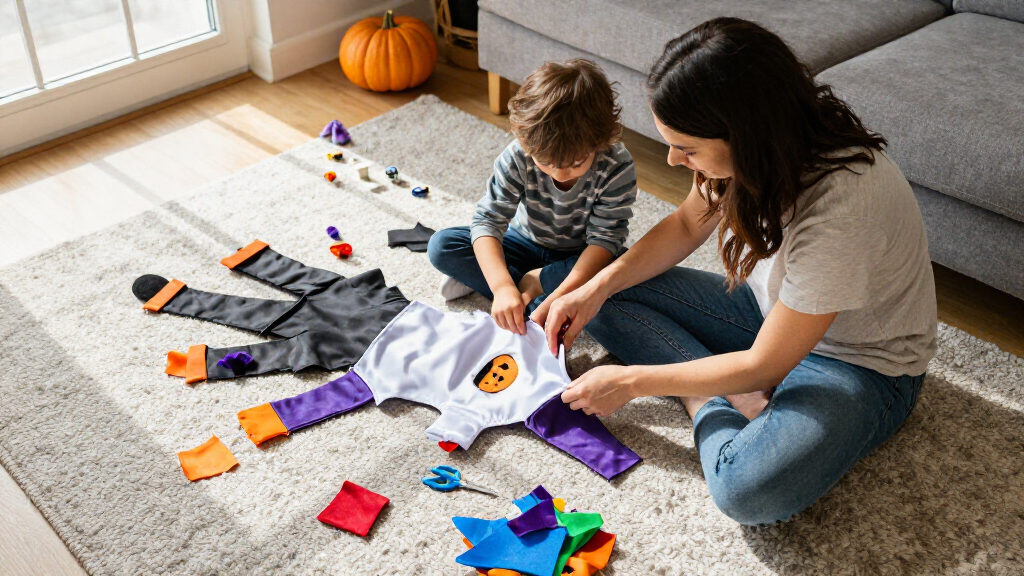
I compared the six costumes by the sensory demands they may place on a child: how much of the body they cover, whether they add headwear or accessories, how familiar the clothing style is, and how easily a child can remove or adjust them. I also considered likely warmth, flexibility for movement, and whether the costume can serve as ordinary dress-up or sleepwear beyond Halloween. These are product-based comparisons, not claims that any costume will suit every child; fabric sensitivity, fit, seams, and preferences vary.
The ranking favors options with fewer fixed sensations and more flexibility, which puts the basic doctor scrubs ahead of highly accessorized or full-body choices. The bat onesie and poncho follow for different reasons: one offers familiar pajama coverage, while the other is a removable outer layer. The seven-piece doctor set ranks below the simpler scrubs because extra accessories can add play value but also more potential friction. The cape set and plush jumpsuit are more dependent on tolerance for headwear or enveloping fabric, so they fit narrower sensory preferences.
| Halloween costumes for kids with sensory need | Care instructions |
|---|---|
| Kids Dress-Up Cape | Hand wash only |
| Kids’ Doctor Scrubs Costume Se | Machine wash |
| Toddler Plush Animal Costume J | Hand wash cold; do not bleach or tumble dry |
| Kids’ Glow-in-the-Dark Hallowe | Machine wash |
| Kids’ Bat Onesie Pajamas and C | — |
| Kids’ Doctor Scrubs Costume Se | Wash in cold water; tumble dry low |
Factors to Consider When Choosing Halloween Costumes For Kids With Sensory Needs
A costume label cannot tell you whether a child will tolerate its seams, temperature, or feel against the skin. I’d treat Halloween clothing as a short sensory trial rather than a one-night surprise: check the garment details, offer choices, and have a familiar backup ready.
Start With Sensations Your Child Already Avoids
Think beyond broad labels such as “soft” or “comfortable” and identify the specific sensations your child dislikes. It may be a tight neckline, elastic at the waist, a tag, fabric brushing the face, or pressure around the wrists. Compare those preferences with the costume’s shape before focusing on its character. A child who dislikes headwear may be happier in scrubs than in a cape-and-mask set, even if both are easy to put on. If product details do not show seams, closures, or fabric composition, ask the seller or plan to inspect the garment before the event. Familiar clothes underneath can help, but only if extra layers do not create heat or bunching.
Choose Coverage for the Weather and the Child
Full-body costumes can reduce the need to coordinate separate pieces, but they may also trap warmth or make bathroom breaks harder. A poncho is quick to remove and can go over everyday clothes, though loose fabric may flap or brush against a child’s arms. Pajama-style costumes may feel familiar, yet a warm onesie can be uncomfortable during active indoor events or mild evenings. Check the expected weather and where the child will spend most of the evening rather than assuming more coverage is always better. For children sensitive to temperature, a regular outfit with one costume layer can offer more control than a thick jumpsuit. Keep a simple clothing change available if the costume becomes uncomfortable.
Treat Accessories as Separate Decisions
A costume can still read clearly without every included item. Masks, wristbands, hats, badges, and toy tools each add a new touch, pressure, or sound, so introduce them one at a time rather than presenting the full set as mandatory. Check whether an accessory can be left off without affecting the main outfit. A child who likes pretend play may enjoy several pieces at home but prefer fewer items while walking, eating, or greeting neighbors. Avoid assuming that included accessories improve a costume for every child. If an accessory touches the face or hands, let the child choose whether and when to try it.
Check Dressing, Toileting, and Movement
Halloween involves more than standing still for a photo, so consider how the costume works during walking, sitting, eating, and bathroom breaks. One-piece outfits may require more help to remove, while separates can be easier to adjust but may shift or get lost. Look for closures the child can manage or that a caregiver can open quickly without pulling fabric over the head. A cape or poncho should not drag or obstruct movement, and a mask should not limit comfortable breathing or vision. If the child uses mobility equipment or needs assistance with dressing, check garment length and access points before choosing. A brief movement check at home can reveal problems that a mirror check misses.
Use a Low-Pressure Trial Instead of a Surprise
Novel clothing can feel different after several minutes, even when a child initially likes its appearance. Offer the costume at a calm time and let the child inspect, touch, or wear one part before deciding about the whole outfit. Keep the trial short and let the child stop; forcing the issue can make Halloween feel harder rather than more festive. If the garment has a tag or removable accessory, make any change only when it is safe and does not damage the item. Plan a familiar backup outfit that still lets the child participate without wearing the costume. The goal is a workable choice, not a full-length wear test.
Prioritize Fit and Practical Value Over More Pieces
A larger accessory bundle can appear to offer more options, but extra pieces only help when the child wants to use them. A well-fitting base outfit may provide more value than a themed set that needs constant adjustment or stays in the closet after Halloween. Check the size chart against the child’s measurements and consider whether the garment is meant to fit over regular clothes. Avoid sizing up automatically: excess fabric can bunch, drag, or feel unpredictable. Think about future use too, such as whether scrubs can join a dress-up box or pajamas can be worn at home. Spending more makes sense only when the added construction or components match a real need, not just a more elaborate look.
Frequently Asked Questions
Should I choose a costume the child can wear over familiar clothes?
That can help when the child likes their usual outfit and tolerates an extra layer, but it is not automatically more comfortable. A second layer may add heat, friction, or bunching beneath the arms and waist. Try the costume over the exact clothes your child plans to wear, rather than testing it over a different outfit. If layers feel distracting, a familiar clothing-style costume or a small themed accessory may be a better route. Let your child decide whether the outer layer stays on.
How can I tell whether a costume’s fabric will bother my child?
Product photos rarely show how a fabric feels against skin, and terms like “plush” or “soft” are subjective. Check the listed material and construction details, then inspect the garment for tags, rough seams, stiff trim, and elastic. If you already own a similar fabric, let your child touch it before choosing. When possible, buy early enough to inspect and try the costume at home with no pressure to wear it for long. A familiar base layer may help, but it will not solve every sensitivity.
Is a mask a good idea if my child is sensitive to clothing?
A mask introduces a separate sensation around the face and may also affect comfort, vision, or communication. A child who tolerates ordinary clothing may still reject a mask, so do not treat it as a required part of the costume. Offer it briefly at home and let the child wear the rest of the outfit without it. Face paint is not a guaranteed substitute, since its texture and removal can also be uncomfortable. The costume should still feel complete to your child if the mask stays off.
Would a one-piece costume or separates be easier for bathroom breaks?
Separates are often simpler to adjust, but the answer depends on the closures and the child’s dressing skills. A one-piece outfit may be manageable if it has an easy opening and the child has help available, while complicated fasteners can slow down a quick break. Check the actual garment design rather than relying on the costume type alone. Consider whether the child can tolerate having the outfit pulled on and off repeatedly. If bathroom access is a concern, choose the option that your child and caregiver can handle calmly.
What should I do if my child refuses the costume on Halloween?
Keep the familiar backup outfit available and avoid turning the costume into a requirement for joining the celebration. Offer a smaller choice, such as carrying a costume prop, wearing one comfortable piece, or skipping costume details altogether. If your child shows discomfort, remove the source rather than waiting for them to adjust. A short outing or at-home celebration can still feel festive without the full outfit. The best purchase is one that leaves room for your child to participate on their own terms.
Conclusion
My best overall pick is the basic Kids’ Doctor Scrubs Costume Set for families who want a familiar, less enveloping outfit. For best value, I’d choose the bat onesie pajamas if the child already likes sleepwear-style clothing and can use it beyond Halloween. The seven-piece doctor set is the best premium-style choice for a child who enjoys pretend-play accessories, while beginners may find the simpler scrubs set easiest to introduce. For a child who prefers removable layers, the glow-in-the-dark poncho is the best specific fit; for children who enjoy plush textures, the animal jumpsuit may suit them better than a loose cape. I’d skip the mask-and-wristband set if face or wrist contact is a known problem, and choose based on the child’s actual sensory preferences rather than the costume’s theme.