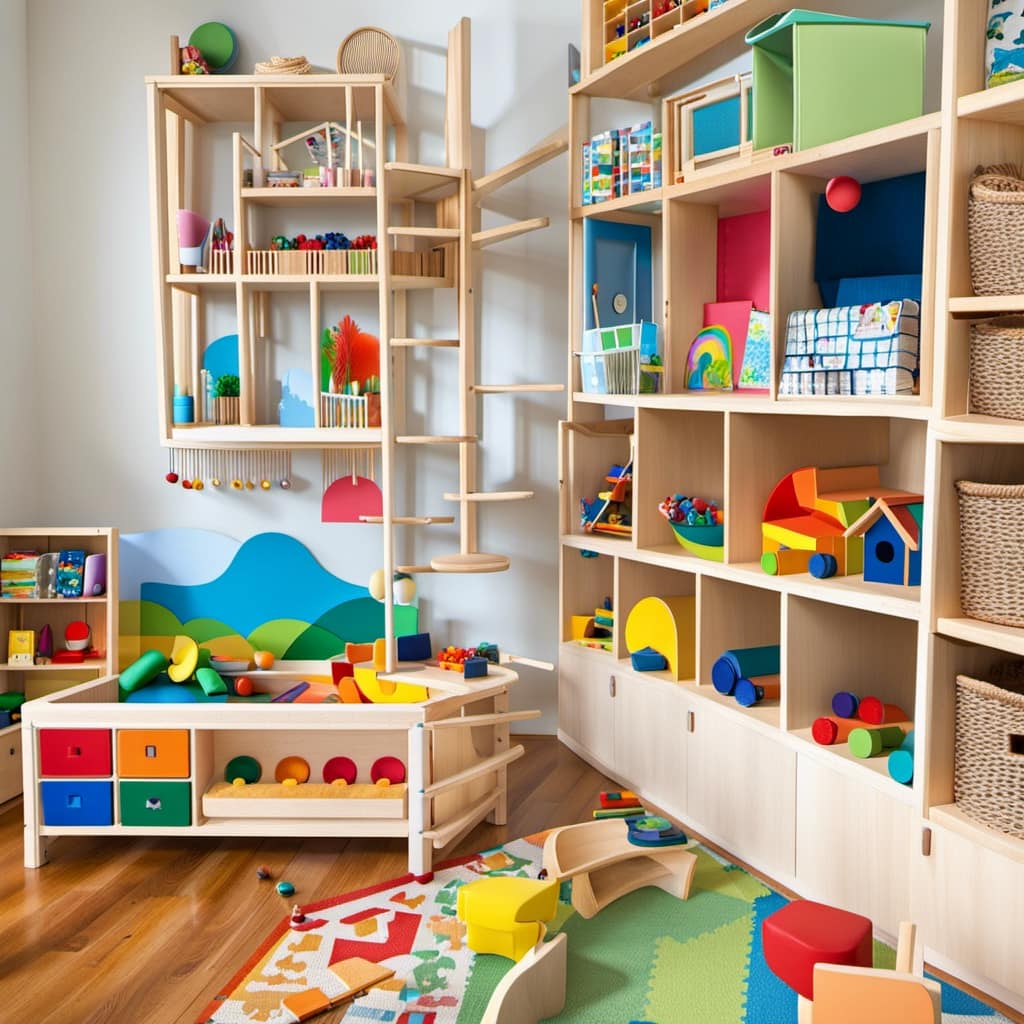
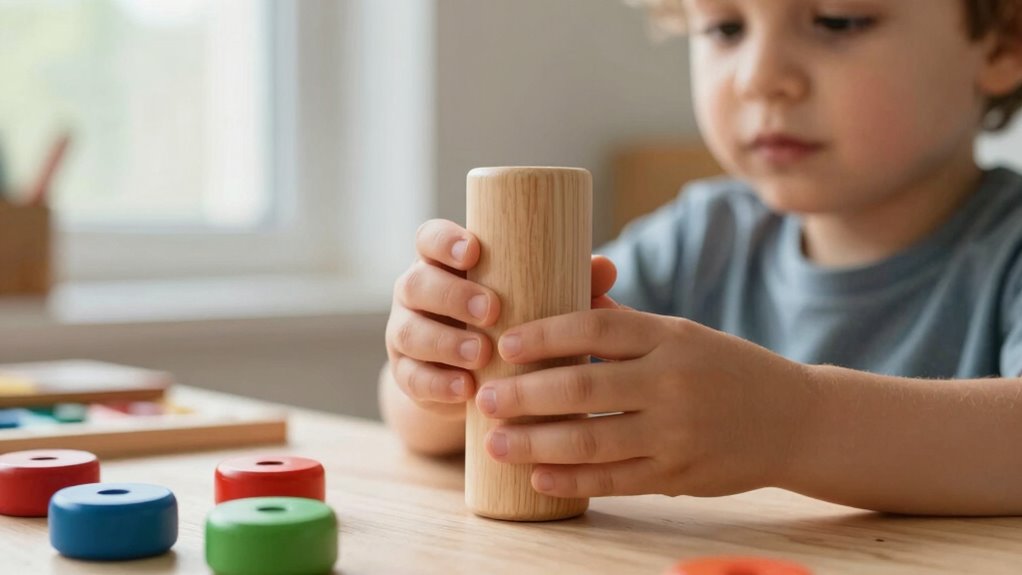

Many parents think that simply buying Montessori toys automatically boosts their child’s development. In reality, these toys are designed to support specific skills but only work well when used with intentional guidance. Without creating a supportive environment or actively engaging with your child, the toys won’t reach their full potential. If you want to understand how to use these toys effectively and foster true growth, keep exploring how guidance, setup, and activity make all the difference.

Turn the school run and nap time into listening time
- Thousands of audiobooks, podcasts and originals
- Listen on your phone, tablet or Echo — also offline
- Cancel anytime
Key Takeaways
- Parents often believe that simply purchasing Montessori toys guarantees developmental progress without active guidance.
- Many assume Montessori toys automatically promote sensory exploration and fine motor skills without intentional facilitation.
- There’s a misconception that toys alone foster independence, ignoring the importance of environment setup and adult involvement.
- Some think Montessori toys are magic solutions for growth, overlooking the need for guided, purposeful use.
- Parents may underestimate the role of active engagement and modeling in helping children benefit fully from these toys.
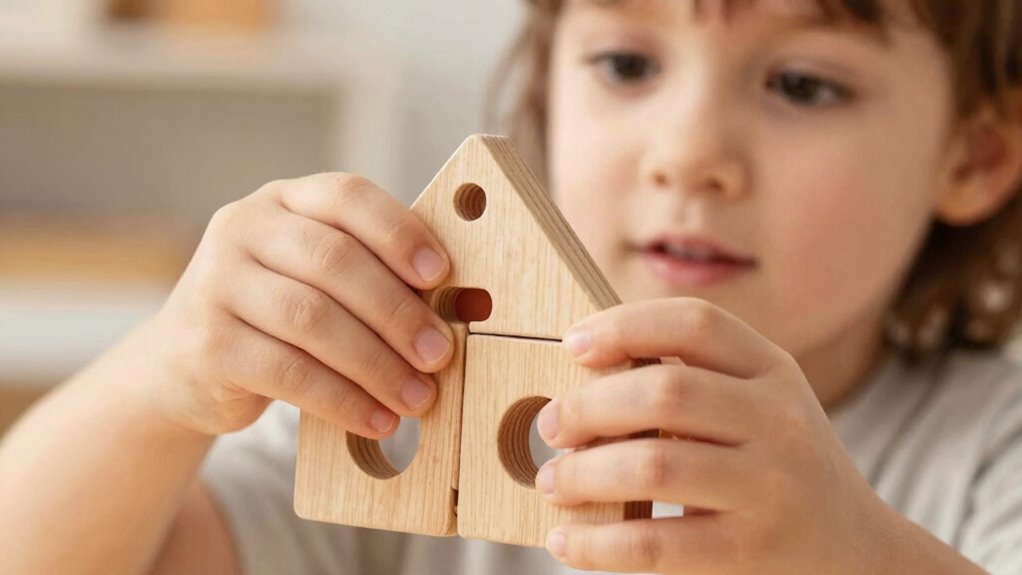
Many parents assume that simply purchasing Montessori toys guarantees their child’s development, but this misunderstanding can lead to misplaced expectations. Montessori toys are designed to support specific aspects of growth, but they aren’t magic solutions. For example, many believe that buying these toys will automatically foster sensory exploration and fine motor skills without intentional guidance. The truth is, these toys are tools—effective ones, but only when used thoughtfully within a broader developmental context.
Montessori toys support growth but require intentional guidance and active parental involvement for effective development.
Sensory exploration is a vital part of early learning. It involves engaging your child’s senses—touch, sight, sound, and even smell—to help them understand their environment. Montessori toys often emphasize natural materials like wood, metal, or glass, which provide rich sensory experiences. However, simply giving your child a sensory toy isn’t enough. You need to actively encourage them to explore it, describe what they feel or see, and ask questions. This interaction reinforces their understanding and keeps their curiosity alive. If you just place a toy in front of them and walk away, they might not fully benefit from the sensory input it offers.
Fine motor development is another area where many parents have misconceptions. Montessori toys are frequently designed to improve hand-eye coordination, grasping, pinching, and precise movements. But expecting these toys to do all the work is a mistake. Your child’s fine motor skills develop through repeated practice and guided activities. When you introduce a toy, like threading beads or manipulating small objects, you should also model and encourage proper techniques. You can make it more effective by turning it into a fun activity, giving praise, and demonstrating patience. The key isn’t just the toy itself but how you facilitate its use. Additionally, understanding developmental stages can help you tailor activities more effectively and support your child’s growth at the right times. Recognizing these stages allows you to select the most appropriate toys and activities that align with their current abilities.
Furthermore, some parents think that the mere presence of Montessori toys will naturally lead to independent play and self-directed learning. While these toys are designed to promote independence, the environment and your involvement play significant roles. Creating a prepared space, setting clear boundaries, and guiding your child without taking over are essential parts of nurturing autonomy. Without your active participation, your child might not fully grasp the purpose of the toys or develop the motivation to explore them deeply. Incorporating intentional guidance can help ensure your child’s engagement aligns with their developmental needs.
Furthermore, understanding the importance of environmental setup can significantly enhance the benefits of Montessori toys, as it creates a space conducive to exploration and learning. A well-organized environment encourages curiosity and helps children develop self-discipline by making learning accessible and manageable. In essence, Montessori toys are valuable tools, but their success depends on your understanding of their purpose and your active engagement. They support, not replace, your role as a guide in your child’s development. Recognizing this helps you set realistic expectations and creates a more meaningful, enriching experience for your little one.
Products Worth Considering

Therabody JetBoots Prime Wireless Compression Boots (Short, Under 29-Inch Inseam)

Garmin Forerunner 165 GPS Running Smartwatch, 43 mm, Black

Oral-B iO Series 7 Rechargeable Electric Toothbrush with 2 Brush Heads and Charging Travel Case
As an affiliate, we earn on qualifying purchases.
Frequently Asked Questions
Are Montessori Toys Only for Early Childhood Development?
No, Montessori toys aren’t just for early childhood development. You can use them throughout different ages to encourage sensory exploration and foster creative expression. These toys adapt as your child grows, promoting curiosity and hands-on learning at every stage. By integrating Montessori toys into your child’s routine, you support ongoing development, helping them build skills and confidence in a fun, engaging way that evolves with their abilities.
Do Montessori Toys Require Special Training to Use Correctly?
Think of Montessori toys as a well-tuned instrument—easy to play with proper guidance. You don’t need special training to use them effectively, but Montessori training can enhance your understanding of their purpose and toy efficacy. With a little knowledge, you’ll see how these toys foster independence and learning, turning playtime into a powerful educational experience. So, no worries—simple use often works best, and training just fine-tunes your approach.
Can Montessori Toys Be Used Alongside Traditional Toys?
Yes, you can definitely use Montessori toys alongside traditional toys. Incorporating both encourages diverse interactive play and sensory exploration, helping your child develop various skills. Montessori toys focus on independence and hands-on learning, while traditional toys can add variety and fun. Mixing them creates a balanced environment where your child benefits from different approaches, fostering curiosity and development without the need for special training or restrictions.
Are Montessori Toys More Expensive Than Regular Toys?
Sure, Montessori toys often seem pricier, but a quick pricing comparison reveals they’re more cost-effective long-term. You might think they’re more expensive than regular toys, but their durability and educational value mean you buy fewer replacements. A cost effectiveness analysis shows that investing in quality Montessori toys can save you money over time, providing your child with meaningful, lasting playthings rather than fleeting entertainment.
How Do Montessori Toys Support Emotional Development?
Montessori toys support your child’s emotional development by encouraging emotional awareness and fostering social skills. When they engage with these toys, your child learns to recognize and manage their feelings through hands-on activities that promote patience and self-control. These toys also facilitate social interactions, helping your child develop empathy and cooperation. By using Montessori toys, you help your child build a strong emotional foundation and better navigate social situations.
Conclusion
So, next time you reach for a toy, ask yourself: are you truly supporting your child’s independence and curiosity? Remember, Montessori toys aren’t about flashy designs or quick entertainment—they’re about fostering real learning and growth. By understanding their true purpose, you can create an environment where your child thrives. Isn’t helping your child develop essential skills worth a little patience and understanding? Embrace the Montessori approach and watch your child’s confidence blossom.