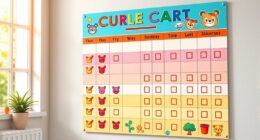
Start with play-based activities like storytelling with decision points to introduce basic coding logic. Use tangible objects such as beads or cards to represent commands and data, making abstract ideas concrete. Encourage pattern recognition through simple shapes or sequences, and let kids experiment with loops and conditionals through hands-on play. These playful approaches make learning accessible and fun, setting a strong foundation. Keep exploring, and you’ll discover even more ways to make coding engaging for beginners.

Turn the school run and nap time into listening time
- Thousands of audiobooks, podcasts and originals
- Listen on your phone, tablet or Echo — also offline
- Cancel anytime
Key Takeaways
- Use storytelling with decision points to introduce basic programming logic in an engaging way.
- Incorporate tangible objects like beads or cards to represent commands and data visually.
- Encourage pattern recognition through shape sequences or repeating actions to build algorithmic thinking.
- Utilize simple experiments with loops and conditionals to teach core programming concepts playfully.
- Promote hands-on activities that foster creativity, exploration, and understanding of information flow.

Have you ever wondered how the earliest programmers came up with ideas for writing code? Long before computers became as advanced as they are today, early coders relied on simple, playful methods to develop foundational concepts. One such idea was using interactive storytelling as a way to teach and explore programming logic. You might have seen children create stories where each decision leads to a different outcome—this is essentially a primitive form of branching code. By engaging with these stories, early programmers practiced how to control the flow of information, anticipate outcomes, and structure their ideas logically. This playful approach made learning to code less intimidating and more accessible, especially when the focus was on creating an engaging experience rather than just writing complex commands.
Pattern recognition played a key role in these early coding explorations. You recognize patterns everywhere—whether in shapes, sequences, or behaviors—and early programmers learned to spot these recurring elements. For example, when designing simple algorithms or game rules, they started noticing how certain actions repeated and how they could be optimized. Recognizing patterns helped them predict outcomes and streamline their code, making their programs more efficient and reliable. This process of identifying repeating structures laid the groundwork for more advanced programming techniques. It was a fundamental skill that allowed them to build more complex systems by breaking down problems into manageable, recognizable parts. Early coding methods often relied on tangible objects, like beads or cards, to represent commands or data, making abstract ideas more concrete and easier to experiment with. Additionally, these tangible tools served as visual representations that helped early programmers grasp complex concepts more effectively. Furthermore, the use of tangible objects helped in developing a better understanding of algorithmic thinking, which remains essential in programming today.
Recognizing patterns helps predict outcomes and create efficient, reliable code by breaking problems into manageable, repeating parts.
Playing with these ideas wasn’t just about entertainment; it was about experimentation and discovery. You could think of early programmers as playful explorers, experimenting with basic instructions and observing how changes affected the results. They often used tangible objects, like beads or cards, to represent commands or data, making the process more interactive and tangible. This hands-on approach fostered creativity and helped them understand core principles like sequencing, conditionals, and loops—concepts that are indispensable even in today’s coding. By engaging in simple play, they learned how to control the flow of information, create logical structures, and anticipate outcomes—all indispensable skills in programming. These foundational practices continue to influence how we teach and learn coding today, emphasizing the importance of play and experimentation. Recognizing early learning methods highlights how fundamental playful exploration has been in shaping modern programming practices.
As an affiliate, we earn on qualifying purchases.
Frequently Asked Questions
What Age Is Best for Introducing Coding Through Play?
You can start introducing coding through play as early as age three, aligning with early childhood development and developmental milestones. At this age, children enjoy interactive activities that promote problem-solving and logical thinking. Keep activities simple, like basic puzzles or coding games, to develop foundational skills. As they grow, you can gradually introduce more complex concepts, helping them build confidence and interest in technology from a young age.
Are There Specific Toys or Tools Recommended for Early Coding?
Imagine your child’s excitement as they manipulate colorful robot toys and navigate through engaging coding games. These tools are perfect for early coding, making complex ideas feel like fun puzzles. Recommended options include programmable robot toys like Bee-Bot or Botley, and coding games such as Osmo Coding or ThinkFun. They help kids develop problem-solving skills while having a blast, fostering early interest in technology and logical thinking.
How Can Parents Support Children Learning to Code Through Play?
You can support your child’s learning to code through play by encouraging activities like interactive storytelling, which boosts their understanding of sequences and logic. Engage them in creative problem solving with puzzles or coding games that challenge their thinking. Offer tools like beginner-friendly robots or apps that make coding fun and hands-on. Your active involvement, asking questions, and celebrating their successes will foster confidence and curiosity in coding.
Can Early Coding Activities Improve Problem-Solving Skills?
Absolutely, early coding activities can boost problem-solving development and ignite coding creativity. When you encourage your child to tinker with simple coding tasks through play, you’re helping them think critically, troubleshoot, and develop logical reasoning. These playful practices foster a fun, fearless approach to problem-solving, making complex concepts approachable. By nurturing curiosity and creativity early on, you lay the foundation for innovative thinking and confident coding capabilities later in life.
What Are Common Challenges When Teaching Coding to Young Children?
You might find that teaching coding to young children faces challenges like maintaining their attention during block-based programming, which can sometimes be too abstract. Screen-free activities are essential, but kids may struggle with understanding commands without visual cues. To overcome these, you can incorporate hands-on, playful methods, making coding tangible and engaging, and gradually introduce screen-based tools. Patience and creativity help children grasp foundational concepts effectively.
Conclusion
By exploring simple, playful coding activities early on, you can spark curiosity and build foundational skills that last a lifetime. Did you know that children who start learning code before age 8 are more likely to pursue careers in STEM fields? Encouraging play-based coding not only makes learning fun but also sets the stage for future success. So, why not introduce these ideas today and watch your child’s confidence and creativity grow?
Cold & flu season Picks
humidifiers
As an affiliate, we earn on qualifying purchases.