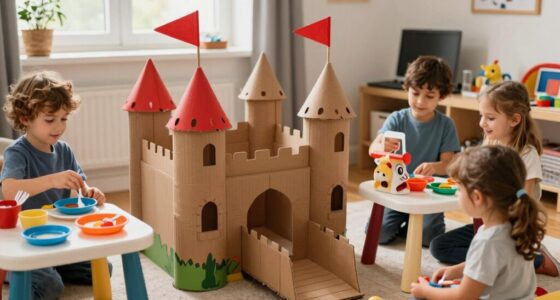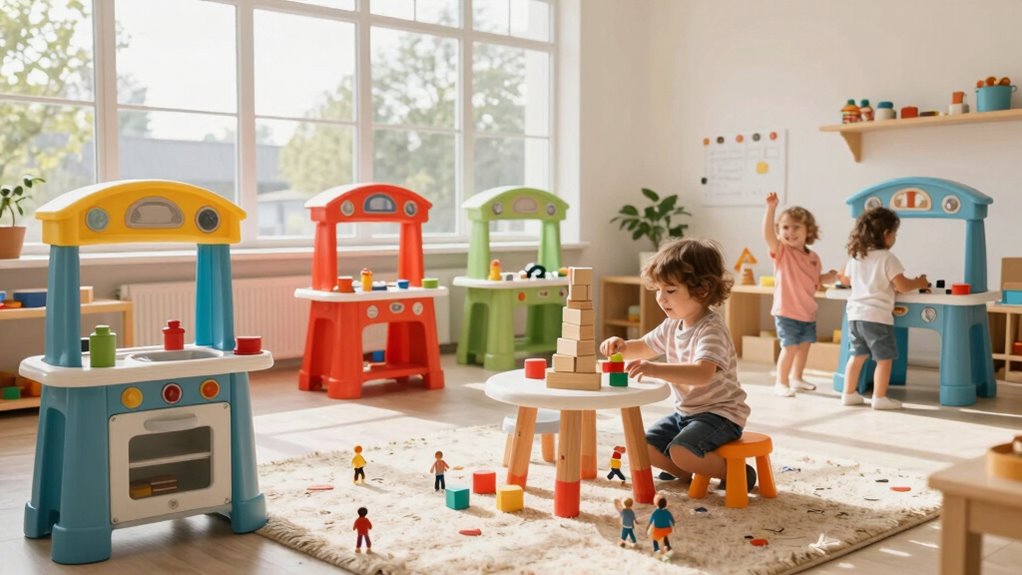

Dramatic play centers are worth the space because they spark imagination and help children develop essential social and language skills. They encourage creative storytelling, teamwork, and empathy, which are crucial for holistic growth. Props and dedicated environments make play more engaging and meaningful, fostering critical thinking and problem-solving. These centers also introduce environmental awareness and concepts like conservation. Keep exploring to discover more ways these spaces support your child’s development and creativity.

Turn the school run and nap time into listening time
- Thousands of audiobooks, podcasts and originals
- Listen on your phone, tablet or Echo — also offline
- Cancel anytime
Key Takeaways
- They foster creativity and language development through imaginative storytelling and role-playing activities.
- They promote social skills like sharing, cooperation, and empathy among children.
- Proper props and environment enhance engagement, stimulate imagination, and support diverse play scenarios.
- They develop critical thinking and problem-solving skills through improvisation and conflict resolution.
- They integrate educational themes like environmental awareness, enriching learning experiences.

Dramatic play centers are vital in early childhood education because they foster creativity, social skills, and problem-solving abilities. When you create a space for children to engage in imaginative storytelling, you’re giving them the chance to explore their ideas and express themselves freely. Through role-playing, kids can act out real-life scenarios or invent new worlds, which enhances their ability to think creatively and develop their language skills. As they craft stories and act them out, they learn to communicate their thoughts and feelings more effectively, building confidence in their interactions.
In these centers, social skill development happens naturally. You’ll notice children learning to share, take turns, and collaborate as they navigate different roles and scenarios. When kids participate in pretend play together, they learn the importance of listening to others, respecting differing perspectives, and working as a team. These interactions are foundational for developing empathy and emotional understanding, which are indispensable for building healthy relationships later in life. The social exchanges that happen during dramatic play help children develop patience and negotiation skills, all while having fun. Additionally, providing diverse props and costumes can further stimulate their imagination, making the play more enriching and engaging.
Having a dedicated space for dramatic play encourages children to immerse themselves in their roles. This immersion promotes deeper imaginative storytelling, as kids feel more confident to experiment with characters, settings, and plotlines. They learn to think on their feet, adapt their stories, and solve problems within their pretend worlds. For example, if a story takes an unexpected turn, children figure out how to resolve conflicts or adjust their roles, fostering critical thinking and adaptability. Creating an environment with biodiversity-themed props and scenarios can also introduce children to concepts of conservation and the natural world, fostering early environmental awareness and respect for living things.
As an affiliate, we earn on qualifying purchases.
Frequently Asked Questions
How Do Dramatic Play Centers Support Social-Emotional Development?
Dramatic play centers support social-emotional development by encouraging emotional expression as you act out different roles and scenarios. You learn to identify and share feelings, which boosts your empathy development. These centers give you a safe space to practice understanding others’ perspectives, helping you develop compassion and emotional resilience. Through role-playing, you build essential social skills and gain confidence in expressing yourself, fostering overall emotional growth.
What Safety Considerations Are Essential for Dramatic Play Areas?
You need to prioritize safety equipment like outlet covers, soft mats, and rounded furniture to prevent injuries. Hazard prevention is essential; regularly inspect the area for sharp objects, choking hazards, or unstable furniture. Keep small items out of reach to avoid choking, and guarantee all materials are non-toxic and child-friendly. By proactively addressing these safety considerations, you create a secure environment that encourages imaginative play without unnecessary risks.
How Can Parents Best Encourage Children During Dramatic Play?
You can encourage children during dramatic play by actively engaging in their imaginative role playing and creative storytelling. Show genuine interest, ask open-ended questions, and participate without taking over. Offer props and themes that inspire their imagination, and praise their ideas and efforts. Your enthusiasm boosts their confidence and helps them explore new roles, fostering social skills and creativity while making the experience enjoyable and enriching for them.
What Are Cost-Effective Ways to Set up a Dramatic Play Center?
You can set up a cost-effective dramatic play center by repurposing household items and incorporating playground equipment like slides or climbing structures for added fun. Use dress-up accessories, old clothes, and props you already have to encourage imaginative play. Visit thrift stores or dollar stores for inexpensive costumes and accessories. This approach keeps costs low while creating an engaging environment that sparks creativity and role-playing.
How Do Dramatic Play Centers Adapt for Diverse Learning Styles?
Dramatic play centers adapt for diverse learning styles like a chameleon changing colors, embracing every child’s unique needs. You foster imaginative exploration by offering varied role-playing scenarios and materials that cater to different sensory, cognitive, and social preferences. This inclusive approach encourages children to express themselves authentically, develop empathy through role playing diversity, and build confidence. By tailoring these centers, you create a space where every child’s imagination blossoms, enriching their learning journey.
Conclusion
Dramatic play centers truly transform your space into a vibrant hub of imagination and learning. By encouraging creativity, social skills, and problem-solving, you’re not just creating a play area—you’re fostering lifelong skills. Think of it as planting a seed that will grow into a future Einstein or Picasso. So, don’t wait for a time machine; add a dramatic play center today and watch your little ones thrive in ways even the most ancient philosophers would admire.
Fall Picks
fall essentials
As an affiliate, we earn on qualifying purchases.