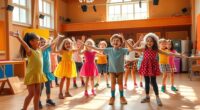
Music and movement games are great for building self-control because they combine rhythm, coordination, and structured routines that keep kids engaged. Activities like clapping to a beat, following dance sequences, and playing “freeze” games teach focus, patience, and impulse regulation in a fun way. Repeating these activities helps internalize self-control skills that transfer to other areas. Keep exploring to discover more fun strategies to help children improve their self-regulation through music and movement.

Turn the school run and nap time into listening time
- Thousands of audiobooks, podcasts and originals
- Listen on your phone, tablet or Echo — also offline
- Cancel anytime
Key Takeaways
- Incorporate rhythm exercises like clapping or stomping to teach children to stay synchronized and control impulses.
- Use “freeze” games where children stop moving when music stops to practice self-regulation.
- Implement follow-the-leader routines to enhance attention, obedience, and impulse control.
- Design engaging dance routines requiring memorization and turn-taking to foster focus and patience.
- Combine movement games with rules and repetition to help internalize self-control and improve social interactions.

Music and movement games are a fantastic way to boost physical activity while having fun. When you combine music with engaging movement, you create an environment where kids can develop important skills like self-control, focus, and coordination. One effective approach is through rhythm exercises. These involve clapping, tapping, or stomping in time with the music, helping children learn to regulate their movements and stay in sync with the beat. As they practice matching their actions to a steady rhythm, they start to develop patience and control over their impulses. For example, you might play a song with a distinctive beat and encourage kids to clap along, gradually increasing the complexity as they become more confident. This not only improves their sense of timing but also teaches them to listen carefully and respond appropriately, which are key components of self-control.
Dance routines are another excellent way to reinforce these skills. When kids follow choreographed movements, they learn to pay attention to instructions, wait for their turn, and stay focused on the task at hand. You can introduce simple dance routines that require them to remember sequences and execute movements at specific moments. This process demands concentration and impulse control, especially when they’re excited or distracted. As they practice and perform these routines, they build resilience against impulsiveness and develop patience in mastering new steps. Incorporating repetitive dance routines also helps children internalize patterns and expectations, making it easier for them to control their impulses in other areas of life. Additionally, integrating structured activities into these games can further enhance their ability to follow rules and improve their self-regulation skills.
To make these activities more engaging, you can incorporate games that involve both rhythm exercises and dance routines. For instance, you might play a game where children must freeze in place when the music stops, which encourages self-regulation and impulse control. Or, you could set up a “follow the leader” dance, where kids mimic the leader’s movements, helping them practice focus and obedience. The key is to keep the activities lively and varied so kids stay motivated and enjoy the process. As they become more adept at controlling their movements to match the music, they also develop broader self-regulation skills that transfer to classroom behavior and social interactions.
As an affiliate, we earn on qualifying purchases.
Frequently Asked Questions
How Can Music Activities Improve Children’s Emotional Regulation Skills?
Music activities can markedly improve your child’s emotional regulation skills by enhancing emotional recognition and impulse management. When children engage in rhythm and movement, they learn to identify feelings and respond appropriately. These activities encourage self-awareness, helping kids control impulses and stay focused. As they follow musical cues and coordinate movements, they develop patience and resilience, fostering better emotional regulation skills that benefit them in various social and academic settings.
What Are Some Age-Appropriate Music Games for Preschoolers?
Did you know preschoolers learn best through play? You can introduce age-appropriate music games like musical storytelling, where kids act out stories with simple movements, and rhythm imitation, encouraging them to copy beats and patterns. These activities boost self-control by requiring focus and turn-taking. Keep it lively, short, and fun to engage their attention. Such games foster coordination, listening skills, and emotional regulation, making learning enjoyable and effective.
How Do Movement Games Enhance Children’s Social Skills?
Movement games boost your children’s social skills by encouraging rhythmic coordination and group synchronization. When they move together, they learn to listen, take turns, and cooperate, fostering teamwork. These activities help children understand social cues and develop empathy as they coordinate their actions with peers. As a result, your kids build confidence, improve communication, and form stronger friendships through fun, engaging movement games.
Are There Specific Music Genres That Promote Better Self-Control?
Certain genres, like classical, jazz, and folk, can promote better self-control through rhythm training and calming melodies. Your children might respond well to gentle, steady beats that encourage focus and patience. As they engage with these genres, they develop discipline, attention, and emotional regulation. By choosing music with predictable structures and soothing rhythms, you help foster self-control while enriching their sensory experiences.
How Can Parents Incorporate Music Games Into Daily Routines?
You can incorporate music games into your daily routines through music integration by setting aside specific times, like after homework or before bedtime, for fun movement activities. Keep routine consistency by making these games a regular part of your day, encouraging your child to follow simple commands and stay engaged. Use lively tunes to motivate participation, helping your child develop self-control while enjoying quality bonding time together.
Conclusion
As you play music and movement games, imagine each beat as a steady heartbeat, guiding your child’s self-control. The rhythm becomes a bridge, connecting focus with fun, like a gentle tide shaping a sandy shore. With every step and pause, they build resilience—like a tree growing taller, rooted in patience. These games aren’t just play; they’re the seeds of strength, blossoming quietly within, ready to flourish as they learn to sway with life’s rhythm.
Cold & flu season Picks
humidifiers
As an affiliate, we earn on qualifying purchases.