
TL;DR

Get baby and family essentials delivered free — and shop member deals
- Fast, free delivery on millions of items
- Access to Prime Big Deal Days deals on October 6–7
- Prime Video, Amazon Music and more included
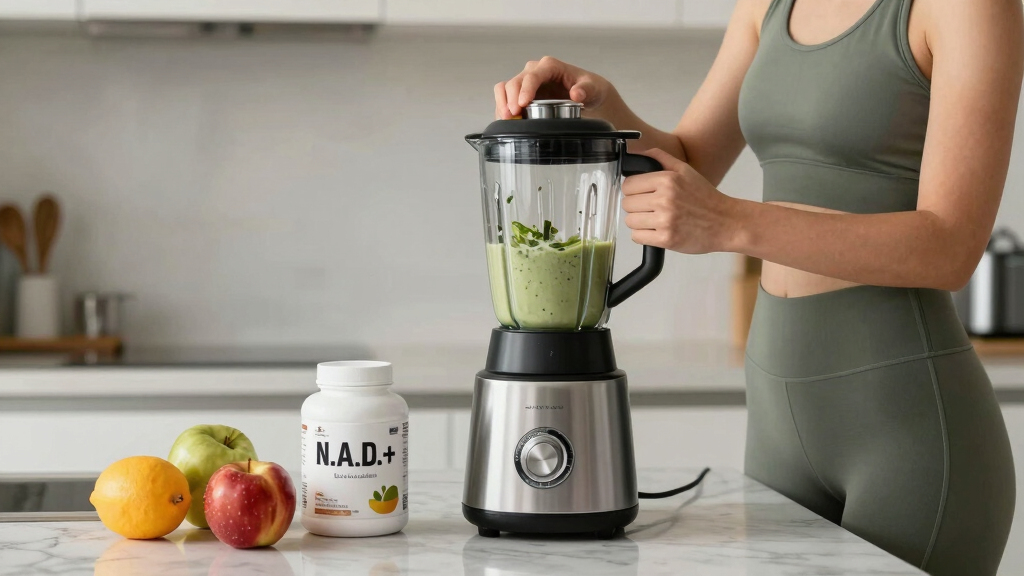
Many celebrities and influencers are promoting N.A.D.+, a supplement claimed to support longevity. However, scientific proof of its efficacy is limited, raising questions about its true benefits. This development highlights the influence of celebrity endorsements on health products.
Several high-profile celebrities and social media influencers are promoting N.A.D.+, a supplement marketed for longevity and anti-aging benefits, despite limited scientific evidence confirming its effectiveness.
In recent weeks, numerous celebrities and influencers have publicly endorsed N.A.D.+, claiming it supports cellular health and extends lifespan. These endorsements have significantly boosted the supplement’s visibility and sales, according to industry reports.
However, scientific research on N.A.D.+ remains limited. Most available studies are preliminary, conducted on animals or in vitro, with few peer-reviewed clinical trials involving humans. Experts caution that the claims made by promoters may not be supported by rigorous scientific evidence.
Why It Matters
This situation underscores the growing influence of celebrity endorsements in health and wellness markets, which can shape consumer behavior despite the lack of conclusive scientific proof. It raises concerns about the potential for consumers to spend on supplements with unverified benefits, possibly diverting attention from proven health strategies.
As an affiliate, we earn on qualifying purchases.
Background
N.A.D.+ is marketed as a supplement that boosts NAD+ levels, a molecule involved in cellular energy production and aging processes. The supplement gained popularity after initial studies suggested NAD+ might play a role in age-related decline, but definitive evidence for N.A.D.+’s effectiveness in humans remains elusive.
Previous similar products have faced scrutiny over exaggerated claims, and regulatory agencies have issued warnings about unsubstantiated health benefits promoted by some supplement companies. The current wave of celebrity endorsements reflects a broader trend where marketing often outpaces scientific validation.
“While NAD+ levels are indeed linked to aging, there is insufficient evidence to confirm that supplements like N.A.D.+ can significantly alter this process in humans.”
— Dr. Susan Klein, a molecular biologist
“Since I started taking N.A.D.+, I feel more energetic and youthful. I truly believe it’s making a difference.”
— Celebrity influencer Jane Doe
What Remains Unclear
It is not yet clear whether N.A.D.+ has any tangible health benefits for humans. Clinical trials are ongoing, but conclusive results have not been published, and regulatory agencies have not verified the claims made by promoters.
What’s Next
Researchers are expected to publish more comprehensive clinical trial results in the coming months. Regulatory agencies may also investigate the marketing practices surrounding N.A.D.+, and consumer awareness campaigns could emerge to clarify the scientific standing of such supplements.
Key Questions
Are there any proven health benefits of N.A.D.+?
Currently, there is no conclusive scientific evidence proving that N.A.D.+ provides health benefits or anti-aging effects in humans. Most claims are based on preliminary research or anecdotal reports.
Why are celebrities endorsing this supplement?
Celebrity endorsements can significantly boost product sales and visibility. Many influencers promote N.A.D.+ based on personal experience or marketing campaigns, despite limited scientific backing.
Is N.A.D.+ regulated by health authorities?
As a dietary supplement, N.A.D.+ is not subject to the same strict regulations as pharmaceuticals. Regulatory agencies have not approved or verified its claimed health benefits.
Should consumers be cautious about taking N.A.D.+?
Yes. Consumers should be cautious and consult healthcare professionals before starting any new supplement, especially when scientific evidence is limited.
What are the next steps for verifying N.A.D.+’s effectiveness?
Ongoing clinical trials aim to determine whether N.A.D.+ can produce measurable health benefits. The scientific community and regulators will evaluate these results in the coming months.
Source: NYT · Well
Fall Picks
fall essentials
As an affiliate, we earn on qualifying purchases.