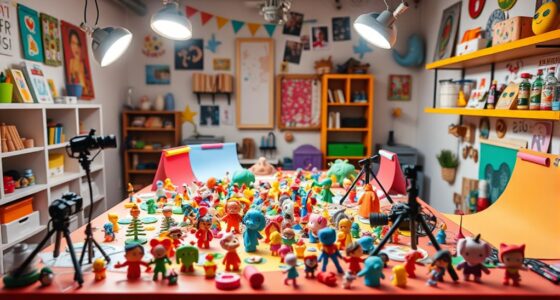


You can create simple pretend play setups using everyday items that kids actually enjoy using. Think of transforming a corner into a cozy home, a small table into a grocery store, or a cardboard box into a spaceship. These setups are easy to assemble and foster imagination, role playing, and social skills. Kids love familiar objects that inspire stories and adventures. Keep exploring to discover more ideas that make pretend play fun and engaging for your child.

Turn the school run and nap time into listening time
- Thousands of audiobooks, podcasts and originals
- Listen on your phone, tablet or Echo — also offline
- Cancel anytime
Key Takeaways
- Kids frequently turn cardboard boxes into spaceships, castles, or shops for imaginative role play.
- Simple setups like a pretend kitchen or store use everyday objects, making play natural and engaging.
- Caregivers encourage storytelling with accessible props like toy food, money, or costumes.
- Children prefer familiar environments that mirror their daily life or fantasies for repeated play.
- Versatile, low-cost setups foster social skills, creativity, and problem-solving through role exploration.

Have you ever noticed how kids transform everyday objects into imaginative worlds? It’s like they have a magic touch for creating entire universes out of simple items. When you set up pretend play, you’re giving them a blank canvas where their creativity can run wild. One of the easiest ways to do this is by introducing simple pretend play setups that kids actually love to use. These setups often revolve around imaginative themes and role playing scenarios that feel natural to children, making playtime both fun and meaningful.
Kids are drawn to themes that resonate with their interests or daily experiences. For example, a makeshift kitchen with plastic utensils, pots, and pans becomes a bustling restaurant or a cozy home. It’s not about having elaborate equipment but about sparking their imagination through familiar objects. Similarly, a cardboard box transformed into a spaceship or a castle taps into their love for adventure and fantasy. These setups encourage role playing scenarios where children can act out stories, explore different roles, and develop social skills. Whether they’re pretending to be a chef, a firefighter, or a princess, they’re immersing themselves in roles that help them understand the world around them.
Kids love role-playing with familiar objects like kitchens and castles to explore stories and develop social skills.
The beauty of simple pretend play setups is that they’re accessible and adaptable. You don’t need expensive toys or complicated structures—just everyday items and a little bit of creativity. For instance, a corner of the room can become a doctor’s office with a toy stethoscope and some bandages, inviting kids to emulate healthcare workers. Or, a small table covered with a cloth and some pretend money can turn into a store, encouraging role playing scenarios involving shopping and money management. These setups provide a safe space for children to experiment with social interactions and problem-solving, all while having a blast. Additionally, incorporating imaginative themes based on familiar objects can make these setups even more engaging and meaningful for kids. Recognizing the importance of biodiversity can also inspire nature-themed pretend play, fostering an appreciation for the environment from an early age. Including elements of environmental awareness can help children connect with their surroundings and develop a sense of responsibility. Creating these themed environments can also support cognitive development, enhancing their ability to plan and organize their play narratives.
Most importantly, these simple setups are used repeatedly because they’re intuitive and relatable. Kids naturally gravitate toward themes that mirror their world or fuel their fantasies. As a caregiver or parent, your role is to facilitate these opportunities, providing the basic props and encouraging their storytelling. The more accessible and familiar the environment, the more likely they are to engage deeply in role playing scenarios that foster development, imagination, and joy. With just a few simple items, you can open up a universe of pretend play that keeps your kids entertained and learning at the same time.
As an affiliate, we earn on qualifying purchases.
Frequently Asked Questions
What Are the Safest Materials for Pretend Play Setups?
You should choose eco-friendly materials for crafting safety in pretend play setups. Opt for natural woods, organic fabrics, and non-toxic paints to minimize risks. Avoid plastics with harmful chemicals, and steer clear of small pieces that could pose choking hazards. By selecting eco-friendly materials, you guarantee your child’s play area is safe and environmentally conscious, encouraging imaginative play without compromising health or safety.
How Do I Encourage Creative Pretend Play?
To encourage creative pretend play, you should promote imaginative storytelling and role switching activities. Give your child open-ended props and prompts to spark their ideas, and encourage them to take on different roles to explore various scenarios. Join in their play to model creativity, ask open-ended questions, and provide a safe space where their imagination can flourish. This approach helps develop their storytelling skills and boosts confidence in role switching activities.
What Age Is Best Suited for Different Pretend Play Setups?
You’ll find that different ages thrive with specific pretend play setups, from toddlers to tweens. For imaginative scenarios, young kids love role-playing games like tea parties or doctor visits, perfect around ages 2-4. As they grow, around ages 5-8, they enjoy more complex role-playing games and themed setups. Tailoring these to their developmental stage keeps pretend play engaging, even if they secretly prefer digital worlds—because who doesn’t love a good fantasy?
How Can I Store Pretend Play Sets Efficiently?
To store pretend play sets efficiently, focus on toy organization and smart storage solutions. Use clear plastic bins or stackable containers to keep items visible and accessible. Label each bin for easy identification, and consider wall-mounted shelves for larger pieces. Regularly sort and rotate toys to prevent clutter. This approach helps you maintain an organized space, making cleanup quick and encouraging your child to independently manage their pretend play essentials.
Are There Budget-Friendly Options for Pretend Play Setups?
Yes, there are budget-friendly options for pretend play setups. Look for cost-effective alternatives like repurposing household items or using inexpensive craft supplies. DIY pretend ideas, such as making a play kitchen from cardboard boxes or creating a grocery store with recycled containers, work well. These options are fun, customizable, and save money, while encouraging your child’s imagination and creativity in a simple, affordable way.
Conclusion
As you set up these simple pretend play scenes, remember you’re planting seeds of imagination that will bloom in your child’s mind. Just like a gentle breeze guides a kite higher, your thoughtful setups lift their creativity to new heights. These everyday play moments are the threads weaving a vibrant tapestry of learning and joy. Keep nurturing their imaginative spirit, and watch as their world unfolds into a beautiful garden of endless possibilities.
Halloween Picks
halloween
As an affiliate, we earn on qualifying purchases.