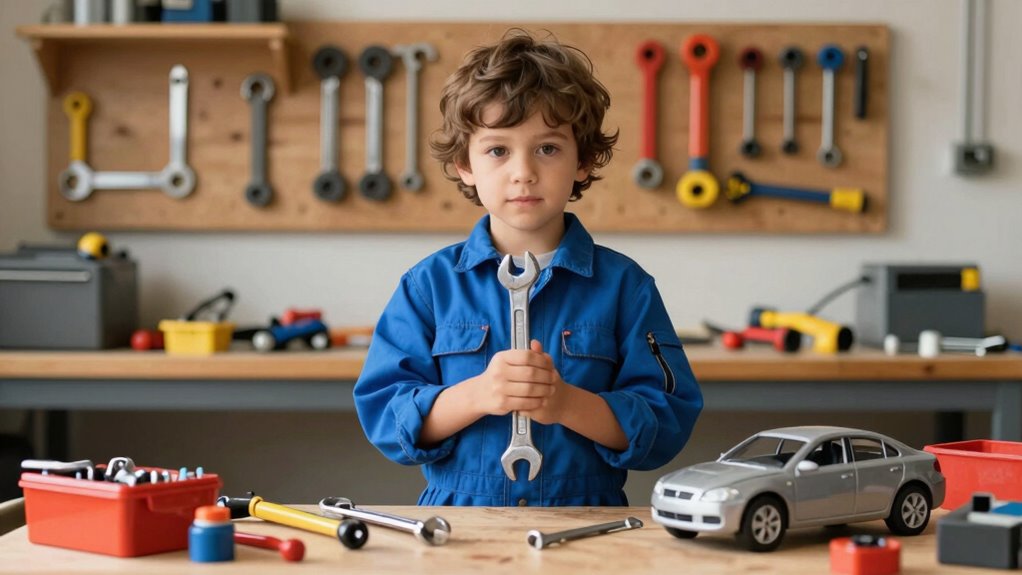

Pretend repair play helps your child build confidence by letting them take on roles like a handyman or mechanic, giving them a sense of achievement. It also improves coordination as they handle toy tools, fit parts, and control their movements. Through imaginative scenarios, they practice problem-solving and develop their motor skills, boosting their self-esteem. If you keep exploring, you’ll discover even more ways this kind of play supports their growth and development.

Turn the school run and nap time into listening time
- Thousands of audiobooks, podcasts and originals
- Listen on your phone, tablet or Echo — also offline
- Cancel anytime
Key Takeaways
- Role-playing repair tasks boosts children’s confidence by enabling successful task completion.
- Handling toy tools enhances fine motor skills and hand-eye coordination.
- Engaging in imaginative scenarios fosters creativity and self-assurance.
- Practicing problem-solving during repairs develops resilience and decision-making skills.
- Following safety guidelines promotes responsible tool use, building trust in their abilities.
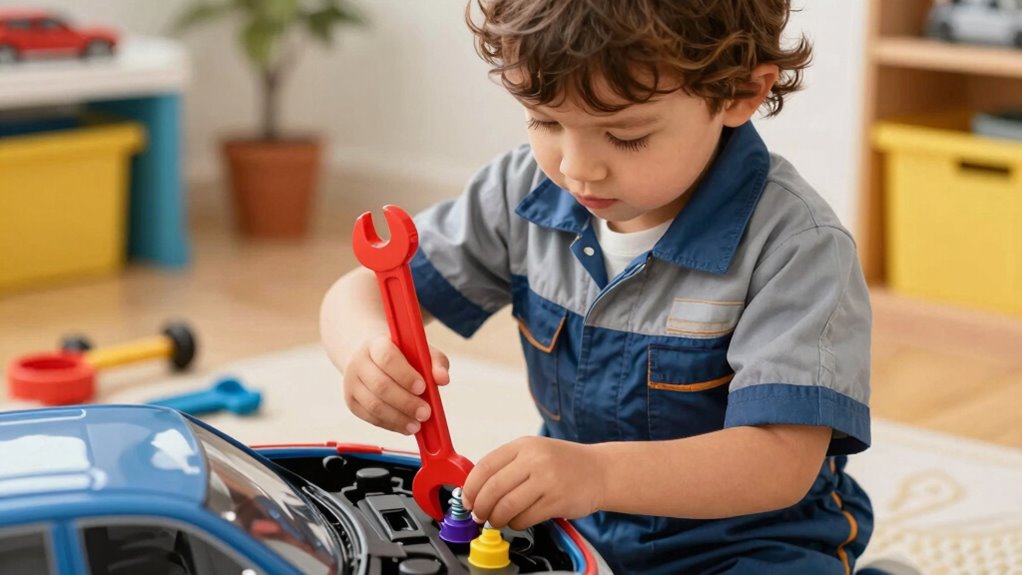
Pretend repair play might seem simple, but it’s a powerful activity that helps children build confidence and improve coordination. When you set up a pretend workshop, you’re giving your child a chance to explore their creativity while developing important skills. One key aspect of this play is teaching tool safety, even in a pretend setting. You want your child to understand that real tools require careful handling, and that safety rules are essential. Using toy tools that mimic real ones, along with clear safety guidelines, helps children learn to respect tools and avoid accidents. This awareness translates into responsible behavior as they grow older, making safety a foundational part of their play.
Role imagination plays a central role in this activity. When your child pretends to be a repair expert, they’re not just playing with toys—they’re engaging in a form of storytelling that sparks their creativity. As they assume different roles, whether that’s a handyman, mechanic, or builder, they practice problem-solving and decision-making. These imaginative scenarios encourage your child to think critically about how things work, which boosts their confidence in their own ideas and abilities. As they act out these roles, they learn to navigate challenges, make plans, and execute tasks, all of which strengthen their sense of competence.
Coordination is another skill that naturally improves during pretend repair play. Handling toy tools, fitting parts together, and mimicking real repair motions require fine motor skills. When your child reaches, grasps, and manipulates objects repeatedly, their hand-eye coordination gets a workout. As they practice these movements, they gain better control and precision, which benefits their overall motor development. Plus, the physical activity involved in pretend play keeps their muscles engaged, fostering better coordination and spatial awareness. Incorporating elements of biodiversity into play can also inspire children to appreciate the importance of caring for their environment as they develop these skills. Additionally, engaging in this type of play can promote a growth mindset, encouraging children to view challenges as opportunities to learn rather than obstacles. Recognizing the role of safety awareness in this activity helps children develop a responsible attitude towards tools and their use.
This type of play also encourages persistence and patience. When tasks don’t go as planned, your child learns to troubleshoot and try again. These experiences build resilience and confidence, teaching them that mistakes are part of learning. As they see their pretend repairs succeed, their self-esteem grows. You’ll notice their enthusiasm increase as they take on more complex roles and tasks, reinforcing their belief in their own capabilities. Ultimately, pretend repair play isn’t just fun—it’s a meaningful way for children to develop confidence, coordination, and a responsible attitude towards tools and safety.
As an affiliate, we earn on qualifying purchases.
Frequently Asked Questions
What Age Is Best for Pretend Repair Play?
You can start pretend repair play at around age three, as children become more interested in imaginative scenarios and role-playing techniques. At this age, they enjoy mimicking real-life activities, which helps develop their confidence and coordination. As they grow older, their skills improve, making the play even more engaging. This activity encourages creativity, problem-solving, and social skills, making it a perfect early childhood development tool.
How Can Parents Encourage Safe Pretend Repair Activities?
To encourage safe pretend repair activities, you should share safety tips and supervise your child closely. Use creative materials like toy tools and soft, child-friendly equipment to prevent injuries. Set clear boundaries, explain safety rules, and demonstrate proper tool use. Always stay nearby to monitor play, ensuring your child understands the importance of safety while exploring their imagination and building confidence through these hands-on activities.
Are There Specific Tools or Toys Recommended for Pretend Repair?
You should look for pretend repair toys that prioritize toy safety, like plastic tools with rounded edges and non-toxic paint. Role playing accessories such as toy screwdrivers, hammers, and wrenches help make the experience realistic and fun. Always check for age-appropriate labels and avoid small parts that could be choking hazards. These tools encourage safe, imaginative play, boosting your child’s confidence and coordination during pretend repair activities.
How Does Pretend Repair Play Differ Across Cultures?
You’ll notice that pretend repair play varies across cultures, reflecting different values and practices. In some cultures, play symbolism emphasizes community and shared responsibility, while others focus on individual skills and innovation. These cultural variations influence how children approach tools, roles, and scenarios during pretend repair, shaping their confidence and coordination differently. Recognizing these differences helps you appreciate how cultural context enriches play and supports diverse developmental experiences.
Can Pretend Repair Play Help With Problem-Solving Skills?
Research shows that 85% of children improve their problem-solving skills through pretend repair play. When you engage in creative improvisation during play, you challenge their thinking and enhance cognitive development. This type of play encourages kids to think critically, adapt to new situations, and find solutions, strengthening their problem-solving abilities. By fostering imagination and flexibility, pretend repair play becomes a powerful tool for nurturing essential skills for their growth.
Conclusion
As you watch your child immerse themselves in pretend repair play, you notice how their confidence grows with each fix and their coordination sharpens with every turn of the wrench. It’s a small coincidence that, through these playful moments, they’re building skills that will serve them for a lifetime. You realize that in these simple, imaginative tasks, they’re not just repairing toys—they’re repairing gaps in their confidence and coordination, one pretend fix at a time.
Evergreen bestsellers Picks
bestsellers
As an affiliate, we earn on qualifying purchases.