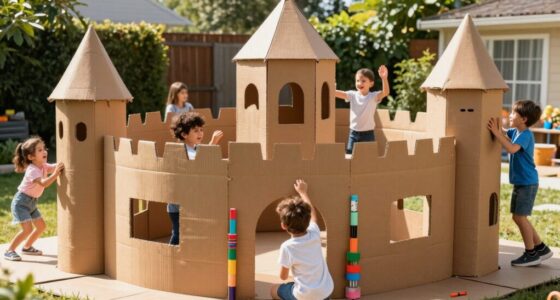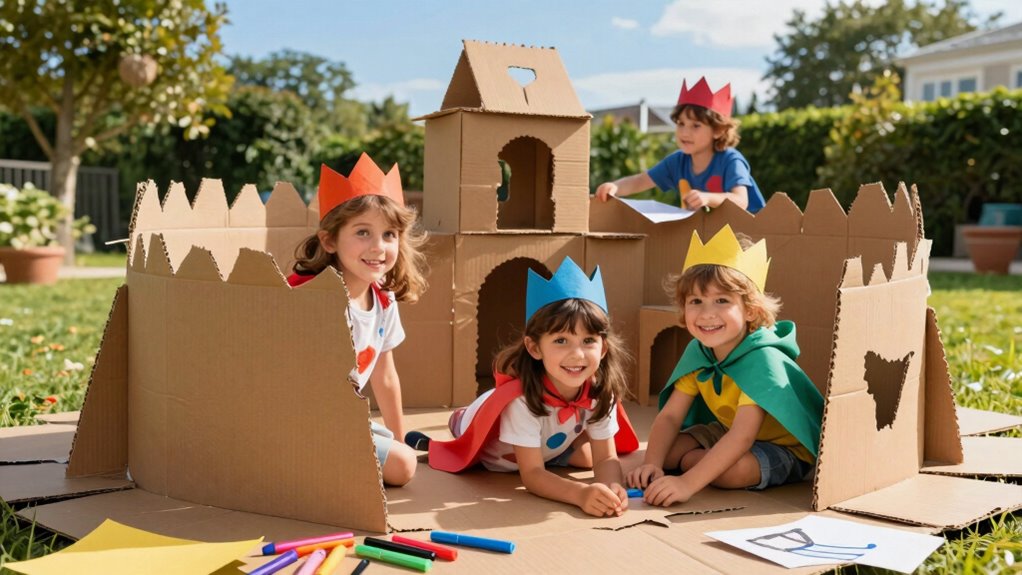

Cardboard building activities boost your imagination by encouraging you to create anything from houses to spaceships, turning simple materials into big ideas. As you experiment with designs, you develop problem-solving skills and see how pieces fit together in new ways. These activities help you visualize and plan complex projects, sparking confidence and inventiveness. By exploring eco-friendly practices, you also connect your creativity to real-world issues. Keep exploring, and you’ll discover even more ways to expand your creative horizons.

Turn the school run and nap time into listening time
- Thousands of audiobooks, podcasts and originals
- Listen on your phone, tablet or Echo — also offline
- Cancel anytime
Key Takeaways
- Encourages limitless creative ideas by transforming simple cardboard into various imaginative structures like castles or spaceships.
- Stimulates innovation through problem-solving and designing unique, customized projects.
- Fosters confidence in turning ideas into tangible, physical creations.
- Promotes flexible thinking by exploring different building techniques and solutions.
- Connects play to broader themes like sustainability, inspiring eco-conscious creativity.
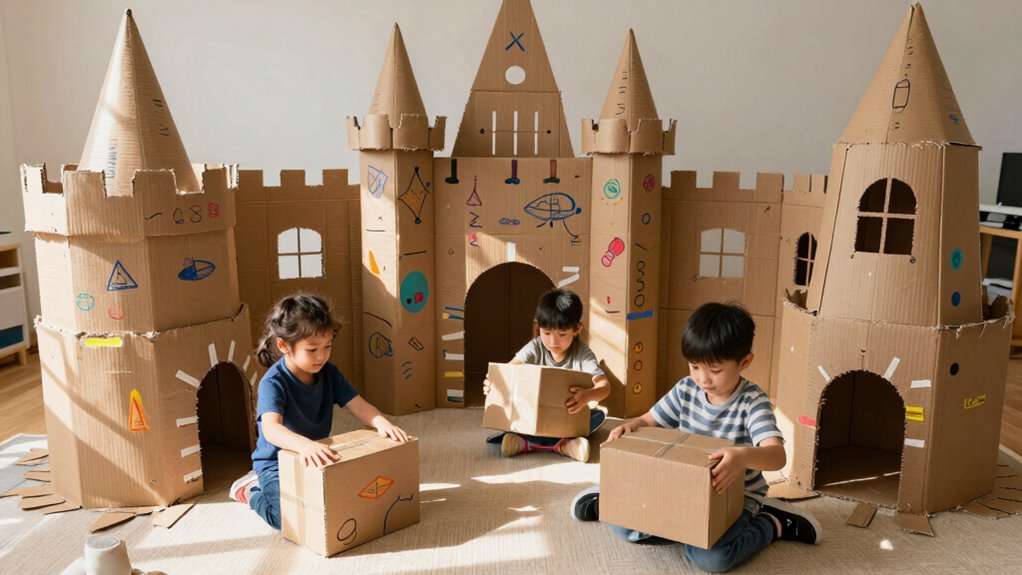
Building activities are a fantastic way to spark your child’s imagination and encourage creative thinking. When you engage in cardboard building projects, you’re opening the door to a world of endless possibilities that foster their ability to think outside the box. These activities naturally promote creative problem solving as your child figures out how to piece together different shapes and sizes of cardboard to create something new. Each challenge, whether it’s constructing a house, a spaceship, or a castle, requires them to think critically about how the pieces fit, balance, and hold together. This process develops their problem-solving skills while keeping the activity fun and engaging.
Building with cardboard sparks imagination and promotes critical thinking through creative, hands-on problem solving.
Additionally, cardboard building activities help your child develop spatial awareness, an essential skill for understanding and orienting the world around them. As they manipulate and arrange the cardboard pieces, they learn to judge distances, measure sizes, and understand spatial relationships. They begin to recognize how different elements relate to each other within a three-dimensional space, which boosts their ability to plan and execute complex designs. This understanding isn’t just about the physical act of building; it’s about cultivating a deeper comprehension of how objects relate to each other and occupy space.
As you watch your child work through their projects, you’ll notice how their focus sharpens and their ideas expand. They might start with a simple box and gradually transform it into a miniature house, complete with windows and doors, or a sprawling fortress with towers and bridges. In doing so, they’re not just building—they’re learning to think critically and plan ahead, which enhances their creative problem-solving skills. They’ll experiment with different folding techniques, stacking, and taping, all of which refine their hand-eye coordination and spatial reasoning. Developing spatial awareness through these activities is fundamental for their overall cognitive growth. Moreover, engaging in these hands-on projects can also foster a sense of environmental awareness, as children learn about recycling and reusing materials, connecting their play to the broader concept of sustainable living.
Encouraging your child to use their imagination during these activities also boosts their confidence. When they see their ideas come to life, they feel empowered to tackle even bigger challenges. You’re helping them build more than just structures—you’re nurturing their ability to think creatively, solve problems independently, and understand spatial concepts deeply. These skills will serve them well in school and beyond, turning simple cardboard pieces into a foundation for lifelong learning and inventive thinking. Recognizing how these activities support cognitive development can motivate you to incorporate more creative projects into their routine. Incorporating creative play into their daily activities is crucial for fostering these developmental benefits and encouraging continuous growth.
As an affiliate, we earn on qualifying purchases.
Frequently Asked Questions
What Safety Precautions Should I Take During Cardboard Building Activities?
During cardboard building activities, you should prioritize safety by wearing appropriate safety gear like gloves and goggles to protect against sharp edges and debris. Make sure to follow supervision guidelines, especially with younger children, to prevent accidents. Keep the workspace organized and clear of hazards, and teach kids to handle tools carefully. Regularly check that all materials are safe and sturdy, ensuring a fun, injury-free experience for everyone involved.
How Can I Customize Cardboard Structures for Different Themes?
You can customize cardboard structures for different themes by adding themed decorations like paint, stickers, or fabric to match your idea. To guarantee structural stability, reinforce key joints with tape or glue and use sturdy cardboard layers. Think about incorporating specific elements related to your theme, such as stars for space or flowers for a garden. This approach makes your creation both imaginative and stable, bringing your theme to life.
What Are Affordable Materials to Enhance Cardboard Building Projects?
Imagine turning everyday scraps into a treasure trove of wonder. You can use recycled materials like bottle caps, fabric scraps, and paper tubes to enhance your cardboard projects, making them more vibrant and imaginative. Creative embellishments, such as stickers, paint, and tape, add personality without breaking the bank. Recycling techniques help stretch your budget, while these affordable materials ignite your creativity, transforming simple cardboard into extraordinary worlds of imagination.
How Do I Encourage Collaborative Building Among Children?
You encourage collaborative building among children by promoting creative teamwork and guiding them through collaborative design. Provide ample space for group work, assign roles, and prompt them to share ideas openly. Celebrate their collective efforts and encourage problem-solving together. You can also introduce team challenges or competitions, fostering a sense of shared achievement. This approach helps children develop communication skills, teamwork, and their ability to think creatively as they build together.
What Are Some Advanced Cardboard Building Project Ideas for Older Kids?
For older kids, challenge their creative design skills with complex projects like a functional dollhouse or a miniature cityscape. Encourage them to think about structural stability by integrating supports or layered designs. They can build bridges, architectural models, or even furniture. These projects push their problem-solving abilities while fostering imagination. Plus, working on such detailed builds helps them develop planning skills and confidence in their craftsmanship.
Conclusion
As you encourage your child’s creativity through cardboard building activities, remember that “the sky’s the limit.” These simple projects ignite big imaginations, foster problem-solving skills, and build confidence. By giving them the space to create, you’re nurturing their sense of wonder and resilience. Keep in mind, every great invention started with a single idea. So, keep building, dreaming, and exploring—because in the world of imagination, anything is possible.
Fall Picks
fall essentials
As an affiliate, we earn on qualifying purchases.