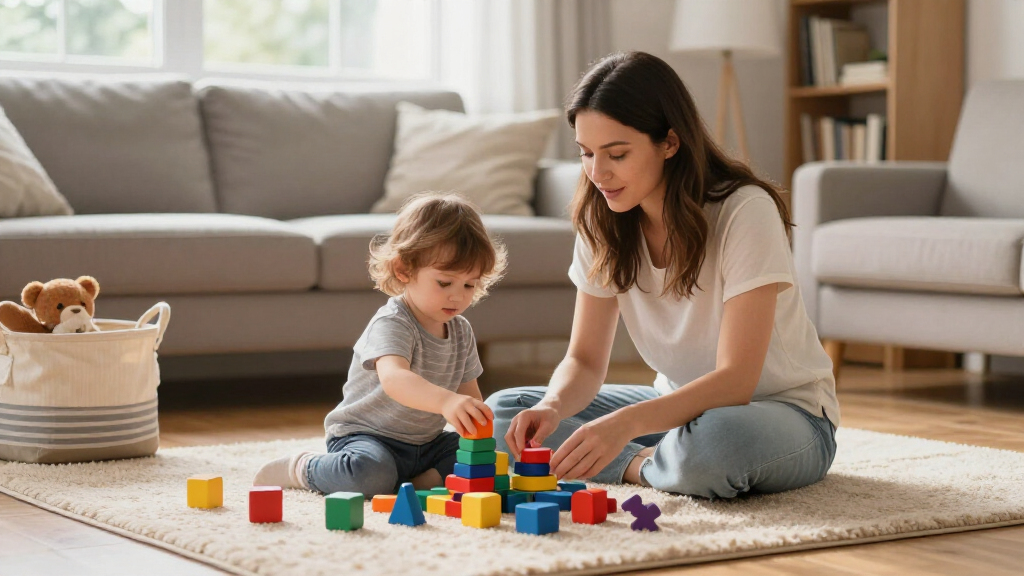

Walk down any preschool toy aisle or scroll through parenting forums and you’ll see two broad camps competing for the same budget: classic open-ended building blocks like LEGO Duplo, Mega Bloks, and wooden block sets, and the newer wave of structured STEM learning kits — electronic circuit boards for toddlers, primary science sets, screen-free coding robots, and subscription activity boxes. Both are marketed as ‘educational,’ both promise school readiness, and both occupy a similar price range, which is exactly why parents struggle to choose between them.

Turn the school run and nap time into listening time
- Thousands of audiobooks, podcasts and originals
- Listen on your phone, tablet or Echo — also offline
- Cancel anytime

BEESTECH Alphabet ABC Learning Educational Toys for Toddlers
- ✔ Target Age: 3-4 years
- ✔ Material: Wood
- ✔ Components: 28 flash cards, 52 wooden letters

Wooden Magnetic Fishing Game with Alphabet and Numbers
- ✔ Brand: NASHRIO
- ✔ Material: Wood
- ✔ Finish: Water-based, non-toxic dye
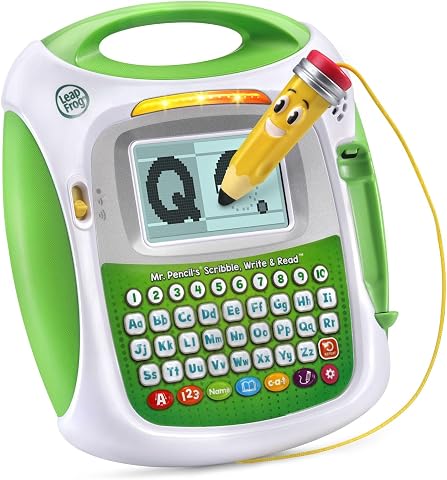
LeapFrog Mr. Pencil’s Scribble, Write and Read
- ✔ Brand: LeapFrog
- ✔ Age Range: 3+ years
- ✔ Batteries Required: 3 AA batteries
The real tension isn’t quality versus junk. It’s a genuine tradeoff in how children learn through play. Blocks hand the child complete creative control: there is no right answer, no predetermined outcome, and the toy grows with the child for years. STEM kits trade some of that freedom for direction: they guide the child toward specific concepts — circuits, sequencing, cause and effect — with satisfying, adult-designed payoffs. Neither approach is wrong, but they serve different developmental needs, different parenting styles, and honestly, different kids.
This comparison breaks down how the two options stack up across the criteria that matter most: developmental value, engagement and replay value, independence, longevity, mess and setup burden, price, and safety. The short version: for most preschoolers, open-ended blocks win on versatility and lasting value, while STEM kits win when you want targeted skill-building or have a child who craves structured challenges. Here’s how to decide which fits your household.
At a Glance
| Criteria | Open-Ended Building Blocks (LEGO Duplo, Mega Bloks, wooden blocks) | Structured STEM Learning Kits (electronic kits, science sets, coding toys) | Winner |
|---|---|---|---|
| Developmental breadth | Very broad: fine motor, spatial reasoning, creativity, early math, language | Narrower but deeper in specific domains like logic, sequencing, science concepts | A |
| Targeted skill-building | Indirect — skills emerge through play rather than instruction | Strong: explicit, curriculum-aligned concept practice | B |
| Independent play | Excellent: most 3-5 year olds play alone for 20-45 minutes | Variable: many kits require adult setup or co-play | A |
| Longevity across ages | Exceptional: used from age 1-2 through 6-7 and beyond | Limited: many kits are outgrown within 1-2 years | A |
| Engagement style | Child-directed, imaginative, open-ended | Goal-directed, guided, reward-based | Depends |
| Parent effort required | Minimal — dump out and play | High for many kits: setup, supervision, guided steps | A |
| Cost over time | One-time purchase; high resale and hand-me-down value | Higher; kits are consumable and subscriptions recur monthly | A |
| Safety and durability | Chunky pieces, near-indestructible, choking-safe at Duplo size | Mixed: batteries, small parts, delicate electronics in some sets | A |
BEESTECH Alphabet ABC Learning Educational Toys for Toddlers
This option stands out for doing the fundamentals exceptionally well. The format is simple: children match 52 polished wooden letters to 28 illustrated flash cards, building letter recognition and vocabulary at the same time. That simplicity is a feature, not a limitation — compared with the LeapFrog Mr. Pencil, there is no setup, no batteries, and no audio prompts, which means a three-year-old can start playing within seconds of opening the box and keep playing independently.Where the BEESTECH set beats the magnetic fishing game is focus. The fishing game turns learning into a physical activity, which is great for energetic kids but can mean the letters become an afterthought. Here, the letters are the whole activity, and the matching system naturally reinforces shape recognition and word-picture association. The included storage bag is a genuinely useful touch — small wooden letters have a way of migrating under couches, and the bag keeps the set complete.The real tradeoff is scope. This set teaches letter recognition and basic vocabulary, but it stops there: there is no phonics progression and no writing practice. A child who already knows the alphabet will outgrow it quickly, and in that case the Mr. Pencil is the better next step. Parents should also note the pieces are small enough to require caution in households with children under three.
Pros:
- Teaches letter recognition and vocabulary with a clear, self-correcting matching system
- No batteries or screens — works out of the box and encourages independent play
- Polished wood with no sharp corners, designed with toddler safety in mind
- Storage bag and gift box keep pieces organized and make it gift-ready
Cons:
- Limited to alphabet basics — no phonics, spelling, or writing progression
- Small wooden letters pose a choking hazard for children under three
Best for: Parents who want a screen-free, battery-free toy that teaches letter recognition and vocabulary through calm, independent matching play.
Not ideal for: Children who already know the alphabet, or households with babies and toddlers who might put the small wooden letters in their mouths.
Bottom line: The most balanced and fuss-free pick for building preschool literacy fundamentals, provided your child hasn’t already mastered the alphabet.
“The most balanced and fuss-free pick for building preschool literacy fundamentals, provided your child hasn’t already mastered the alphabet.”
Wooden Magnetic Fishing Game with Alphabet and Numbers
Not every preschooler will sit down with flash cards — and this is where the magnetic fishing game earns its place. By attaching letters and numbers to colorful fish and asking children to catch them with a magnetic pole, this set disguises literacy and counting practice as a game. Compared with the BEESTECH matching set, it trades some focus for a much broader skill set: the fishing action itself builds hand-eye coordination and fine motor control, which the card-matching format only lightly exercises.The build quality deserves mention. The fish are made from polished wood with smooth edges and finished with water-based, non-toxic dye — a meaningful safety distinction over cheaper plastic fishing sets with magnets that can detach. The multi-skill design also means it holds attention longer in mixed-age play: one child can fish by color while another names letters, making it more flexible than the single-purpose BEESTECH set in group settings.The honest drawback is precision. Because the letters ride on fish, the learning is less structured — there is no matching system guiding a child from recognition toward words, and the letter-to-word connection the BEESTECH set builds simply isn’t here. We’d also flag the confusing age labeling: the manufacturer lists 36 months to 3 years, which appears narrower than the 3–5 range in the product description. It doesn’t change the toy’s quality, but parents should treat the small magnetic pieces with the same caution as any small-part toy.
Pros:
- Combines letter and number recognition with an engaging physical fishing game
- Strongly develops hand-eye coordination and fine motor skills
- Polished wood with smooth edges and water-based, non-toxic dye
- Flexible enough for multiple children to play at different skill levels
Cons:
- Learning is unstructured — no built-in progression from letters to words
- Confusing age labeling: listed as 36 months–3 years despite a 3–5 year description
- Small magnetic pieces require supervision around younger siblings
Best for: Energetic preschoolers who learn better through movement and play than through sitting with cards, and families wanting letter and number practice in one toy.
Not ideal for: Parents focused specifically on vocabulary building or a structured literacy progression, or those with children under three due to small magnetic pieces.
Bottom line: The best choice when your preschooler needs to move while learning, offering broader developmental benefits than card-based alternatives.
“The best choice when your preschooler needs to move while learning, offering broader developmental benefits than card-based alternatives.”
LeapFrog Mr. Pencil’s Scribble, Write and Read
Both wooden picks teach children to recognize letters; this is the only one in our lineup that teaches them to write letters. Using a stylus on a responsive screen, Mr. Pencil guides children through uppercase and lowercase letters, numbers, and even their own name, with animated feedback that corrects stroke order and celebrates successes. For a preschooler heading toward kindergarten, that skill gap — recognition versus formation — is exactly where this toy justifies its place.Compared with the BEESTECH set, this model is genuinely a stage ahead. A child who has mastered matching letters to cards is ready for exactly what Mr. Pencil offers: early spelling, sound-it-out activities, and counting, layered over the writing practice. The free-drawing mode also gives it a creative outlet neither wooden toy provides, which helps extend its lifespan beyond pure drilling.The tradeoffs are practical rather than educational. It requires 3 AA batteries, and the included batteries are for demo purposes only — expect to supply fresh ones almost immediately, an ongoing cost the wooden picks never incur. There’s also a shorter novelty curve with electronics: once a child has worked through the activity set, there is less open-ended replay than re-shuffling a card set or inventing new fishing games. And unlike the two wooden options, it isn’t well suited to very young preschoolers who lack the pencil grip to benefit from it.
Pros:
- Actively teaches letter and number formation with stylus guidance and stroke feedback
- Extends to spelling, counting, sound-it-out activities, and name writing
- Free drawing mode adds creative play and extends the toy’s useful life
Cons:
- Requires 3 AA batteries, with included batteries meant for demo only
- Less open-ended replay value once activities are completed
- Requires sufficient fine motor development to benefit from the stylus
Best for: Preschoolers who already recognize letters and are preparing for kindergarten writing, spelling, and number formation.
Not ideal for: Children under three still developing pencil grip, or parents who want to avoid battery-powered, screen-based toys entirely.
Bottom line: The clear pick for the literacy step beyond letter recognition — writing — making it the strongest kindergarten-prep option here.
“The clear pick for the literacy step beyond letter recognition — writing — making it the strongest kindergarten-prep option here.”
As an Amazon Associate we earn from qualifying purchases.
Key Differences
The most important difference is who directs the play. Blocks are a blank canvas: a preschooler decides whether today’s pile of Duplo becomes a zoo, a spaceship, or a tower to knock down, and every one of those choices exercises planning, fine motor control, and symbolic thinking. STEM kits typically work the other way — the manufacturer designed an activity with a specific learning objective and a defined success state, and the child works toward it. This isn’t a flaw; guided practice is how children reliably pick up specific concepts like number sequencing or circuit completion. But it means the child is following a curriculum someone else wrote, and the developmental payoff is concentrated rather than spread across many domains.
The second difference that shapes daily life is parental effort. Blocks are close to zero-maintenance: a three-year-old can play independently while you make dinner, and cleanup is sweeping pieces into a bin. Many STEM kits — especially science sets, craft-based subscription boxes, and anything involving water, magnets, or batteries — expect an adult nearby to set up, read instructions aloud, and prevent shortcuts. If you’re buying an educational toy partly to buy yourself twenty minutes of independent play time, this distinction alone should drive your decision.
Finally, the longevity and value gap is real. A good block set bought at age two is still in weekly rotation at age six, survives siblings, and resells or hands down easily. STEM kits are more often consumable or single-concept: once a child has done the volcano experiment or mastered the coding robot’s twenty puzzles, interest usually drops sharply. You’re paying for a concentrated burst of learning rather than a decade of play, and that changes the value math considerably.
Detailed Comparison
Developmental breadth (Open-Ended Building Blocks (LEGO Duplo, Mega Bloks, wooden blocks) wins — major)
Blocks are the closest thing developmental psychology has to a consensus pick. Research on construction play links it to fine motor development, spatial reasoning, early mathematical thinking, symbolic play, and even later language and problem-solving skills. Because blocks have no single purpose, they touch everything at once. STEM kits are narrower by design: a circuit kit teaches circuits, a coding mouse teaches sequencing. That depth is a feature when you have a specific goal, but as a general developmental investment, blocks simply cover more ground. Winner: Blocks — major gap.
Targeted skill-building (Structured STEM Learning Kits (electronic kits, science sets, coding toys) wins — moderate)
This is where STEM kits earn their price. If you want a four-year-old to explicitly practice number recognition, sequencing, or scientific thinking like hypothesis and observation, a well-designed kit delivers that in a way blocks never will. Blocks teach these things implicitly and slowly; kits teach them directly and quickly. For a child who is behind on a specific skill or fascinated by a specific domain — magnets, gears, robots — a targeted kit is simply the better tool. Winner: STEM kits — moderate but real gap.
Independent play (Open-Ended Building Blocks (LEGO Duplo, Mega Bloks, wooden blocks) wins — major)
Blocks let most preschoolers play alone for extended stretches because the child controls the entire activity. STEM kits vary widely: coding robots and simple electronic boards can be self-directed once demonstrated, but science experiments and craft-based kits almost always need an adult partner. Parents consistently underestimate how much supervision ‘educational’ kits require until the box is open. If independent play matters to your daily routine, this is a decisive difference. Winner: Blocks — major gap for solo play.
Longevity across ages (Open-Ended Building Blocks (LEGO Duplo, Mega Bloks, wooden blocks) wins — major)
A LEGO Duplo or quality wooden block set spans roughly ages one through seven, then often bridges to smaller-brick systems. STEM kits are usually age-banded tightly: a kit pitched at 3-4 year olds is frequently abandoned by five, and a single-concept kit exhausts itself once the novelty fades. Blocks also scale in complexity as the child’s building skills mature, while a completed kit does not change. Winner: Blocks — major gap.
Engagement style (moderate difference)
This one genuinely depends on the child. Some preschoolers light up at open-ended creation and will happily build for an hour; others lose interest without a goal, a story, or a reward at the end, and for those kids a kit with lights, sounds, and a puzzle to solve is far more engaging. Neither style is superior — but matching the toy to your child’s temperament matters more than any spec sheet. Winner: Depends on the child — moderate difference.
Parent effort and mess (Open-Ended Building Blocks (LEGO Duplo, Mega Bloks, wooden blocks) wins — moderate)
Blocks require setup of zero and supervision of zero; the worst case is stepping on a stray brick. Kits frequently involve reading multi-step instructions, gathering materials, supervising batteries or water, and cleaning up afterward. Subscription boxes in particular can feel like a weekly homework assignment for the parent. If your available time is limited, weight this heavily. Winner: Blocks — moderate to major gap.
Cost over time (Open-Ended Building Blocks (LEGO Duplo, Mega Bloks, wooden blocks) wins — major)
A quality block set is a one-time purchase of roughly comparable price to one or two STEM kits, but it lasts years and holds resale value. STEM kits — especially monthly subscriptions — accumulate cost quickly, often $25-40 per box, and are consumed rather than kept. Per hour of actual play, blocks are dramatically cheaper. Winner: Blocks — major gap for most families.
Safety and durability (Open-Ended Building Blocks (LEGO Duplo, Mega Bloks, wooden blocks) wins — moderate)
Duplo-size and wooden blocks are nearly indestructible, washable, and choking-safe for the youngest preschoolers. STEM kits span the range: some are robustly built, while others include small parts, button batteries, fragile wires, or chemical components requiring careful supervision. Durability follows the same pattern — a dropped block survives; a dropped circuit board may not. Winner: Blocks — moderate gap.
Open-Ended Building Blocks (LEGO Duplo, Mega Bloks, wooden blocks): Pros and Cons
Pros:
- Supports an unusually broad range of developmental skills in one toy
- Excellent for independent play — minimal adult involvement needed
- Long usable lifespan, typically ages 1 through 7 or beyond
- High resale and hand-me-down value; one-time purchase
- Near-indestructible and choking-safe at chunky sizes
- Grows in complexity as the child’s building skills develop
Cons:
- No explicit instruction — specific academic skills develop slowly and indirectly
- Can feel ‘boring’ to children who need goals, stories, or rewards
- Loose pieces spread across the house and hurt underfoot
- Open-ended play doesn’t produce the visible ‘learning moment’ many parents want
- Quality wooden or brand-name block sets carry a high upfront price
Structured STEM Learning Kits (electronic kits, science sets, coding toys): Pros and Cons
Pros:
- Direct, curriculum-aligned practice of specific skills like sequencing and logic
- High novelty appeal with lights, sounds, and defined rewards
- Excellent for co-play and guided parent-child learning time
- Great fit for children who thrive on structure and goals
- Can target a child’s particular interest, from robots to chemistry
Cons:
- Often requires adult setup, instruction-reading, and supervision
- Frequently outgrown within one to two years or after a single concept is mastered
- Subscriptions and repeat kits accumulate significant cost
- Small parts, batteries, and fragile components demand care
- Less replay value once the activities are completed
Who Should Choose What
Choose Open-Ended Building Blocks (LEGO Duplo, Mega Bloks, wooden blocks) if:
- You want one versatile toy that lasts from toddlerhood into early elementary school
- You need your preschooler to play independently while you handle other tasks
- Your child already shows imaginative, self-directed play tendencies
- You prefer a single purchase over recurring subscription costs
- You’re buying for a first or only child and want maximum reuse across siblings
Choose Structured STEM Learning Kits (electronic kits, science sets, coding toys) if:
- You want to work on a specific skill — sequencing, number sense, science vocabulary
- Your child loses interest in open-ended play but engages deeply with goals and rewards
- You enjoy co-playing and have time for guided activities several times a week
- Your child has a strong specific interest, like robots, magnets, or experiments
- You want visible, structured learning outcomes rather than long-term implicit development
Skip both if: Your preschooler is already drowning in unplayed-with toys — in that case, rotate and declutter before adding anything, since both options fail in an overstimulating playroom.
Value for Money
On raw value, blocks are hard to beat. A $50-80 block set that gets used weekly for five years costs pennies per play hour and can be resold or handed down afterward. A $35 STEM kit that entertains for two weeks before being shelved costs several times more per hour of engagement — though if it successfully teaches a concept or sparks a lasting interest, that concentrated payoff can justify the price for your child even if the math looks bad on paper.
Subscription STEM boxes deserve special scrutiny: they are the most expensive way to buy this category, and the recurring charge quietly adds up to $300-450 per year. Pay for a subscription only if your family has genuinely done and enjoyed standalone kits first, and only if an adult will reliably do the activities with the child.
The best value strategy for most families is blocks first, then one carefully chosen kit on top. Blocks are the foundation; a kit is a supplement. Families who reverse that order usually end up buying blocks anyway within a year.
Final Verdict
For most preschoolers and most families, start with open-ended building blocks. They win on developmental breadth, independence, longevity, safety, and cost per hour of play — five of the eight criteria here, several by a wide margin. If you can only buy one educational toy for a three-to-five-year-old, a quality block set is the strongest single investment, and the developmental research behind construction play backs that up.
Choose a STEM kit instead — or more realistically, in addition — if your child specifically needs goal-driven play to stay engaged, if you’re targeting a concrete skill, or if you actively want structured parent-child learning time and have the schedule to support it. A child who ignores blocks but spends forty focused minutes guiding a coding robot is better served by the robot, full stop.
The single biggest deciding factor is your child’s play temperament, not either product’s marketing. Watch how your preschooler plays this week: if they invent their own games, buy blocks; if they ask ‘what do I do with it?’ and want instructions, buy a kit. And if budget allows roughly $100 total, the strongest combination is a mid-size block set plus one well-reviewed kit in your child’s interest area — blocks carry the years, the kit delivers the spark.
Frequently Asked Questions
Are STEM kits actually more educational than blocks?
Not in aggregate. Kits teach specific concepts faster and more explicitly, but decades of research on construction play show blocks build fine motor skills, spatial reasoning, early math, language, and executive function broadly. Blocks win on breadth; kits win on targeted depth. ‘More educational’ depends on whether your goal is general development or a particular skill.
What age should I introduce each type of toy?
Chunky blocks are appropriate from around 12-18 months and stay relevant through age 6-7. Most STEM kits are designed for ages 3-4 and up, and many need an adult partner until age 5-6. If you’re buying for a two-year-old, blocks are essentially the only appropriate choice of the two.
Are STEM subscription boxes worth the monthly cost?
Usually not as a first purchase. At $25-40 per box they’re the most expensive path in this category, and boxes often depend on a parent doing the activity alongside the child. Try one or two standalone kits first; only subscribe if your family consistently completes and enjoys them.
My child ignores blocks — should I still buy them?
Not necessarily. Some preschoolers genuinely need goals, stories, or sensory feedback to engage. If a child has had access to blocks for weeks and never chooses them, a structured kit matched to their interests will get far more use. Match the toy to the observed child, not to the theoretical ‘best’ toy.
Can blocks and STEM kits be combined?
Yes, and they complement each other well. A common pattern is using blocks for daily free play and pulling out a kit once or twice a week for guided parent-child time. Some kits even integrate with construction toys, letting a child build structures that interact with circuits or simple machines.
Fall Picks
fall essentials
As an affiliate, we earn on qualifying purchases.