
In Waldorf education, doll play is a meaningful way to nurture your child’s emotional, social, and imaginative growth. You’ll notice a focus on handcrafted, natural-material dolls that invite gentle caregiving and heartfelt storytelling. This kind of play helps children understand feelings, develop empathy, and build resilience in a calm, unhurried environment. If you want to learn how these dolls foster emotional depth and support overall development, there’s much more to explore beyond this.
Key Takeaways
- Doll play fosters imagination, emotional growth, and social skills in line with Waldorf educational principles.
- Handcrafted dolls from natural materials promote sensory engagement and reverence.
- Playing with dolls helps children recognize, express, and manage feelings safely.
- Caregiving activities with dolls develop empathy, compassion, and emotional self-awareness.
- Incorporating aromatherapy enhances the nurturing environment and supports emotional well-being during play.
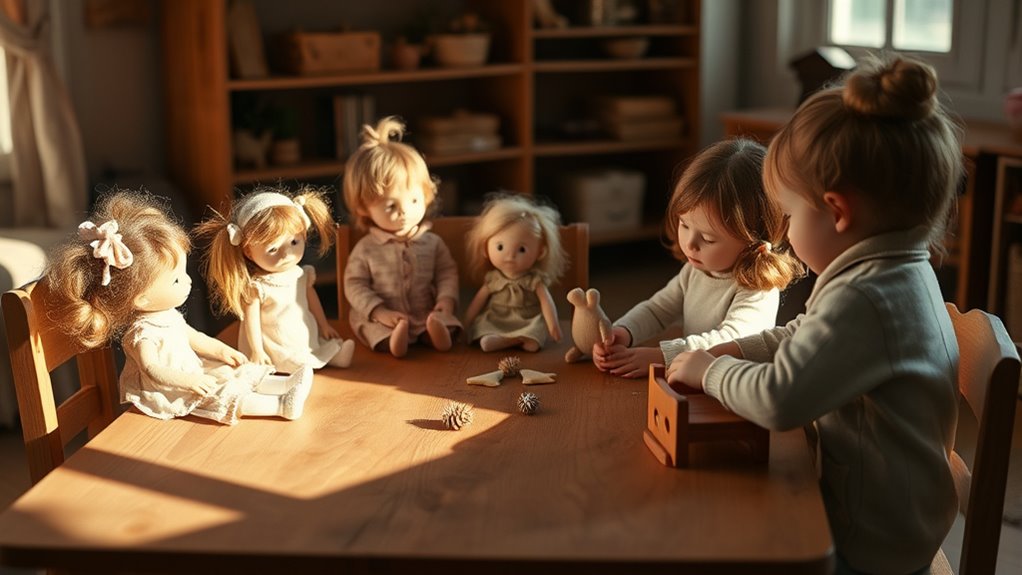
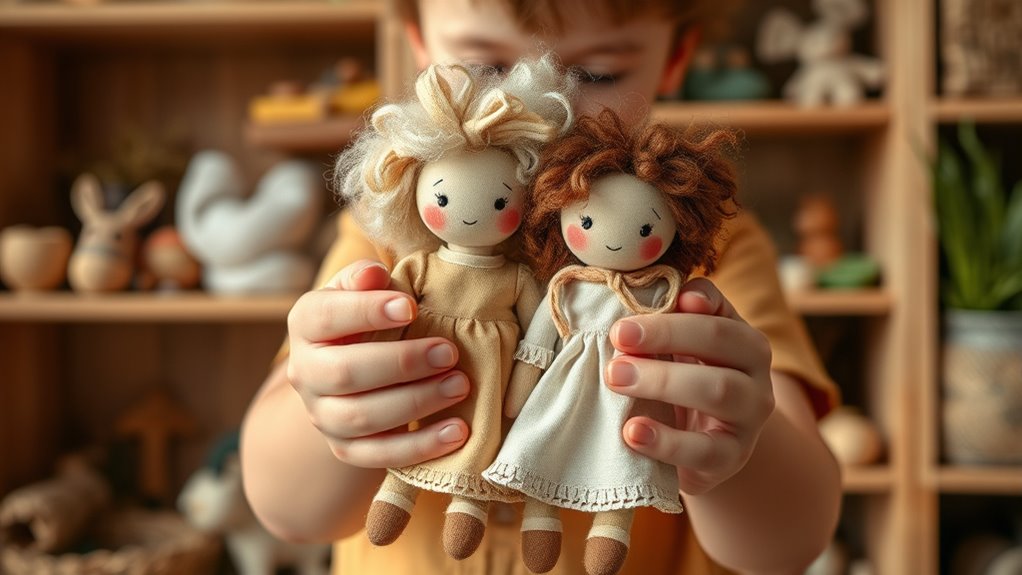
Doll play holds a special place in Waldorf education because it nurtures children’s imagination, emotional development, and social skills. When you choose a doll, you’re not just selecting a toy; you’re providing a tool that encourages heartfelt storytelling and personal connection. In Waldorf philosophy, the quality of the doll’s craftsmanship is essential. These dolls are often handcrafted from natural materials like wool, cotton, and wood, which foster a sensory experience that’s gentle and inviting. This careful craftsmanship allows children to see the doll as a little being, capable of expressing emotions and stories. When children handle well-made dolls, they develop a sense of reverence and care, which directly supports their emotional growth. The softness of wool hair, the warmth of the fabric body, and the simple features invite children to project their feelings and experiences onto the doll, helping them process complex emotions like love, sadness, or anxiety in a safe, non-judgmental way. Furthermore, essential oils can be incorporated into Waldorf play spaces through subtle diffusions or scented materials to promote calmness and focus, enhancing the nurturing environment.
As you observe children playing with these dolls, you notice how their emotional development blossoms. They often begin by imitating adult behavior, nurturing and comforting their dolls as they would a real person. This nurturing role-playing helps children understand empathy and develop compassion. They learn to recognize and manage their own feelings because they see their dolls as extensions of themselves. The act of caring for a doll—feeding, dressing, or soothing—becomes a mirror for emotional self-awareness. Waldorf educators emphasize the importance of unhurried, open-ended play, where children can explore their emotions freely. As they do so, they build resilience and emotional intelligence, skills that will serve them throughout life.
Frequently Asked Questions
How Does Doll Play Influence Emotional Development in Children?
Doll play helps you develop emotional empathy and social skills by allowing you to role-play real-life situations. As you care for and nurture the dolls, you learn to understand others’ feelings and perspectives. This type of play encourages you to express emotions and practice kindness, strengthening your emotional intelligence. Through these interactions, you build confidence in social settings, making you more empathetic and socially aware as you grow.
Are There Specific Types of Dolls Recommended for Waldorf Classrooms?
You should choose handmade dolls made from natural materials for Waldorf classrooms. These dolls, often crafted from wool, cotton, or wood, promote authenticity and sensory engagement. They encourage imaginative play and emotional connection, helping children develop empathy. Avoid plastic or mass-produced dolls, as natural materials foster a warm, nurturing environment aligned with Waldorf principles, supporting children’s holistic growth through meaningful, tactile experiences.
How Long Should Children Engage in Doll Play Daily?
You should aim for about 15 to 30 minutes of doll play daily, following the duration guidelines that support healthy engagement. This consistent, gentle play nurtures developmental benefits like emotional understanding, social skills, and imagination. Let children lead and explore at their own pace, ensuring the experience remains meaningful and pleasurable. Regular doll play helps children develop empathy and self-awareness in a natural, enjoyable way.
Can Doll Play Replace Other Forms of Imaginative Play?
Doll play can be a crucial thread in your child’s tapestry of imaginative play, but it shouldn’t stand alone. Like a key opening pretend scenarios and social interactions, it enriches their creative world. However, diversifying play forms invites broader development, from storytelling to physical activity. So, while doll play is valuable, it complements rather than replaces other imaginative activities, ensuring your child’s growth is both rich and balanced.
How Is Doll Play Integrated Into Waldorf Curriculum Standards?
You’ll find doll play seamlessly integrated into Waldorf curriculum standards through careful classroom integration, emphasizing the importance of high-quality doll craftsmanship. Teachers encourage children to use dolls for storytelling, nurturing empathy, and developing social skills. These dolls become part of daily activities, supporting creative expression and emotional growth. The focus on craftsmanship guarantees each doll is cherished, fostering a meaningful connection that enhances the overall educational experience.
Conclusion
As you observe children engaging in doll play, you’ll notice how it nurtures their imagination and emotional growth. For example, imagine a child pouring love and care into a handmade doll, creating a world where empathy blossoms. This simple activity fosters social skills and inner development, showing that doll play isn’t just fun—it’s a powerful tool in Waldorf education. Embrace these moments, and you’ll see your child’s creativity and compassion flourish naturally.