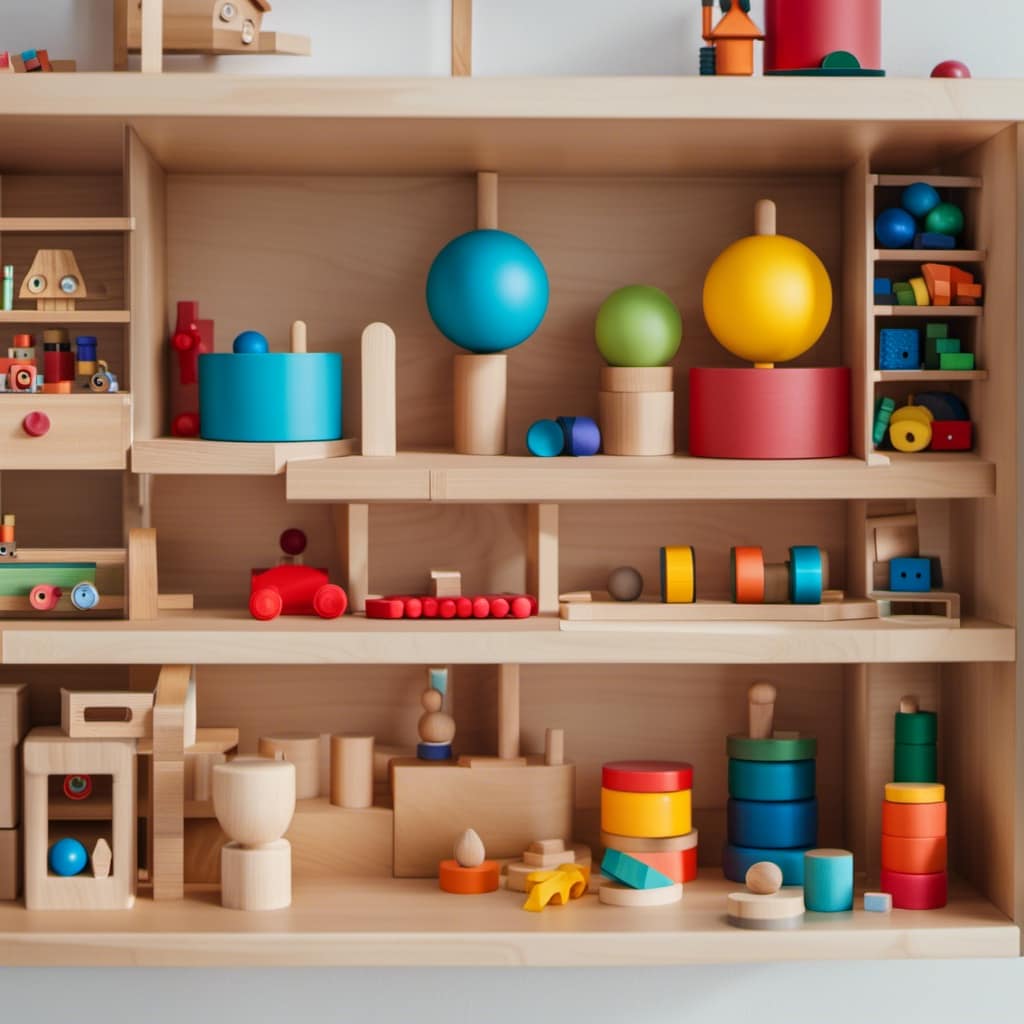

To create DIY Montessori-inspired materials from recyclables, gather household items like cardboard boxes, plastic bottles, and paper towel rolls. Add natural elements such as leaves, shells, or stones to enhance sensory experiences. Use these to make activities like color sorting, sensory bins, or shape matching. Focus on simple, open-ended designs that encourage independence and exploration. Keep experimenting with different textures and items—if you continue, you’ll uncover more ways to craft meaningful learning tools from recyclables.

Turn the school run and nap time into listening time
- Thousands of audiobooks, podcasts and originals
- Listen on your phone, tablet or Echo — also offline
- Cancel anytime
Key Takeaways
- Repurpose household recyclables like bottles, caps, and cardboard for sensory and sorting activities.
- Incorporate natural elements such as leaves, shells, and stones to enhance tactile and visual experiences.
- Create color sorting tools using recycled containers and colorful materials to build recognition and fine motor skills.
- Design simple, accessible materials that encourage independent exploration and critical thinking.
- Emphasize sustainability by using everyday household waste, teaching resourcefulness and environmental awareness.

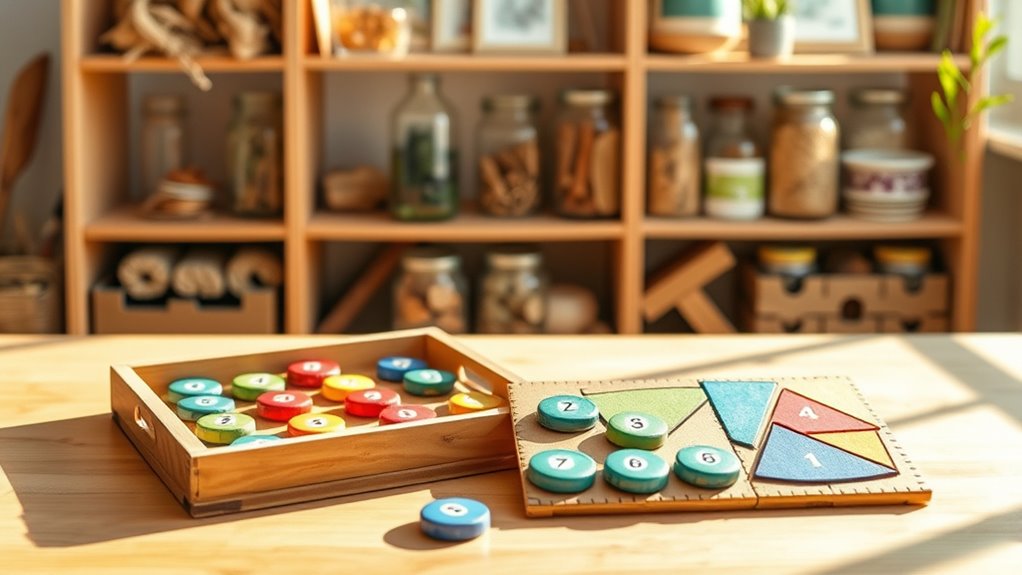
Creating DIY Montessori-inspired materials allows you to tailor learning experiences to your child’s needs while fostering independence and hands-on exploration. One effective way to do this is by incorporating sensor activities that stimulate your child’s senses and enhance their understanding of the world. Sensor activities can include simple yet engaging projects like sensory bins, textured materials, or objects that invite touch, sight, and sound exploration. For example, you might fill a shallow container with rice, beans, or pasta, hiding small objects inside for your child to find using their sense of touch. These activities help develop fine motor skills, improve sensory discrimination, and encourage concentration. Using everyday recyclables such as cardboard boxes, plastic bottles, or paper towel rolls, you can create tactile experiences that are both sustainable and educational. Incorporating natural elements like leaves, shells, or stones can further enrich sensory engagement and inspire curiosity. Color sorting is another fundamental activity that supports cognitive development and visual discrimination skills. To create a DIY color sorting activity, gather various recyclable items like bottle caps, fabric scraps, or paper pieces in different colors. Provide your child with small containers or sections of a tray labeled with colors, encouraging them to match and sort the items accordingly. This activity not only reinforces color recognition but also promotes fine motor control and concentration. You can make it more engaging by adding themes, such as sorting items by seasons or household objects, which introduces categorization and enhances vocabulary. When designing these activities, focus on simplicity and accessibility. Use common recyclables that would otherwise be discarded, transforming them into valuable learning tools. For sensor activities, consider incorporating natural elements like leaves, shells, or stones, which introduce different textures and inspire curiosity. For color sorting, ensure the sorting containers are easy for small hands to grasp and manipulate. As you set up these stations, encourage your child to explore at their own pace, asking open-ended questions to deepen their understanding and engagement. DIY Montessori-inspired materials from recyclables not only save money but also teach your child about sustainability and resourcefulness. These activities foster independence by allowing your child to choose, manipulate, and complete tasks on their own. They also promote critical thinking, problem-solving, and fine motor skills—all essential for early development. By tailoring these activities to your child’s interests and developmental level, you create a rich, hands-on learning environment that nurtures curiosity and confidence, all while giving new life to everyday household items.
As an affiliate, we earn on qualifying purchases.
Frequently Asked Questions
How Can I Ensure Safety With Recycled Materials?
To guarantee safety with recycled materials, always choose non-toxic paints and finishes to prevent harmful exposure. Check that all parts are securely fastened to avoid choking hazards or injuries. Inspect each item thoroughly for sharp edges, loose components, or splinters. Supervise children during play, and regularly maintain and replace materials as needed. By prioritizing non-toxic substances and secure fastenings, you create a safe and engaging environment for your kids.
What Age Groups Are Suitable for DIY Montessori Materials?
You can create age-appropriate activities using DIY Montessori-inspired materials for children from infancy to early elementary ages. Focus on their developmental milestones, like fine motor skills for toddlers or early math concepts for older kids. Tailor materials to their abilities, ensuring safety and engagement. Younger children benefit from simple, tactile objects, while older kids enjoy more complex, problem-solving tasks, helping them develop independence and essential skills at each stage.
How Do I Maintain Hygiene With Recycled Supplies?
You can’t just toss recycled supplies into a sink and hope for the best! To maintain hygiene, follow strict cleaning protocols—wash with warm, soapy water, and disinfect regularly. Pay attention to material durability; some recyclables withstand cleaning better than others. This way, you guarantee a safe learning environment, making your DIY Montessori materials as clean and durable as store-bought ones, so your kids stay healthy and happy while exploring!
Are There Specific Brands Recommended for Eco-Friendly Recyclables?
You should look for recyclable material brands that prioritize eco-friendly packaging options, like TerraCycle or Loop, to guarantee sustainability. These brands often offer eco-friendly packaging options that reduce waste and are safer for children. When selecting supplies, check labels for certifications like FSC or recycled content. This way, you can confidently create Montessori-inspired materials from recyclables, knowing you’re supporting environmentally responsible choices.
How Can I Personalize Materials for Different Developmental Stages?
Think of your materials as a garden that needs tailoring to each child’s unique growth. You can personalize materials through thoughtful material customization and developmental adaptation, adjusting textures, colors, and complexity as children progress. For early learners, simplify and brighten, while for older kids, introduce more intricate designs. By tuning your materials to developmental stages, you nurture curiosity and skills, helping each child blossom at their own pace and reach their full potential.
Conclusion
By creating your own Montessori-inspired materials from recyclables, you not only save money but also foster creativity and environmental awareness. These DIY projects make learning more engaging and personalized for your child. Isn’t it wonderful to turn everyday items into educational treasures that inspire curiosity and independence? With a little effort, you can build a nurturing, sustainable learning environment right at home. So, why not start transforming recyclables into meaningful learning tools today?
Halloween Picks
halloween
As an affiliate, we earn on qualifying purchases.