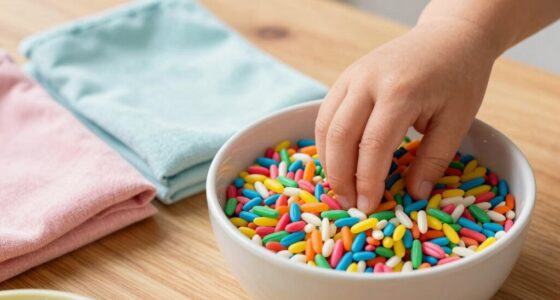
When using water beads, you need to guarantee they’re made from non-toxic materials and free of harmful chemicals like phthalates or heavy metals, so your child stays safe if they mouth or swallow them. Always supervise young children closely, especially those under three, to prevent choking or choking hazards. Store beads securely when not in use and regularly check for damage. Staying informed about safety tips helps you create a safe environment, so keep exploring to learn more safeguards.

Turn the school run and nap time into listening time
- Thousands of audiobooks, podcasts and originals
- Listen on your phone, tablet or Echo — also offline
- Cancel anytime
Key Takeaways
- Ensure water beads are made from non-toxic, chemical-free materials to prevent poisoning if ingested.
- Supervise children closely during play to prevent choking hazards, especially for those under three years old.
- Store water beads securely out of children’s reach when not in use to avoid accidental ingestion.
- Regularly inspect beads for damage and discard broken or deteriorated beads to maintain safety.
- Follow manufacturer instructions for use and cleaning to ensure beads remain safe and intact over time.

Water beads are popular sensory toys that can provide hours of entertainment, but it’s important to understand their safety considerations. When choosing water beads for your child, you’ll want to confirm they’re made from non toxic materials. This is essential because young children often put toys in their mouths, so you need to verify that the beads are free from harmful chemicals like phthalates or heavy metals. Non toxic materials reduce the risk of poisoning if your child accidentally ingests a bead or two. Always check the packaging or product descriptions to verify that the beads are labeled as non toxic and safe for children.
Despite their appealing appearance and soft texture, water beads do pose some choking hazards. The beads are small and can easily be swallowed or lodged in a child’s throat, especially for those under three years old who tend to explore objects with their mouths. As a parent, you must supervise playtime carefully, watching children closely when they’re handling water beads. Never leave a young child unattended with these toys, because even a single bead can cause choking. If you notice that a child has swallowed a bead or is having difficulty breathing, seek immediate medical attention.
Another safety tip is to keep the water beads in a secure container when not in use. This prevents curious little hands from accessing them unsupervised. It’s also wise to store the beads away from children who are too young or prone to mouthing objects. When you set up a water bead activity, do it in a controlled environment where you can keep an eye on your child. Make sure the area is free of other small objects that could be confused with the beads or cause additional choking risks.
Additionally, always inspect the water beads regularly for signs of damage or deterioration. If the beads start to break down or lose their shape, discard them immediately. Damaged beads can be more easily ingested or cause choking. Remember to follow the manufacturer’s instructions on how to properly use and clean the beads. Some water beads are reusable, but they still need proper care to ensure they stay intact and safe for play. Being aware of the potential for market growth is important because it reflects the increasing popularity and availability of these toys, which in turn necessitates vigilant safety practices.
Frequently Asked Questions
Are Water Beads Safe for Children With Allergies?
Water beads may not be safe for children with allergies, as they can contain potential allergy triggers or irritants. You should always check the packaging for allergen information and consult your child’s doctor if you’re unsure. To keep your child safe, consider using safe alternatives like sensory gels or other non-allergenic toys. Always supervise playtime and ensure that water beads are kept out of reach to prevent accidental ingestion.
How Long Do Water Beads Typically Last Before Needing Replacement?
Water beads typically last about 2 to 3 weeks before needing replacement, but their lifespan depends on factors like exposure to sunlight and handling. You might think they’d last forever, yet they shrink and become cloudy over time. Regularly check their appearance and texture, and when they start to crack or lose their vibrant color, it’s time for fresh ones. Staying attentive guarantees safe, enjoyable play without unexpected messes.
Can Water Beads Be Used Outdoors Safely?
Yes, you can use water beads outdoors, but you should supervise children closely. They make great outdoor hydration tools and garden decorations, adding color and fun to your yard. However, avoid leaving them in direct sunlight for extended periods, as heat can cause them to break down faster. Always monitor children during play, and clean up thoroughly afterward to prevent environmental impact and keep play safe and enjoyable.
Are There Any Age Restrictions for Water Bead Play?
You should know that age restrictions for water bead play are typically recommended for children aged 3 and up. Younger kids might try to swallow or choke on the beads, so supervision requirements are essential. Always keep water beads out of reach of small children when unsupervised, and closely monitor playtime to prevent accidents. Following these guidelines guarantees safe enjoyment and minimizes risks associated with water bead use.
What Should I Do if a Water Bead Is Ingested?
If you suspect water bead ingestion, act quickly. Call emergency response or seek medical attention immediately, especially if the bead is large, causes choking, or if your child shows difficulty breathing, gagging, or pain. Do not try to induce vomiting or give anything by mouth unless instructed by a healthcare professional. Stay calm, monitor your child closely, and provide details about the ingested water bead to emergency responders.
Conclusion
As you navigate the colorful world of water beads, remember they’re like tiny, shimmering treasures—beautiful but delicate. With careful supervision, you can keep these sparkling gems from turning into hidden hazards, ensuring your little one’s playtime remains safe and joyful. Think of yourself as the guardian of these magical orbs, guiding your child’s curiosity while keeping danger at bay. By staying vigilant, you turn a simple splash of fun into a safe, shimmering adventure.
Fall Picks
fall essentials
As an affiliate, we earn on qualifying purchases.