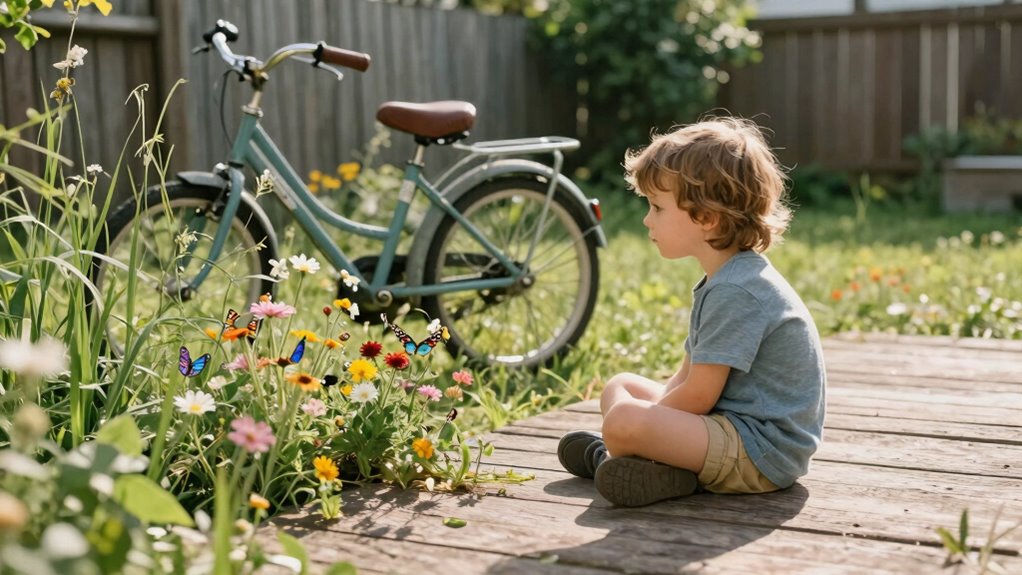

Boredom can be a powerful opportunity for your kids to grow, encouraging creativity, resilience, and independence. When they face boredom, they learn to find their own ways to entertain themselves and solve problems, boosting their resourcefulness. It helps them develop patience, cope with setbacks, and explore their imagination freely. Embracing boredom supports their emotional strength and self-directed learning. Keep exploring, and you’ll discover how it can truly benefit your child’s development.

Turn the school run and nap time into listening time
- Thousands of audiobooks, podcasts and originals
- Listen on your phone, tablet or Echo — also offline
- Cancel anytime
Key Takeaways
- Boredom encourages children to develop creativity and problem-solving skills through self-guided exploration.
- Experiencing boredom fosters emotional resilience by teaching patience and perseverance.
- It provides space for imagination, storytelling, and cognitive flexibility, supporting mental development.
- Boredom promotes independence and resourcefulness by motivating kids to find their own activities.
- Research shows that productive boredom enhances patience, creativity, and lifelong learning skills.
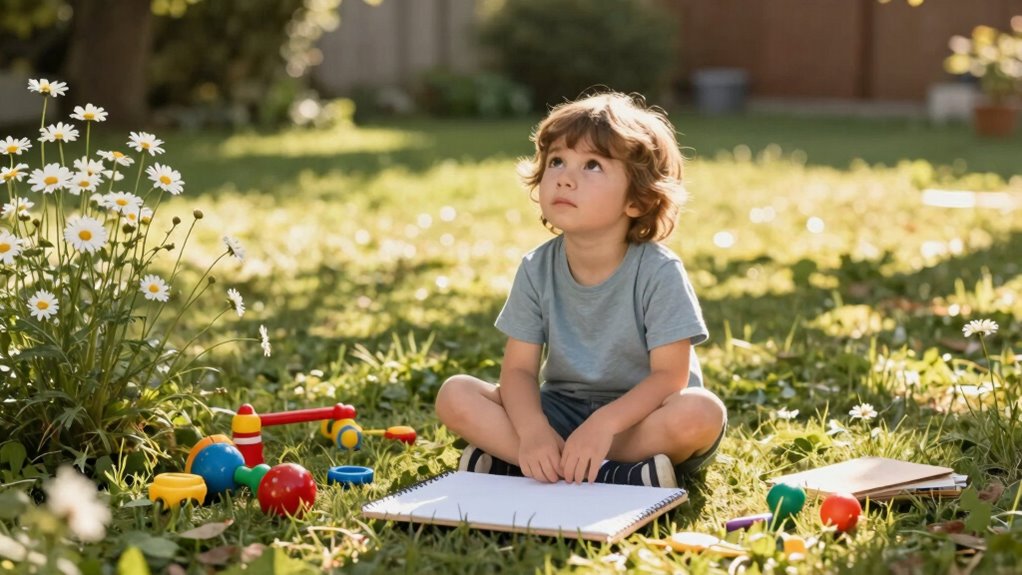
Many parents worry when their kids are bored, but this boredom can actually be a valuable opportunity for growth. When children face moments of inactivity or lack of stimulation, they’re often encouraged to find their own ways to occupy themselves. This process nurtures creative problem solving, as kids learn to come up with ideas on how to entertain themselves or overcome obstacles without immediate guidance. Instead of relying on screens or constant entertainment, they start to brainstorm, experiment, and invent, fostering a sense of independence and resourcefulness.
Boredom also plays a essential role in building emotional resilience. When children aren’t immediately given what they want, they learn patience and perseverance. They understand that discomfort or dissatisfaction is a natural part of life, and they develop skills to manage these feelings. Over time, this strengthens their ability to handle setbacks, frustrations, and uncertainties, which are indispensable qualities for emotional resilience. You might notice your child becoming more adaptable, more capable of handling challenges, and less prone to tantrums or outbursts because they’ve experienced moments of boredom and learned to cope with them.
Furthermore, boredom provides space for imagination to flourish. When kids aren’t engaged with structured activities, they often start to daydream, create stories, or invent games. This imaginative play helps develop their cognitive flexibility and emotional intelligence, as they explore different scenarios and emotions in their minds. Such creative exploration isn’t just a distraction; it’s a necessary part of their mental development, allowing them to process feelings and ideas in a safe, self-directed way. Engaging in self-guided exploration during these times can also foster a sense of curiosity and intrinsic motivation, which are key for lifelong learning.
You might worry that boredom leads to misbehavior or restlessness, but in reality, it’s often a sign that children need more opportunities for self-directed learning. Instead of jumping in to fill every silence or gap with entertainment, consider letting your child sit with their boredom for a while. Give them the freedom to figure things out on their own, and watch how they begin to develop resilience, creativity, and independence. These skills won’t just serve them during childhood—they’ll become the foundation for problem solving and emotional strength throughout their lives. Recognizing that self-directed learning is crucial for development can help parents foster these valuable skills more intentionally.
Research shows that allowing children to experience productive boredom can significantly enhance their ability to develop patience, independence, and creative thinking.
As an affiliate, we earn on qualifying purchases.
Frequently Asked Questions
How Can Parents Effectively Encourage Healthy Boredom in Children?
You can encourage healthy boredom by giving your children time and space for independent thinking and creative play. Avoid constant entertainment and let them find ways to occupy themselves. Offer simple materials like paper, markers, or building blocks, and resist the urge to intervene too quickly. This helps them develop problem-solving skills, fosters imagination, and learns to enjoy their own company, turning boredom into a productive, joyful experience.
Are There Any Risks Associated With Allowing Kids to Be Bored?
Allowing kids to be bored generally poses minimal risk factors, but it’s important to monitor their emotional responses. Boredom consequences can include frustration or restlessness if it persists too long. You should guarantee they have safe environments and support to explore their feelings. While occasional boredom encourages creativity and independence, prolonged or unmanaged boredom might lead to anxiety or negative behaviors, so balance is key.
How Does Boredom Impact a Child’s Emotional Development?
Boredom helps your child build emotional resilience and self-awareness. When they experience boredom, they learn to manage their feelings and find ways to entertain themselves, fostering independence. It encourages introspection, helping them understand their emotions better. By facing moments of boredom, your child develops patience and coping skills, which are essential for emotional growth. Embracing boredom can ultimately lead to a more confident, self-aware, and emotionally balanced individual.
What Activities Help Children Make the Most of Their Bored Moments?
To help your child make the most of bored moments, encourage unstructured play and imaginative exploration. You can set up simple materials like art supplies, building blocks, or costumes to spark their creativity. Allow them to lead their activities, giving them freedom to invent stories or experiment with different ideas. This not only keeps them engaged but also nurtures their problem-solving skills and emotional growth through self-directed fun.
Can Boredom Improve a Child’s Creativity and Problem-Solving Skills?
Boredom acts like a spark in a dark room, igniting your child’s creative thinking and cognitive growth. When they’re left to ponder, they’ll weave ideas out of thin air and solve problems like a detective on a case. This quiet time fosters imagination, encouraging them to see beyond the obvious. So, embrace those dull moments—they’re the fertile ground where your child’s ingenuity and problem-solving skills flourish.
Conclusion
So, next time your child complains of boredom, remember it’s actually a gift. It encourages creativity, independence, and problem-solving. You might worry they’ll just waste time, but in reality, they’re learning to entertain themselves and develop resilience. Giving kids space to be bored isn’t neglect; it’s empowering them to discover their own passions and build confidence. Embrace those quiet moments—they might just be the best thing for their growth.
Halloween Picks
halloween
As an affiliate, we earn on qualifying purchases.