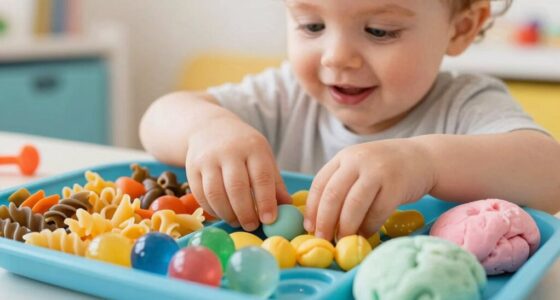
Setting up a sensory bin is simple: choose a sturdy container, fill it with safe materials like rice, beans, or pasta, and add small toys, scoops, or natural elements. Always supervise play to prevent choking hazards and keep the area clean. Sensory bins promote fine motor skills, sensory integration, and cognitive growth by encouraging exploration and manipulation. Continuing will help you discover more tips to maximize safety, fun, and learning in your child’s sensory experiences.

Turn the school run and nap time into listening time
- Thousands of audiobooks, podcasts and originals
- Listen on your phone, tablet or Echo — also offline
- Cancel anytime
Key Takeaways
- Proper setup includes a sturdy container, safe base materials, and engaging toys, tailored to the child’s age and interests.
- Always supervise sensory bin play to prevent choking hazards and ensure safe handling of materials.
- Use themed or varied materials to promote sensory exploration, fine motor skills, and cognitive development.
- Regularly clean and inspect the sensory bin to maintain safety, hygiene, and prevent bacteria buildup.
- Adjust contents and activities based on the child’s reactions to maximize learning, focus, and emotional regulation.

Sensory bins are a versatile and engaging tool that can boost your child’s development through hands-on exploration. When you provide a well-designed sensory bin, you’re offering your child opportunities to improve fine motor skills and enhance sensory integration. These bins encourage children to grasp, scoop, pour, and manipulate objects, which strengthens the small muscles in their hands and fingers. As your child sorts and transfers materials, they’re refining their pincer grip and hand-eye coordination—key components of fine motor development. Additionally, sensory bins help integrate various sensory inputs, allowing your child to process tactile, visual, and proprioceptive information simultaneously. This sensory integration promotes better focus, emotional regulation, and overall cognitive growth.
Setting up a sensory bin is straightforward, but the key is to choose the right materials that are safe and appealing for your child’s age. Start with a sturdy container, like a plastic bin or a shallow tray, that allows easy access. Fill it with a base material such as rice, beans, pasta, or shredded paper. These materials provide a satisfying texture for tactile exploration and serve as a medium for different objects. Add small toys, scoops, cups, or spoons to encourage grasping and transferring activities. The variety of items keeps your child engaged and promotes different types of fine motor movements. You can incorporate natural elements like shells or leaves for additional sensory input. Remember, safety is paramount—avoid small objects that pose choking hazards for younger children, and always supervise play to prevent ingestion or misuse.
To maximize the benefits, consider themes or variations that align with your child’s interests or current learning goals. For example, a “garden” theme might include plastic insects, flowers, and gardening tools, fostering imaginative play alongside fine motor practice. Regularly rotating materials keeps the sensory experience fresh and encourages continued development. Be mindful of the cleanliness and dryness of materials, and clean the sensory bin regularly to prevent bacteria buildup. Always observe your child’s reactions and adapt the setup accordingly—if they seem overwhelmed, simplify the contents or reduce the sensory input.
Frequently Asked Questions
How Do I Clean and Disinfect Sensory Bins Effectively?
To clean and disinfect sensory bins effectively, follow proper cleaning protocols by removing all materials and washing the bin with warm, soapy water. Use disinfection methods like a diluted bleach solution (1 part bleach to 10 parts water) or commercial disinfectants approved for toys. Rinse thoroughly and let air dry before reusing. Regular cleaning guarantees safety and maintains a hygienic environment for children.
What Are the Best Materials for Sensory Bin Fillers?
Ever imagine a sensory bin filled with safe, engaging materials? You should use non-toxic, washable fillers like rice, pasta, or water beads, guaranteeing they’re age-appropriate for sensory exploration. Natural options like dried beans or sand also work well, providing tactile variety. Always prioritize material safety, checking for allergies or choking hazards. Wouldn’t you want kids to explore confidently, knowing everything’s safe and fun? Choose fillers that inspire curiosity and ensure safety.
How Can I Modify Sensory Bins for Children With Allergies?
To modify sensory bins for children with allergies, you should use hypoallergenic fillers like rice, oats, or synthetic beads. Always check for allergy-friendly modifications, ensuring materials are safe and non-toxic. Keep the environment clean, wash hands before and after play, and avoid using common allergens like nuts or dairy in fillers. These steps help create a safe, inclusive sensory experience for all children.
When Should I Introduce Sensory Bins to Young Children?
Think of sensory bins as a garden waiting to bloom. You should introduce them when your child’s developmentally ready, typically around 12 months, but always consider individual milestones. Early introduction sparks curiosity and supports sensory development, like planting tiny seeds for future learning. Keep it simple and safe, and watch your little explorer flourish as they discover textures, colors, and sounds, shaping their understanding of the world around them.
Are There Age-Appropriate Themes for Sensory Bins?
Yes, there are age-appropriate themed options for sensory bins. For infants and toddlers, choose simple themes like water, rice, or soft fabrics that promote exploration and development. As children grow, incorporate more complex themes such as nature, animals, or seasonal items, ensuring developmental appropriateness. Tailoring themes to your child’s age helps enhance their sensory experiences, encourages curiosity, and supports their overall growth.
Conclusion
Now that you know the essentials of setting up and safety for sensory bins, you’re ready to create engaging learning experiences. Did you know that children who participate in sensory play show improved fine motor skills and increased focus? Incorporate sensory bins regularly to boost development and curiosity. With a little preparation, you’ll foster a fun, safe environment that encourages exploration and learning—making every sensory bin session both enjoyable and educational.
Fall Picks
fall essentials
As an affiliate, we earn on qualifying purchases.