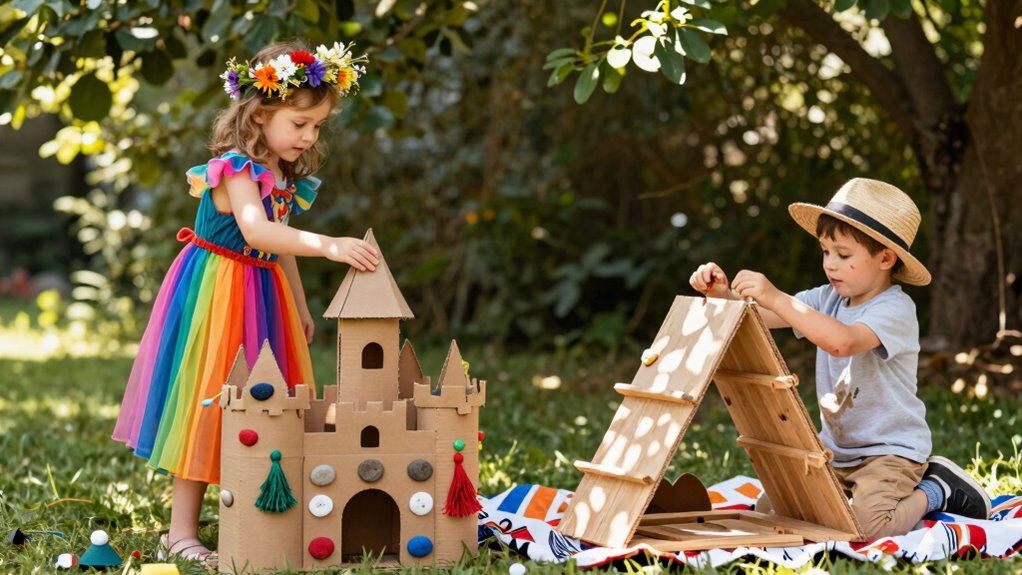

To spark your kid’s creativity, try open-ended prompts that encourage imagination and sensory exploration. You can ask questions like, “What adventures would you go on if you found a mysterious box?” or suggest pretending to be a pirate or meeting a friendly dragon. Incorporate sensory details like smells, textures, or sounds to deepen their experience. Keep things fun and flexible—if you keep exploring, you’ll discover even more ways to inspire joyful, inventive play.

Turn the school run and nap time into listening time
- Thousands of audiobooks, podcasts and originals
- Listen on your phone, tablet or Echo — also offline
- Cancel anytime
Key Takeaways
- Use imaginative scenarios like treasure hunts or meeting mythical creatures to spark storytelling and creative thinking.
- Incorporate sensory prompts such as textures, smells, and sounds to deepen engagement and observational skills.
- Tailor prompts to kids’ interests, like space adventures or fairy tales, to boost motivation and enthusiasm.
- Combine storytelling with sensory exploration to enhance language development and perceptual awareness.
- Encourage open-ended questions that invite limitless possibilities, fostering confidence and curiosity in play.
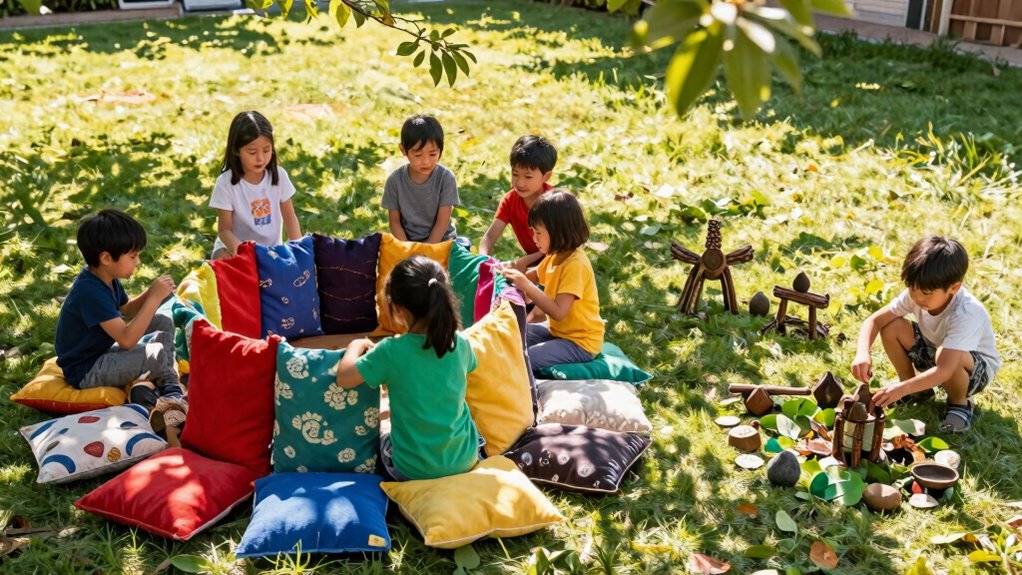
Open-ended play prompts are a powerful way to spark your child’s imagination and encourage creative thinking. When you give them open-ended ideas, you invite endless possibilities for imaginative storytelling and sensory exploration. When you give them open-ended ideas, you invite endless possibilities for imaginative storytelling and sensory exploration. Instead of guiding them toward a specific activity, you let their minds wander freely, which helps build their confidence in their creative abilities. For example, you might ask, “What adventures would you go on if you found a mysterious box in the backyard?” This simple prompt opens the door for your child to invent stories, characters, and worlds, fostering their narrative skills while making playtime fun and engaging.
Open-ended play prompts ignite imagination, build confidence, and make storytelling fun and engaging.
Imaginative storytelling is at the heart of these prompts because it encourages your child to build narratives from their own ideas. You can prompt them with scenarios like, “Imagine you’re a pirate searching for treasure,” or, “What happens when you meet a friendly dragon?” These questions stimulate their storytelling abilities and help them practice expressing ideas clearly. As they create stories, they develop language skills, learn to organize their thoughts, and strengthen their ability to think creatively. The beauty of these prompts is that they can be tailored to your child’s interests, whether they love animals, space, or fairy tales, making playtime relevant and exciting.
Sensory exploration is another essential element woven into open-ended prompts. You can encourage your child to explore their surroundings by asking questions like, “What does the magic potion in your hand smell like?” or “Can you describe the texture of the treasure you found?” These prompts turn ordinary objects into multisensory experiences, helping your child notice details they might overlook. Sensory exploration enhances their perception and vocabulary, making their play more immersive and meaningful. It also helps them develop a deeper connection to their environment, fostering curiosity and observational skills.
By combining imaginative storytelling with sensory exploration, you create a multisensory experience that stimulates your child’s creativity and perception. You might suggest setting up a “secret garden” where your child describes the sounds, smells, and textures they encounter while imagining themselves as explorers. Or, you could create a pretend kitchen where they invent recipes based on the textures and smells of real or imaginary ingredients. These activities keep their minds active and engaged, encouraging them to think outside the box. Including sensory-rich prompts can greatly enhance their engagement and help develop their perceptual abilities. Incorporating sensory details into open-ended prompts allows your child to connect more deeply with their environment and enhances their descriptive language skills. By providing open-ended prompts that blend storytelling and sensory details, you help your child develop a well-rounded set of creative skills****, all while having fun exploring their world.
open-ended creative play toys for kids
As an affiliate, we earn on qualifying purchases.
As an affiliate, we earn on qualifying purchases.
Frequently Asked Questions
How Can I Encourage Shy Children to Participate in Open-Ended Play?
To encourage shy children to participate in open-ended play, create a safe, welcoming environment that fosters creative confidence. Offer gentle prompts and join in without pressure, modeling enthusiasm and curiosity. Respect their pace, offering choices to empower them. Celebrate small successes to build self-assurance. Over time, your consistent support helps shy children feel comfortable exploring their creativity, boosting their confidence and encouraging more active participation in open-ended play.
What Are Some Safety Tips for Outdoor Creative Play?
To guarantee outdoor creative play is safe, prioritize playground safety by regularly checking equipment for hazards and ensuring it’s age-appropriate. Always provide outdoor supervision to monitor children’s activities and prevent accidents. Set clear boundaries and establish rules about safe play behavior. Encourage kids to use proper footwear and avoid roughhousing. By staying attentive and proactive, you create a secure environment where children can explore and enjoy outdoor creative play confidently.
How Do I Modify Prompts for Different Age Groups?
Imagine tailoring a suit to fit perfectly—that’s what prompt adaptation does for different ages. To make prompts age-appropriate, you modify complexity, themes, and materials. For younger kids, use simpler language and imaginative scenarios; for older children, introduce more open-ended questions and creative challenges. Adjusting prompts guarantees your little one stays engaged and challenged, fostering growth while keeping play safe and fun.
Can Open-Ended Play Help Develop Social Skills?
Yes, open-ended play helps develop social skills by encouraging peer collaboration and emotional expression. When kids engage in creative activities, they learn to share ideas, negotiate roles, and solve problems together. This process fosters teamwork and empathy, as children express their feelings and listen to others. Through these interactions, they build confidence, improve communication, and develop essential social skills that benefit them throughout life.
How Much Supervision Is Needed During Creative Play?
Imagine children building a fort with random cushions and blankets. You should strike a supervision balance by observing from a distance, allowing creative independence while staying nearby to prevent accidents. Typically, supervise enough to guarantee safety but give kids room to explore their ideas. This approach encourages confidence and problem-solving skills, making open-ended play both fun and safe without overly restricting their imaginative freedom.
Conclusion
By embracing open-ended prompts, you invite your child’s imagination to soar like a kite caught in a breeze—free and limitless. These prompts aren’t just games; they’re gateways to opening endless worlds of creativity and discovery. When you encourage open-ended play, you’re not just fostering fun, you’re nurturing confidence, problem-solving, and joy. So, let their imagination run wild—after all, the only limit is the sky, and even that’s just the beginning.
Halloween Picks
halloween
As an affiliate, we earn on qualifying purchases.