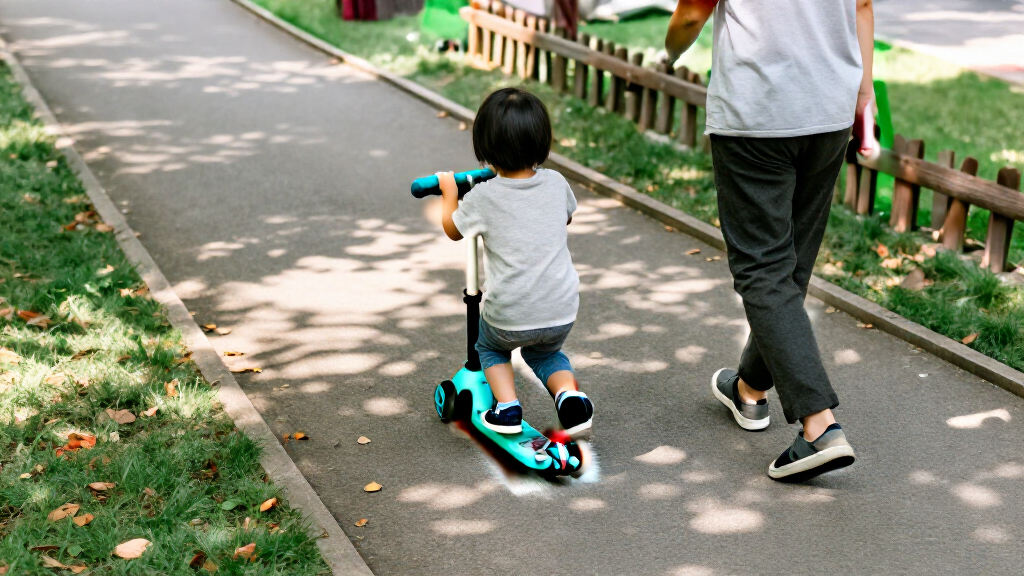

For most school-age riders, I’d start with the Micro Kickboard Maxi Scooter: its three-wheel layout favors steady steering, while the Gotrax KS1 adds light-up wheels for younger children and the Razor A5 Lux suits kids who want a larger two-wheel ride. The best kids scooters differ most in stability, portability, and power, so a scooter that works for a confident older rider may frustrate a beginner. Three-wheel models tend to feel easier to balance, while two-wheel and electric options ask for more coordination and attention to speed. Folding frames and adjustable handlebars can help with storage and fit, but they do not replace checking the age and weight guidance. Read on for the full breakdown and help matching a scooter to your child’s size, skills, and usual riding spots.

Turn the school run and nap time into listening time
- Thousands of audiobooks, podcasts and originals
- Listen on your phone, tablet or Echo — also offline
- Cancel anytime
Complete the kit


Key Takeaways
- The Maxi is the strongest all-around starting point for many school-age riders because its three-wheel design puts stability ahead of tricks or high speed.
- Beginner fit varies by age and balance: the Micro Mini is aimed at toddlers, while the Maxi and the three-wheel besrey options suit different growing riders.
- Light-up wheels are a visibility and fun feature, not a substitute for safety equipment; several Gotrax, besrey, Jetson, and Aero Mobility models compete on this appeal.
- Portability separates the foldable options from the more stability-focused picks: WAYPLUS and Sorlikz make more sense when storage or carrying matters, but check folded size and child fit.
- Electric scooters are a different kind of purchase: the MAXSHOT and Segway Ninebot C2 Go add powered riding, bringing speed, charging, and supervision needs that kick scooters avoid.
| Micro Kickboard Maxi Scooter for Kids Ages 5–12 |  | Best Overall for Growing Riders | Recommended age: 5–12 years | Maximum rider weight: 110 lbs | Wheel count: 3 | VIEW LATEST PRICE | See Our Full Breakdown |
| Gotrax KS1 Kids Kick Scooter with LED Light-Up Wheels |  | Best for Younger Beginners | Age range: 2 years and up; maximum recommended age 8 years | Maximum weight capacity: 110 lbs | Wheel count: 3 | VIEW LATEST PRICE | See Our Full Breakdown |
| Razor A5 Lux Kick Scooter for Kids, Blue |  | Best for Older Kids and Longer Rides | Recommended age: 8+ | Weight capacity: 220 pounds | Wheel size: 8 inches (200 mm) | VIEW LATEST PRICE | See Our Full Breakdown |
| WAYPLUS KS1 Foldable Kick Scooter for Kids, Teens, and Adults |  | Best for Shared Family Use | Age range: 6+ | Maximum weight capacity: 240 lb | Wheel size and material: 8 inches; polyurethane | VIEW LATEST PRICE | See Our Full Breakdown |
| Micro Kickboard Maxi Deluxe LED Kids Scooter |  | Best Premium Pick for Light-Up Riding | Age range: 5–12 years | Weight capacity: 110 lbs | Wheel count: 3 | VIEW LATEST PRICE | See Our Full Breakdown |
| MAXSHOT Electric Scooter for Kids with Dual Suspension |  | Best Electric Pick for Older Kids | Motor: 350W | Speed modes: 7.5, 11, and 19 mph | Maximum range: Up to 12 miles | VIEW LATEST PRICE | See Our Full Breakdown |
| Jetson Jupiter Kids 2-Wheel Light-Up Kick Scooter |  | Best Two-Wheel Scooter for Visibility | Recommended age: 5+ | Wheels: 2 | Wheel size: 4 inches | VIEW LATEST PRICE | See Our Full Breakdown |
| besrey 3-Wheel Kids Scooter with Adjustable Handlebar and LED Wheels |  | Best Value for Everyday Beginner Rides | Age range: 3–10 years | Weight capacity: 110 pounds | Wheels: 3 | VIEW LATEST PRICE | See Our Full Breakdown |
| Micro Kickboard Mini 3-Wheel Toddler Scooter |  | Best for Toddlers and First-Time Riders | Recommended age: 2–5 years | Weight capacity: 110 pounds | Wheels: 3 | VIEW LATEST PRICE | See Our Full Breakdown |
| besrey 3-Wheel Light-Up Scooter for Kids |  | Best for No-Assembly Convenience | Age range: 3–10 years | Number of wheels: 3 | Handlebar height: 24–33 inches; 4 settings | VIEW LATEST PRICE | See Our Full Breakdown |
| Segway Ninebot C2 Go Kids Electric Scooter |  | Best Electric Pick for New Riders | Recommended age: 6–10 years | Maximum weight capacity: 121 pounds | Maximum range: Up to 9 miles in Standard Mode | VIEW LATEST PRICE | See Our Full Breakdown |
| Sorlikz Foldable Kick Scooter for Kids, Teens, and Adults |  | Best for Growing Riders and Shared Use | Age range: 8+ | Maximum weight capacity: 240 pounds | Rider height range: 3.9–6.6 feet | VIEW LATEST PRICE | See Our Full Breakdown |
| Gotrax KS1 Kids Kick Scooter with Light-Up Wheels |  | Best for Toddler and Preschool Beginners | Recommended age: 2 years and up | Maximum age recommendation: 8 years | Weight capacity: 110 pounds | VIEW LATEST PRICE | See Our Full Breakdown |
| Aero Mobility A5 Big Wheel Kick Scooter with Light-Up Wheels |  | Best for Smoother Rides on Mixed Surfaces | Age range: 6–12 years; also described as suitable for teens and adults | Weight capacity: 176 pounds | Weight: 5 kg | VIEW LATEST PRICE | See Our Full Breakdown |
| kids scooter | Brake | Warranty | Weight capacity | Recommended age |
|---|---|---|---|---|
| Micro Kickboard Maxi Scooter f | Rear brake | 2 years | — | 5–12 years |
| Gotrax KS1 Kids Kick Scooter w | Rear mudguard brake | 1 year | — | — |
| Razor A5 Lux Kick Scooter for | Rear | — | 220 pounds | 8+ |
| WAYPLUS KS1 Foldable Kick Scoo | — | 12 months | — | — |
| Micro Kickboard Maxi Deluxe LE | Rear foot brake | Manufacturer warranty; duration varies in listing (1 or 2 years) | 110 lbs | — |
| MAXSHOT Electric Scooter for K | — | — | — | 10+ |
| Jetson Jupiter Kids 2-Wheel Li | Rear foot brake | — | 132 pounds | 5+ |
| besrey 3-Wheel Kids Scooter wi | Rear brake | 2 years | 110 pounds | — |
| Micro Kickboard Mini 3-Wheel T | Rear brake | 2 years | 110 pounds | 2–5 years |
| besrey 3-Wheel Light-Up Scoote | Rear braking | — | 110 pounds | — |
| Segway Ninebot C2 Go Kids Elec | — | — | — | 6–10 years |
| Sorlikz Foldable Kick Scooter | — | 180 days | — | — |
| Gotrax KS1 Kids Kick Scooter w | Rear mudguard brake | 1 year | 110 pounds | 2 years and up |
| Aero Mobility A5 Big Wheel Kic | — | 2-year manufacturer coverage; 1-year support for normal-wear parts | 176 pounds | — |
More Details on Our Top Picks
Micro Kickboard Maxi Scooter for Kids Ages 5–12
The Maxi is my strongest all-around pick for children who are ready for a stable, steer-by-lean scooter and will ride mainly on paved paths. Its adjustable T-bar helps it keep pace with a growing rider, while three wheels and a slip-resistant footplate offer a more confidence-building setup than the two-wheel Razor A5 Lux. Smooth-gliding polyurethane wheels suit neighborhood sidewalks, and the rear brake gives kids a clear way to slow down. Compared with the Maxi Deluxe LED, this version skips illuminated wheels, but retains the core lean-to-steer design and a two-year warranty. The tradeoff is a 110-pound rider limit and a narrower use case: it is made for children ages 5–12 and paved surfaces, not rough terrain or older riders.
Pros:- Adjustable T-bar accommodates a growing child.
- Three-wheel lean-to-steer design supports balance and carving.
- Polyurethane wheels glide smoothly on paved paths.
- Two-year manufacturer warranty.
Cons:- The 110-pound weight limit and age range may mean a child outgrows it.
- Best suited to smooth, paved surfaces rather than rough routes.
Best for: Families seeking a stable three-wheel scooter for a child ages 5–12 who rides on sidewalks and paved paths.
Not ideal for: Older or heavier riders, and children who need a scooter for bumpy or unpaved routes.
- Recommended age:5–12 years
- Maximum rider weight:110 lbs
- Wheel count:3
- Wheel material and size:Polyurethane; 12 cm
- Handlebar:Adjustable T-bar
- Brake:Rear brake
- Item weight:2.8 kg
- Warranty:2 years
Our verdict“Choose the Maxi for a growing child who wants stable, smooth sidewalk rides without needing light-up wheels.”
Gotrax KS1 Kids Kick Scooter with LED Light-Up Wheels
For a younger child learning to steer and balance, the Gotrax KS1 combines a three-wheel lean-to-steer layout with an anti-slip deck and a lightweight frame. Its LED wheels add visibility and fun without batteries, while the quick-release stem makes it easier for a parent to carry or store than the larger Razor A5 Lux. Three handlebar settings also give the KS1 some room to fit as a child grows. Compared with the Micro Kickboard Maxi, though, its listed age range begins earlier and tops out at eight, so it is the more age-specific choice rather than a longer-term scooter for older kids. The rigid suspension is a limitation on uneven pavement, and the 110-pound capacity does not change its stated age ceiling.
Pros:- Three handlebar heights provide fit flexibility as a young child grows.
- LED wheels light up while rolling.
- Lightweight frame and quick-release stem ease carrying and storage.
- Wide anti-slip deck supports stable footing.
Cons:- Rigid suspension offers limited cushioning on uneven surfaces.
- Maximum recommended age of eight makes it less suitable for older children.
Best for: Parents choosing a light, adjustable first scooter for a child aged 2–8 who will ride mostly on smooth paths.
Not ideal for: Older children or families whose routes include rough pavement where a rigid ride may feel less comfortable.
- Age range:2 years and up; maximum recommended age 8 years
- Maximum weight capacity:110 lbs
- Wheel count:3
- Wheel size and material:4.5 inches; polyurethane
- Handlebar heights:29.92, 31.5, and 33.46 inches
- Deck width:5 inches
- Scooter weight:4.89 lbs
- Brake:Rear mudguard brake
- Warranty:1 year
Our verdict“Pick the Gotrax KS1 for a young beginner who values light-up wheels and easy carrying over a longer age range.”
Razor A5 Lux Kick Scooter for Kids, Blue
The Razor A5 Lux is a better match for older children who are comfortable balancing on two wheels and want a scooter they can fold for storage. Its 8-inch polyurethane wheels are larger than the wheels on many three-wheel beginner models, which can help it roll over small cracks on everyday paths. The adjustable aluminum handlebar and 220-pound capacity also give it more room to fit larger riders than the Micro Kickboard Maxi or Gotrax KS1. In exchange, it lacks their three-wheel lean-to-steer stability, so it is not my pick for a child still learning basic balance. The folding design is practical, but the scooter weighs 9.4 pounds, and its rigid suspension leaves little added cushioning on rough ground.
Pros:- Large 8-inch polyurethane wheels suit everyday paved routes.
- Adjustable handlebar can accommodate taller riders.
- Foldable frame and anti-rattle mechanism support storage and transport.
- 220-pound capacity exceeds the limits of the three-wheel kids’ models here.
Cons:- Two-wheel design demands more balance than the Micro Kickboard Maxi or Gotrax KS1.
- Rigid suspension provides limited cushioning on uneven ground.
- At 9.4 pounds, it is heavier to carry than the Gotrax KS1.
Best for: Older children aged eight and up who can balance on two wheels and want a foldable scooter for paved routes.
Not ideal for: Young beginners who need three-wheel stability or riders who expect a cushioned ride over bumpy surfaces.
- Recommended age:8+
- Weight capacity:220 pounds
- Wheel size:8 inches (200 mm)
- Wheel material:Polyurethane
- Frame material:Aluminum
- Handlebar:Adjustable height
- Brake:Rear
- Foldable:Yes
- Item weight:9.4 pounds
Our verdict“Choose the A5 Lux for an older, balance-confident child who wants larger wheels and a folding two-wheel design.”
WAYPLUS KS1 Foldable Kick Scooter for Kids, Teens, and Adults
The WAYPLUS KS1 makes the most sense when a scooter needs to fit more than one rider. Its four handlebar settings span 31–37 inches, and its 240-pound capacity is higher than the Razor A5 Lux’s, so it can suit older children, teens, and some adults. Eight-inch wheels, ABEC-9 bearings, and front suspension set it apart from the rigid-suspension Razor, while the one-button fold and carry strap make transport less awkward. It is a two-wheel scooter, though, unlike the steadier three-wheel Micro Kickboard Maxi, so younger beginners may need more balance and control. Solid polyurethane wheels also cannot match the cushioning of air-filled tires, and its 9-pound frame is less convenient to carry than a compact, lightweight kids’ model.
Pros:- Four handlebar heights accommodate a wider range of rider sizes.
- 240-pound capacity supports shared use by older riders.
- Front suspension and 8-inch wheels can smooth everyday paths.
- One-button folding and an included carry strap aid transport.
Cons:- Two-wheel design is less stable for beginners than the Micro Kickboard Maxi.
- Solid wheels provide less cushioning than air-filled tires.
- At 9 pounds, it is not the lightest option for carrying.
Best for: Families sharing a scooter among older children, teens, and adults who want adjustable fit and a foldable frame.
Not ideal for: Young first-time riders who need three-wheel stability or anyone seeking the cushioning of air-filled tires.
- Age range:6+
- Maximum weight capacity:240 lb
- Wheel size and material:8 inches; polyurethane
- Bearings:ABEC-9
- Handlebar height:31–37 inches; 4 settings
- Frame material:Alloy steel
- Suspension:Front suspension
- Weight:9 lb
- Warranty:12 months
Our verdict“Choose the WAYPLUS KS1 when several older family members need one adjustable, foldable scooter rather than a beginner-focused kids’ model.”
Micro Kickboard Maxi Deluxe LED Kids Scooter
The Maxi Deluxe LED keeps the stable three-wheel, lean-to-steer format of the Micro Kickboard Maxi and adds motion-activated lights that work without batteries. That makes it a natural choice for families who want a more visible, playful ride without adding battery upkeep. Its adjustable T-bar and 110-pound limit put it in the same age-and-size bracket as the standard Maxi, while the polyurethane deck and aluminum T-bar give the build a distinct material mix. Compared with the Gotrax KS1, this model is specifically aimed at ages 5–12 rather than starting at age two; compared with the standard Maxi, its lights are the main stated distinction. The tradeoff is that it remains a child-sized scooter, and the listing gives conflicting warranty durations, so I would not choose it for a known warranty term.
Pros:- Three-wheel lean-to-steer design supports stable riding.
- Motion-activated LED wheels need no batteries.
- Adjustable T-bar accommodates a growing child.
- Lightweight 2.5 kg construction is manageable for everyday use.
Cons:- 110-pound capacity limits use as the child grows.
- The listing gives inconsistent warranty durations.
- Like the standard Maxi, it is designed for children rather than older riders.
Best for: Families with a child ages 5–12 who want three-wheel stability and battery-free light-up wheels for everyday rides.
Not ideal for: Riders over 110 pounds, older children, or buyers who need a clearly stated warranty duration.
- Age range:5–12 years
- Weight capacity:110 lbs
- Wheel count:3
- Wheel type:Solid polyurethane LED wheels
- Lighting:Motion-activated; no batteries required
- Handlebar:Adjustable T-bar; 34-inch handle height
- Brake:Rear foot brake
- Item weight:2.5 kg
- Warranty:Manufacturer warranty; duration varies in listing (1 or 2 years)
Our verdict“Choose the Maxi Deluxe LED over the standard Maxi if battery-free illuminated wheels are worth more to you than a clearly specified warranty.”
MAXSHOT Electric Scooter for Kids with Dual Suspension
For families specifically looking for a powered scooter, the MAXSHOT offers more comfort-focused equipment than the Jetson Jupiter, which is a lightweight kick scooter rather than an electric model. Its dual suspension and 8.5-inch solid tires are intended to soften uneven pavement without requiring tire inflation, while the three speed modes let parents choose a lower top speed than 19 mph. App controls add options for setting speed limits and checking scooter status, and folding plus a 22-pound frame helps with storage. The tradeoffs are substantial: this is heavier and faster than the non-electric picks, so it better suits older, confident riders than young beginners. The listed charging time also conflicts between four and five hours, and I would verify the exact configuration before buying.
Pros:- Three speed modes include lower settings for more controlled riding.
- Dual suspension and solid tires are designed for uneven pavement without inflation.
- Folding aluminum frame weighs 22 pounds for an electric scooter.
- App controls support speed limits, mode changes, and status checks.
Cons:- A top speed of 19 mph calls for an older, capable rider and close adult judgment.
- Charging time is inconsistent in the supplied details: four hours in the specs and five in the description.
- At 22 pounds, it is much less convenient to carry than the 6.2-pound Jetson Jupiter.
Best for: Families seeking a foldable electric scooter for a rider aged 10 or older who can handle its speed and 22-pound weight.
Not ideal for: Parents shopping for a first scooter, younger children, or anyone who wants a simple kick scooter without a motor, app controls, or charging.
- Motor:350W
- Speed modes:7.5, 11, and 19 mph
- Maximum range:Up to 12 miles
- Tires:8.5-inch solid rubber
- Brakes:Front EABS anti-lock brake and rear drum brake
- Suspension:Dual
- Weight:22 pounds
- Recommended age:10+
Our verdict“Choose the MAXSHOT for an older child ready for an electric ride with adjustable speed modes, but skip it if a lightweight beginner kick scooter is the goal.”
Jetson Jupiter Kids 2-Wheel Light-Up Kick Scooter
The Jetson Jupiter is the most portable two-wheel choice in this group: at 6.2 pounds, it is easier for a child or adult to carry than the 6.2-pound besrey three-wheel light-up model only in form, not weight, while its two-wheel setup suits riders ready to move beyond a three-wheel beginner scooter. Its standout is the more than 100 LEDs across the stem, deck, and wheels, with multiple wheel effects for added visibility and visual appeal. The adjustable handlebar gives it room to fit as a child grows, and the folding frame makes storage simpler. Compared with the Micro Kickboard Mini, though, it has two wheels rather than three, so it asks more of a young rider’s balance. The 4-inch wheels and rigid ride also make rough paths less comfortable, and partial assembly is required.
Pros:- More than 100 LEDs across the stem, deck, and wheels add visibility and visual appeal.
- Adjustable handlebar accommodates changing rider height.
- At 6.2 pounds, it is light to carry and folds for storage.
- Rear foot brake and low deck support straightforward control.
Cons:- Two wheels demand more balance than the three-wheel Micro Kickboard Mini.
- Rigid suspension and 4-inch wheels offer limited cushioning on rough surfaces.
- Partial assembly is required.
Best for: Children aged roughly 5–12 who can balance on two wheels and want a light, foldable scooter with prominent LED lighting.
Not ideal for: Very young beginners or children who need the added stability of a three-wheel lean-to-steer scooter, such as the Micro Kickboard Mini.
- Recommended age:5+
- Wheels:2
- Wheel size:4 inches
- Handlebar height:24.6–33.3 inches
- Brake:Rear foot brake
- Weight:6.2 pounds
- Weight capacity:132 pounds
- Folded dimensions:24.8 × 9.8 × 7.7 inches
Our verdict“Pick the Jetson Jupiter for a balance-ready child who wants a very light two-wheel scooter with extensive lighting, not for a first-time toddler rider.”
besrey 3-Wheel Kids Scooter with Adjustable Handlebar and LED Wheels
This besrey makes sense for families after a straightforward three-wheel starter scooter that folds away and adds lights without batteries. Its motion-activated wheels and lean-to-steer design keep the setup simple: children steer by shifting their weight rather than turning a conventional handlebar. Compared with the Micro Kickboard Mini, it covers a broader listed age range of 3–10, while the Micro is specified for ages 2–5 and weighs less. The besrey’s 4.72-inch wheels are larger than the Jetson Jupiter’s 4-inch wheels, but its rigid suspension still leaves rough ground as a weak point. The 110-pound capacity is enough for many children, yet it gives less headroom than the Jetson’s 132-pound limit. I’d shortlist it for everyday paths, not bumpy routes or long-term use by a heavier rider.
Pros:- Three-wheel lean-to-steer layout supports beginner balance and coordination.
- Motion-activated LED wheels work without batteries.
- Folds for easier carrying and storage.
- Adjustable handlebar can accommodate different rider heights.
Cons:- The 110-pound weight limit is lower than the Jetson Jupiter’s 132-pound capacity.
- Rigid suspension offers little cushioning over uneven ground.
- The supplied details do not specify exact handlebar height settings.
Best for: Families seeking a foldable three-wheel scooter for a child aged 3–10 who is learning lean-to-steer handling on relatively smooth paths.
Not ideal for: Heavier or older riders nearing the 110-pound limit, and families whose usual routes have rough surfaces that call for more cushioning.
- Age range:3–10 years
- Weight capacity:110 pounds
- Wheels:3
- Wheel size:4.72 inches
- Handlebar:Adjustable height
- Brake:Rear brake
- Weight:2.8 kg
- Warranty:2 years
Our verdict“Choose this besrey for a young beginner who needs a folding, light-up three-wheel scooter for smoother everyday rides.”
Micro Kickboard Mini 3-Wheel Toddler Scooter
For the youngest riders in this lineup, the Micro Kickboard Mini is the clearest fit: it is specified for ages 2–5, with a three-wheel layout and lean-to-steer handling that favors steady, gradual turns over quick direction changes. Its 4.2-pound weight is lighter than the 6.2-pound besrey BR-KSK01, so it is easier for adults to carry when a toddler is done riding. The adjustable T-bar, low deck, rear brake, and motion-activated lights make it a practical choice for short everyday outings. Its 110-pound capacity is generous for its age range, but the recommended age remains the limiting factor—not a reason to buy it for an older child. Compared with the broader-age besrey three-wheel model, this Micro is more specifically aimed at toddlers and younger preschoolers; rigid suspension still means uneven pavement can feel harsh.
Pros:- Three-wheel lean-to-steer layout supports steady early riding and balance practice.
- At 4.2 pounds, it is lighter to carry than the besrey BR-KSK01.
- Adjustable T-bar, low deck, and rear brake suit young riders.
- Motion-activated LED wheels need no batteries, and the scooter folds for storage.
Cons:- Recommended age range ends at 5, making it a short-use choice as children grow.
- Rigid suspension provides limited comfort on uneven surfaces.
- The smaller 12 cm wheels are intended for everyday paths rather than rough terrain.
Best for: Parents of children aged 2–5 who want a lightweight, foldable first scooter with three-wheel stability and an adjustable handlebar.
Not ideal for: Older children who have outgrown toddler-sized scooters, or families whose riding routes are consistently rough.
- Recommended age:2–5 years
- Weight capacity:110 pounds
- Wheels:3
- Wheel size:12 cm
- Handlebar height:17–25 inches from deck
- Item weight:4.2 pounds
- Brake:Rear brake
- Safety standards:ASTM
- Warranty:2 years
Our verdict“The Micro Kickboard Mini is the better match for a toddler’s first scooter, while families buying for a school-age child should choose a larger-age-range model.”
besrey 3-Wheel Light-Up Scooter for Kids
The besrey BR-KSK01 is the easiest pick here for families who want a scooter ready to ride without assembly: the supplied details list no assembly required, alongside a foldable frame and a 6.2-pound weight. It shares the three-wheel lean-to-steer approach of the besrey adjustable model, but this version calls out battery-free lights in the deck, front, and wheels, plus four handlebar height settings. That makes it a useful fit for beginners who want a little more than wheel lighting alone. Compared with the lighter Micro Kickboard Mini, it weighs two pounds more, but its 3–10 age range is broader than the Micro’s 2–5 range. Its 110-pound capacity and 4.33-inch wheels set clear limits: it is for children, not larger riders or rough-ground outings.
Pros:- No assembly required, making it convenient to use straight away.
- Battery-free lights appear in the deck, front, and wheels while riding.
- Four handlebar height settings provide room to adjust as a child grows.
- Lean-to-steer design, folding frame, and 6.2-pound weight suit beginner use and transport.
Cons:- The 110-pound weight capacity limits use as children get larger.
- At 6.2 pounds, it is heavier than the 4.2-pound Micro Kickboard Mini.
- The supplied details do not list suspension, and its 4.33-inch wheels are not aimed at rough routes.
Best for: Parents seeking a ready-to-ride, foldable three-wheel scooter for a beginner aged 3–10 who enjoys lights and needs an adjustable handlebar.
Not ideal for: Families prioritizing the lightest possible scooter, riders above 110 pounds, or children who will mainly ride on rough terrain.
- Age range:3–10 years
- Number of wheels:3
- Handlebar height:24–33 inches; 4 settings
- Weight capacity:110 pounds
- Item weight:6.2 pounds
- Wheel size:4.33 inches
- Brake:Rear braking
- Features:Battery-free lights, foldable, lean-to-steer, no assembly required
Our verdict“Choose the besrey BR-KSK01 if no assembly and lights across the scooter matter more than having the lightest three-wheel option.”
Segway Ninebot C2 Go Kids Electric Scooter
The Segway Ninebot C2 Go suits families who want a child’s first electric scooter with room to build confidence. Its three riding modes let parents and riders choose a pace that fits their comfort, while the 16.5-pound weight is easier to manage than many full-size options. The listed range reaches up to 9 miles in Standard Mode, though Sport Mode cuts that to 5.5 miles, so faster riding means more frequent charging. Compared with the non-electric Gotrax KS1, the C2 Go adds powered riding and a higher age range, but it also brings battery charging and a 121-pound weight limit to factor in. UL-2272 and UL-2271 certifications are useful safety credentials, not a substitute for supervision and protective gear. I’d skip it if you want a simple push scooter or need longer Sport Mode rides.
Pros:- Three riding modes give younger riders options as their confidence grows.
- Up to 9 miles of range in Standard Mode supports rides beyond a quick trip around the block.
- At 16.5 pounds, it is relatively manageable to carry or store.
- UL-2272 and UL-2271 safety certifications are listed.
Cons:- The 121-pound maximum capacity limits how long some children can use it as they grow.
- Sport Mode range is listed at just 5.5 miles.
- A 5.5-hour charge time calls for planning between rides.
Best for: Families with riders ages 6–10 who want adjustable electric riding modes and a manageable scooter weight.
Not ideal for: Buyers seeking a non-electric scooter, a higher weight capacity, or extended rides in Sport Mode.
- Recommended age:6–10 years
- Maximum weight capacity:121 pounds
- Maximum range:Up to 9 miles in Standard Mode
- Sport Mode range:5.5 miles
- Riding modes:3
- Item weight:16.5 pounds
- Wheels:7-inch rubber
- Charge time:5.5 hours
- Safety certifications:UL-2272 and UL-2271
Our verdict“Choose the C2 Go for a younger rider who wants electric assistance and selectable modes, but choose the Gotrax KS1 for simpler, battery-free scooting.”
Sorlikz Foldable Kick Scooter for Kids, Teens, and Adults
The Sorlikz SR001 is the lineup’s height-flexible choice for households where one scooter may serve several riders. Its four handlebar settings span 30 to 40.5 inches, and the listed rider height range runs from 3.9 to 6.6 feet; that is a broader fit than the child-focused Gotrax KS1, which uses three fixed height settings and three wheels. The Sorlikz is a two-wheel, non-electric scooter with a 240-pound capacity, hand and foot brakes, and a bell, giving older children and adults more room to share it. Folding helps with storage, although the product details do not provide its weight, so carrying ease is hard to judge. Its solid wheels avoid punctures but can feel harsher than air-filled tires on rough pavement, and the listed warranty is 180 days.
Pros:- Four handlebar settings cover a wide stated rider height range.
- The 240-pound capacity makes it suitable for shared family use.
- Hand and foot brakes provide two ways to slow down, and a bell alerts nearby people.
- Folding design helps reduce storage and transport hassle.
Cons:- Solid wheels can deliver a firmer ride than air-filled tires over uneven surfaces.
- The listed warranty is 180 days.
- Product details do not state the scooter’s weight, making portability difficult to compare.
Best for: Families with older children, teens, and adults who want one adjustable kick scooter for different rider heights.
Not ideal for: Young beginners who need a three-wheel learning platform or riders who prioritize cushioning on rough paths.
- Age range:8+
- Maximum weight capacity:240 pounds
- Rider height range:3.9–6.6 feet
- Handlebar settings:4 heights: 30, 36.5, 38.5, and 40.5 inches
- Wheels:2 solid wheels, 8 inches
- Brakes:Hand and foot brakes
- Features:Folding design, non-slip deck, and bell
- Warranty:180 days
Our verdict“Pick the Sorlikz if multiple taller riders need one foldable kick scooter, but choose the Gotrax KS1 for a younger child learning balance on three wheels.”
Gotrax KS1 Kids Kick Scooter with Light-Up Wheels
For a child just learning to scoot, the Gotrax KS1 puts stability ahead of speed. Its three-wheel layout and lean-to-steer controls give beginners a wider platform for balance practice than the two-wheel Aero Mobility A5, while the adjustable handlebar can keep pace through several early growth stages. The 5.1-pound frame and detachable design also make it easier for an adult to carry or stash than larger family scooters. LED wheels add visibility without a separate battery, and the rear mudguard brake gives the child a straightforward way to slow down. The tradeoff is that this is a starter scooter: its 110-pound capacity and age guidance through 8 years leave less room for older or larger riders than the Sorlikz SR001. Its rigid setup may also feel less comfortable on rough ground.
Pros:- Three wheels and lean-to-steer controls support early balance and coordination.
- Three handlebar heights allow some adjustment as a child grows.
- At 5.1 pounds, it is easy for an adult to carry and store.
- LED wheels, a non-slip deck, and a rear brake add visibility and practical control.
Cons:- The 110-pound weight limit is lower than the Sorlikz SR001’s 240-pound capacity.
- Rigid suspension may make rough sidewalks less comfortable.
- Its three-wheel beginner design may feel limiting once a child wants a more advanced ride.
Best for: Parents of children ages 2 and up who are learning to balance and need a lightweight, three-wheel starter scooter.
Not ideal for: Older children or families looking for a scooter with a high weight limit or added cushioning for uneven paths.
- Recommended age:2 years and up
- Maximum age recommendation:8 years
- Weight capacity:110 pounds
- Weight:5.1 pounds
- Wheels:3 polyurethane wheels, 4.5 inches
- Handlebar heights:29.9, 31.9, and 33.7 inches
- Brake:Rear mudguard brake
- Warranty:1 year
Our verdict“Choose the KS1 for a small beginner who needs stability and easy carrying, rather than an older rider who has outgrown a three-wheel setup.”
Aero Mobility A5 Big Wheel Kick Scooter with Light-Up Wheels
The Aero Mobility A5 is aimed at children who have moved beyond a beginner three-wheel scooter but still need a ride that can suit a growing family. Its front suspension and 7-inch wheels are intended to soften bumps on pavement and gravel, a useful difference from the smaller-wheeled Gotrax KS1, which is better suited to early balance practice on smoother ground. The A5 folds, arrives assembled, and includes a carrying strap and kickstand, so it is ready to use without a setup session. Light-up polyurethane wheels add visibility without a separate battery. The compromises are its 5 kg weight—heavier to carry than the 5.1-pound KS1—and a broad age claim that lists 6–12 years while also mentioning teens and adults. Its three handlebar heights are adjustable, but the listed handle height is 38 inches.
Pros:- Front suspension and 7-inch wheels are designed to smooth out rougher routes.
- Folding design, carrying strap, and kickstand make storage and stopping more convenient.
- Light-up wheels operate without a separate battery.
- The 176-pound capacity can accommodate a growing rider and some adult use.
Cons:- At 5 kg, it is less convenient to carry than the 5.1-pound Gotrax KS1.
- The stated age range is primarily 6–12, despite also describing teen and adult use.
- Three handlebar settings are listed, but the product data gives only one handle height.
Best for: Families with a confident rider aged 6–12 who wants a two-wheel scooter for bumpy sidewalks and occasional gravel paths.
Not ideal for: Very young beginners, frequent long-distance carriers, or buyers who need clear evidence of a wide handlebar height range.
- Age range:6–12 years; also described as suitable for teens and adults
- Weight capacity:176 pounds
- Weight:5 kg
- Wheels:2 polyurethane wheels, 7 inches
- Suspension:Front suspension
- Handlebar:Adjustable, 3 heights; listed handle height 38 inches
- Brakes:Rear brake
- Features:Folding design, light-up wheels, carrying strap, and kickstand
- Warranty:2-year manufacturer coverage; 1-year support for normal-wear parts
Our verdict“Choose the A5 for an older child who values a more cushioned ride and foldable design, but choose the Gotrax KS1 for a lighter, more stable beginner scooter.”
How We Picked
I ranked these kids scooters around the decisions that shape everyday use: age and skill fit, steering stability, ride control, portability, build and adjustment features, and the demands of electric power. A scooter that appears versatile on paper does not rank higher if its format is a poor match for a beginner or if its added features bring responsibilities a family may not want. I also treated wheel lighting as a secondary convenience rather than a stand-in for visibility gear or safe riding habits.
The order favors clear, broad use cases first, then products that serve narrower needs well. The Micro Maxi leads as a balanced non-electric choice; simpler light-up models and larger-wheel two-wheel scooters follow for buyers with different priorities. Foldable scooters earn consideration for storage and transport, while electric models sit lower for families seeking a first scooter because powered riding adds speed management and charging. Before buying, compare each model’s current manufacturer guidance for rider age, weight, assembly, and safety equipment.
| kids scooter | Brake |
|---|---|
| Micro Kickboard Maxi Scooter f | Rear brake |
| Gotrax KS1 Kids Kick Scooter w | Rear mudguard brake |
| Razor A5 Lux Kick Scooter for | Rear |
| WAYPLUS KS1 Foldable Kick Scoo | — |
| Micro Kickboard Maxi Deluxe LE | Rear foot brake |
| MAXSHOT Electric Scooter for K | — |
| Jetson Jupiter Kids 2-Wheel Li | Rear foot brake |
| besrey 3-Wheel Kids Scooter wi | Rear brake |
| Micro Kickboard Mini 3-Wheel T | Rear brake |
| besrey 3-Wheel Light-Up Scoote | Rear braking |
| Segway Ninebot C2 Go Kids Elec | — |
| Sorlikz Foldable Kick Scooter | — |
| Gotrax KS1 Kids Kick Scooter w | Rear mudguard brake |
| Aero Mobility A5 Big Wheel Kic | — |
Factors to Consider When Choosing Kids Scooters
Product features matter only when they suit the rider and the places they will use the scooter. I’d settle the fit, riding surface, and transport questions before weighing lights or styling; those choices determine whether a scooter is comfortable to ride and practical to keep.
Match the scooter layout to balance and confidence
Three-wheel scooters usually give new riders a steadier platform, but their steering can feel different from a bicycle or a two-wheel scooter. A child who is still learning to balance may benefit more from a simple, stable layout than from a model that looks older or faster. Confident riders may prefer two wheels for a more familiar lean-and-steer feel and a narrower profile. Do not choose by age label alone: coordination, height, and confidence can vary widely among children of the same age. If possible, compare the handlebar height range and the manufacturer’s fit guidance before ordering. Moving straight to a two-wheel scooter because a child is growing can make the first rides harder rather than extend useful life.
Check handlebar fit and room to grow
An adjustable handlebar can extend a scooter’s useful fit, but adjustment range matters more than the word “adjustable.” A bar set too low encourages a cramped posture, while one set too high can make steering feel less controlled. Check the listed minimum and maximum heights against your child’s current reach, then consider whether the adjustment mechanism is simple for an adult to secure. A scooter that fits now is usually a better choice than one bought several sizes too large for future growth. Also check the recommended rider weight; that limit is a product specification, not a measure of how skilled a child is. For siblings sharing a scooter, confirm that each rider fits the permitted range rather than assuming one model suits everyone.
Think about where the scooter will be ridden
Small, firm wheels tend to work best on smooth paths and sidewalks, while uneven pavement can make a ride feel rougher and harder to control. Larger wheels may roll more comfortably over minor surface imperfections, but they do not turn a kick scooter into an off-road model. Look at the actual route your child will use, including cracks, slopes, and crowded areas, before deciding which wheel setup makes sense. A scooter intended for a park path may be less convenient on a bumpy driveway or narrow indoor storage space. Avoid judging ride quality from wheel size alone: deck, steering, and rider skill all shape control. For steep or busy routes, a scooter’s intended use and the child’s ability to stop safely matter more than decorative features.
Treat folding and carrying as separate needs
A folding scooter can be easier to store in a car trunk or take on public transport, but folding does not automatically make it light or compact. Check the folded dimensions and product weight if an adult or child will carry it regularly. Consider where it will live at home, whether the folded frame can be stored securely, and how often it will be opened and locked. A fixed-frame scooter may be the simpler choice if rides start and end at home and storage space is not tight. For a school run, the important question is not just whether it folds but whether your child can manage the routine safely with adult help as needed. Avoid letting portability outweigh a poor fit or an awkward riding position.
Decide whether electric power fits your household
Electric scooters change the riding experience: speed, battery charging, and powered controls introduce responsibilities that kick scooters do not have. Before choosing one, check the maker’s age and weight limits, speed settings, braking instructions, and guidance for adult supervision. Think about where charging will happen and whether the child can reliably follow rules about when and where to ride. Battery-powered models can be less practical if the scooter is often left unused or carried up stairs. Local rules may also restrict where electric scooters can be ridden, so check the requirements that apply to your area. Families seeking a first scooter or a low-maintenance option may find a non-electric model easier to manage.
Prioritize fit and safety over lights or styling
Light-up wheels can make a scooter more appealing and help it stand out in some conditions, but they do not provide the same protection as a helmet, clear sightlines, or safe riding habits. Check the braking method and confirm that the child can reach and use it comfortably before regular rides. A properly fitted helmet and age-appropriate supervision should remain part of the plan, even when a scooter has eye-catching details. Reflective clothing or separate lights may be more useful for visibility than wheel lights alone. Read the assembly instructions and check fasteners, wheels, and folding locks as directed by the manufacturer. If a child is drawn to a feature, use it as a tie-breaker after fit, control, and intended riding conditions are settled.
Frequently Asked Questions
Should I choose a three-wheel or two-wheel scooter for my child?
Choose based on the child’s current balance and steering confidence, not just age. Three-wheel designs generally offer a steadier learning platform, while two-wheel models call for more coordination and can suit riders already comfortable balancing. A child who has outgrown a beginner scooter may still prefer three wheels for relaxed rides. Check the maker’s age, height, and weight guidance for the particular model, since wheel count alone does not establish fit. If possible, let the child try the steering style before choosing.
Is a light-up-wheel scooter a good choice for riding after dark?
Light-up wheels can make a scooter easier to notice, but I would not treat them as nighttime safety equipment. They do not guarantee that drivers or other path users will see the rider, and they may not provide enough illumination for the child to see hazards. Follow local rules about when scooters can be used and whether additional lights or reflective gear are required. For routine rides, pair the scooter with a well-fitted helmet and choose routes with good visibility. If low-light riding is likely, prioritize dedicated visibility measures over decorative wheel effects.
Is an electric scooter suitable as a child’s first scooter?
It can suit some older, capable riders, but it is not the simplest starting point for every child. Powered riding adds speed control, charging, braking practice, and supervision needs beyond those of a kick scooter. Check the exact model’s age and weight limits, speed settings, and operating instructions, then consider whether your child can follow riding rules consistently. Local restrictions may also affect where an electric scooter can be used. For a child still learning balance or basic steering, a non-electric scooter is usually the more straightforward option.
Does a foldable scooter make sense if my child will ride it to school?
Folding can help when a scooter must fit in a car, be stored in a small space, or be carried during part of a journey. It is less useful if the folded scooter is still bulky or too heavy for the person expected to carry it. Check folded dimensions, weight, and how the locking mechanism works before relying on it for a daily routine. A child should not be expected to manage a folding joint without understanding how to secure it safely. Also check school rules about bringing scooters inside or storing them on campus.
What should I check before buying a scooter for a growing child?
Start with the handlebar height range and the manufacturer’s rider age and weight guidance, then compare those limits with the child’s current size. Adjustable handlebars may extend the fit, but a scooter should not be so large that steering feels awkward now. Check whether the deck gives the rider a comfortable stance and whether the brake is reachable. If more than one child will use it, verify that each fits the stated limits rather than assuming a shared scooter will work for all. A modest amount of room to grow is useful; buying far ahead can make learning less comfortable.
Conclusion
For the broadest mix of stability and everyday usability, I’d choose the Micro Kickboard Maxi as best overall. Families seeking a more accessible light-up kick scooter can compare the Gotrax KS1 options, while the Micro Mini is the clearest beginner pick for a toddler-sized rider when its fit guidance matches. For a premium, stability-led option, the Micro Kickboard Maxi Deluxe LED is the model to compare against the standard Maxi; the added LED detail is a preference, not a reason to skip checking fit. Choose the Razor A5 Lux if a confident rider wants a two-wheel scooter, and look at WAYPLUS or Sorlikz when folding and storage matter most. The Segway Ninebot C2 Go or MAXSHOT makes sense only for households ready for the extra speed, charging, and supervision of electric riding. Match the format to the child’s skills first, then choose the features that fit your routine.
Halloween Picks
halloween
As an affiliate, we earn on qualifying purchases.