
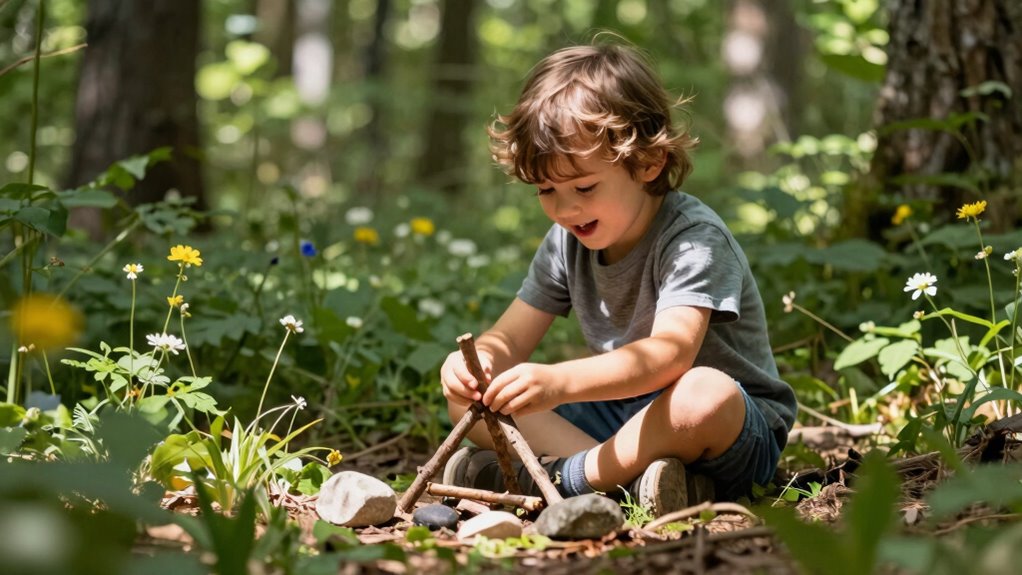

Self-directed play matters for your child’s healthy development because it encourages them to explore and learn at their own pace, fostering independence and curiosity. It helps your child build social and emotional skills like empathy, patience, and resilience through collaboration and problem-solving. This type of play also connects kids to nature, promoting environmental awareness. By supporting self-directed play, you give your child tools for lifelong growth and confidence—discover how this approach can benefit your child even more.

Give the gift of listening to the whole family
- Choose a 1-, 3-, 6- or 12-month membership
- They pick the audiobooks they love
- Easy to send by email
Key Takeaways
- Promotes exploration, creativity, and learning at the child’s own pace, fostering independence and confidence.
- Encourages active participation, goal-setting, and perseverance, enhancing motivation and deep understanding.
- Develops social skills like collaboration, empathy, and conflict resolution through peer interactions.
- Strengthens environmental awareness and appreciation through nature-based, play-driven experiences.
- Supports holistic development by integrating cognitive, emotional, and ecological understanding.
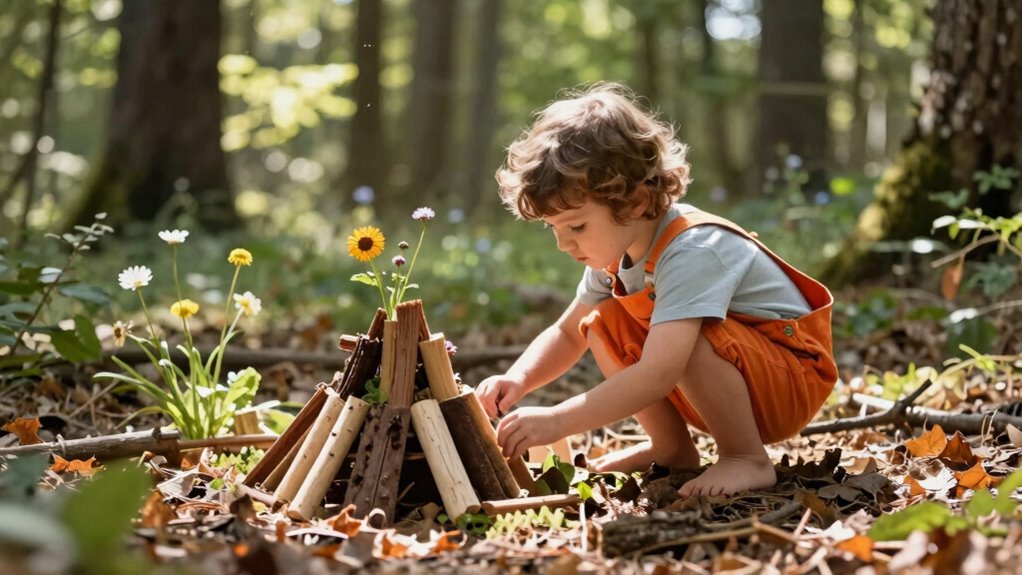
Self-directed play is an essential component of healthy childhood development because it allows children to explore, imagine, and learn at their own pace. When you give children the freedom to choose how they play, you foster an environment where play-based learning thrives. This approach encourages curiosity and creativity, helping kids develop critical thinking skills as they navigate their world through their own ideas and interests. By supporting child autonomy during play, you empower children to make decisions, solve problems, and express themselves freely. This independence nurtures confidence and fosters a sense of control over their learning experiences.
In a setting that promotes self-directed play, children are not just passive recipients of information; instead, they become active participants in their growth. They learn to set goals, adapt to challenges, and persevere through setbacks, all while engaging in play that feels meaningful to them. As they choose what to play with and how to interact, they build a sense of ownership over their activities. This ownership is vital for developing intrinsic motivation, making learning enjoyable rather than a chore. When children are in charge of their play, they naturally engage in exploration and experimentation, which leads to deeper understanding and retention of new concepts. Incorporating play-based learning into daily routines further enhances their development and keeps children engaged in meaningful ways.
Supporting play-based learning through self-directed play also helps develop social and emotional skills. When children decide what and how to play, they often collaborate with peers, negotiate roles, and resolve conflicts. These interactions teach empathy, patience, and communication. Additionally, children learn to regulate their emotions as they navigate the ups and downs of their play scenarios. Recognizing the importance of biodiversity in their environment can also inspire children to appreciate the natural world and understand their role in conservation efforts. This understanding can be amplified through nature-based activities, which deepen their connection to the environment. Developing an awareness of environmental factors during play can also motivate children to adopt sustainable habits early on, fostering a lifelong respect and curiosity for the environment. Connecting children with natural ecosystems during play can further strengthen their appreciation for biodiversity and ecological balance, making their learning experience more holistic.
Products Worth Considering

Levoit Vital 100S-P Air Purifier with Washable Pre-Filter

OMRON Complete 2-in-1 Upper Arm Blood Pressure Monitor with EKG

Withings Sleep Tracking Pad
As an affiliate, we earn on qualifying purchases.
Frequently Asked Questions
How Can Parents Effectively Encourage Self-Directed Play at Home?
You can encourage self-directed play at home by setting creative boundaries that inspire independence, like providing open-ended toys and materials. Give your child space to explore without constant interference, fostering playtime independence. Avoid overly structured activities and instead, trust their imagination to guide play. By doing so, you help them develop problem-solving skills and confidence, all while allowing their creativity to flourish naturally.
What Are Common Challenges Children Face During Self-Directed Play?
Children often face challenges during self-directed play that seem like mountain-sized hurdles. They might struggle with playtime independence, feeling unsure about what to do or how to keep themselves engaged. Distractions or fear of failure can hinder their creative exploration. Sometimes, they get overwhelmed or lose focus, making it hard to enjoy the freedom of their play. Supporting patience and gentle guidance helps children navigate these obstacles confidently.
How Does Self-Directed Play Differ Across Various Age Groups?
You’ll notice that self-directed play varies across age groups, reflecting age-specific preferences and developmental milestones. Young children often engage in imaginative, sensory activities, while older kids pursue more complex, rule-based games. As children grow, their play becomes more social and strategic, aligning with their cognitive and emotional development. Understanding these differences helps you support their growth by providing appropriate opportunities that foster independence, creativity, and confidence.
Are There Any Safety Concerns Associated With Unstructured Play?
Yes, there are safety concerns with unstructured play. You should conduct regular risk assessments to identify potential hazards and adapt the environment accordingly. Implement supervision strategies that allow children some independence while ensuring safety, like monitoring from a distance or setting clear boundaries. This approach helps children learn risk management skills and fosters confidence, all while minimizing dangers associated with unstructured play.
How Can Educators Integrate Self-Directed Play Into Classroom Settings?
You can integrate self-directed play into your classroom by creating a space that encourages play-based learning and creative exploration. Offer diverse materials and flexible setups that invite children to choose activities that interest them. Facilitate rather than direct, allowing kids to lead their play. This approach nurtures independence, problem-solving, and imagination, making learning engaging and meaningful while supporting healthy development through natural exploration.
Conclusion
Research shows that children who engage in self-directed play are 60% more likely to develop strong problem-solving skills. By encouraging this type of play, you’re fostering independence, creativity, and resilience in your child. Remember, giving them the freedom to explore on their own helps build a foundation for lifelong learning and confidence. So, step back, let them lead, and watch how their imagination and skills flourish in the process.