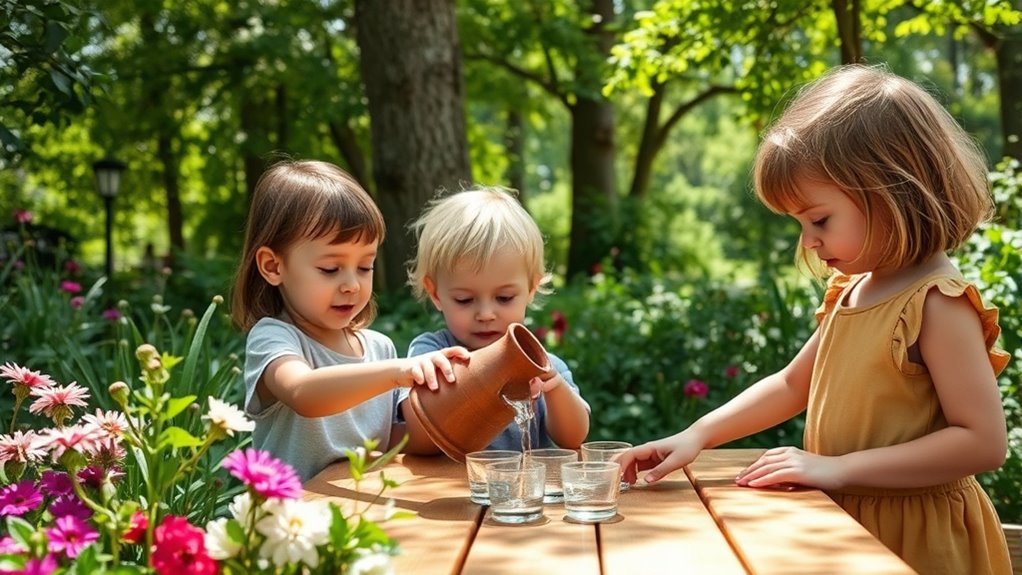

Montessori outdoor play offers children the chance to engage in practical life activities like gardening, watering, and harvesting, which build independence and real-world skills. As they nurture plants, kids develop patience, responsibility, and a strong connection with nature. These activities boost physical, cognitive, and emotional growth while fostering curiosity and conservation awareness. If you keep exploring, you’ll discover more ways outdoor environments enrich your child’s learning and development in meaningful ways.
Key Takeaways
- Promotes independence and responsibility through outdoor garden tasks like planting and watering.
- Enhances fine motor skills and hand-eye coordination via digging, pouring, and transplanting activities.
- Fosters curiosity, observation, and critical thinking about nature’s cycles and environmental care.
- Builds social skills through collaborative garden work and sharing tools and responsibilities.
- Supports holistic development—physical, cognitive, and emotional—through engaging outdoor practical life activities.
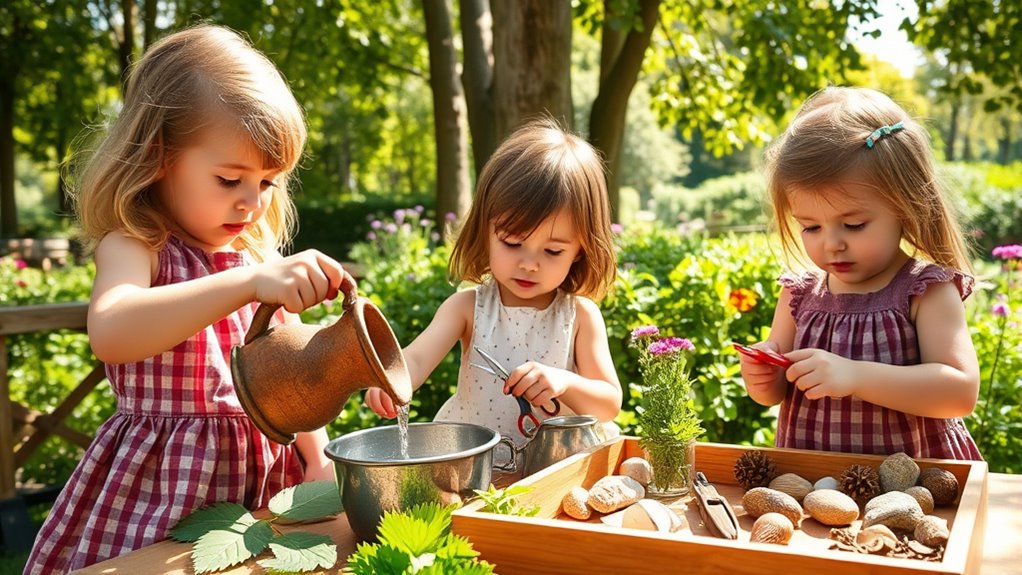
Montessori outdoor play offers children a pivotal opportunity to explore, learn, and develop essential skills in a natural setting. When you encourage children to engage in nature exploration, you open the door to countless learning experiences that foster curiosity, independence, and a sense of responsibility. In a Montessori environment, outdoor play isn’t just about fun; it’s an indispensable part of practical life activities that help children connect with their surroundings. Garden activities, for example, allow children to participate in real-world tasks like planting, watering, weeding, and harvesting. These activities teach patience, care, and the importance of nurturing living things, reinforcing a child’s understanding of nature’s cycles and their role in supporting life.
As you guide children through garden activities, you notice how they develop fine motor skills by digging, pouring soil, or transplanting seedlings. These tasks also promote hand-eye coordination and strengthen small muscles, which are essential for later writing and other daily tasks. The hands-on nature of these activities encourages children to be present and attentive, cultivating mindfulness and concentration. Additionally, engaging in nature exploration helps children develop observational skills. They learn to notice different plants, insects, and weather patterns, fostering a deeper appreciation for the environment. This awareness can inspire a lifelong respect for nature and a desire to protect it.
Montessori outdoor play emphasizes independence, so you allow children to take the lead during garden activities. Instead of over-directing, you provide the necessary tools and guidance, then step back to let them explore and problem-solve on their own. For example, children might figure out how to carry water without spilling or decide where to plant seeds. This autonomy builds confidence and resilience, teaching children that their actions have meaningful impacts. Additionally, working outdoors helps children develop social skills. They often collaborate during garden tasks, sharing tools or discussing what needs to be done next, which encourages communication, patience, and teamwork.
Incorporating nature exploration into daily outdoor routines nurtures a sense of wonder and curiosity that extends beyond the garden. It creates opportunities for children to ask questions, seek answers, and develop critical thinking skills. Whether it’s observing how a caterpillar transforms or understanding the importance of composting, these activities foster a love for learning rooted in real-life experiences. Furthermore, understanding the best soil for string of hearts plants can help children grasp the importance of proper soil conditions and plant care, reinforcing lessons about nurturing living things. Overall, Montessori outdoor play in the context of practical life and garden activities offers children a rich, engaging way to grow physically, cognitively, and emotionally, all while forging a meaningful connection with the natural world.
Frequently Asked Questions
How Can Outdoor Play Enhance Children’s Social Skills?
Outdoor play boosts your child’s social skills by encouraging peer interaction and teamwork. As they explore nature, they naturally engage with others, share tools, and solve problems together. These activities help develop their cooperative skills, patience, and understanding. When kids play outside, they learn to communicate better, negotiate, and build friendships. You’ll see their confidence grow as they navigate social situations in a relaxed, natural setting.
What Safety Precautions Are Needed for Outdoor Montessori Activities?
Did you know that children learn best when they feel safe outdoors? To guarantee safety, you should implement supervision strategies like constant monitoring and clear boundaries. Regularly check equipment safety, making sure toys, tools, and outdoor structures are in good condition. Keep first aid supplies nearby and educate children on safe outdoor behaviors. These steps help create a secure environment where kids can freely explore and thrive in nature.
How Can Outdoor Play Support Children With Special Needs?
You can support children with special needs during outdoor play by focusing on sensory integration and providing adaptive outdoor tools. These tools help children explore their environment comfortably, fostering confidence and skill development. By observing their responses, you can tailor activities that engage their senses and promote social interaction. Creating a safe, inclusive space encourages their independence and guarantees they benefit fully from nature-based practical life experiences.
What Are Effective Ways to Encourage Independence Outdoors?
Did you know that kids who engage in outdoor activities tend to develop stronger independence skills? To encourage independence outdoors, you can introduce nature exploration and gardening activities that allow children to make choices and take responsibility. Offer simple tools, set achievable tasks, and provide space for free play. This approach fosters confidence, nurtures curiosity, and helps children learn to manage their environment confidently.
How Does Outdoor Learning Influence Long-Term Environmental Awareness?
Outdoor learning boosts your child’s long-term environmental awareness by fostering sustainability education and ecological mindfulness. When they explore nature firsthand, they develop a deeper understanding of ecosystems and the importance of conservation. This hands-on experience encourages them to make eco-friendly choices and appreciate the natural world, cultivating a lifelong commitment to sustainability. By engaging with nature regularly, you set the foundation for your child’s responsible stewardship of the environment.
Conclusion
Embracing outdoor play through the Montessori approach transforms your child’s connection to nature into an unstoppable force of curiosity and growth. When you encourage these moments, you’re nurturing a spirit that’s as resilient as the tallest oak and as boundless as the open sky. Remember, every outdoor adventure isn’t just play—it’s the seed of a lifelong love for learning and discovery. So, let nature be your child’s greatest classroom; it’s a journey that will shape their world forever.