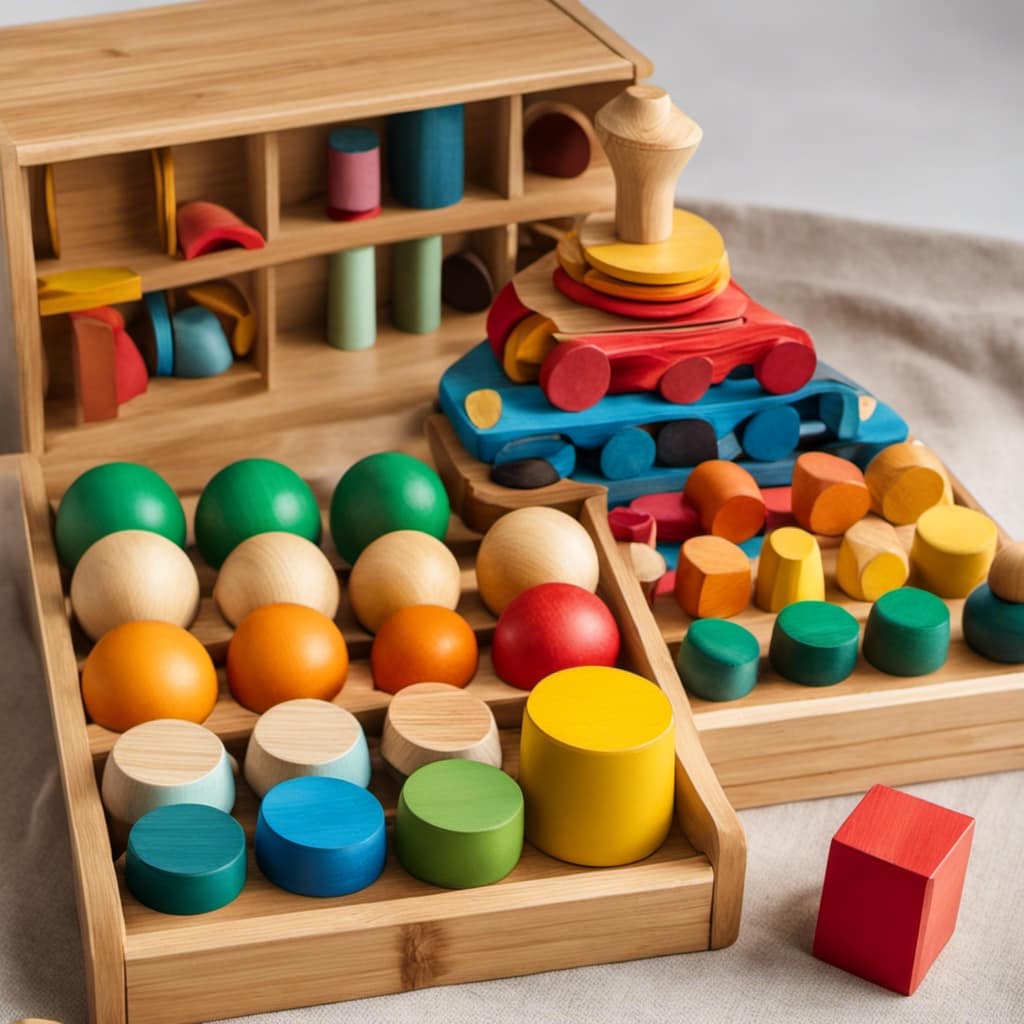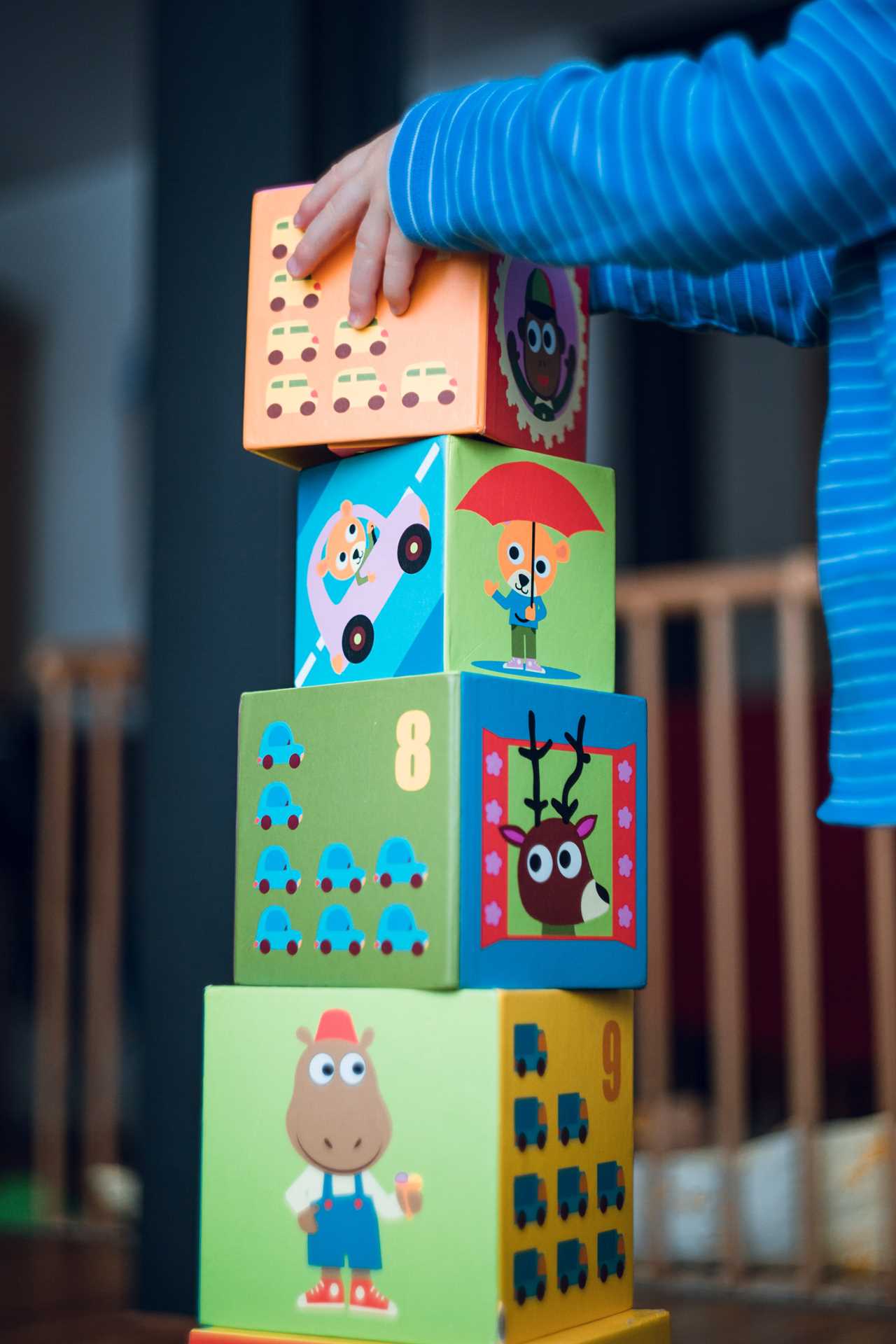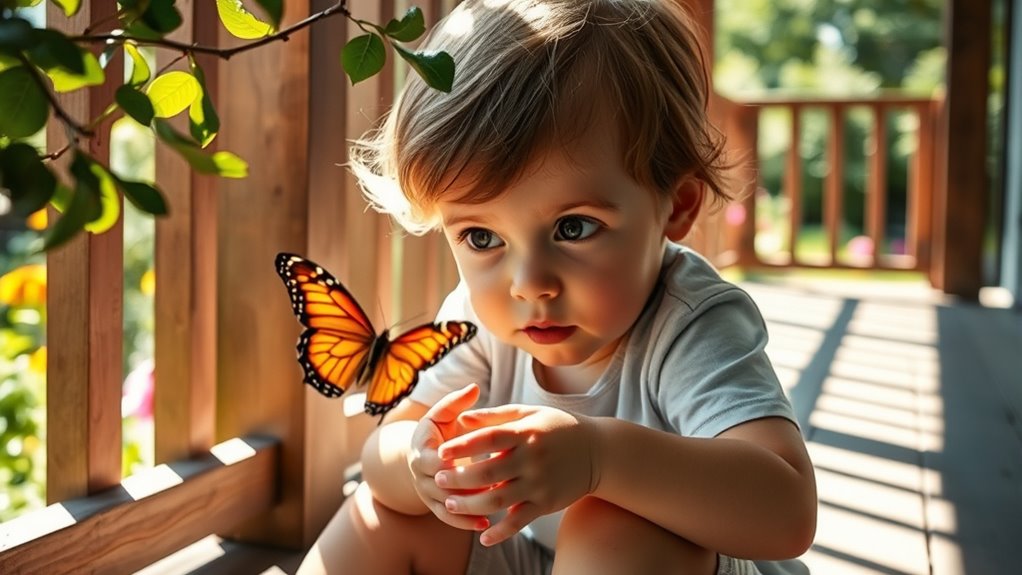

When observing a child’s play and emotional cues, note how they interact with toys, whether they prefer solitary or social activities, and their facial expressions or gestures. Look for signs of comfort, happiness, frustration, or withdrawal. These observations help you understand their emotional state and developmental needs. By paying close attention, you can identify areas for support and create responsive strategies. Keep exploring these clues to better support the child’s growth and well-being.

Turn the school run and nap time into listening time
- Thousands of audiobooks, podcasts and originals
- Listen on your phone, tablet or Echo — also offline
- Cancel anytime
Key Takeaways
- Document specific play behaviors and emotional cues to identify developmental progress or concerns.
- Note patterns of social interaction and comfort levels during activities for tailored support.
- Observe emotional responses to different environments or stimuli to determine calming or overwhelming factors.
- Use detailed notes to inform next steps, such as introducing new activities or providing emotional support.
- Incorporate individual differences and subtle cues to create a nurturing plan that promotes growth and well-being.

Have you ever wondered what a child’s behavior reveals about their development and emotional state? When you observe a child, you’re not just watching their actions—you’re gaining insight into their inner world. One of the most telling aspects to pay attention to is their play behavior. Play is a natural and crucial part of childhood, serving as a window into their cognitive, social, and emotional growth. Notice how they interact with toys, peers, and even their environment. Are they engaging in imaginative play, or do they seem hesitant or withdrawn? Do they prefer solitary activities or seek out social interaction? These patterns can tell you a lot about their comfort levels, confidence, and emerging skills.
Alongside play behavior, emotional cues stand out as critical indicators. Children often communicate their feelings through facial expressions, gestures, and body language before they can articulate words. For example, a child who suddenly clams up, avoids eye contact, or displays a frown during a specific activity might be signaling discomfort, fear, or frustration. Conversely, a child who smiles widely, claps their hands, or shows excitement indicates happiness and engagement. Recognizing these emotional cues helps you understand what tasks or environments might be overwhelming or soothing for them. It’s crucial to be attentive to these subtle signals because they often reveal underlying needs or concerns that the child might not be able to express verbally.
By observing how children’s play behavior aligns with their emotional cues, you can better gauge their overall well-being. For instance, a child who is enthusiastic about engaging in pretend play and displays positive emotional cues is likely feeling secure and confident. On the other hand, a child who avoids play or exhibits signs of distress might need additional support or reassurance. Your role is to notice these details without jumping to conclusions. Instead, let these observations guide your next steps—whether that’s offering comfort, adjusting the environment, or encouraging different kinds of play to help the child feel more at ease.
Paying close attention to play behavior and emotional cues isn’t just about understanding where a child is now; it’s about informing future actions. These notes can help you identify areas where a child might need extra help, whether it’s social skills, emotional regulation, or confidence building. Remember, every child is unique, and their behaviors offer valuable clues. Your careful observation allows you to respond thoughtfully, fostering a supportive space where they can grow emotionally and developmentally. Additionally, understanding the significance of essential oils for emotional support can create a calming environment that promotes emotional well-being in children.
Frequently Asked Questions
How Can I Ensure My Observations Are Unbiased?
To guarantee your observations are unbiased, you should be aware of observer bias and actively check your assumptions. Use objective language, focus on specific behaviors, and record facts rather than interpretations. Consider cultural considerations to avoid misjudging actions or signals. Reflect regularly on your notes, seek feedback, and compare observations with others to maintain fairness and accuracy in your documentation.
What Tools Are Best for Documenting Child Behavior?
Think of your tools as a child’s storybook—each page revealing unique moments. The best tools for documenting child behavior include behavior recording sheets and digital apps, which streamline observation methods. These tools help you capture details accurately and consistently, ensuring that your notes reflect true behavior rather than assumptions. By choosing user-friendly options, you can easily track patterns, making your observations more effective and insightful for guiding next steps.
How Often Should I Observe a Child’s Development?
You should observe a child’s development regularly, ideally following observation schedules tailored to their age and milestones. Frequent observations, such as weekly or bi-weekly, help you track progress toward development milestones and identify any concerns early. Consistent monitoring guarantees you capture changes over time, allowing you to adjust your approach and support the child’s growth effectively. Staying attentive to development milestones through regular observation is key to fostering their development.
How Do I Interpret Conflicting Behaviors During Observation?
When you notice conflicting behaviors during observation, consider behavioral inconsistencies and contextual influences. You should interpret these behaviors by examining the environment, recent events, and the child’s mood at the time. Ask yourself if external factors or specific situations triggered the inconsistency. Keep detailed notes to identify patterns, and avoid jumping to conclusions. Understanding these influences helps you better interpret the child’s actions and plan appropriate next steps.
What Are Common Pitfalls in Observing Children Effectively?
You might overlook common pitfalls like ignoring parental involvement and cultural considerations, which can skew your understanding. Be cautious not to make assumptions based solely on your observations; involve parents to gain context. Remember, children’s behaviors are influenced by their backgrounds, so consider cultural factors. Avoid rushing to conclusions, and make certain your observations are balanced, respectful, and inclusive, fostering an exhaustive view that guides effective next steps.
Conclusion
By carefully observing the child, you begin to see the intricate tapestry of their development, each thread revealing their unique strengths and challenges. These notes act as a compass, guiding your next steps with clarity and purpose. Remember, your observations are the keys that unseal their potential, turning the quiet moments into powerful insights. Like a gardener tending fragile sprouts, your attentive eye nurtures growth, helping the child flourish amid the garden of their possibilities.
Halloween Picks
halloween
As an affiliate, we earn on qualifying purchases.