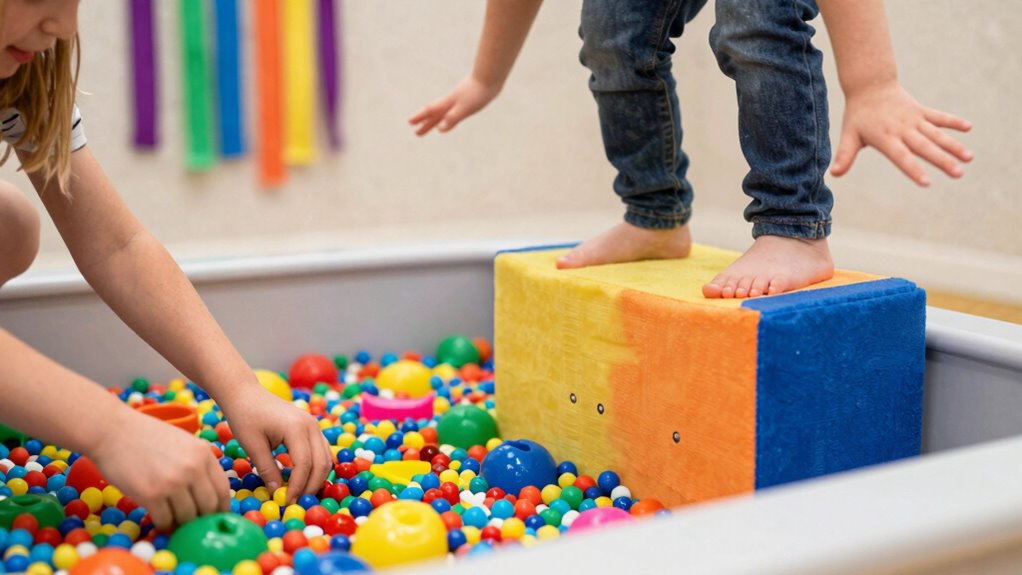

To layer sensory and movement play, start by incorporating textured surfaces like mats, stepping stones, or obstacle courses to engage your child’s tactile senses while encouraging movement. Use tools like balance beams with textured surfaces or foam rollers to challenge their coordination and tactile awareness. Create activities that combine crawling, jumping, or climbing with sensory elements for a rich, multi-sensory experience. If you keep exploring, you’ll discover more fun ways to boost your child’s development through layered play.

Get baby and family essentials delivered free — and shop member deals
- Fast, free delivery on millions of items
- Access to Prime Big Deal Days deals on October 6–7
- Prime Video, Amazon Music and more included
Key Takeaways
- Incorporate textured mats, stepping stones, or obstacle courses to combine tactile exploration with active movement.
- Use tactile-themed equipment like textured slides or balance beams to engage multiple senses during gross motor activities.
- Design activities that integrate soft, textured balls or foam rollers for dynamic sensory and movement engagement.
- Create safe, tactile-rich environments that encourage crawling, climbing, and balancing for layered sensory-motor experiences.
- Tailor activities to developmental levels, gradually increasing tactile complexity alongside movement challenges.

Layering sensory play and movement play creates rich, engaging experiences that support your child’s development. When you combine tactile exploration with movement activities, you foster an environment where your child can learn about their body and surroundings simultaneously. For example, setting up a textured obstacle course provides opportunities for tactile exploration as they crawl over different materials—like sand, foam, or fabric—while engaging in balance activities. These balance activities challenge their coordination and strengthen their core muscles, helping them develop better stability and spatial awareness.
By integrating sensory elements into movement play, you make the experience more immersive and beneficial. Imagine guiding your child to walk along a line of different textured mats or stepping stones, each offering a distinct tactile sensation. As they shift their weight and balance, they’re not only honing their motor skills but also engaging their sense of touch. This layered approach encourages them to process sensory information actively, which is vital for their overall sensory integration development.
You can also create a safe space for dynamic play that combines movement and tactile feedback. Set up a station where your child jumps into a pile of soft, textured balls or slides down a tactile-themed slide. These activities stimulate their tactile senses and promote gross motor skills like jumping, climbing, and sliding. As they move through these activities, they’re practicing balance and coordination, which are essential for everyday tasks and physical confidence.
Incorporating simple tools like balance beams with textured surfaces or foam rollers can elevate the experience. Have your child walk across a balance beam while feeling the different textures beneath their feet. This not only challenges their balance but also enhances tactile exploration, helping them become more aware of their body in space. Engaging in sensory integration activities like these helps children develop crucial neural pathways that support their overall growth and learning. Additionally, incorporating movement play into their routine encourages active engagement and improves their physical fitness, which benefits their overall development. These activities can be tailored to suit your child’s age and developmental level, creating a customized sensory and movement experience that feels both fun and beneficial.
As an affiliate, we earn on qualifying purchases.
Frequently Asked Questions
What Are the Safety Considerations for Combined Sensory and Movement Play?
When combining sensory and movement play, you should prioritize safety by conducting a thorough risk assessment beforehand. Always supervise closely to monitor your child’s reactions and prevent accidents. Use age-appropriate equipment, make certain the play area is free of hazards, and set clear boundaries. Keep emergency supplies nearby, and communicate safety rules clearly. These supervision strategies help create a safe environment for your child’s exploration and development during combined sensory and movement activities.
How Can I Adapt Activities for Different Age Groups?
Want to turn a toddler’s jungle gym into a gymnast’s obstacle course? You adapt activities by tailoring them to different age groups, considering developmental variations. For little ones, keep activities simple, with soft textures and gentle movements. For older kids, increase complexity and challenge. Always guarantee safety, and remember, what excites a preschooler might bore a teenager. Adjusting your approach makes sensory and movement play engaging and safe for all ages.
What Materials Are Best for Sensory and Movement Play?
You should choose versatile sensory tools like textured balls, soft fabrics, and water tables to enhance sensory play. For movement activities, incorporate items like balance beams, tunnels, and climbing structures. These materials support active exploration and help children develop coordination, strength, and sensory awareness. Combining these tools creates a dynamic environment where sensory and movement play seamlessly intertwine, promoting engagement, learning, and physical development.
How Do I Monitor a Child’s Overstimulation During Play?
Imagine your child’s senses turning into fireworks—bright, loud, and unpredictable. You spot overstimulation signs like clenched fists, rapid breathing, or crying. To manage this, implement calming strategies like a quiet corner, gentle rocking, or soothing words. Keep a close eye, intervene early, and adjust activities before their sensory fireworks become a meltdown. Your calm response helps them reset, turning chaos into calm.
How Can I Incorporate Language Development Into Play?
You can incorporate language development into play by engaging your child in activities that promote communication strategies, like describing what they see or do. Use simple language aligned with their current language milestones, and encourage them to imitate sounds or words. Sing songs, ask open-ended questions, and narrate actions to boost their vocabulary and comprehension. This active involvement helps your child develop essential language skills in a fun, natural way.
Conclusion
By blending sensory and movement play, you create rich, engaging experiences that boost development and joy. Think about how your child benefits from exploring textures while moving—doesn’t it make playtime more meaningful? When you intentionally layer these activities, you’re not just entertaining; you’re nurturing curiosity, coordination, and confidence. So, why settle for one when you can access the full potential of play by combining both? Your child’s growth is worth the effort.
Halloween Picks
halloween
As an affiliate, we earn on qualifying purchases.