
Sand play sparks your child’s creativity by encouraging them to build castles, landscapes, and stories, turning the sandbox into a stage for imagination. It also promotes early scientific thinking as they observe how sand behaves under different conditions, experiment with adding water, and explore material properties. Through trial and error, they develop confidence, problem-solving skills, and an understanding of cause-and-effect. Keep exploring to discover how you can support their curiosity and growth even further.

Get baby and family essentials delivered free — and shop member deals
- Fast, free delivery on millions of items
- Access to Prime Big Deal Days deals on October 6–7
- Prime Video, Amazon Music and more included
Key Takeaways
- Facilitates imaginative creation of structures, landscapes, and stories, fostering creative thinking.
- Enables observation of sand behavior and material changes, supporting early scientific inquiry.
- Encourages experimentation with water, pressure, and shapes, promoting hypothesis testing and scientific understanding.
- Builds fine motor skills and sensory awareness, laying groundwork for cognitive development and problem-solving.
- Provides a safe environment for trial, error, reflection, and discovery, boosting confidence in exploration.
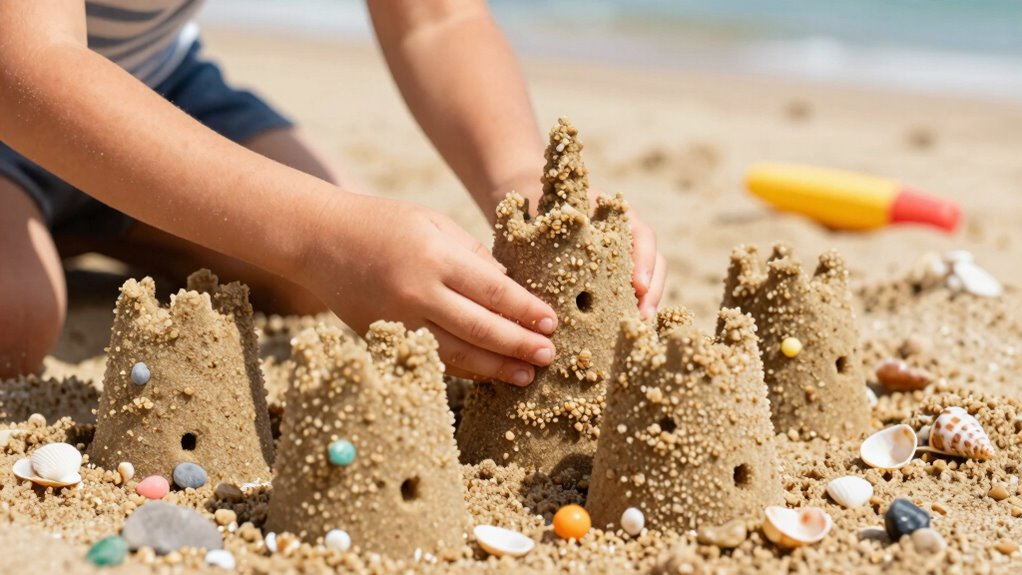
Sand play is more than just a simple childhood activity; it’s a powerful tool that sparks creativity and imagination. When you engage in sand play, you access a world of sensory exploration that stimulates your senses and encourages curiosity. The feel of cool, granular sand slipping through your fingers or piling up into shapes invites you to observe, touch, and experiment. This tactile experience helps develop your fine motor skills and sharpens your sense of texture, temperature, and weight. As you manipulate the sand, you naturally become more aware of how different properties change with pressure and moisture, laying a foundation for early scientific thinking.
Sand play boosts sensory skills, promotes curiosity, and builds a foundation for early scientific thinking through tactile exploration.
Beyond the physical sensations, sand play fuels your imagination. As you build castles, roads, or landscapes, you’re not just creating; you’re storytelling. Imaginative storytelling becomes a core part of the process, as you envision characters, scenarios, and worlds within your sandy creations. You might imagine a bustling city or a mysterious desert, and in doing so, you practice narrative skills and creative problem-solving. The sandbox transforms into a stage where your ideas come to life, fostering a playful environment that nurtures your ability to think outside the box.
This combination of sensory exploration and imaginative storytelling doesn’t just entertain; it also promotes early scientific understanding. When you observe how sand behaves under different conditions—how it flows, compacts, or crumbles—you’re engaging in basic scientific inquiry. You learn cause and effect as you experiment with adding water or changing the shape, noticing how these actions alter the properties of the sand. These activities encourage you to ask questions, make predictions, and test hypotheses—all fundamental scientific skills. Developing an understanding of biodiversity and environmental interactions can also enhance your awareness of the natural world as you explore different materials and ecosystems. Recognizing the interconnectedness of ecosystems can deepen your appreciation for environmental science and sustainability.
Additionally, sand play provides a safe space to experiment with ideas and learn from trial and error. No matter the outcome, you gain confidence in your ability to explore and discover. This process of experimentation and reflection helps foster early critical thinking and problem-solving skills, essential for scientific development. Engaging in activities like observing how different materials interact can further enrich your understanding of material properties. Incorporating scientific observation into these activities allows you to develop skills in data collection and analysis, which are crucial for scientific inquiry. Recognizing how properties of materials change with variables like moisture or pressure can deepen your comprehension of scientific concepts. Whether you’re creating a fortress or investigating the effects of moisture, you’re engaging in activities that build a solid foundation for future scientific inquiry. In this way, sand play isn’t just about fun; it’s about cultivating the curiosity, creativity, and scientific mindset that will serve you throughout your life.
As an affiliate, we earn on qualifying purchases.
Frequently Asked Questions
How Does Sand Play Influence Language Development in Children?
Sand play influences your child’s language development by encouraging linguistic expression as they describe their actions and creations. When they talk about the shapes, textures, or stories they build, their vocabulary expands naturally. This playful exploration fosters communication skills, prompting them to articulate ideas clearly. As they narrate their sand adventures, they gain confidence in language, making it a fun, engaging way to boost their vocabulary and expressive abilities.
Are There Specific Types of Sand Better for Creative Play?
You’ll find that finer, smoother types of sand are ideal for creative play, offering a gentle texture that encourages detailed sculpting and imaginative designs. Coarser sands might challenge fine motor skills but can inspire larger, bold creations. The key is choosing types of sand with ideal textures—soft, clean, and free of debris—that invite exploration and help your child develop their creativity without frustration.
How Can Parents Encourage Scientific Exploration During Sand Play?
You can encourage scientific exploration during sand play by providing tools like magnifying glasses, scoops, and measuring cups to enhance sensory engagement. Ask open-ended questions to spark curiosity and guide your child to observe textures, patterns, and changes in the sand. This activity boosts motor skills and critical thinking, making science fun and accessible. Your active participation and prompting help nurture a natural interest in early scientific concepts.
What Safety Precautions Should Be Taken During Sand Play Activities?
You should always guarantee proper sand safety during play by checking that the sand is clean and free from harmful debris. Keep a close eye on your child through continuous supervision to prevent ingestion or inhalation of sand particles. Encourage handwashing afterward and avoid letting children put sand in their mouths. By maintaining vigilant supervision and practicing good sand safety, you help create a safe, fun environment that fosters creativity and early scientific curiosity.
Can Sand Play Benefit Children With Special Needs?
Sand play benefits children with special needs by enhancing sensory integration and emotional regulation. You’ll notice children engaging with textures and manipulating sand, which helps them process sensory input more effectively. This calming activity can reduce anxiety and improve focus. You support their development by providing a safe, accessible environment that encourages exploration, allowing children with special needs to express themselves creatively and build essential emotional and sensory skills.
Conclusion
By engaging in sand play, you open the door to boundless creativity and early scientific exploration. As you mold castles or dig tunnels, you naturally foster problem-solving skills and imaginative thinking. Isn’t it fascinating how a simple handful of sand can uncover a child’s potential for discovery and innovation? Embracing this playful activity not only nurtures their curiosity but also lays a strong foundation for lifelong learning. After all, isn’t the world itself just a vast sandbox waiting to be explored?
Cold & flu season Picks
humidifiers
As an affiliate, we earn on qualifying purchases.