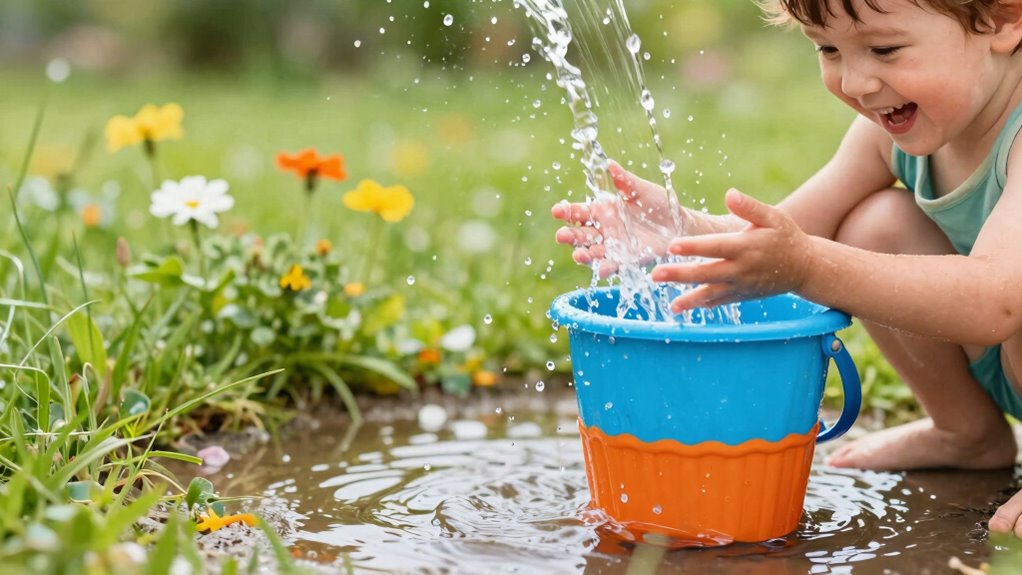

Water play supports your child’s learning and relaxation by stimulating their senses through touch, temperature, and movement. It helps strengthen fine motor skills and encourages exploration, fostering cognitive growth and scientific curiosity. The calming sounds and rhythmic motions of water can reduce anxiety and promote emotional well-being. Creating a soothing environment, water play engages children in hands-on activities that improve focus and provide comfort. Keep exploring to discover even more ways water play can benefit your child’s development.

Turn the school run and nap time into listening time
- Thousands of audiobooks, podcasts and originals
- Listen on your phone, tablet or Echo — also offline
- Cancel anytime
Key Takeaways
- Water play enhances sensory processing, helping children better interpret and respond to sensory stimuli, supporting overall learning.
- Engaging with water activities improves fine motor skills, dexterity, and hand-eye coordination essential for academic tasks.
- Exploring water concepts fosters cognitive development, curiosity, and scientific understanding through hands-on experimentation.
- The calming sounds and rhythmic motions of water promote emotional regulation and reduce anxiety.
- Water’s soothing nature creates a relaxed environment that encourages focus, engagement, and stress reduction during learning.

Water play is a powerful tool for supporting both learning and relaxation in children. When you introduce water activities, you give kids a chance to explore their environment in a way that stimulates their senses and promotes growth. As children manipulate water, they naturally develop their sensory awareness—touching, splashing, and feeling its temperature. These experiences are fundamental to sensory development because they help children understand different textures, temperatures, and even the movement of liquids. As a result, water play becomes an engaging sensory experience that enhances their ability to process sensory information more effectively.
In addition to sensory development, water play significantly benefits fine motor skills. When children scoop, pour, splash, or squeeze water, they are exercising the small muscles in their hands and fingers. These activities strengthen their dexterity and hand-eye coordination, which are essential for tasks like writing, tying shoelaces, and buttoning clothes. The repetitive motions involved in water play also improve precision and control, making fine motor development more natural and enjoyable. You’ll notice that as kids practice these actions, their confidence with manipulating objects and tools grows, laying a strong foundation for future academic and daily tasks.
Moreover, water play encourages concentration and problem-solving. As children experiment with pouring water into different containers or trying to fill a cup without spilling, they learn about volume, balance, and cause-and-effect relationships. These activities promote critical thinking and patience, as kids adjust their actions based on outcomes. These experiences also support cognitive development by fostering an understanding of scientific concepts through hands-on exploration. Research indicates that engaging with water can also stimulate curiosity and foster a love for scientific discovery, making learning more enjoyable. Developing an understanding of scientific principles through water play can also help children build a foundation for scientific inquiry, which is essential for their overall cognitive growth. Additionally, understanding scientific concepts through water play can improve their observational skills and attention to detail. As a result, they become more engaged in their play and develop a sense of curiosity and resilience. The calming nature of water helps create a relaxed environment that fosters focus, making learning activities feel less stressful and more inviting.
You also benefit from observing how water play can help children regulate their emotions. The soothing sound of splashing water and the rhythmic motions involved can reduce anxiety and promote relaxation. When children are calm, they’re more receptive to new experiences and can better manage their emotions. Water play offers a safe space where kids can express themselves freely and explore their feelings through sensory engagement. Additionally, engaging with water can support sensory processing by helping children better interpret sensory stimuli and respond appropriately. This combination of sensory input, fine motor practice, and emotional regulation contributes to overall well-being, making water play an invaluable component of early childhood development.
As an affiliate, we earn on qualifying purchases.
Frequently Asked Questions
How Does Water Play Improve Fine Motor Skills?
Water play enhances your child’s fine motor development by encouraging precise hand movements and strengthening small muscles. As they squeeze, pour, and manipulate water, they improve hand-eye coordination and dexterity. Activities like scooping or transferring water help refine their grasp and finger control. This playful engagement not only boosts motor skills but also makes learning fun, fostering confidence in their ability to perform delicate tasks and develop essential coordination.
Can Water Play Benefit Children With Sensory Processing Issues?
Water play can benefit children with sensory processing issues by supporting sensory integration and providing calming effects. As you let children explore textures, temperatures, and movements of water, they learn to process sensory input more effectively. The soothing nature of water helps reduce anxiety and overstimulation, creating a calming environment. This sensory engagement encourages self-regulation and comfort, making water play an excellent tool for supporting children with sensory processing challenges.
What Safety Precautions Are Essential During Water Play Activities?
To guarantee safety during water play, you must prioritize water safety and follow strict supervision protocols. Always stay within arm’s reach of children, especially younger ones, and never leave them unattended. Use non-slip mats and keep the water shallow to prevent accidents. Regularly check the water temperature to avoid burns, and teach children about safe water behaviors. These precautions create a safe, enjoyable environment that promotes learning and relaxation.
How Does Water Play Influence Emotional Regulation in Children?
Research shows that water play can improve emotional development in children by providing a calming, sensory experience. You’ll notice children often exhibit better emotional regulation and reduced stress levels after engaging in water activities. Water’s soothing properties offer stress relief, helping children manage their feelings more effectively. By fostering these emotional skills, water play supports healthier emotional regulation and encourages confidence and resilience in young learners.
Are There Benefits of Water Play for Elderly Relaxation?
Yes, water play offers numerous relaxation benefits for the elderly. It encourages elderly engagement, helping seniors reduce stress and improve mood. The soothing sensation of water can activate relaxation techniques, easing muscle tension and calming the mind. By incorporating gentle water activities, you promote physical and emotional well-being, making relaxation more accessible and enjoyable for seniors. Water play becomes a simple yet effective way to support relaxation and overall health.
Conclusion
Water play isn’t just fun—it’s a powerful tool for learning and relaxation. As you immerse yourself in water activities, you’ll find that they help develop skills and soothe your mind at the same time. Think of water as a gentle giant, washing away stress while building confidence. When you embrace water play, you’re opening the door to a world where learning flows effortlessly and relaxation comes naturally, proving that sometimes, going with the flow is the best way to grow.
Cold & flu season Picks
humidifiers
As an affiliate, we earn on qualifying purchases.