
To explore warm versus cold experiments safely, test objects with your skin or a thermometer first. Keep hot items at a safe, lukewarm level and wrap cold objects in cloth to avoid direct ice contact. Use gentle touch and observe your child’s reactions, discussing sensations like “hot” or “chilly.” Supervise closely and be ready to stop if discomfort occurs. If you’re curious about more ways to make temperature play both fun and safe, keep exploring these tips.
Key Takeaways
- Use safe, lukewarm water and sealed cold objects to teach children about temperature differences safely.
- Encourage exploration with gentle finger dips into warm and cold water, discussing sensations like “hot” or “chilly.”
- Always test objects beforehand, keep cold items sealed, and supervise closely to prevent discomfort or injury.
- Promote sensory discrimination and vocabulary development by describing how different temperatures feel.
- Observe children’s reactions and adjust the temperatures to ensure a positive, safe learning experience.
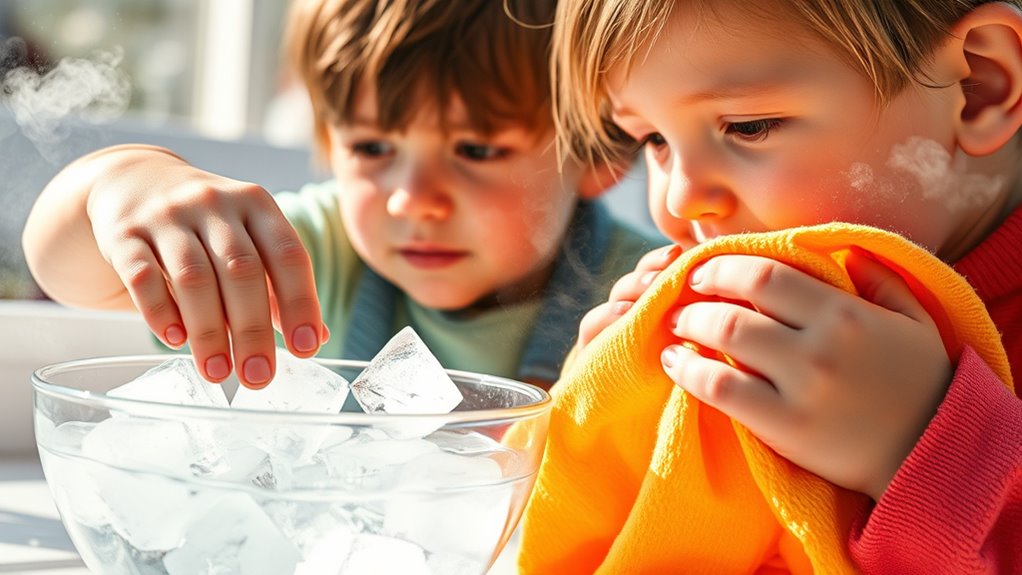
Temperature play can be a fun and educational way for kids to explore their senses and learn about how different temperatures affect their bodies. When engaging in warm versus cold experiments, it’s important to prioritize safety precautions to guarantee that your child has a positive and safe experience. Always start by testing the temperature of objects with your own skin or a thermometer before allowing your kid to touch or interact with them. This helps prevent accidental burns or discomfort. Keep hot items at a safe, lukewarm level, and cold items in a sealed container or wrapped in a soft cloth to avoid direct contact with ice or very cold surfaces. Never leave your child unattended during temperature experiments, especially when handling hot or cold objects, to respond quickly if they show signs of discomfort or distress.
Incorporating temperature play into your child’s activities can considerably support sensory development. When kids experience different temperatures, they learn to differentiate sensations, which enhances their ability to interpret their environment. For example, touching a warm towel and then a cold metal spoon helps them notice the subtle differences in texture and temperature. This kind of sensory exploration helps develop their tactile awareness and fine motor skills. Also, encouraging your child to describe how things feel encourages language development and observational skills. As they identify sensations like “hot,” “cold,” “warm,” or “chilly,” they expand their vocabulary related to sensory experiences. Engaging in sensory activities like this can also promote emotional regulation by helping children become more comfortable with new sensations.
While engaging in these experiments, keep the focus on gentle exploration rather than intense discomfort. For instance, you might fill two bowls—one with warm water and the other with cold water—and allow your child to dip their fingers in each. Talk about how each feels and ask questions to foster curiosity, such as, “Does this feel warm or cold?” Always monitor their reactions closely. If they show signs of discomfort or if the sensation becomes too intense, immediately remove the object or adjust the temperature to a safer level. Remember, the goal is to help your child develop comfort with different sensations, not to cause distress.
As an affiliate, we earn on qualifying purchases.
Frequently Asked Questions
What Safety Precautions Should Parents Take During Temperature Experiments?
You should guarantee safety during temperature experiments by always supervising your kids closely and setting clear supervision guidelines. Use appropriate safety gear like gloves or goggles if needed, and test temperatures beforehand to prevent burns or discomfort. Keep hot or cold objects within reach, and teach your kids to handle materials carefully. Staying vigilant and guiding them through proper procedures helps make these experiments safe and enjoyable.
How Do Temperature Changes Affect Different Materials?
You’ll notice that temperature changes cause different materials to react uniquely. For example, thermal expansion makes metals expand when heated, while some plastics may become more flexible. Conductance varies too; metals conduct heat quickly, so they warm or cool faster, unlike insulators like rubber. Understanding these differences helps you predict material behavior during experiments, ensuring safe and engaging learning while exploring how temperature impacts various substances.
Can Temperature Play Help With Sensory Processing Issues?
Temperature play can help with sensory processing issues by enhancing sensory integration and tactile exploration. When you introduce warm or cold items, you encourage your child to engage their senses actively, improving their response to different stimuli. This gentle, controlled approach can reduce sensory sensitivities and increase comfort with tactile experiences, making daily activities easier and more enjoyable. Always supervise to guarantee safety and comfort during these sensory exercises.
What Are Some Age-Appropriate Temperature Experiments for Toddlers?
For toddlers, you can explore simple temperature experiments that demonstrate thermal shock and heat transfer safely. Fill two bowls—one warm, one cold—and let your child dip their fingers to feel the difference. You might also gently put a toy in warm water, then cold, observing how it reacts. These activities help them understand temperature changes while staying safe, engaging their senses and curiosity.
How Can I Introduce Temperature Concepts to Children With Special Needs?
To introduce temperature concepts to children with special needs, focus on sensory integration and gentle exploration. Use safe, familiar objects at different temperatures, like warm towels or cool gel packs, allowing them to feel and describe sensations. Keep activities calm and predictable, supporting temperature regulation. Encourage their participation at their comfort level, helping them build awareness and comfort with temperature changes through positive, sensory-rich experiences.
Conclusion
As you explore the world of temperature play with curious kids, remember that these experiments are more than just sensations—they’re gateways to understanding how our bodies and environment interact. Like a gentle flame or a cool breeze, these experiences ignite a sense of wonder and discovery. Embrace the journey, knowing each experiment is a step closer to revealing the mysteries of temperature, turning simple moments into lasting memories that warm the heart and cool the mind.