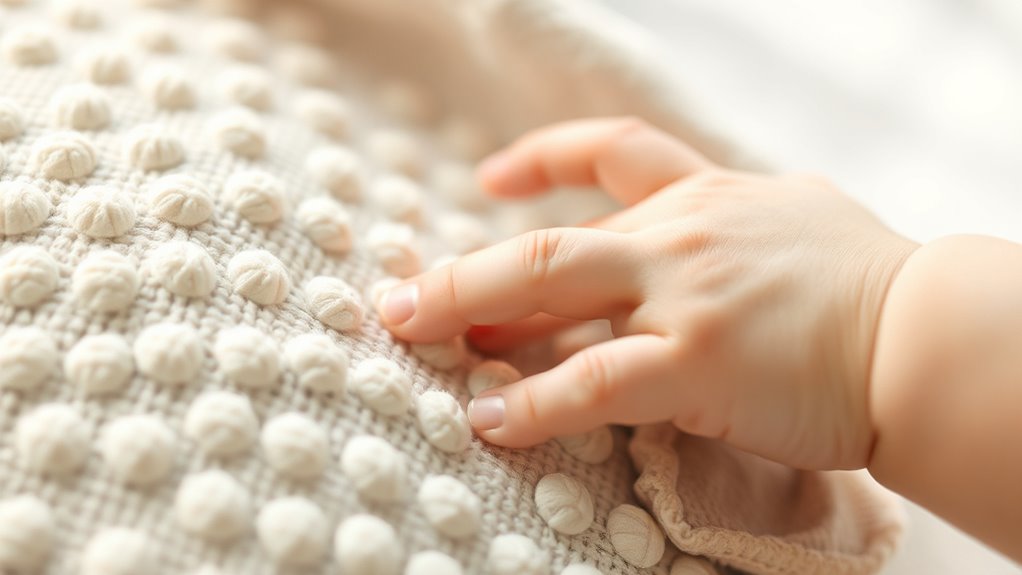

To gently expand your texture tolerance, start by gradually introducing new textures in a calm environment. Pair touch with calming techniques like deep breathing or grounding exercises to ease overstimulation. Use soft, warm materials or weighted objects to provide soothing pressure, and take small steps at a pace that feels comfortable. Celebrate your progress, and gradually increase exposure to different textures over time. Continue exploring these strategies to build confidence and comfort in touch.

Turn the school run and nap time into listening time
- Thousands of audiobooks, podcasts and originals
- Listen on your phone, tablet or Echo — also offline
- Cancel anytime
Key Takeaways
- Gradually introduce new textures through brief, controlled contact paired with calming techniques like deep breathing.
- Use soft, soothing materials and start with small patches to build familiarity comfortably.
- Incorporate pressure and warmth, such as weighted blankets or gentle massage, to promote calm during exposure.
- Create a sensory-friendly environment by reducing overwhelming stimuli and increasing predictability.
- Celebrate small progress and practice patience to steadily expand tolerance without causing anxiety.

Tactile defensiveness is a sensory processing issue where the brain overreacts to touch sensations, making everyday textures and physical contact feel overwhelming or uncomfortable. When your skin perceives certain textures or sensations as threatening, it can lead to sensory overload, leaving you feeling anxious, irritable, or exhausted. Recognizing this response is the first step toward managing it. You might notice that light touches, certain fabrics, or even the feeling of tags and seams trigger a strong reaction. To cope, incorporating calming techniques can help ease your sensory load and gradually expand your tolerance to different textures.
Tactile defensiveness causes overreactions to touch, making textures feel overwhelming and triggering sensory overload.
One effective strategy is to create a sensory-friendly environment. This involves reducing clutter or harsh textures that may contribute to sensory overload. Soft lighting, calming sounds, and smooth surfaces can help you feel more grounded. When you need to touch or explore new textures, start with small, controlled interactions. For example, holding a smooth stone or soft fabric for a few seconds can build familiarity without overwhelming your senses. Over time, these gentle exposures can help your brain become more accustomed to different textures, reducing your overall sensitivity.
Another technique involves mindful breathing and grounding exercises. When you start feeling overwhelmed by tactile stimuli, take slow, deep breaths to calm your nervous system. Focus on your breath or the sensation of your feet on the ground to bring your attention away from the uncomfortable texture. This helps decrease the sensory overload and makes it easier to tolerate touch. Pairing these calming techniques with tactile exposure creates a positive feedback loop—your brain begins associating touch with relaxation rather than discomfort.
Using temperature and pressure as calming tools can also be beneficial. Applying a warm, soft cloth or wearing snug, comfortable clothing provides gentle pressure that may soothe your nervous system. Weighted blankets or vests are popular options for providing a calming, consistent pressure that can make textures feel more manageable. When you approach new textures, do so gradually—start with a small patch or brief contact, then slowly increase exposure as your tolerance improves. Remember, patience is key; pushing yourself too quickly can increase anxiety and sensory overload.
Ultimately, expanding your texture tolerance involves a combination of gradual exposure, calming techniques, and creating a supportive environment. Recognize your limits, practice self-compassion, and celebrate small victories along the way. Incorporating sensory integration strategies into your routine can further enhance your progress. Over time, these gentle strategies will help you regain control over your sensory experiences, making everyday textures less overwhelming and more manageable.
Frequently Asked Questions
Can Tactile Defensiveness Resolve on Its Own Without Intervention?
Tactile defensiveness usually doesn’t resolve on its own without intervention, despite some self-resolution myths. While some children may show natural progression as they grow, many need gentle, targeted strategies to expand their texture tolerance. You can help by gradually exposing yourself to new sensations in a supportive way, but professional guidance often guarantees more effective and lasting progress. Don’t rely solely on time; proactive steps make a real difference.
Are There Specific Textures That Are Universally More Challenging?
Some textures, like extremely sticky or slimy textured foods and rough clothing fabrics, can feel like an assault on your senses. You might find textured foods especially challenging to enjoy, and clothing sensitivities often make wearing certain fabrics unbearable. While everyone’s sensitivities differ, these textures tend to be universally more difficult for many people. Gradually introducing these textures with gentle, controlled exposure can help build your tolerance over time.
How Does Tactile Defensiveness Affect Social Interactions?
Tactile defensiveness can make social interactions harder, as you might avoid touch or close contact, increasing social anxiety. You may find it tough to engage with peers, leading to feelings of isolation or misunderstanding. This discomfort can hinder forming or maintaining relationships, making social settings stressful. Recognizing these challenges helps you develop coping strategies, gradually expanding your texture tolerance and improving your confidence in peer interactions.
Is Tactile Defensiveness Linked to Other Sensory Processing Issues?
Yes, tactile defensiveness is often linked to other sensory processing issues through sensory integration challenges. When your brain struggles to organize sensory input, you may experience sensory overload, making you hypersensitive to textures and other stimuli. This connection means that addressing tactile defensiveness can also help manage broader sensory processing difficulties, allowing you to better tolerate various sensory inputs and reduce overwhelm.
What Is the Role of Occupational Therapy in Managing Tactile Defensiveness?
Imagine a toolbox filled with sensory integration strategies; occupational therapy uses this toolbox to help you manage tactile defensiveness. Through tailored therapy techniques, you gradually expose you to textures that feel overwhelming, helping your nervous system adapt. Your therapist guides you in activities that build tolerance, making everyday touch experiences less distressing. This personalized approach empowers you to navigate the world with increased comfort and confidence.
Conclusion
By gradually introducing new textures in a calm, supportive way, you can help build your tolerance. Imagine trying a soft, textured scarf after months of avoiding rough fabrics; over time, it becomes less intimidating. Remember, progress may be slow, but consistency matters. With gentle exposure and patience, you’ll expand your comfort zone and enjoy a wider world of sensations. Keep taking small steps—your tactile journey is worth it.
Cold & flu season Picks
humidifiers
As an affiliate, we earn on qualifying purchases.