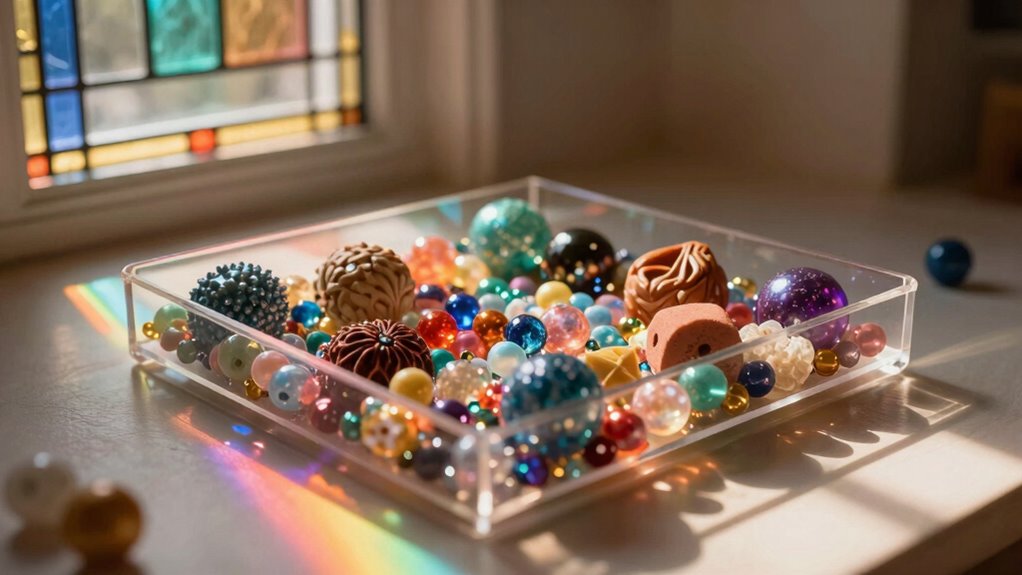

To use light in sensory play setups, incorporate colorful lights or filters to encourage exploration of colors, shadows, and reflections. Adjust light intensity, angles, and distances to create varying shadow effects and vibrant scenes. Use shadow puppets or translucent materials to engage children’s focus and imagination. Combining color mixing with shadow play offers multisensory stimulation that promotes visual perception and curiosity. Explore these techniques further to discover creative ways to enhance sensory experiences.

Turn the school run and nap time into listening time
- Thousands of audiobooks, podcasts and originals
- Listen on your phone, tablet or Echo — also offline
- Cancel anytime
Key Takeaways
- Incorporate colored lights or filters to explore color mixing and visual effects during play.
- Use various objects and materials to create dynamic shadows and reflections with different light sources.
- Adjust light intensity and angles to vary shadow sizes, shapes, and effects for engaging sensory experiences.
- Combine different light colors and shadow techniques to design multisensory scenes that stimulate exploration.
- Keep setups interactive and adaptable to encourage curiosity, fine motor skills, and visual perception development.
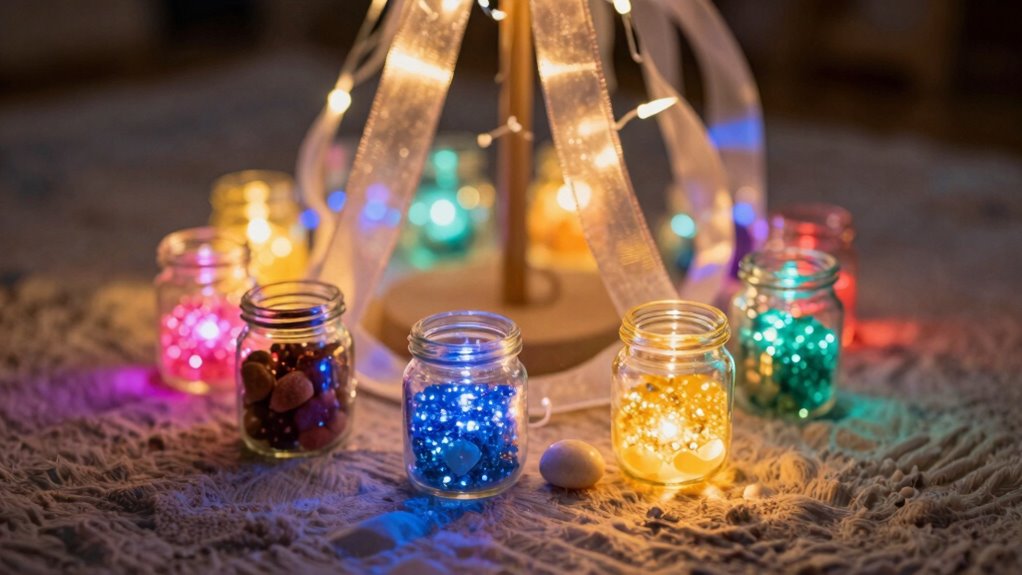
Lighting plays a vital role in creating engaging and stimulating sensory play setups, as it can influence mood, focus, and exploration. When you incorporate light effectively, you open up a world of possibilities for children to experiment with colors, shapes, and shadows. One exciting way to do this is through color mixing. By using different colored lights or filters, you can encourage children to explore how colors blend and change as they overlap. For example, shining red and blue lights together creates purple, while mixing yellow and blue results in green. These activities not only develop visual perception but also introduce basic color theory in a playful way. You might set up a small station with colored gels or LED lights that children can manipulate, allowing them to discover new hues through experimentation.
Shadow creation is another fascinating aspect of lighting in sensory play. Shadows captivate children because they’re dynamic and mysterious, sparking curiosity. To maximize shadow play, you can position a light source behind objects or figures, creating silhouettes on nearby surfaces. Encourage children to move objects around or cast shadows with their hands to see how shapes change and evolve. This hands-on approach helps them understand the relationship between light, object, and shadow. You can also introduce different materials—translucent, opaque, or reflective—to see how they alter shadows and light reflections. Playing with shadows sharpens focus and fine motor skills while stimulating imagination, especially when kids are asked to create stories or scenes using shadow puppets. Incorporating light intensity adjustments can further enhance the shadow effects and deepen their understanding of how light interacts with different surfaces. Additionally, understanding how light behavior influences shadow formation can inspire further exploration and discovery.
Combining these elements elevates your sensory setup. For instance, you might use colored lights to cast vibrant shadows or create a scene where children can experiment with mixing colors on a screen or surface while observing the resulting shadows. This multisensory experience not only makes exploration more engaging but also helps children grasp foundational concepts about light behavior. As you design your setup, think about the placement of lights and objects carefully—adjusting angles and distances can dramatically change the effects, making each session unique. Whether you focus on blending colors or creating shadows, the key is to keep the activities interactive and adaptable. By doing so, you foster curiosity, focus, and creative thinking, transforming simple lighting into a powerful tool for sensory development.
As an affiliate, we earn on qualifying purchases.
Frequently Asked Questions
Can Light Be Used Safely Around Children With Sensory Processing Disorders?
Yes, light can be used safely around children with sensory processing disorders if you prioritize lighting safety and keep a close eye through child supervision. Use soft, non-flashing lights to prevent overstimulation and avoid overly bright or flickering sources. Always supervise your child during sensory play, ensuring they don’t touch or ingest any light sources or cords. Regularly check the setup for stability and safety to keep the experience positive and secure.
What Types of Lights Are Best for Outdoor Sensory Play Setups?
Choosing outdoor sensory play lights is like selecting stars for a sky—bright and inviting. You should opt for LED strips, which are versatile and colorful, creating engaging visual effects. Solar lanterns are perfect for eco-friendly, gentle illumination that adds warmth and charm. Both options are safe, energy-efficient, and easy to set up, making your outdoor space inviting and stimulating for sensory exploration.
How Can I Prevent Overstimulation When Using Lights in Sensory Play?
To prevent overstimulation with lights, you should control light intensity by choosing softer, dimmer bulb types like LED or warm-toned bulbs. Keep the lighting gentle and adjustable, so you can easily turn it down if needed. Monitor the child’s reactions closely, and provide breaks or shaded areas. Using diffusers or lamps with adjustable settings helps create a calming environment, reducing sensory overload and ensuring a comfortable sensory experience.
Are There Specific Color Combinations That Enhance Sensory Experiences?
Like a painter in a Renaissance studio, you can enhance sensory experiences with specific color combinations. Opt for contrasting colors like blue and orange or purple and yellow, which create vibrant color contrast. Keep light intensity adjustable, so you can fine-tune the brightness for comfort. These choices help stimulate senses without overwhelming, making the sensory play more engaging and balanced for anyone involved.
How Do I Store Lighting Equipment Safely After Sensory Play Sessions?
After sensory play sessions, you should store your lighting equipment in sturdy, labeled storage solutions like plastic bins or designated shelves to keep them safe and organized. Always disconnect and inspect your equipment for damage, performing regular equipment maintenance to guarantee longevity and safety. Keep delicate lights away from moisture and extreme temperatures. Proper storage prevents accidents and extends the life of your lighting tools, ensuring they’re ready for your next sensory adventure.
Conclusion
As you weave light into your sensory play, you’re painting a world bursting with magic and wonder. Think of each glow and shimmer as tiny stars guiding curious minds through a galaxy of exploration. With your gentle touch, you turn ordinary moments into shimmering adventures, inviting wonder to dance in every shadow and sparkle. Embrace the glow, and watch how it transforms simple play into a luminous journey of discovery that sparks joy and curiosity in every little heart.
Cold & flu season Picks
humidifiers
As an affiliate, we earn on qualifying purchases.