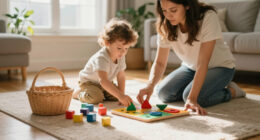
To make a sensory table more engaging, incorporate bright, colorful materials like rice and beads to attract attention and spark curiosity. Create fun themes such as beach or garden scenes to encourage imagination and role-play. Add varied textures like soft fabrics and smooth stones to stimulate senses and promote fine motor skills. Include themed props like animal figurines for storytelling. Let kids help with setup and cleanup, fostering ownership and enthusiasm. Discover more ideas to boost engagement and make playtime even more exciting.

Get baby and family essentials delivered free — and shop member deals
- Fast, free delivery on millions of items
- Access to Prime Big Deal Days deals on October 6–7
- Prime Video, Amazon Music and more included
Key Takeaways
- Incorporate colorful, diverse materials like beads and water beads to attract attention and stimulate senses.
- Use creative themes such as beaches or gardens to foster imagination and storytelling.
- Add varied textures with fabrics, stones, and foam to enhance sensory experiences.
- Include themed props and decorations to encourage role-play and narrative development.
- Involve children in setup and cleanup to increase ownership, curiosity, and engagement.
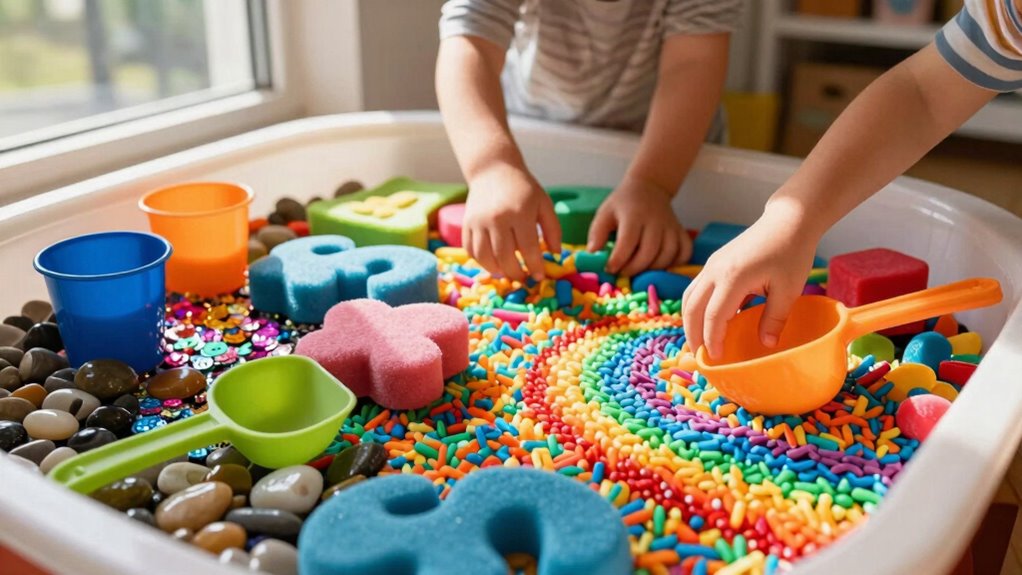
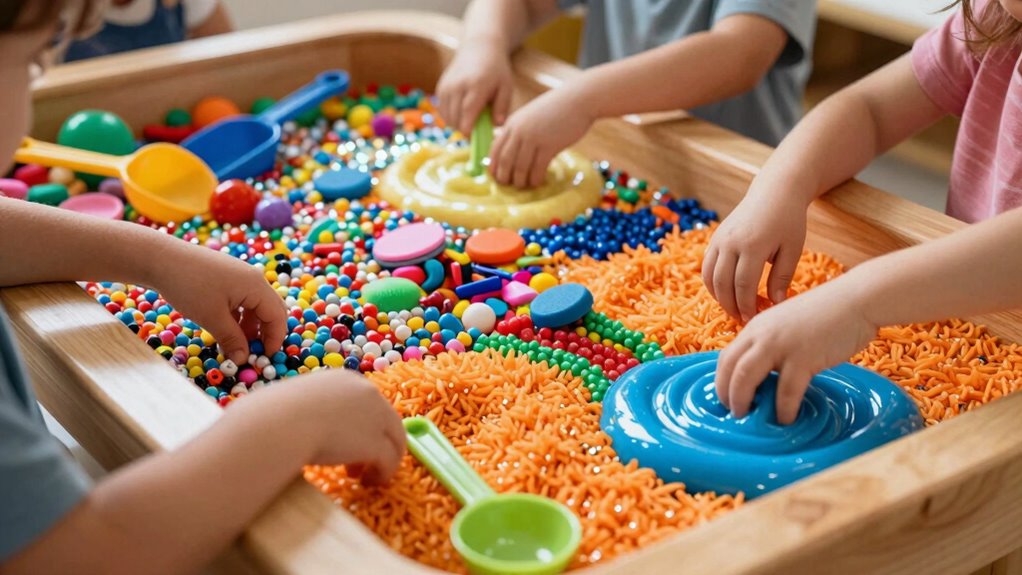
A sensory table can become a favorite part of the day when you find creative ways to make it more engaging. One of the easiest ways is by adding colorful materials that instantly grab kids’ attention. Brightly colored rice, beads, or water beads make the table visually stimulating, encouraging children to explore and manipulate the materials. When you incorporate a variety of hues, it sparks curiosity and invites children to differentiate colors, fostering both sensory and cognitive development. Using vibrant items also creates a lively atmosphere, making the experience more enjoyable.
To keep things fresh and exciting, introduce creative themes that transform the sensory table into a mini adventure. For example, you could create a beach scene with sand, shells, and plastic fish, or set up a garden with faux plants and bugs. Themes provide context and storytelling opportunities, which deepen engagement as children imagine and role-play. They also help focus exploration, making the activity feel purposeful rather than random. Rotate themes regularly to sustain interest, and consider involving children in choosing or creating themes—this increases their investment and enthusiasm.
Mixing different textures and materials also enhances the sensory experience. Incorporate items like soft fabric pieces, smooth stones, or bubbly foam to stimulate various senses. When you add these textured materials alongside colorful ones, children can compare and contrast, enriching their understanding of different sensations. You can also use tools like scoops, funnels, or small containers to promote fine motor skills while adding an element of play. These tools encourage problem-solving and coordination, making the activity more interactive and dynamic. Incorporating multi-sensory experiences can further deepen their engagement and learning. Additionally, providing opportunities for children to manipulate and explore different sensory materials can foster their curiosity and resilience as they discover new ways to interact with the environment. Incorporating varied sensory stimuli can help support diverse learning styles and developmental needs.
Another way to boost engagement is by incorporating themed props or figures that relate to the current creative theme. For instance, if you’re exploring a jungle theme, include animal figurines or leafy decorations. These props help children create narratives and role-play scenarios, making the sensory table a space for imaginative play. As they manipulate the materials and incorporate storytelling, they develop language skills and social-emotional understanding. Using themed decorations also invites children to think creatively about how they can combine different elements to build stories and scenarios.
Finally, involve children in setting up the sensory table. Letting them select materials, arrange items, or even help clean up fosters a sense of ownership. When children feel they have a say in what goes into the table, they’re more likely to be enthusiastic and curious during exploration. Incorporating visual stimulation through bright colors and themed decorations also supports early sensory and cognitive development. By combining colorful materials, creative themes, textured elements, and participatory setup, you turn the sensory table into an engaging, versatile activity that children will look forward to every day.
sensory table accessories for kids
As an affiliate, we earn on qualifying purchases.
As an affiliate, we earn on qualifying purchases.
Frequently Asked Questions
What Are the Best Sensory Materials for Different Age Groups?
For different age groups, choose sensory materials that match their developmental needs. For infants, soft fabrics and water provide gentle sensory play, while toddlers benefit from material variety like rice, pasta, and textured toys. Preschoolers enjoy more complex items like slime, beads, or natural elements. Tailoring sensory materials to each age guarantees engaging sensory play, promotes exploration, and supports learning through a carefully selected variety of textures, colors, and shapes.
How Often Should I Change the Sensory Table Contents?
Did you know that changing sensory table contents weekly can boost sensory play benefits? You should update the materials every 1-2 weeks to keep children engaged and stimulate new senses. Incorporate DIY sensory ideas like colored rice or textured fabrics, which keep the experience fresh and exciting. Regular updates encourage curiosity and exploration, making sensory play more beneficial and fun for kids.
Can Sensory Tables Be Used Outdoors Safely?
Yes, you can use sensory tables outdoors safely. Just consider outdoor weather, like rain or strong sun, which can affect the materials. Cover the table when not in use to prevent contamination from dirt or insects, and use insect prevention strategies such as mesh covers or natural repellents. Regularly check and clean the table to guarantee a safe, fun sensory experience while protecting it from outdoor elements.
What Safety Precautions Are Necessary for Young Children?
Think of your sensory table as a tiny boat on choppy waters—you need steady hands to keep it safe. You must supervise children at all times, ensuring they don’t put unsafe items in their mouths. Use only child-safe, non-toxic materials, and inspect supplies regularly for hazards. Keep the area clean and dry, and set clear rules for safe exploration. These precautions help prevent accidents and make sensory play enjoyable for everyone.
How Do I Clean and Maintain the Sensory Table?
You should regularly clean and maintain your sensory table by following a cleaning schedule, ideally after each use or daily if used frequently. Remove any leftover materials, wash the table with warm, soapy water, and disinfect with a child-safe cleaner. Maintenance tips include checking for cracks or damage, replacing worn-out liners, and ensuring drainage holes are clear. This keeps the sensory table safe, hygienic, and inviting for children to explore.
Conclusion
So, next time you think a sensory table can’t get any more exciting, remember—it’s not about the fancy toys or colorful materials. Sometimes, the real magic lies in your creativity and willingness to experiment. Ironically, the simplest ideas often turn out to be the most engaging. So, don’t overthink it—trust your instincts, and watch as kids discover new worlds right in your own backyard. After all, isn’t curiosity what truly makes a sensory table come alive?
Cold & flu season Picks
humidifiers
As an affiliate, we earn on qualifying purchases.