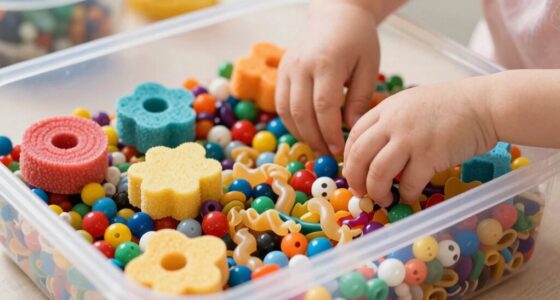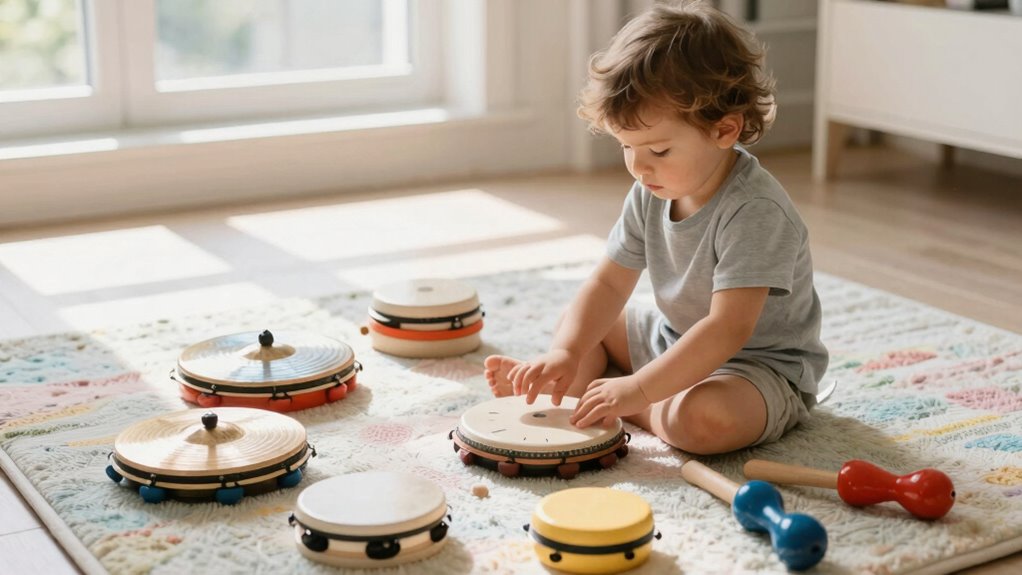

You can try simple sound-based sensory activities like playing with shakers, bells, and drums, asking children to find and identify the sources of different sounds. Use musical instruments for sound matching and encourage singing or clapping to develop rhythm. Incorporate natural sounds from outside, like birds or water, to boost listening skills and connect with the environment. Keep activities short and engaging—if you want to discover more ideas, there’s plenty to explore.

Turn the school run and nap time into listening time
- Thousands of audiobooks, podcasts and originals
- Listen on your phone, tablet or Echo — also offline
- Cancel anytime
Key Takeaways
- Use everyday objects like shakers, bells, or drums for sound matching and exploration activities.
- Sing simple songs and encourage echoing to develop vocal and listening skills.
- Create sound scavenger hunts with items like squeaky toys or rattles for active listening.
- Incorporate natural sounds (birds, water) to enhance environmental awareness and auditory discrimination.
- Keep activities short, engaging, and celebrate successes to boost confidence and participation.

Sound-based sensory play activities offer a dynamic way to engage children’s senses and foster their cognitive development. These activities stimulate auditory pathways, helping children improve their listening skills and build a strong foundation for language and communication. One simple way to incorporate this into play is through music therapy-inspired activities, where you use different sounds and rhythms to hold their attention and encourage response. Music naturally captivates children, making it an excellent tool for developing auditory discrimination—the ability to distinguish between different sounds, pitches, and tones. When you introduce varied musical instruments or sounds, you help children learn to identify differences, a key skill in language learning and sensory processing.
You can start with basic activities like playing a variety of sounds and asking your child to find the source. For example, use a drum, bell, or shaker, and let them explore each one. Then, challenge them to match sounds to objects or repeat sounds after you. This not only hones auditory discrimination but also makes listening fun and interactive. To deepen this experience, you can sing simple songs and encourage your child to echo or imitate the melody, which further enhances their listening and vocal skills. Incorporating rhythmic clapping or tapping can also help children develop a sense of beat and timing, reinforcing their auditory perception.
Another effective activity is creating a sound scavenger hunt. You hide small objects that produce sounds—like a rattle, a crinkly paper, or a squeaky toy—and then ask your child to find and identify them based solely on sound. This encourages active listening and sharpens their auditory discrimination, as they learn to differentiate subtle differences in sounds. You can extend this by playing sound matching games, where they listen to pairs of sounds and determine if they’re the same or different. These simple, engaging activities boost their ability to focus on auditory cues and improve their overall sensory processing. Additionally, understanding the importance of biodiversity can inspire children to appreciate the natural sounds around them, fostering a deeper connection to their environment. Exploring natural sounds can also enhance their auditory discrimination skills and promote a greater appreciation for the environment.
Incorporating music therapy principles into everyday play makes these activities more effective and enjoyable. You’re helping your child develop critical listening skills while fostering emotional expression and social interaction. Keep activities short and varied to maintain their interest, and always celebrate their successes to build confidence. These simple sound-based sensory activities are easy to set up, require minimal resources, and offer rich opportunities for learning and growth. By regularly engaging in these playful, sound-rich experiences, you support your child’s auditory development and lay the groundwork for future language and cognitive skills. Engaging children in diverse natural sounds can further promote their sensory awareness and environmental understanding.
As an affiliate, we earn on qualifying purchases.
Frequently Asked Questions
How Can Sound Activities Support Language Development?
Sound activities boost your child’s language development by enhancing sound recognition and auditory discrimination skills. When you engage in activities like clapping, singing, or listening to different sounds, your child learns to distinguish and identify various sounds, which is essential for speech. These activities also encourage them to connect sounds with words, improving their vocabulary and pronunciation. Regular practice makes it easier for your child to understand and use language confidently.
Are Sound-Based Activities Suitable for All Age Groups?
Sound-based activities, including music therapy and auditory games, are suitable for all age groups. You can adapt these activities to suit different developmental levels, making them engaging and beneficial for everyone. For young children, they foster early language skills, while older adults can enjoy cognitive stimulation and emotional connection. By customizing the activities, you guarantee they remain accessible, effective, and enjoyable across the lifespan.
What Safety Precautions Should Be Taken During Sound Play?
Don’t let safety fall through the cracks when you’re engaging in sound play. You should monitor noise levels to avoid discomfort or hearing damage, and always keep a close eye on children to manage supervision requirements. Use age-appropriate instruments and avoid sharp or fragile objects. Make sure the environment is safe, free from hazards, and that sound levels are comfortable, so everyone enjoys the activity without any surprises.
How Can I Adapt Activities for Children With Hearing Impairments?
You can adapt activities for children with hearing impairments by incorporating sign language to facilitate communication and guarantee they understand the activity. Use tactile feedback, such as textured objects or vibrations, to engage their senses and help them participate fully. Keep activities visually accessible with bright colors or visual cues, and involve them in gestures or movements that promote interaction and sensory exploration, making the experience inclusive and enjoyable.
What Are Some Inexpensive Tools for Sound-Based Sensory Play?
Imagine turning your home into a symphony of discovery—cheap, fun, and creative. You can craft DIY instruments like shakers from plastic bottles filled with rice or beans, and use household objects like pots, spoons, or metal lids as drums. These tools are inexpensive and perfect for sound-based sensory play, allowing children to explore different sounds, develop auditory skills, and enjoy the sensory experience without breaking the bank.
Conclusion
Engaging in sound-based sensory play is like tuning into a symphony where every note sparks curiosity and joy. Imagine a child discovering a rainstick’s gentle rain, their eyes lighting up with wonder—each sound a new world to explore. Just as a conductor brings harmony to an orchestra, you guide your little one through these activities, fostering their sensory development. Embrace these simple steps, and watch their confidence and curiosity flourish like a beautiful melody.
Cold & flu season Picks
humidifiers
As an affiliate, we earn on qualifying purchases.