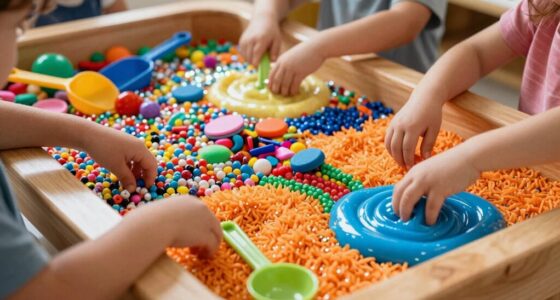
To start sensory play without the mess, choose activities that are well-contained, like using shallow trays or bins with washable or disposable materials. Set up your space with plastic covers or waterproof tablecloths, and opt for mess-friendly items like textured fabrics or edible materials. Keep cleanup supplies nearby and involve your child in tidying up afterward. Focus on simple, quick activities that offer benefits without overwhelming you—continue to find helpful tips that make sensory play enjoyable and manageable.

Turn the school run and nap time into listening time
- Thousands of audiobooks, podcasts and originals
- Listen on your phone, tablet or Echo — also offline
- Cancel anytime
Key Takeaways
- Use shallow, contained trays or bins with washable or disposable materials to minimize cleanup.
- Choose less messy activities like textured fabrics or silicone toys in designated, easy-to-clean spaces.
- Conduct water or sensory play on waterproof surfaces with coverings to catch spills and simplify cleanup.
- Incorporate activities that naturally limit spillage and promote independent cleanup skills.
- Prepare cleaning supplies nearby and teach children to help tidy up after sensory play.
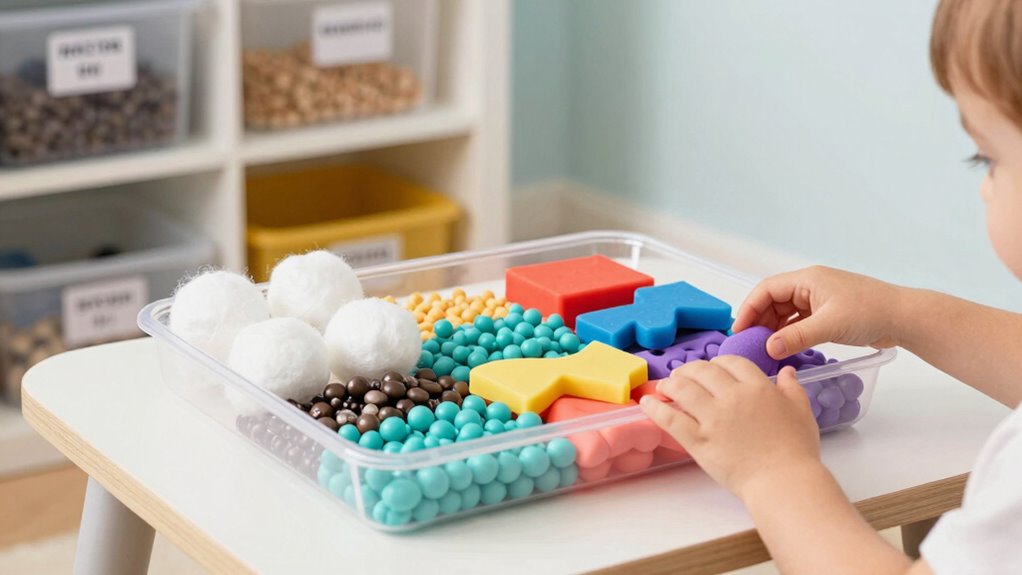
Sensory play is a fantastic way to help your child explore and learn about the world around them. It stimulates their senses, encourages creativity, and boosts development. But if you dread the mess that often comes with sensory activities, you’re not alone. Luckily, you can introduce sensory play without turning your space into a chaotic scene. The key is to focus on the sensory play benefits and use safe sensory materials that minimize cleanup and mess.
Start by choosing activities that contain the mess or keep it contained. For example, using shallow trays or bins allows you to contain the sensory materials within a specific area. You can fill these with items like dry pasta, rice, or beans—these are inexpensive, easy to store, and can be swept up easily afterward. To make cleanup even simpler, opt for materials that are washable or disposable. For instance, using water-based activities with plastic cups and spoons can be engaging and mess-free, especially if you do them on a waterproof tablecloth or in the bathtub. Incorporating containing strategies can help manage the mess effectively and keep playtime enjoyable. Additionally, choosing activities that naturally limit spillage can further reduce cleanup efforts.
Contain messes with trays and washable materials for fun, easy-to-clean sensory play.
Next, consider the environment where your child will play. Set up sensory activities in a designated space that’s easy to clean, such as your kitchen or bathroom. Cover surfaces with plastic or disposable tablecloths to catch any spills. You might also want to use aprons or old clothes to protect your child’s clothing. This way, you can feel more relaxed about the mess, knowing cleanup is straightforward. Incorporating safe sensory materials that are easy to rinse or dispose of can further reduce the stress of cleanup. Remember, child safety is a crucial aspect of sensory play and should guide your choice of materials and supervision strategies.
Another tip is to choose activities that are inherently less messy but still offer sensory benefits. For example, playing with textured fabrics, silicone sensory toys, or kinetic sand in a contained tray delivers tactile stimulation without a big cleanup. You can also incorporate safe sensory materials like edible finger paint or whipped cream—these are fun, engaging, and easy to wipe away or rinse. Using easy-to-clean sensory materials can make the experience more enjoyable for both you and your child. Furthermore, selecting activities that promote independent cleanup can help foster responsibility and independence in your child, making the process smoother overall.
Lastly, involve your child in the cleanup process. Teaching them to put away materials after play fosters responsibility and makes the process more manageable. Keep cleaning supplies nearby, so you can quickly tidy up once the activity is over. Remember, the goal is to give your child the sensory play benefits—like improved fine motor skills and sensory processing—without feeling overwhelmed by the mess. With a little planning and some smart choices, you can create a sensory-rich environment that’s both fun and manageable, even if you dislike the chaos that often accompanies sensory activities.
As an affiliate, we earn on qualifying purchases.
Frequently Asked Questions
Can Sensory Play Be Done Outdoors Safely?
Yes, sensory play can be done outdoors safely if you prioritize sensory safety and manage outdoor challenges. Choose safe, non-toxic materials and supervise your child closely. Use designated play areas to contain messes, and consider covering surfaces with tarps or outdoor mats. Keep an eye on weather conditions and avoid plants or objects that could cause harm. With proper planning, outdoor sensory play becomes a fun, safe experience for your child.
What Are Mess-Free Sensory Play Options?
Mess-free sensory play options include activities like texture exploration with items such as rice, pasta, or foam, which you can contain in trays or bags. You can also try color mixing with water and food coloring in clear cups or bottles, minimizing mess while engaging your child’s senses. These options allow for hands-on learning and fun without creating a mess, perfect for those who prefer tidy play sessions.
How to Clean up After Sensory Activities?
After sensory activities, you should focus on quick, effective cleaning routines that prioritize sensory safety. Use damp cloths or wipes for quick cleanup, and consider designated containers for messy materials to minimize spills. Make sure to clean thoroughly to prevent any hazards. Establish a routine that includes sanitizing surfaces and tools, ensuring the environment remains safe and clean for future sensory play sessions.
Are There Sensory Activities Suitable for Limited Space?
Imagine you’re a modern-day Marie Antoinette, and space is limited. You can still enjoy sensory activities like a small sensory bin or calm down jars. Use a shallow container or a clear plastic box to save space, and keep materials contained. These activities are compact, easy to store, and perfect for tight quarters, helping your child explore senses without clutter. Just a few simple items can make a big difference.
How to Introduce Sensory Play to Reluctant Children?
You can introduce sensory play to reluctant children by highlighting its benefits, like improving motor skills and boosting creativity. Start with simple, mess-free activities such as exploring textured fabrics or listening to calming sounds. Engage your child with their interests, making it fun and interactive. Your enthusiasm encourages child engagement, helping them see sensory play as an enjoyable experience rather than a chore. Gradually, they’ll become more comfortable and excited to participate.
Conclusion
Don’t let the fear of mess keep you from opening a world of wonder for your little one. Think of sensory play as a garden—you just need the right tools and a little patience to see it bloom. Embrace the chaos as part of the adventure, like a painter welcoming splashes of color. With each new texture and scent, you’re planting seeds of curiosity that will grow into a lifelong love of discovery.
Halloween Picks
halloween
As an affiliate, we earn on qualifying purchases.