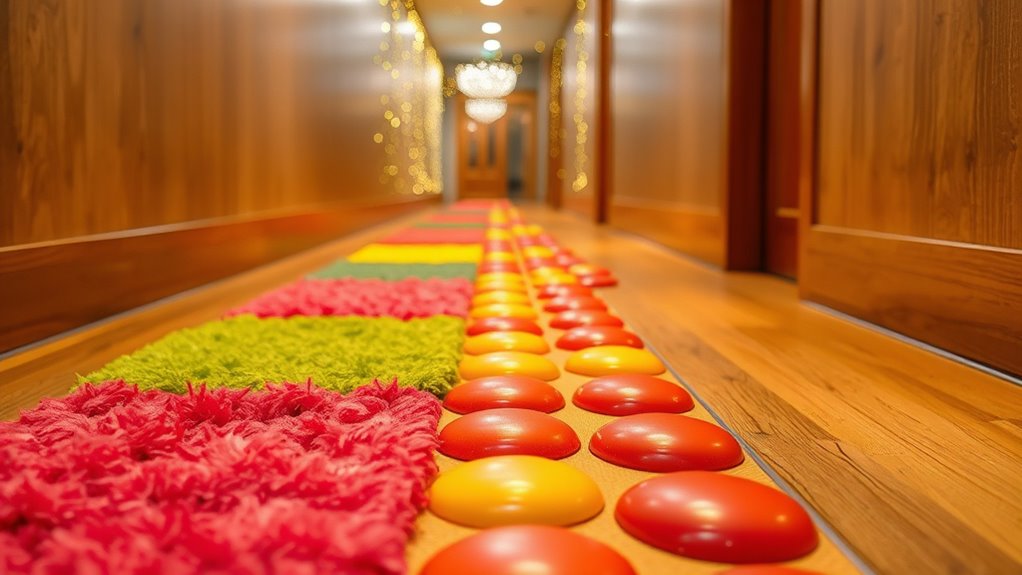

To create a sensory path in your hallway, choose a wide, safe space and plan a sequence of activities like hopping, crawling, balancing, and stepping. Use simple materials such as painter’s tape, foam mats, or recycled items to make stations that stimulate touch, balance, and proprioception. Incorporate bright visuals and clear instructions to engage kids and encourage continuous movement. Keep safety in mind with non-slip surfaces—and if you want tips on designing an effective sensory path, keep exploring!

Get baby and family essentials delivered free — and shop member deals
- Fast, free delivery on millions of items
- Access to Prime Big Deal Days deals on October 6–7
- Prime Video, Amazon Music and more included
Key Takeaways
- Plan a natural, sequential layout with a variety of movement activities to promote continuous sensory input.
- Use simple, safe materials like painter’s tape, foam mats, and recycled items to create stations.
- Incorporate diverse sensory stimuli such as textured mats, balance beams, and movement challenges.
- Design clear visual cues and simple instructions to encourage independent use by children.
- Ensure safety through non-slip surfaces, secure installations, supervision, and regular maintenance.
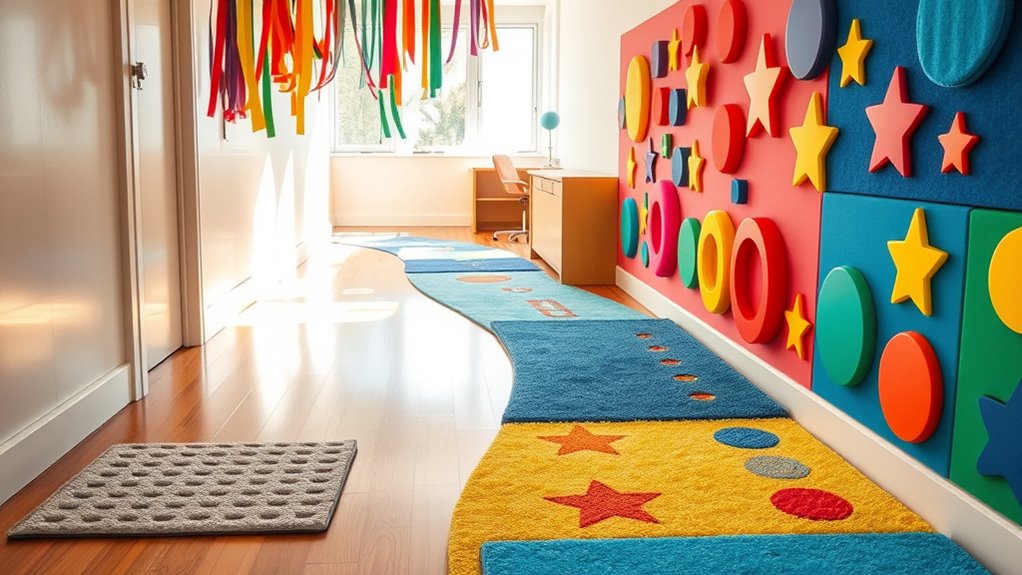
If you’re looking for a fun and functional way to engage children and promote sensory development, creating a sensory path in your hallway is a great option. A sensory path offers a dynamic environment where kids can participate in sensory integration through movement activities. These paths are designed to stimulate multiple senses—touch, balance, proprioception, and even sight—while encouraging active play. By incorporating a variety of stations and textures, you can make the space appealing and engaging, helping children develop essential motor skills and sensory processing abilities.
To start, consider the layout of your hallway. It should be wide enough to accommodate movement activities comfortably and safely. Think about the different types of activities you want to include; for example, hopping on a designated spot, crawling through tunnels, balancing on a line, or stepping on textured surfaces. These stations can be made from simple materials like painter’s tape for lines, foam mats for soft surfaces, or even recycled items like cardboard boxes for crawling tunnels. The key is to create a sequence that flows naturally, allowing children to move smoothly from one activity to the next. This setup encourages continuous movement, which is *essential* for sensory integration, helping children process sensory information more effectively.
Next, focus on making the path visually appealing and inviting. Use bright colors, patterns, or themed decorations to stimulate visual senses and capture children’s attention. Clear signage or simple instructions can help guide them through the activities, making the experience independent and self-directed. As children navigate the path, they engage in movement activities that challenge their balance, coordination, and body awareness. These activities are not only fun but also *indispensable* for developing core muscles, improving motor planning, and enhancing overall sensory processing. Incorporating knitting techniques or patterns can add tactile variety to different stations if desired, further enriching the sensory experience.
You should also consider including stations that target different sensory inputs. For instance, a textured mat can stimulate tactile senses, while a balance beam promotes vestibular input. Incorporate activities that require jumping, crawling, or stepping to boost proprioception, which helps children understand their body’s position in space. These movement activities are essential for sensory integration because they help children organize and interpret sensory information more effectively, leading to better attention, behavior, and learning.
Finally, keep safety in mind. Use non-slip surfaces, secure all installations, and supervise children during play. Regularly inspect the path for hazards or wear, and adjust activities as needed to suit different ages and abilities. With thoughtful design and consistent use, your sensory path can become a vibrant, interactive space where kids develop *imperative* skills while having fun. Creating this sensory experience right in your hallway makes a positive difference in children’s sensory development, motor skills, and overall well-being.
As an affiliate, we earn on qualifying purchases.
Frequently Asked Questions
Can a Sensory Path Be Customized for Specific Sensory Needs?
Yes, you can definitely customize a sensory path for specific sensory needs. By incorporating sensory integration principles, you tailor activities to suit individual preferences and sensitivities. You might add textured mats, movement stations, or calming elements based on what helps the person stay focused or calm. Personalizing activities guarantees the sensory path effectively supports unique sensory processing, making it a valuable tool for promoting engagement and regulation.
What Safety Precautions Are Necessary for a Sensory Hallway?
You should follow safety guidelines to make certain your sensory hallway is safe. Use non-slip mats or textured flooring to prevent falls, and secure all equipment firmly to avoid hazards. Keep pathways clear of clutter, and regularly inspect for damages or loose parts. Adequate lighting and soft borders reduce injury risk, while signage can remind users of safety practices. Implementing these hazard prevention measures creates a secure environment for everyone using the sensory path.
How Much Space Is Needed to Install a Sensory Path?
Think of your hallway as a blank canvas; you’ll need enough space for the sensory path to flow smoothly. Typically, allocate about 10-15 feet of length and 3-4 feet of width for effective layout considerations. This guarantees kids can move comfortably without feeling cramped. If your hallway is narrow, consider shorter, more compact stations. Proper space permits safe, engaging activities that promote sensory integration.
What Age Groups Benefit Most From Sensory Paths?
You’ll find that sensory paths benefit children of all ages, especially preschoolers and early elementary students, by supporting child development and sensory integration. These paths help improve motor skills, focus, and emotional regulation. As children move through different activities, they strengthen their sensory systems, making them especially valuable for children needing extra sensory input or those with sensory processing challenges. Your sensory path can be a versatile tool for fostering growth across age groups.
Are There Budget-Friendly Options for Creating a Sensory Path?
Yes, you can create a sensory path using DIY alternatives and budget materials. You might repurpose items like painter’s tape for colorful pathways, use foam mats or carpet squares for soft surfaces, and gather household objects for balance and coordination activities. These options are affordable, easy to customize, and engaging. By combining creativity with inexpensive materials, you can design a sensory path that’s fun, functional, and budget-friendly.
Conclusion
By creating a sensory path in your hallway, you engage your child’s senses, encourage movement, and promote focus. You inspire exploration, foster development, and boost confidence. You make your home a space of learning, fun, and growth. So, why wait? Start designing your sensory path today, turn your hallway into a haven, and watch your child thrive through play, movement, and discovery. Because with a sensory path, every step leads to success.
Fall Picks
fall essentials
As an affiliate, we earn on qualifying purchases.