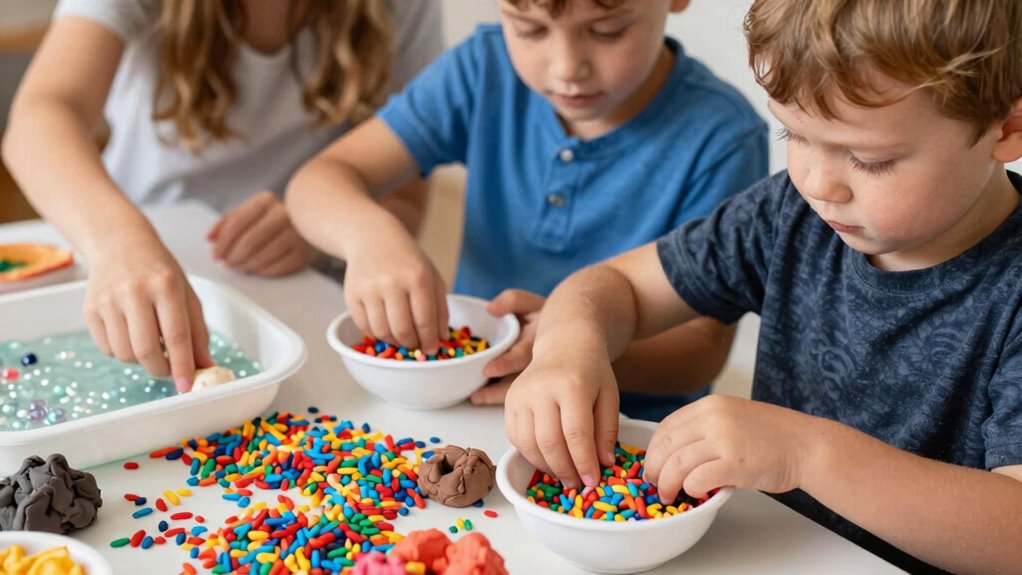

Sensory play changes as your child grows. With infants, you’ll focus on simple textures like fleece or velvet to soothe and stimulate their tactile senses. Preschoolers enjoy more complex activities, like sorting beans or creating tactile collages with different fabrics such as burlap or corduroy. As they develop, they can explore with tools and engage in activities that challenge their sensory discrimination. Keep exploring, and you’ll discover how each age benefits from tailored sensory experiences.

Turn the school run and nap time into listening time
- Thousands of audiobooks, podcasts and originals
- Listen on your phone, tablet or Echo — also offline
- Cancel anytime
Key Takeaways
- Infants engage with safe, textured fabrics like fleece or velvet to explore tactile sensations and promote calming.
- Toddlers experiment with simple sensory bins filled with rice, beans, or water, developing fine motor skills.
- Preschoolers use more complex materials, tools, and sorting activities to enhance cognitive and sensory discrimination.
- Sensory play evolves to include textured fabrics and collages, fostering tactile awareness and environmental understanding.
- All ages benefit from safe, engaging sensory experiences tailored to their developmental stage and sensory processing needs.
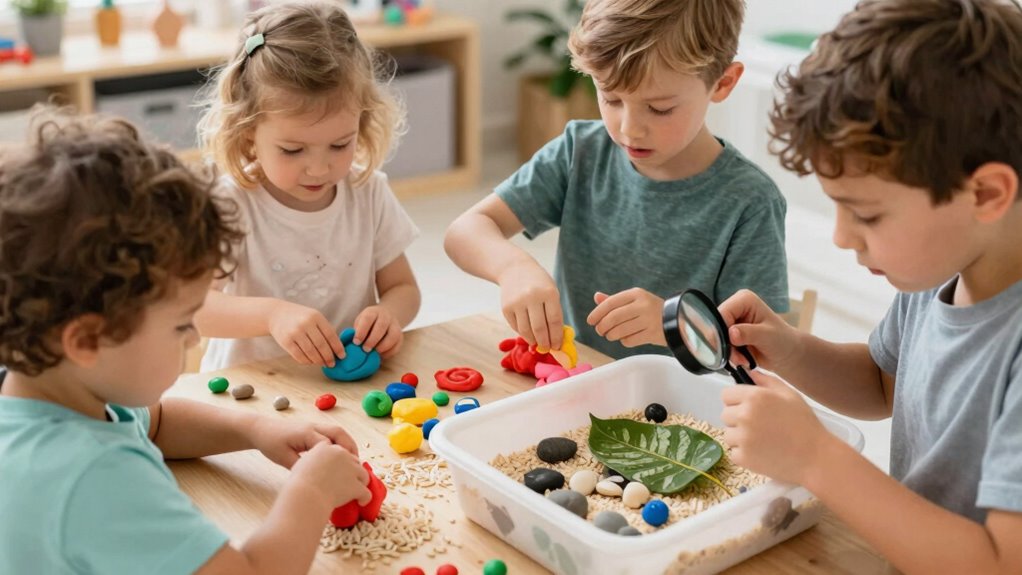
Sensory play is an essential part of childhood development that evolves with age, offering different benefits and opportunities at each stage. When you introduce sensory bins, you give your child a safe space to explore different textures, colors, and shapes. These bins can be filled with anything from rice, pasta, or beans to water beads or sand, providing a rich sensory experience. As your child grows, they’ll delight in discovering new textures and manipulations, which help build fine motor skills and hand-eye coordination. For infants, simple sensory bins with soft fabrics or textured fabrics like fleece or velvet can stimulate tactile senses and promote calming. For older children, adding small objects or themed items can encourage imaginative play and problem-solving. Incorporating sensory-rich materials like textured fabrics into play can further enhance their sensory experiences.
At around age one, your little one begins to explore the world through their hands and mouth. Sensory play at this stage should focus on safe, non-toxic materials that promote exploration. Using textured fabrics in sensory play is especially effective because they offer different tactile sensations—rough, soft, bumpy, or smooth—helping your child develop their tactile discrimination. You might introduce fabrics with varied textures in sensory bins or as standalone items, encouraging your child to touch, squeeze, and feel. This activity not only enhances sensory processing but also fosters language development as you describe the textures together. Incorporating texture diversity into sensory activities can maximize sensory engagement and learning. Additionally, rotating different fabrics can keep the sensory experience fresh and engaging for your little one. Incorporating a variety of textures can also aid in sensory integration, helping children process sensory information more effectively.
As children reach preschool age, their curiosity deepens, and sensory activities become more complex. You can expand your sensory bins with items like dried pasta, beans, or water, and introduce tools such as scoops and cups to refine motor skills. Incorporating textured fabrics like burlap or corduroy into these activities adds new tactile layers, challenging your child’s sensory perceptions. At this stage, play becomes more intentional, helping your child learn about the properties of different materials while refining their fine motor and cognitive skills. They might enjoy sorting objects by texture, exploring how different fabrics feel, or creating tactile collages. Combining different textures in a single activity can further develop sensory discrimination and help your child better understand the world around them.
sensory play sensory bins for toddlers
As an affiliate, we earn on qualifying purchases.
As an affiliate, we earn on qualifying purchases.
Frequently Asked Questions
How Can Sensory Play Benefit Children With Developmental Delays?
Sensory play can considerably benefit children with developmental delays by supporting sensory integration, helping them process and respond to stimuli more effectively. It encourages reaching developmental milestones like improved motor skills, coordination, and communication. You might notice your child becoming more engaged and confident as they explore textures, sounds, and sights. This type of play fosters a calming environment, promotes learning, and helps bridge gaps in their development.
What Safety Precautions Are Needed During Sensory Play?
You should prioritize sensory safety by closely supervising children during play. Always check for allergies and avoid small objects that pose choking hazards. Use non-toxic, hypoallergenic materials and keep play areas clean. Implement play precautions like setting clear boundaries and ensuring age-appropriate activities. Regularly inspect toys and materials for damage to prevent injuries. These steps make sensory play both fun and safe, helping children explore confidently while minimizing risks.
How Do You Introduce Sensory Play to Reluctant Children?
You can introduce sensory play to reluctant children by starting with activities that match their play preferences. Encourage sensory exploration through simple, inviting options like textured toys or water play, making it fun and low-pressure. Observe their reactions and gradually introduce new textures or scents. Keep sessions short and positive, allowing them to explore at their own pace. This approach helps build comfort and curiosity in sensory play.
Can Sensory Play Be Adapted for Children With Sensory Processing Disorder?
You can definitely adapt sensory play for children with sensory processing disorder, as it’s essential for their development. Research shows that sensory integration activities help improve tactile stimulation and reduce anxiety. Focus on gentle, controlled experiences like soft textures or calming scents. By customizing sensory activities, you help your child process sensory input at their own pace, encouraging engagement and growth while minimizing overwhelm.
What Are Some Inexpensive Sensory Play Activities?
You can create inexpensive sensory play activities using DIY materials like rice, beans, or pasta for sensory bins. Fill a container with these materials, adding small toys or tools for exploration. You might also make homemade slime, playdough, or use everyday household items like sponges and fabric scraps. These activities stimulate senses and are budget-friendly, making sensory play accessible and fun without spending much money.
Conclusion
Sensory play evolves with your child’s age, fostering development through tailored experiences. For instance, a toddler exploring textured toys builds fine motor skills, while a preschooler engaging in sensory bins enhances problem-solving. Imagine a parent introducing a scent jar activity—this not only sparks curiosity but also deepens emotional connections. By understanding these age-specific activities, you can create enriching opportunities that support growth, curiosity, and learning at every stage.
Fall Picks
fall essentials
As an affiliate, we earn on qualifying purchases.