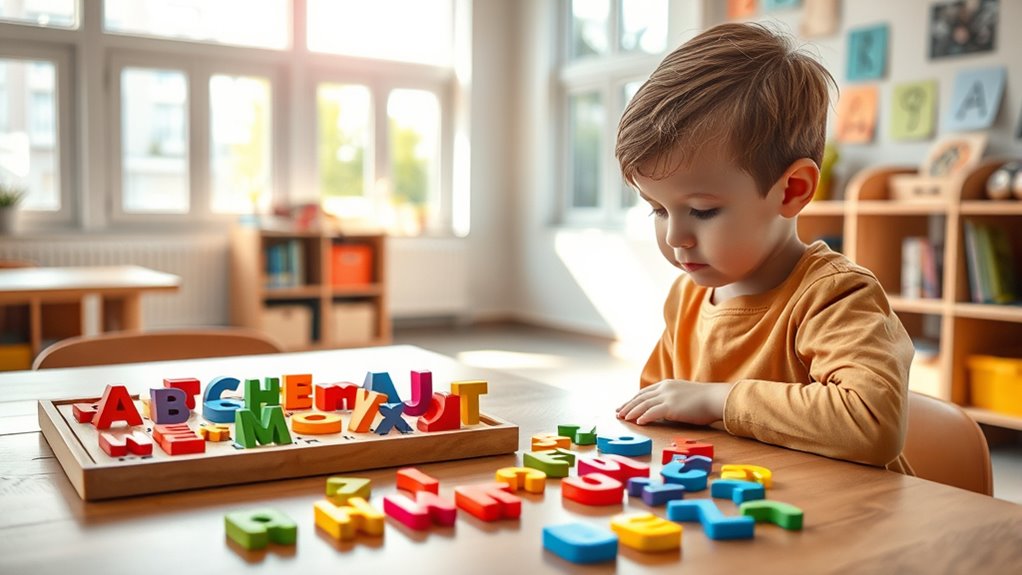

Using sound games with a moveable alphabet makes language learning engaging and hands-on. You can help learners improve pronunciation, sound recognition, and letter skills through fun activities that reinforce auditory discrimination and letter-sound connections. These tools support learners of all levels, encouraging confidence and independence. Incorporating these materials transforms abstract concepts into tactile experiences, making learning more effective. Keep exploring to discover how these methods can boost your teaching techniques even further.
Key Takeaways
- Sound games enhance phonetic understanding, making pronunciation practice engaging and interactive for learners.
- Moveable alphabet tools help visually and physically connect sounds to written symbols, improving alphabet recognition.
- Incorporating sound games with movable alphabets reinforces auditory discrimination and phoneme-symbol associations.
- These materials support learners at various levels, fostering confidence and independent language exploration.
- Combining sound games with moveable alphabets accelerates reading, spelling, and pronunciation skills through hands-on activities.
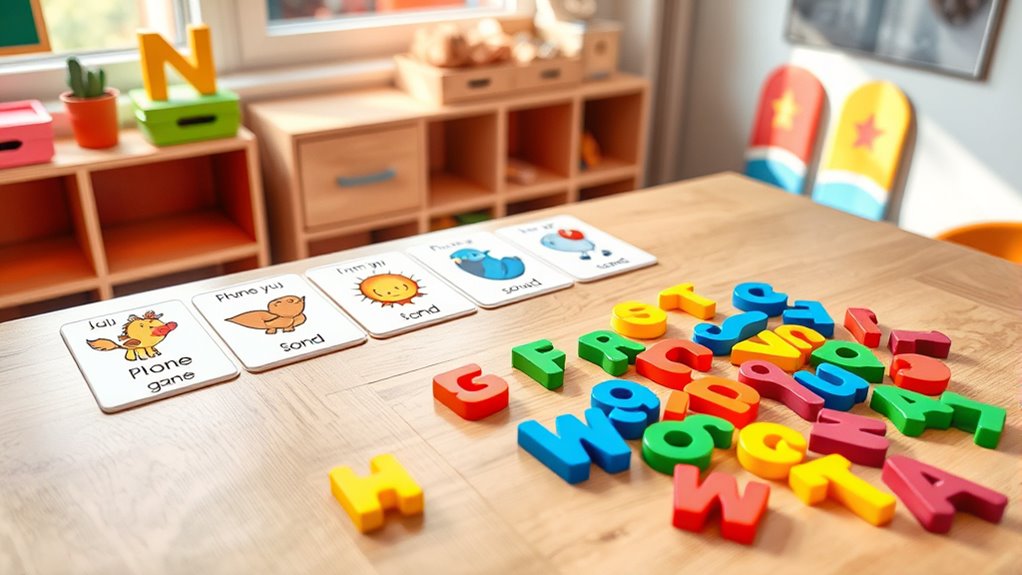
Have you ever wondered what tools best support language learning? If so, you’re not alone. Many educators and learners seek engaging ways to develop foundational skills like phonetic exercises and alphabet recognition. These tools are essential for building confidence and fluency in a new language. Sound games and moveable alphabet materials stand out because they transform abstract concepts into tangible experiences. They make learning active and hands-on, helping you connect sounds to their written forms more naturally.
Phonetic exercises are fundamental to mastering pronunciation and understanding how sounds form words. Using sound games, you can practice these exercises in a fun, interactive way. For example, phonetic matching games encourage you to listen carefully and associate sounds with corresponding symbols or letters. This active process reinforces auditory discrimination and helps you internalize the way sounds work in the language. These exercises boost your ability to decode unfamiliar words, making reading and pronunciation more intuitive. When you engage in regular phonetic practice with sound games, you develop a more precise ear for subtle differences in pronunciation, which is essential for effective communication.
Alphabet recognition is another critical skill that these materials support. Recognizing and naming the alphabet’s letters lays the groundwork for spelling, reading, and writing. Moveable alphabet tools are especially useful here. They allow you to physically manipulate letters, arranging and rearranging them to form words or match sounds. This tactile approach makes the abstract concept of the alphabet more concrete, especially for visual or kinesthetic learners. As you become more confident with alphabet recognition, you’ll find it easier to connect sounds to their written symbols, accelerating your reading development.
Sound games and moveable alphabet activities are adaptable for learners at different levels. For beginners, they help establish a solid phonetic foundation and build confidence with the alphabet. For more advanced learners, these tools can refine pronunciation and spelling skills, making language use more precise. They also foster a sense of independence, as learners can self-correct and experiment with different sounds and word formations. The interactive nature of these materials keeps learning engaging, which encourages consistent practice—an essential ingredient for language mastery. Additionally, understanding the importance of language materials in developing literacy skills can enhance your overall learning experience.
Frequently Asked Questions
How Do Sound Games Enhance Phonemic Awareness?
Sound games boost phonemic awareness by helping you develop phoneme recognition and auditory discrimination skills. As you participate, you actively identify and differentiate individual sounds in words, which strengthens your ability to hear subtle differences. These games make learning engaging and practical, encouraging you to listen carefully and recognize phonemes in various contexts. Ultimately, they build a solid foundation for decoding words and improving reading fluency.
What Age Is Best for Introducing Moveable Alphabets?
You should introduce moveable alphabets around ages 4 to 6, when children are developmentally ready for early literacy activities. This age is ideal because their fine motor skills and letter recognition are improving, making it easier for them to engage with the materials. By selecting age-appropriate activities, you support their developmental readiness, helping them build confidence and foundational reading skills effectively.
Are There Digital Alternatives to Traditional Language Materials?
Yes, there are digital alternatives to traditional language materials. You can explore digital tools like language apps and interactive software that make learning engaging and flexible. These resources often feature games, quizzes, and moveable alphabet simulations that help children develop literacy skills. Using digital tools allows you to customize lessons, track progress, and incorporate multimedia elements, making language learning more dynamic and accessible for kids at various developmental stages.
How Do These Tools Support Multilingual Language Learning?
Think of these tools as bridges spanning linguistic islands, allowing you to navigate multilingual phonics with ease. They support language transfer by providing interactive, multisensory experiences that reinforce vocabulary and pronunciation across languages. Digital alternatives adapt to your learning pace, making it easier to transfer skills from one language to another. This personalized approach helps you build confidence and fluency, turning language learning into a smooth journey rather than a formidable mountain.
What Are Common Challenges When Using Sound Games?
You might face challenges with sound games, especially in phoneme recognition and speech articulation. Some learners struggle to distinguish similar sounds or produce clear pronunciation, making progress slow. You’ll need patience and tailored activities to help learners improve their listening skills and speech clarity. Consistent practice and positive reinforcement can help overcome these hurdles, ensuring learners develop stronger phonemic awareness and better speech articulation over time.
Conclusion
So, after all these sound games and moveable alphabets, you might think you’ve unfastened the secrets of language. Ironically, while you’re busy building words and sounds, the true magic slips quietly between your fingers—unspoken understanding. It’s funny how the tools seem so powerful, yet the real language lives in the subtle pauses and unarticulated feelings. Sometimes, all your efforts only remind you that the most profound conversations happen beyond the materials you hold.