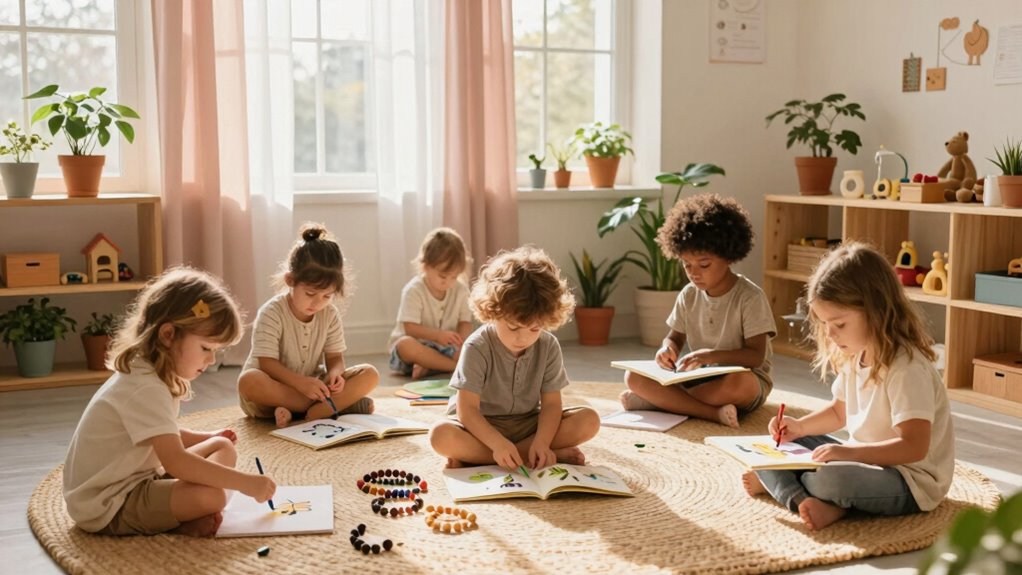

A gentle Waldorf morning begins with opening the curtains to let in natural light and stepping outside to breathe fresh air and observe the sky. You’ll slow down with simple, mindful routines, like preparing nourishing meals together and engaging in creative crafts inspired by nature. Songs and stories add harmony, fostering connection and calm. By intentionally embracing this peaceful start, you’re setting a loving, grounded tone for the day ahead—keep exploring to discover more ways to nurture these moments.

Turn the school run and nap time into listening time
- Thousands of audiobooks, podcasts and originals
- Listen on your phone, tablet or Echo — also offline
- Cancel anytime
Key Takeaways
- Start the day outdoors, breathing fresh air and observing the sky to foster a peaceful connection with nature.
- Open curtains to let in natural light, setting a calm, inviting atmosphere for the day ahead.
- Incorporate gentle, mindful routines like storytime, singing, and simple crafts that emphasize presence and joy.
- Prepare nourishing, seasonal meals together, practicing gratitude and mindful eating to deepen connection.
- Maintain a slow, deliberate daily rhythm that balances quiet reflection, creative activities, and outdoor experiences.

Waldorf mornings with kids offer a gentle, intentional start to the day that nurtures both mind and spirit. You begin by creating a calm, inviting atmosphere that encourages mindfulness and presence. As you rise with the sun, you might open the curtains to let in natural light, welcoming the day’s quiet energy. This connection to nature is central to a Waldorf routine, so you may take a moment outside to breathe in the fresh air, listen to the birds, or observe the changing sky. These simple acts foster a deep sense of connection to the natural world and set a peaceful tone for everything that follows.
A gentle Waldorf morning begins with natural light, outdoor connection, and mindful presence to nurture mind and spirit.
After your outdoor connection, you can shift into a time of creative crafts that engage your child’s hands and mind. These activities are not about perfection but about the process—feeling the texture of wool, shaping clay, or weaving simple patterns. You might start with a morning craft that reflects the seasons or the natural environment around you, like making leaf crowns or painting with earth tones. These creative crafts serve as a gentle way to develop fine motor skills and encourage imaginative expression. They also reinforce the rhythm of your day while grounding your child in a sense of accomplishment and joy.
Throughout the morning, you keep the pace slow and deliberate, emphasizing quality over speed. You might read a story aloud, choosing stories that celebrate nature and human virtues, or sing gentle songs that evoke a sense of harmony. As you move through these activities, an intentional rhythm unfolds—balancing quiet reflection with hands-on work. This rhythm helps your child feel secure and centered, fostering emotional resilience and a love for learning. Incorporating nature connection into your routine can deepen your child’s appreciation for the environment and support their overall well-being. Emphasizing the importance of sustainable living practices can further instill respect for the earth and its resources from a young age.
As part of this gentle rhythm, a mindful approach to meals is also essential. You prepare simple, nourishing foods together, involving your child in the process. This act of cooking becomes an extension of your connection to nature, using seasonal, whole ingredients whenever possible. The meal becomes a time for gratitude and mindful eating, deepening your shared experience.
In all these moments, you prioritize presence and intention, gently guiding your child through a morning that celebrates life’s natural rhythms. A Waldorf morning isn’t rushed or hectic; it’s a sacred space where your child’s curiosity and sense of wonder are cultivated. This gentle start not only nurtures their growing mind but also feeds their spirit, creating a foundation of calm, connection, and love that lasts throughout the day.
natural light window curtain for kids room
As an affiliate, we earn on qualifying purchases.
As an affiliate, we earn on qualifying purchases.
Frequently Asked Questions
How Do You Prepare for a Waldorf Morning With Young Children?
To prepare for a Waldorf morning, you start the night before by setting out materials for a creative craft, like watercolor paints or natural clay. In the morning, greet your children calmly, then serve a nourishing breakfast that’s warm and wholesome. Engage them with gentle conversations, encouraging mindfulness and presence. This routine fosters a peaceful start, helping your kids feel grounded and ready for a day of gentle exploration and learning.
What Are Common Challenges During Waldorf Mornings?
Like the dawn breaking softly, mornings can face challenges, such as resistance to creative crafts or moments of restlessness. You might find gentle discipline essential to maintaining harmony, guiding your children with patience rather than urgency. Distractions can test your calm, but embracing a mindful approach helps you stay centered. By focusing on understanding and kindness, you create a nurturing atmosphere where challenges transform into opportunities for connection and growth.
How Do You Incorporate Outdoor Time Into the Morning Routine?
You incorporate outdoor time into your morning routine by starting with simple nature exploration activities, like observing birds or collecting leaves. As part of your morning rituals, you step outside together, encouraging curiosity and mindfulness. You might take a short walk, breathe in fresh air, or listen to the sounds of nature. This gentle start helps set a calm, grounded tone for the day, fostering a deep connection with the natural world.
What Role Does Storytelling Play in Waldorf Mornings?
Storytelling plays a crucial role in your Waldorf mornings by nurturing imagination, fostering connection, and enriching daily routines. You weave storytelling traditions into your mornings, sparking curiosity and wonder. You encourage imaginative play through stories that invite your children to visualize, explore, and create. You nurture their sense of awe and develop language skills while building a calm, meaningful start to each day, making storytelling an essential, heartwarming part of your rhythm.
How Do You Balance Routine and Flexibility in the Morning?
You balance routine and flexibility by embracing mindful shifts, allowing your children to flow smoothly from one activity to another. You set gentle, predictable rhythms that provide security, but also leave room for creative flexibility when curiosity sparks or unexpected moments arise. This approach helps your kids feel safe yet free to explore, making mornings calm and joyful. Trust your instincts, and adapt your routine to meet your family’s unique rhythm.
Conclusion
A gentle Waldorf morning is like tending a delicate garden, where patience and presence nurture growth. By embracing simplicity, rhythm, and connection, you create a space where your children blossom naturally. Each moment becomes a seed of trust and wonder, cultivating a harmonious start to the day. When you approach mornings with love and mindfulness, you’re not just guiding your kids—they’re blooming into their brightest selves, one gentle step at a time.
Halloween Picks
halloween
As an affiliate, we earn on qualifying purchases.