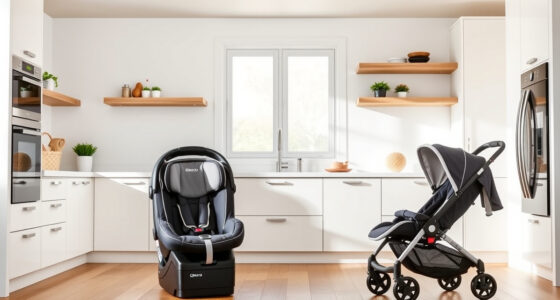
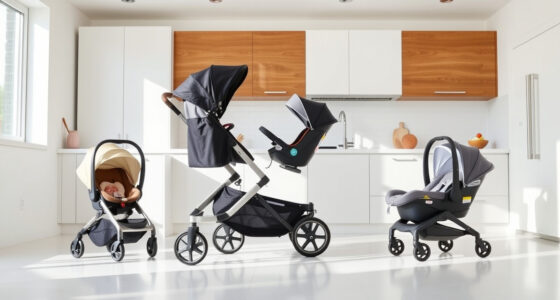
Rotating big toys keeps your child engaged and excited without needing to buy more. By swapping out toys periodically, you reignite their curiosity and make familiar toys feel fresh again. This method encourages active play, exploration, and even problem-solving as they discover new ways to use the same toys. It also helps reduce clutter and promotes organization. Keep exploring, and you’ll find more ideas to make playtime even more stimulating and fun.

Turn the school run and nap time into listening time
- Thousands of audiobooks, podcasts and originals
- Listen on your phone, tablet or Echo — also offline
- Cancel anytime
Key Takeaways
- Rotating big toys keeps play areas fresh and exciting without additional purchases.
- Swapping large toys periodically sparks renewed curiosity and exploration.
- Limiting accessible big toys creates anticipation and enhances their perceived novelty.
- Regular rotation prevents boredom and fosters sustained engagement over time.
- Reintroducing familiar big toys with new configurations encourages creative and developmental play.

Ever feel like your child’s interest in their big toys is fading too quickly? It’s a common challenge, especially as kids grow and their preferences shift. Instead of constantly buying new playthings, you can breathe new life into the toys they already own by simply rotating them. This strategy keeps play fresh, engaging, and full of surprises, all without extra cost. When you change up which toys are accessible, your child’s curiosity is reignited, and they’re encouraged to explore with renewed enthusiasm.
Rotating big toys allows you to introduce a sense of novelty that captivates your child’s imagination. Instead of leaving all toys out at once, keep some stored away and swap them periodically. This creates a sense of anticipation and makes each toy feel special when it reappears. It’s like giving the same plaything a fresh start, which helps sustain interest and prevents boredom. Plus, this method helps you keep your space organized, reducing clutter and making it easier for your child to focus on a few select toys at a time. Incorporating variety in play through rotation also enhances interactive play and sensory engagement. When your child encounters a toy they haven’t seen in a while, they’re more likely to explore all its features anew. This sparks their creativity and encourages problem-solving, especially if the toy offers multiple ways to play. For example, a large play kitchen or a climbing structure may have different functions or configurations that they can discover over time. This ongoing discovery promotes active participation, fostering their cognitive and physical development. Additionally, understanding how different toys relate to electric vehicle technology can subtly introduce them to concepts of innovation and engineering as they play. Recognizing the importance of sensory stimulation in play can further boost their overall development, making each rotation not just fun but also beneficial. Introducing toys that mimic real-world engineering principles can inspire curiosity about how things work, encouraging an early interest in STEM topics.
As an affiliate, we earn on qualifying purchases.
Frequently Asked Questions
How Often Should I Rotate the Big Toys?
You should rotate the big toys every 2 to 4 weeks, depending on your child’s interest and the variety of toys available. Establish a toy organization system and a rotation schedule to keep things fresh and exciting. This approach prevents boredom, maintains curiosity, and encourages imaginative play. Regularly changing toys also helps you identify which ones capture your child’s attention the most, making future selections more intentional and enjoyable.
What Safety Considerations Are Involved in Rotating Toys?
When rotating big toys, you need to take into account age appropriateness to ensure they’re suitable for your child’s development. Watch out for safety hazards like sharp edges, loose parts, or small pieces that could cause choking. Regularly inspect toys for wear and tear, and always supervise playtime. By keeping safety in mind, you create a safe environment that encourages exploration while minimizing risks.
How Do I Determine Which Toys to Rotate?
You should select toys for rotation by observing your child’s current interests and engagement levels. Use creative display ideas to showcase different toys, making each feel fresh and exciting. Consider storage solutions that make it easy to swap toys in and out, ensuring variety without clutter. Rotate toys that are still in good condition and align with your child’s evolving preferences, keeping playtime engaging and stimulating while maximizing your existing collection.
Can Rotation Help With Long-Term Toy Durability?
Rotation can definitely help with toy lifespan by reducing wear and tear, which keeps toys in better condition longer. When you switch out toys regularly, your child stays engaged, boosting play engagement and preventing boredom. This approach not only preserves the quality of your toys but also encourages ongoing interest. By rotating big toys, you extend their durability and maintain your child’s curiosity, making playtime both fun and sustainable over the long term.
Should I Involve Children in the Rotation Process?
Involving children in the rotation process is like planting seeds for autonomy. You should include them in the decision-making process, as it boosts their interest and ownership. Child involvement makes toy rotation more engaging and helps kids understand the value of sharing and patience. By involving them, you encourage independence and make the experience fun, fostering a positive attitude toward play and new toy arrangements.
Conclusion
By gently shifting your big toys, you invite invigorating excitement without the need for new additions. It’s a quiet way to keep interest alive, like turning a familiar page to reveal a hidden chapter. When you rotate what’s available, you’re softly rekindling curiosity and wonder, giving your space a subtle, revitalizing breath. Sometimes, all it takes is a gentle change to renew enthusiasm—no extra cost, just a little mindful movement to keep the magic flowing.
Halloween Picks
halloween
As an affiliate, we earn on qualifying purchases.