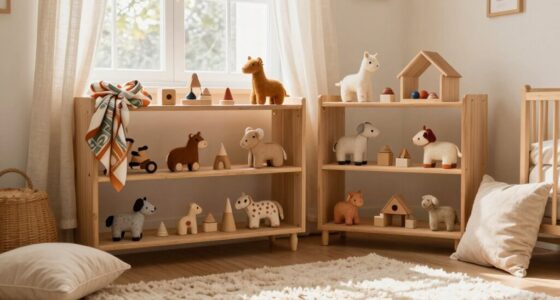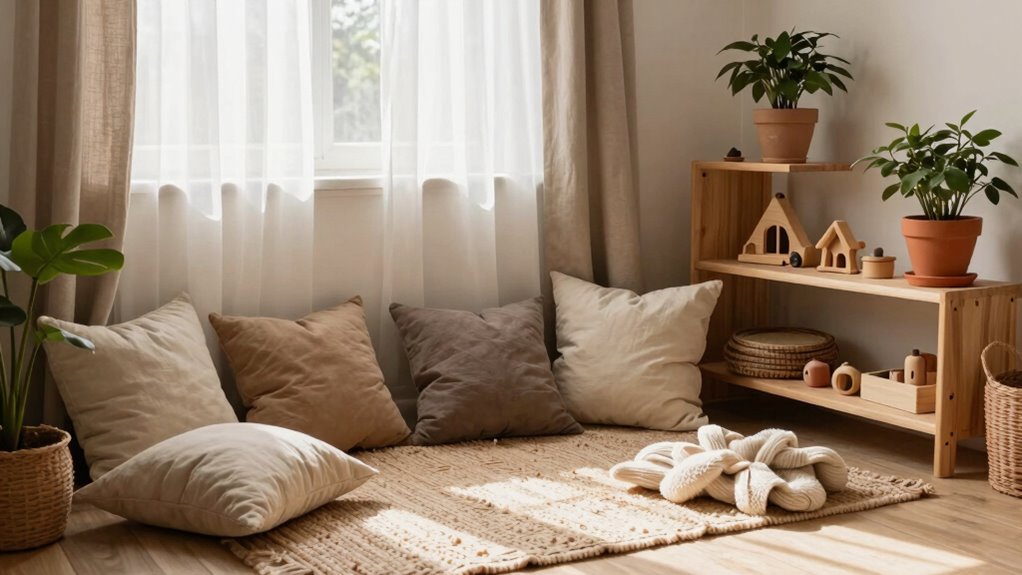

To create cozy play corners with Waldorf principles, choose natural materials like wooden toys, wool blankets, and organic textiles to promote warmth and sensory engagement. Arrange these items at your child’s height for independence and easy access, and add soft lighting or natural sunlight to foster a calming atmosphere. Keep the space simple, with earthy tones and minimal decoration, creating a peaceful retreat that sparks imagination. If you explore further, you’ll discover how to enhance this nurturing environment even more.

Turn the school run and nap time into listening time
- Thousands of audiobooks, podcasts and originals
- Listen on your phone, tablet or Echo — also offline
- Cancel anytime
Key Takeaways
- Use natural materials like wood, wool, and organic textiles to create warm, tactile, and inviting spaces.
- Incorporate soft lighting and earthy tones to enhance a calm, nurturing atmosphere.
- Design cozy corners with cushions, tents, or canopies for quiet reflection and imaginative play.
- Arrange accessible, open shelves at child height for easy self-directed exploration.
- Keep the space simple and clutter-free, emphasizing natural elements to promote tranquility.
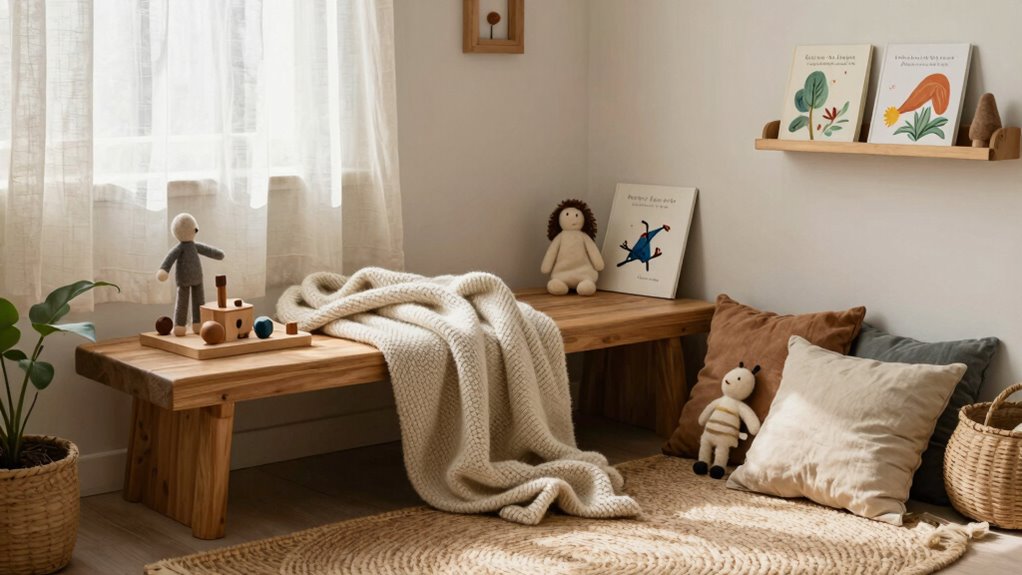
Creating a cozy play corner rooted in Waldorf principles allows children to explore, imagine, and develop naturally in a calming environment. To achieve this, focus on using natural materials, which are essential in fostering a warm, inviting space that feels both safe and inspiring. Wooden toys, soft wool blankets, and organic cotton textiles help create an authentic atmosphere that encourages gentle play and comfort. These natural materials aren’t just visually appealing; they also provide rich sensory experiences that engage your child’s senses and promote mindful exploration. When children touch, feel, and manipulate these textures, they develop a deeper connection to their environment, which supports their overall growth.
A Waldorf-inspired play corner nurtures natural curiosity through warm, sensory-rich, and simple natural materials.
Designing your play corner with sensory experiences in mind means selecting items that stimulate multiple senses without overwhelming. Incorporate elements like smooth stones, fragrant herbs, or textured fabric swatches to invite tactile exploration. These sensory-rich objects help children refine their fine motor skills and heighten their awareness of their surroundings. Keep in mind that Waldorf philosophy emphasizes simplicity, so avoid clutter and overly bright colors. Instead, opt for muted, earthy tones that promote tranquility and focus. This gentle palette encourages children to engage with their environment calmly and thoughtfully, fostering a sense of harmony.
The layout of your play corner should prioritize accessibility and freedom of movement. Arrange toys and materials at child height, allowing your little one to choose and put away items independently. This promotes self-directed play, a core principle of Waldorf education. Use open shelves made of natural wood or wicker, which visually blend into the space and make it easy for your child to access their favorite playthings. Incorporate a cozy corner with soft cushions and a small, inviting tent or canopy to create a dedicated space for quiet reflection or imaginative storytelling. These quiet zones offer a retreat where your child can relax and recharge. Additionally, integrating natural materials into the overall design enhances the sensory and aesthetic quality of the space. Creating a peaceful environment also involves paying attention to intentional design, ensuring that every element contributes to a nurturing atmosphere.
Finally, consider the overall atmosphere of the play corner. Keep lighting soft, preferably natural sunlight or warm, gentle lamps that mimic natural light. Use minimal decorations to avoid overstimulation, emphasizing the beauty of simple, natural objects. The environment should support your child’s emotional well-being, helping them feel safe and secure while exploring. When you combine natural materials, sensory experiences, thoughtful layout, and a calming ambiance, you create a truly Waldorf-inspired play corner—one that nurtures your child’s natural curiosity, imagination, and sense of well-being.
As an affiliate, we earn on qualifying purchases.
Frequently Asked Questions
What Are the Key Materials Needed for a Waldorf-Inspired Play Corner?
You’ll need natural materials like wood, wool, and cotton to foster artistic expression and sensory exploration. Soft, textured fabrics create a cozy atmosphere, while simple toys encourage imaginative play. Incorporate items like handmade dolls, watercolor paints, and natural blocks to stimulate creativity. Keep the space clutter-free, inviting children to freely explore textures and colors, enhancing their sensory experiences and nurturing their artistic growth in your Waldorf-inspired play corner.
How Can I Incorporate Natural Elements Into the Play Space?
You can craft a enchanting, cozy corner by incorporating natural textures and organic colors. Use soft wool rugs, wooden toys, and leafy plants to bring earthy elements alive. Choose muted, organic hues for walls and textiles, fostering a peaceful atmosphere. Incorporate stones, shells, or branches to add tactile interest and textures. This harmonious blend of natural elements invites children to explore, imagine, and relax in a truly Waldorf-inspired, warm, and welcoming play space.
What Safety Considerations Are Important for Young Children?
You should prioritize safety by keeping the play area free of fire hazards, like candles or near heaters, and guarantee all natural materials are flame-resistant. Check for choking hazards by selecting age-appropriate toys and avoiding small parts that little ones could swallow. Regularly inspect the space for loose or broken items, and always supervise children closely to prevent accidents. Creating a safe environment helps children explore confidently and joyfully.
How Do I Tailor the Space for Different Age Groups?
Sure, tailoring a space for different age groups sounds simple—until you realize what’s age-appropriate for one might not be for another. You’ll want a flexible layout that adapts easily, with age-appropriate toys for each stage. Move things around, introduce new textures, and keep safety in mind. That way, your cozy corner becomes a versatile haven, engaging toddlers and preschoolers alike, without turning into a cluttered chaos.
Can I Create a Cozy Play Corner Outdoors?
Yes, you can create a cozy outdoor play corner. Focus on establishing a warm outdoor ambiance with soft lighting, rugs, and natural elements. Use weatherproof furniture and cushions to guarantee comfort and durability. Add gentle touches like fairy lights or wind chimes to enhance the atmosphere. This way, your space remains inviting, safe, and suitable for children to enjoy outdoor play while embracing Waldorf principles.
Conclusion
By weaving Waldorf principles into your play corner, you transform a simple space into a nurturing garden of imagination. Think of it as planting seeds of wonder that bloom with creativity and comfort. As you curate this cozy nook, you’re not just creating a play area—you’re cultivating a sanctuary where your child’s dreams can drift like gentle clouds, and their spirit can flourish like a resilient tree rooted in love and natural beauty.
Fall Picks
fall essentials
As an affiliate, we earn on qualifying purchases.