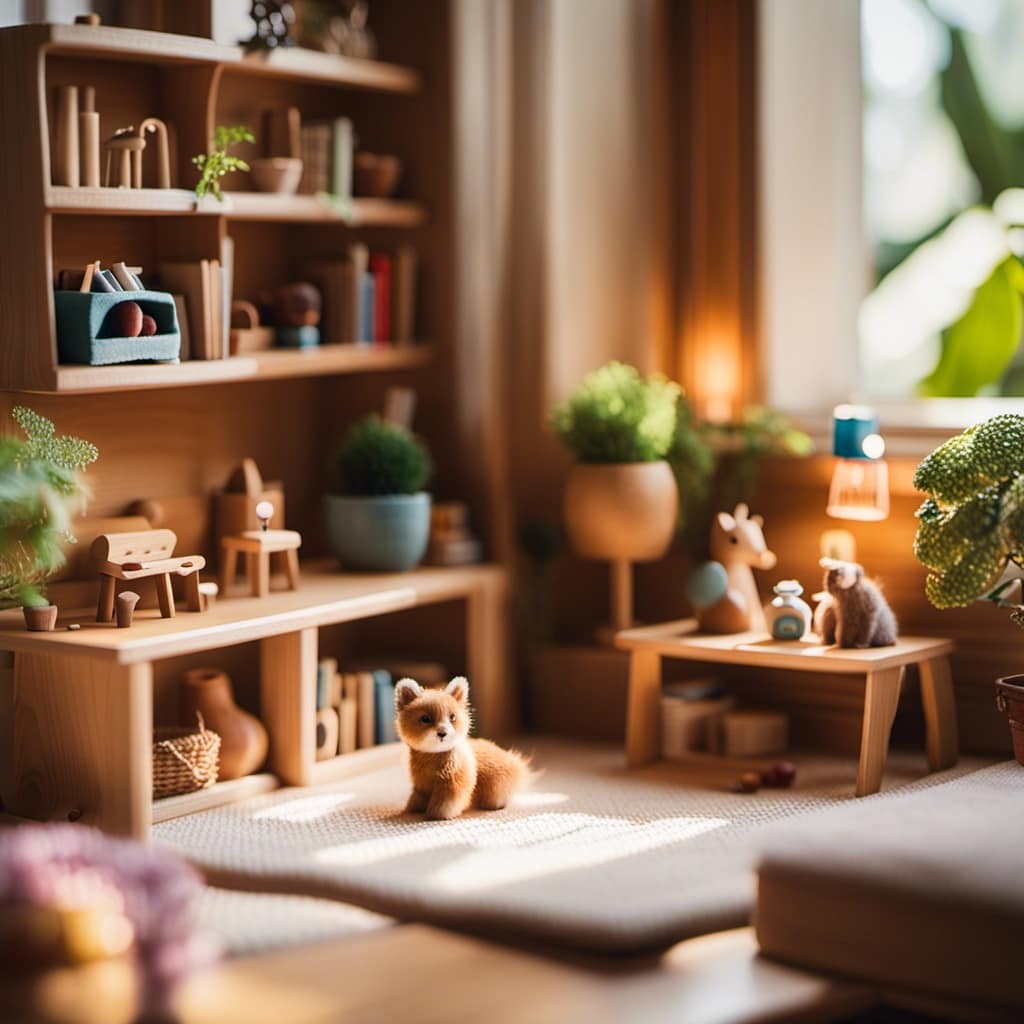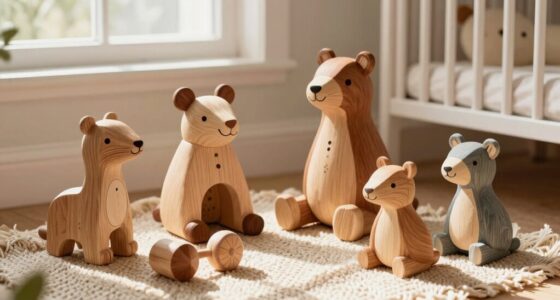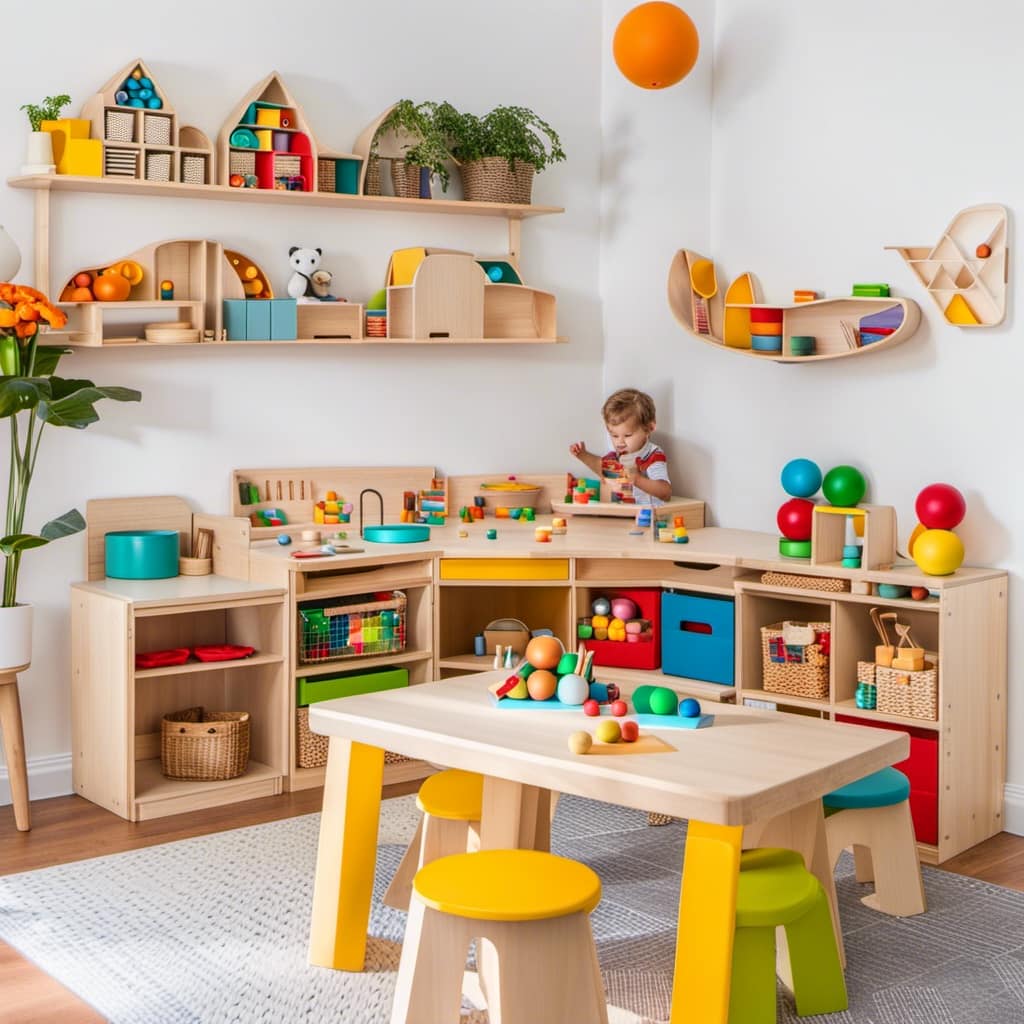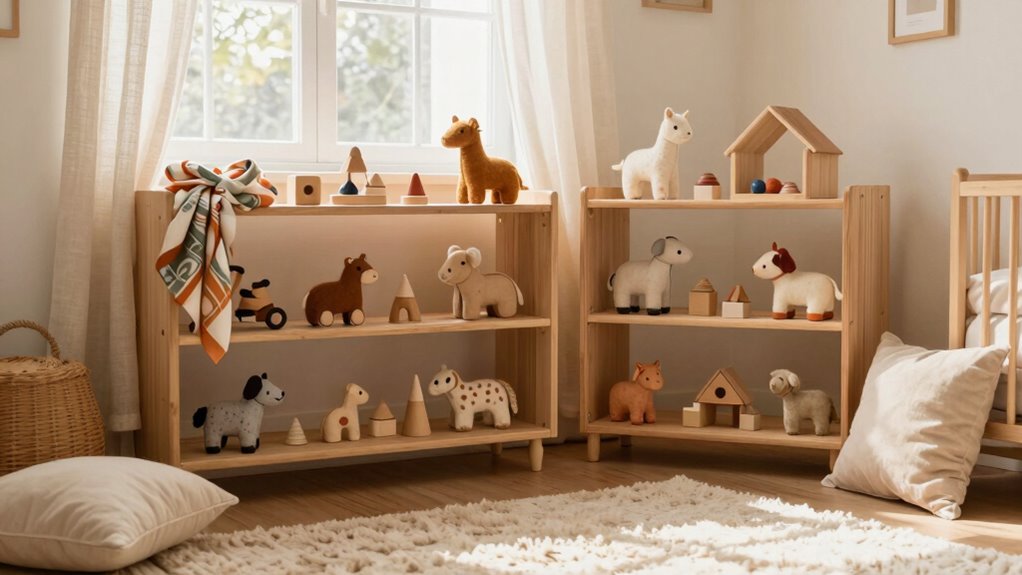

To create a more peaceful toy rotation the Waldorf way, choose simple, natural toys like wooden blocks, soft animals, and cloth dolls that invite calm, imagination, and emotional expression. Display toys in neat, natural containers and introduce them gradually to avoid overstimulation. Rotate toys regularly to foster deep engagement and appreciation while maintaining a serene environment. Focus on mindful selection and gentle presentation; ask yourself how each toy nurtures a child’s sense of security and connection as you prepare for a more centered play space.

Turn the school run and nap time into listening time
- Thousands of audiobooks, podcasts and originals
- Listen on your phone, tablet or Echo — also offline
- Cancel anytime
Key Takeaways
- Select meaningful, natural toys that inspire imagination and calmness for intentional play.
- Rotate toys regularly to prevent boredom and deepen emotional engagement.
- Keep toy display simple and natural to maintain a peaceful, clutter-free environment.
- Incorporate sensory-rich toys to promote mindfulness and emotional regulation.
- Foster reverence for toys through gentle handling and meaningful interactions.
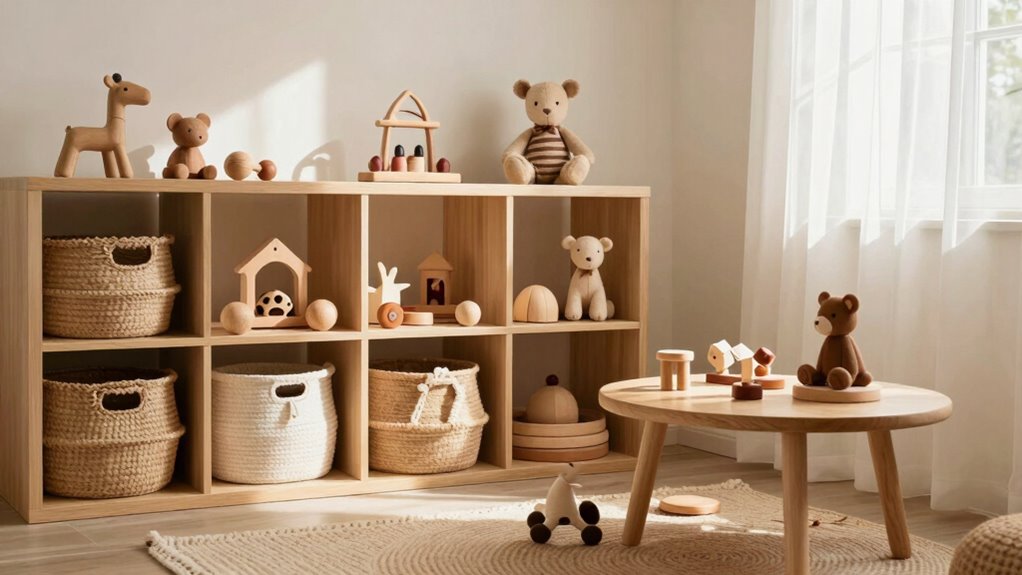
Keeping your child’s toys fresh and engaging can be simple with the right rotation strategy. When you approach toy rotation the Waldorf way, you focus on creating a peaceful environment that nurtures emotional development and sensory exploration. Instead of overwhelming your child with a cluttered collection of toys, you choose a few meaningful items that promote imagination and calmness. By rotating these toys regularly, you prevent boredom and encourage your child to engage deeply with each object.
A thoughtful toy rotation fosters calmness, imagination, and deep engagement in your child’s peaceful learning environment.
The goal is to foster a sense of reverence for the toys, which aligns with Waldorf principles. When toys are rotated thoughtfully, your child learns patience and appreciation, which can support their emotional development. They start to see toys as more than just playthings—they become tools for storytelling, exploration, and emotional growth. As you select toys for rotation, consider those that evoke natural feelings and allow your child to express their emotions. Soft wool animals, wooden blocks, or simple cloth dolls are excellent choices because they invite gentle, mindful play.
Incorporating sensory exploration is key to this approach. You want your child to experience different textures, sounds, and shapes through the toys you choose. When you rotate toys that engage the senses, you help your child develop a richer understanding of their world. For example, switching between smooth wooden puzzles, textured fabric balls, and aromatic herbal sachets provides a variety of sensory experiences that stimulate and calm. This variety encourages mindfulness and helps your child learn to regulate their emotions by finding comfort in familiar, soothing objects.
Creating a peaceful toy environment also means paying attention to the overall atmosphere. Keep toys in simple, natural containers and avoid overstimulating displays. When you introduce new toys during rotation, do so slowly, giving your child time to explore and connect with each item. This mindful process supports emotional resilience and allows your child to develop a sense of security and trust in their environment. Additionally, understanding 3D printing and scanning can help you create custom, meaningful toys that fit your child’s developmental needs.
Ultimately, a Waldorf-inspired toy rotation isn’t just about limiting toys; it’s about cultivating a gentle, intentional space. You’re guiding your child toward meaningful play and emotional growth by thoughtfully selecting and rotating toys that promote sensory exploration. This approach helps your child feel more centered, secure, and connected to their environment, making playtime a peaceful and enriching experience for both of you.
As an affiliate, we earn on qualifying purchases.
Frequently Asked Questions
How Often Should I Rotate Toys in a Waldorf-Inspired Setup?
You should rotate toys in a Waldorf-inspired setup every 1 to 2 weeks, depending on your child’s engagement and interest levels. Use thoughtful toy selection to keep things fresh and stimulating. Rotation scheduling helps prevent overstimulation and keeps play meaningful. Observe your child’s preferences, and adjust the frequency as needed to promote peaceful, focused play. Regularly changing toys fosters curiosity and allows each item to be appreciated fully.
What Materials Are Best for Waldorf-Style Toys?
Think of Waldorf-style toys as the seeds of imagination, flourishing through natural materials and open-ended designs. You should choose wooden blocks, felted figures, silk scarves, and beeswax crayons. These materials are gentle on little hands and foster creativity. Avoid plastic, opting instead for toys that invite exploration and storytelling. Natural materials cultivate a nurturing environment, encouraging your child’s imagination to grow wild and free, like a garden in full bloom.
How Do I Involve Children in the Toy Rotation Process?
You involve children in the toy rotation process by encouraging their creative engagement and making it a shared activity. Let them choose which toys to put away or bring out, fostering a sense of ownership. Parental involvement is key—explain the process gently and make it fun. This way, children learn to value their toys, develop patience, and feel more connected to the rhythm of their play environment.
What Are Signs My Child Is Bored With Current Toys?
Did you know kids typically lose interest in toys after just 10 minutes? If your child turns away from their current toys, it’s a sign they might be bored. Look for cues like lack of engagement or repetitive play. When they’re bored, they miss out on opportunities for creative play and emotional development. Rotating toys keeps their interest alive, fostering imagination and helping them develop emotionally.
How Can I Store Toys to Keep the Rotation Organized?
To keep your toy rotation organized, use clear, labeled storage bins or baskets for different toy categories. Store unused toys out of sight but accessible for easy swapping. Organization tips include rotating toys weekly, keeping daily favorites in a dedicated basket, and maintaining a tidy play area. Regularly check and clean storage to guarantee toys stay inviting and organized, making it simple to introduce new toys and keep your child’s interest alive.
Conclusion
By implementing these simple toy rotation tips, you can create a more peaceful and focused environment for your child. Remember, less is often more—giving your child time to appreciate each toy fosters creativity and patience. When you embrace the Waldorf approach, you’re planting seeds for a calmer, more mindful childhood. Sometimes, it’s not just about what toys you have, but how you nurture your child’s relationship with them that truly makes the difference.
Evergreen bestsellers Picks
bestsellers
As an affiliate, we earn on qualifying purchases.