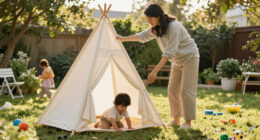


To make everyday life easier with Montessori-inspired habits, involve your child in routines like tidying, setting the table, or choosing clothes. Use simple, clear steps suited to their age, and keep daily necessities within easy reach. Organize your home with accessible storage and visual cues to encourage independence. Include eco-friendly practices to teach respect for nature. By establishing these routines and creating a child-friendly environment, you’ll foster confidence and initiative—discover how to make this seamless.

Turn the school run and nap time into listening time
- Thousands of audiobooks, podcasts and originals
- Listen on your phone, tablet or Echo — also offline
- Cancel anytime
Key Takeaways
- Establish consistent, age-appropriate routines that children can participate in to build confidence and independence.
- Organize the environment with accessible storage and visual cues to promote self-directed tasks.
- Involve children in daily chores like tidying or setting the table to foster responsibility.
- Use visual charts and simple instructions to support understanding and routine adherence.
- Incorporate sustainable and eco-friendly practices into daily habits to teach environmental responsibility.

Creating a Montessori home environment starts with establishing daily habits that foster independence and respect for your child’s natural development. One of the most effective ways to do this is by implementing practical routines that your child can participate in actively. These routines aren’t just about getting things done; they’re about creating opportunities for your child to develop confidence, responsibility, and a sense of mastery over their surroundings. When you involve your child in simple tasks like tidying up, setting the table, or choosing their clothes, you’re encouraging child independence and teaching them that their contributions matter. Consistency is key here—by establishing predictable routines, you help your child understand what to expect and when, which reduces frustration and builds trust.
Practical routines should be designed to be achievable for your child’s age and abilities. For example, a toddler can help put away toys or wipe up spills, while an older child can assist with laundry or prepare snacks. When you allow your child to take part in these activities, you’re reinforcing the idea that they’re capable and valued. This sense of agency naturally leads to increased motivation and a desire to participate. It’s important to keep routines simple and to give your child clear, step-by-step instructions. Using visual cues or charts can support their understanding and independence, especially for younger children who are still mastering communication skills. Incorporating organized environments can significantly enhance your child’s ability to develop independence and self-confidence, especially when they are designed with child-friendly storage that promotes easy access and organization. Additionally, visual aids can be highly effective in helping children follow routines and understand expectations more clearly.
In addition to involving your child in practical routines, creating a prepared environment plays a vital role. Guarantee that everything your child needs for daily routines is within reach, organized, and easy to access. This encourages them to take initiative without needing constant adult help. For instance, placing clothes in low drawers or utensils in accessible drawers invites your child to make choices and perform tasks independently. These small adjustments support your child’s natural curiosity and desire to learn, while also making daily life smoother for everyone involved. Furthermore, incorporating biodiversity-friendly materials and sustainable practices into the home environment can serve as valuable learning opportunities about respecting the natural world and fostering environmentally conscious habits. Being mindful of the sustainable practices you introduce can also inspire your child to develop environmentally responsible habits that last a lifetime.
Products Worth Considering

Therabody Theragun Relief Massage Gun, 3-Speed, Black

Hyperice Hypervolt Go 3 Percussion Massage Gun with Carry Case

Oura Ring 5 Smart Ring, Gold, Size 8
As an affiliate, we earn on qualifying purchases.
Frequently Asked Questions
How Early Can Children Start Montessori Home Habits?
Children can start Montessori home habits as early as infancy, around 6 months, when they begin developing early childhood skills. Introducing simple routines and encouraging independence during this period helps with habit formation. You can involve your child in everyday tasks like tidying up or choosing their clothes. Early experiences foster self-discipline and confidence, laying a strong foundation for lifelong learning and independence within their natural developmental stages.
What Supplies Are Essential for Montessori Home Routines?
Think of your home as a well-tuned orchestra, where the right supplies cue harmony. You’ll need carefully chosen Montessori toy selection that sparks curiosity, and child-friendly storage solutions that keep chaos at bay. These essentials create a nurturing environment, empowering your child to explore confidently. Keep everything accessible and inviting, turning daily routines into delightful lessons where independence blooms effortlessly.
How Do I Introduce Montessori Habits to Reluctant Children?
To introduce routines to reluctant children, start by gently explaining the benefits and involving them in the process. Use simple, consistent steps to build independence, making each task manageable and rewarding. Show patience and praise their efforts, creating a positive atmosphere. Gradually, they’ll feel more confident and motivated to participate, transforming routines into a natural part of daily life rather than a chore.
Can Montessori Methods Work for Teenagers?
Yes, Montessori methods can work for teenagers, helping them blossom like a flower in spring. You encourage teen independence and skill development by offering real-world tasks, like cooking or managing finances, fostering responsibility. With respectful guidance and tailored activities, you support their growth, making learning engaging and meaningful. This approach nurtures self-motivation, preparing teens for adulthood while respecting their need for autonomy and personal discovery.
How to Adapt Montessori Habits for Small Living Spaces?
To adapt Montessori habits for small living spaces, focus on space organization by using vertical storage and multi-purpose furniture to maximize every inch. Encourage habit consistency by establishing simple routines, like daily tidying and designated spots for belongings, which help maintain order. You can involve your teen in organizing to foster independence and responsibility, making your small space feel more functional and calm without feeling cramped.
Conclusion
By incorporating these Montessori home habits, you create a nurturing environment where everyday tasks become manageable and even enjoyable. You’ll find that patience and consistency turn challenges into opportunities for growth. Remember, Rome wasn’t built in a day, so don’t get discouraged if progress feels slow. Keep steady, and soon these habits will become second nature for both you and your child, proving that a little effort goes a long way in making life smoother and more fulfilling.