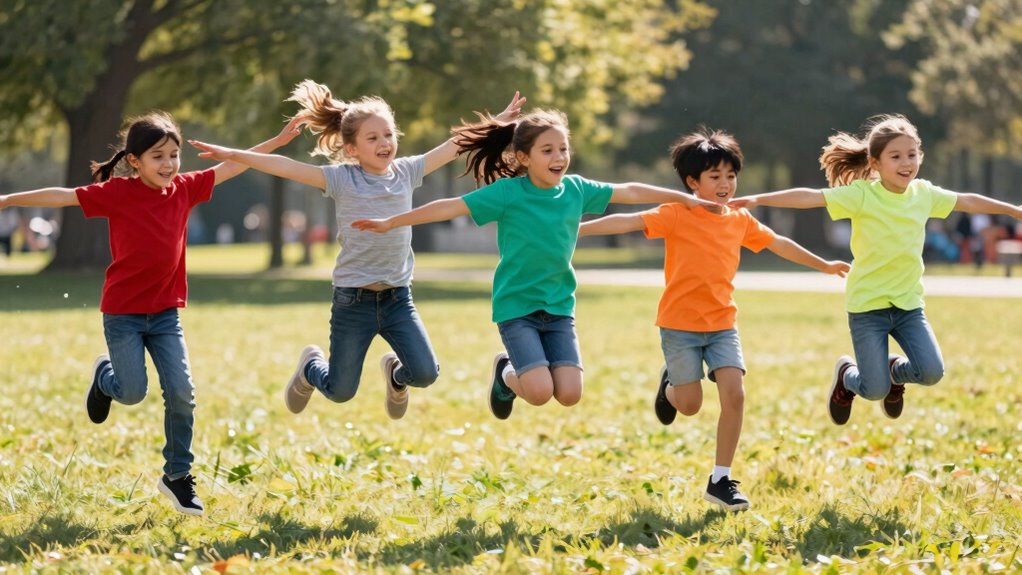

When children repeat gross motor activities, they strengthen their muscles, improve coordination, and develop spatial awareness. Repetition helps solidify new skills, making movements more instinctive and boosting confidence. It also enhances brain development, promoting better planning, problem-solving, and focus. As they practice, they build neural pathways that support overall brain function and learning. Keep exploring how these activities shape growth, and you’ll see how essential repeated movement is for a child’s development.

Turn the school run and nap time into listening time
- Thousands of audiobooks, podcasts and originals
- Listen on your phone, tablet or Echo — also offline
- Cancel anytime
Key Takeaways
- Repetition strengthens neural pathways, making movements more automatic and improving coordination.
- It enhances physical strength and balance through consistent activity like jumping or balancing.
- Repeating activities boosts confidence, patience, and perseverance in children.
- It supports cognitive development by reinforcing motor learning and pattern recognition.
- Repetition fosters overall brain growth, improving learning, adaptability, and motor skill mastery.

Have you ever wondered why children often repeat the same gross motor activities? It’s a natural part of their growth process, and it offers more than just fun. When children engage repeatedly in activities like jumping, climbing, or running, they’re actually building essential skills that influence their overall development. Repetition helps solidify their understanding of movement, but it also plays a significant role in strengthening fine motor skills and fostering cognitive development.
Repeating gross motor activities boosts movement skills, cognitive growth, and confidence in children’s development.
As children repeat gross motor activities, they develop better coordination and control over their bodies. This ongoing practice allows their brain to create stronger neural pathways, which makes these movements more automatic over time. When a child repeatedly climbs a ladder or balances on a beam, they’re not just improving their physical strength—they’re also honing their ability to plan, problem-solve, and adapt to new challenges. These are core aspects of cognitive development, and they’re enhanced through active, repetitive play. Repetition also encourages motor learning, making new skills more instinctive.
Repetition also helps children understand spatial awareness and body positioning. For example, when they repeatedly jump or hop in different directions, they begin to internalize concepts like distance, balance, and rhythm. This understanding of space and movement translates into better fine motor skills later on, especially as they begin to manipulate small objects or learn to write. The confidence they gain from mastering gross motor activities encourages them to try more complex tasks, which further stimulates their brain’s capacity to process and integrate information. Repeating these activities can also promote brain development, making it easier for children to learn new skills more quickly.
Moreover, when children engage in these activities over and over, they learn patience and perseverance. These qualities are essential for their emotional and cognitive growth. They start recognizing patterns, predicting outcomes, and adjusting their actions accordingly—all of which are fundamental for developing problem-solving skills. Repeating gross motor activities creates a sense of mastery, boosting their self-esteem and motivating them to keep practicing new skills. Repetition also fosters motor memory****, which makes these movements more fluid and instinctive over time.
Additionally, engaging in repeated gross motor activities can support the development of neural pathways, which are crucial for efficient communication within the brain. This process enhances overall brain plasticity, making it easier for children to learn new skills and adapt to different situations. Repetition in gross motor activities not only benefits physical development but also accelerates cognitive growth, reinforcing the importance of active play in childhood development.
In essence, the repeated practice of gross motor activities is a foundation for broader development. It builds physical strength and coordination while simultaneously nurturing cognitive processes like memory, attention, and planning. As you observe children engaging in these activities, remember that each repetition is a step toward more refined fine motor skills and a more adaptable, confident mind. This cycle of practice and mastery is essential, shaping their ability to navigate both physical and mental challenges as they grow.
children's gross motor skill development toys
As an affiliate, we earn on qualifying purchases.
As an affiliate, we earn on qualifying purchases.
Frequently Asked Questions
How Often Should Children Repeat Gross Motor Activities?
You should aim for children to repeat gross motor activities daily or at least several times a week. Frequent activity frequency helps reinforce skills and build confidence. The repetition benefits include improved coordination, muscle strength, and motor planning. Keep activities fun and varied, encouraging kids to practice regularly. By maintaining consistent repetition, children develop better motor skills, boost endurance, and gain a sense of achievement, which motivates them to stay active.
Do Gross Motor Activities Improve Academic Performance?
Yes, gross motor activities can improve academic performance. They boost motor skill development, which enhances coordination and concentration. When kids engage in these activities, they experience cognitive benefits like improved memory, problem-solving, and attention span. As a result, children often perform better in subjects like math and reading. Repeating these activities helps reinforce these skills, making learning easier and more effective, ultimately supporting their overall academic success.
Are There Risks Associated With Repetitive Gross Motor Activities?
Repetitive gross motor activities can pose health risks like overuse injuries and developmental concerns such as hindered coordination if done excessively. You should monitor your child’s activity levels to prevent fatigue or strain. Incorporate variety into their routines to promote balanced development and reduce risks. Ensuring proper technique and rest periods helps safeguard their health and supports healthy growth, making the activities both fun and safe.
How Can Parents Encourage Children to Repeat Activities?
To encourage your children to repeat activities, use motivation strategies like offering praise or small rewards to reinforce their efforts. Incorporate activity variety to keep things interesting, preventing boredom and promoting continued engagement. Show enthusiasm yourself, join in their play, and set achievable goals. By making activities fun and rewarding, you help your children develop confidence and motor skills, making them more likely to want to repeat these important gross motor exercises.
What Are Some Examples of Effective Gross Motor Activities?
You can introduce playful challenges like obstacle courses and hopscotch that act as gateways to sensory integration. Jumping, climbing, and balancing become symbolic journeys, strengthening muscles and refining coordination. These activities turn movement into a game, encouraging repeated practice. By making gross motor tasks fun and engaging, you help your child build confidence, improve motor skills, and enjoy the rhythmic flow of active play, fostering growth through joyful repetition.
Conclusion
By repeating gross motor activities, you’re not just helping children develop strength and coordination—you’re planting the seeds for confidence and resilience. Think of each movement as a brushstroke on their masterpiece of growth. When they practice, they build a foundation that supports future adventures and challenges. So, keep encouraging their efforts—because in this dance of development, every step they take brings them closer to becoming their best selves.
Fall Picks
fall essentials
As an affiliate, we earn on qualifying purchases.