
Creating DIY sensory bins on a budget is easy and fun. Use household items like rice, pasta, beans, or oatmeal as your base, and add small toys, scoops, and colorful objects to engage your child. Incorporate natural textures like shells or leaves, and spice things up with scented elements or themed items. Changing themes weekly keeps things exciting. Keep safety in mind, and explore creative ideas to make sensory play both affordable and engaging—keep going to discover even more!
Key Takeaways
- Use inexpensive household items like rice, beans, pasta, or shredded paper as base materials for cost-effective sensory bins.
- Incorporate natural elements such as leaves, shells, or pinecones to add tactile variety without extra cost.
- Repurpose common household items like spoons, cups, or small toys to enhance play and exploration.
- Rotate themes weekly using easily available items, creating fresh experiences without additional purchases.
- Supervise play and reuse materials to ensure safety and maximize the longevity of your DIY sensory bins.

Creating DIY sensory bins is a simple and engaging way to stimulate your child’s senses and encourage hands-on learning. Sensory play helps toddlers explore their environment, develop fine motor skills, and build cognitive awareness. By making your own sensory bins, you can customize the experience to match your child’s interests and developmental stage—all while keeping costs low. These bins are versatile and perfect for toddler activities, offering endless opportunities for discovery and fun without needing fancy or expensive materials.
Create customizable, budget-friendly sensory bins to promote learning, exploration, and sensory development in toddlers.
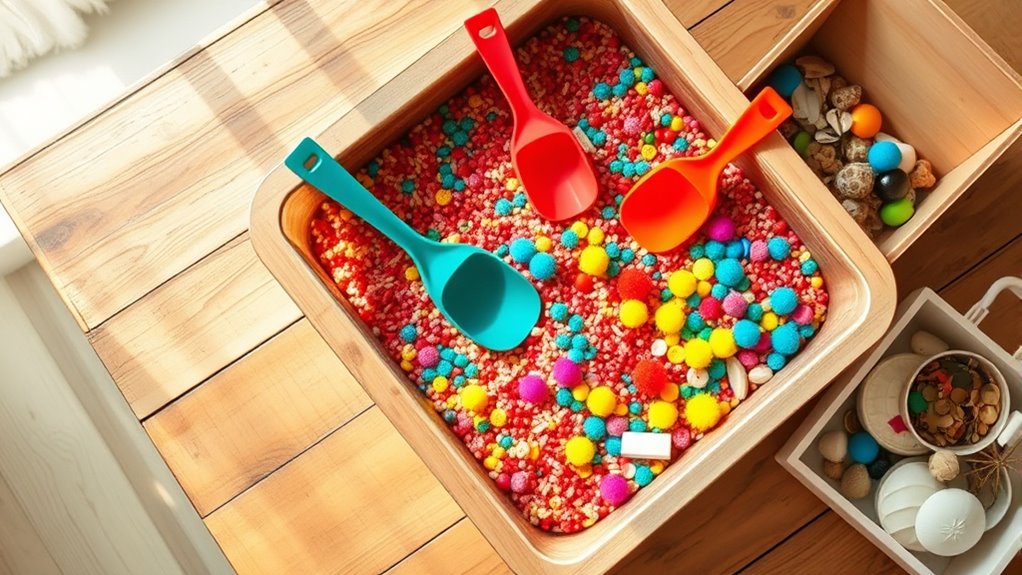
To start, gather some basic supplies like a sturdy plastic bin, which acts as the foundation for your sensory play area. You can fill it with a variety of materials such as rice, pasta, beans, or oatmeal as the base. These textures are excellent for sensory exploration and are easy to find at home or the grocery store. For added excitement, toss in small toys, spoons, scoops, or cups to encourage pouring, scooping, and sorting—key activities that develop fine motor skills and hand-eye coordination. Incorporating colorful objects or themed items also boosts visual stimulation and makes the activity more enticing.
Using household items is a great way to keep your DIY sensory bins budget-friendly. For example, you could hide small figures or plastic animals in shredded paper or sand for a mini adventure. Adding natural elements like pinecones, shells, or leaves can introduce your child to different textures and promote curiosity about nature. If you want to engage their senses further, consider including scented items like lavender or cinnamon sticks, which add a fragrant dimension to the sensory experience. Remember, safety is paramount, so avoid small items that could pose a choking hazard and supervise your child during play.
You can rotate different themes or materials to keep your toddler interested and engaged. For instance, one week, focus on a beach theme with sand and shells, while another week, create a garden scene with faux flowers and dirt. Additionally, insights from sleep solutions for new parents can help you establish a calming routine around sensory activities to promote better sleep habits. Creating DIY sensory bins not only provides stimulating toddler activities but also allows you to be creative and resourceful. Plus, these activities are easy to clean up and store, making them perfect for busy parents. With a little imagination and some everyday household items, you can craft delightful sensory play experiences that promote learning, exploration, and joy—all on a budget.
Frequently Asked Questions
What Are the Benefits of Sensory Bins for Children?
Sensory bins offer numerous benefits for children by encouraging beneficial development through sensory exploration. When you provide these bins, you help your child enhance fine motor skills, improve focus, and develop problem-solving abilities. They also promote creativity and emotional regulation. By engaging with different textures and materials, your child can build confidence and curiosity, making sensory bins a valuable, fun tool for supporting overall growth and learning in a playful way.
How Do I Choose Safe Materials for DIY Sensory Bins?
Choosing safe materials for your sensory bin is like planting a secure foundation for a house. You should opt for non-toxic materials to guarantee safety if children put things in their mouths. Also, prioritize sharp object safety by avoiding items with jagged edges or small parts that could pose a choking hazard. Always check labels and inspect items beforehand, making sure everything is age-appropriate and safe for your little explorer.
Can Sensory Bins Be Used for Children With Sensory Processing Disorder?
You can definitely use sensory bins for children with sensory processing challenges. They help provide calming input and improve sensory regulation when used appropriately. Focus on creating sensory bins with soothing textures and avoid overstimulating materials. Always supervise your child during play, and tailor the sensory bin contents to their specific sensory needs. Sensory bins can be a valuable tool to support sensory processing development and create a calming, engaging experience.
How Often Should I Clean and Maintain Sensory Bins?
You should clean and maintain your sensory bins regularly to make sure they stay safe and hygienic. Follow a consistent cleaning schedule, ideally after each use or at least weekly, depending on how often your children play. Use simple maintenance tips like removing old or moldy materials, rinsing with warm water, and drying thoroughly. This routine helps prevent bacteria buildup, keeps the bins inviting, and ensures a safe sensory experience every time.
Are There Age-Appropriate Sensory Bin Ideas for Toddlers?
You’re wondering if there are age-appropriate sensory bin ideas for toddlers. Absolutely! Focus on using age-appropriate toys that are safe and easy to handle. Choose themed options like beach, farm, or jungle to keep things engaging. You can also incorporate simple textures and soft materials to stimulate their senses. Keep the activities short and supervise closely to make sure safety while they explore and learn.
Conclusion
Now, imagine your child’s fingers exploring a vibrant sea of rice, textured pasta, or shimmering beads, each discovery sparking joy and curiosity. With just a few simple supplies, you’ve created a colorful, inviting world where learning feels like an adventure. These sensory bins aren’t just budget-friendly—they turn everyday moments into magical experiences. So, get hands-on, let your imagination run wild, and watch as your little one dives into a universe of tactile wonder.