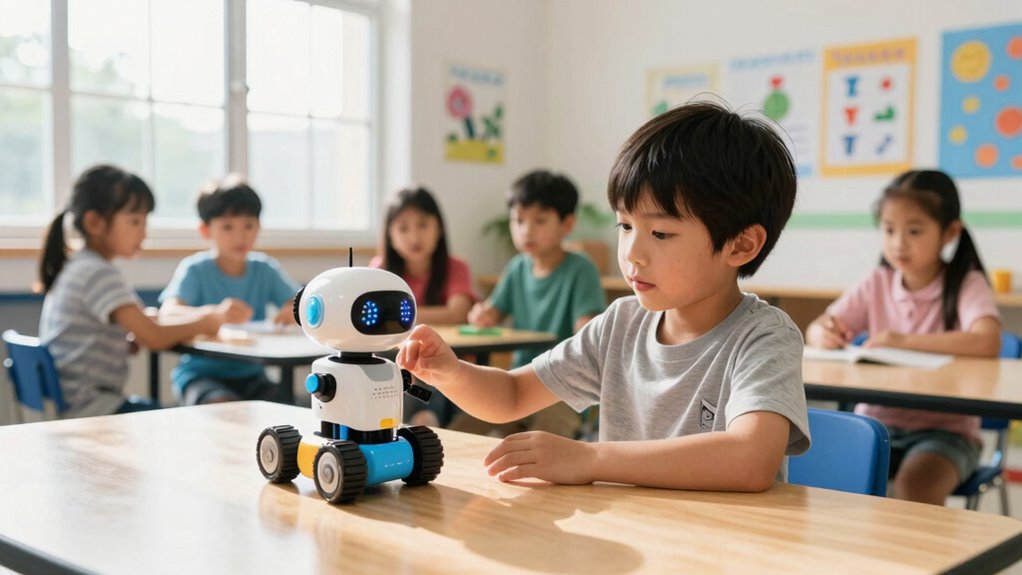

Coding robots work for younger kids because they’re designed to be safe, engaging, and easy to use. With bright colors, friendly shapes, and simple controls, they spark curiosity and make learning fun. Visual programming gets kids started without feeling overwhelmed, gradually building their problem-solving skills. Built-in sensors and interactive features encourage exploration and critical thinking. Keep exploring to see how these robots open up a world of early tech learning tailored for young learners.

Turn the school run and nap time into listening time
- Thousands of audiobooks, podcasts and originals
- Listen on your phone, tablet or Echo — also offline
- Cancel anytime
Key Takeaways
- Visual programming interfaces with drag-and-drop features simplify coding for young children, making it accessible and engaging.
- Bright, friendly robot designs and tactile controls stimulate curiosity and encourage exploration in early learners.
- Built-in sensors and interactive feedback provide immediate, tangible results, boosting confidence and understanding.
- Guided activities and age-appropriate instructions help prevent frustration and promote sustained learning.
- Emphasizing play and hands-on experiences develops fine motor skills and foundational STEM understanding from a young age.
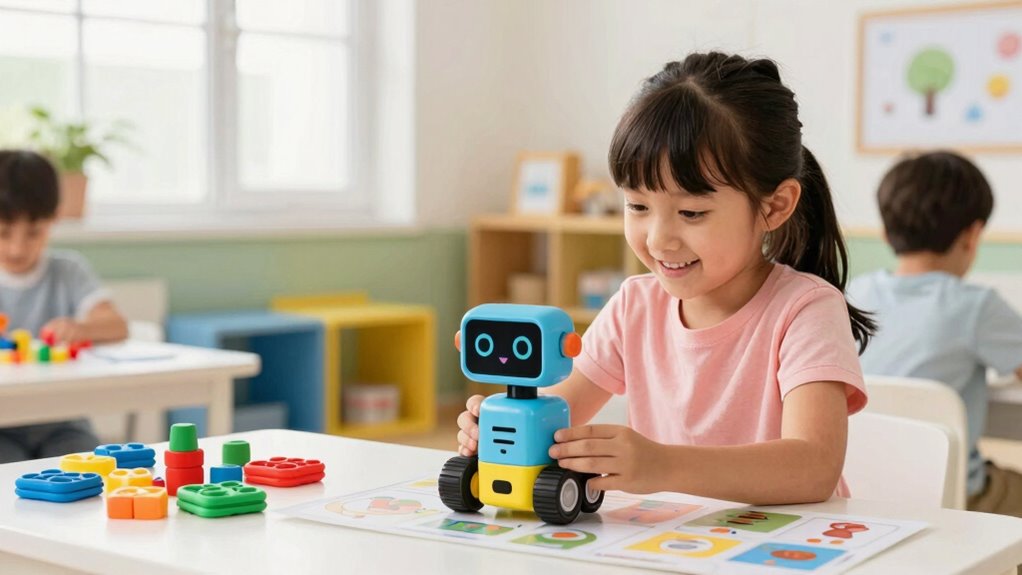
Introducing coding robots to younger kids can spark their interest in technology early on, making learning both fun and engaging. These robots serve as interactive tools that help children grasp complex concepts through hands-on experience. When it comes to robot design, these machines are crafted to be simple yet stimulating, with bright colors, friendly shapes, and intuitive controls that appeal to young learners. Their design encourages curiosity, inviting kids to explore how each part works and how they can manipulate the robot’s movements. This tactile engagement builds a foundation of understanding that’s essential for more advanced technical skills later on. Additionally, many educational robots are designed with visual programming languages that make coding more accessible and enjoyable for beginners. Programming languages play a significant role in making coding accessible to children. Many educational robots use visual programming languages—drag-and-drop interfaces that allow kids to create code by snapping together blocks rather than typing out complex syntax. These languages are designed specifically for beginner-level programmers, making the process of coding less intimidating and more approachable. As kids become more confident, they can shift to more advanced, text-based programming languages like Python or JavaScript, which are also used in professional development environments. This progression helps children develop logical thinking and problem-solving skills gradually, without feeling overwhelmed. The beauty of coding robots for younger kids is that they blend creativity with technical learning. You can start with basic commands like moving forward, turning, or stopping, then gradually introduce loops, conditionals, and functions. This layered approach allows children to see immediate results from their code, reinforcing a sense of achievement and motivating further exploration. Plus, many robots come with built-in sensors and cameras, enabling kids to experiment with tasks like obstacle avoidance or simple object recognition. These features foster curiosity and encourage kids to think critically about how robots perceive and interact with their environment. Moreover, the durability and safety design of these robots make them ideal for young users, ensuring a worry-free experience for parents and educators alike. Their sturdy build can withstand accidental drops and rough handling, giving parents and educators peace of mind. Additionally, many kits come with age-appropriate instructions and guided activities, ensuring that kids stay engaged without frustration. Developing early technical skills through play not only makes learning enjoyable but also lays the groundwork for future success in STEM fields. Incorporating age-appropriate educational content helps ensure that children are engaged at their developmental level and can progress comfortably. These features, combined with child-friendly interfaces, make the learning process smoother and more intuitive for young beginners. Using interactive feedback features, children can immediately see the results of their programming, which enhances their motivation and understanding. As they learn to program and design, they develop fine motor skills, sequencing, and logical reasoning—all while having fun. This hands-on, playful approach to learning makes it easier for younger children to develop an early love for technology and STEM fields, establishing a strong foundation for future learning.
kids coding robot with visual programming
As an affiliate, we earn on qualifying purchases.
As an affiliate, we earn on qualifying purchases.
Frequently Asked Questions
Are Coding Robots Safe for Very Young Children?
Yes, coding robots are generally safe for very young children, but you should always prioritize robot safety. Choose age-appropriate models with rounded edges and non-toxic materials. Keep an eye on your child during play and provide parental supervision to prevent misuse or damage. This guarantees they enjoy learning coding in a safe environment, helping them develop skills without any risks. Always read the manufacturer’s safety guidelines before introducing a robot to your child.
What Skills Do Kids Develop by Coding Robots?
Imagine planting a seed and watching it grow—coding robots help kids develop essential skills like problem-solving, critical thinking, and creativity. When you explore robot programming, you foster logical reasoning, patience, and perseverance. These skills act as roots strengthening their confidence, while steering through coding challenges acts as branches reaching toward innovation. Through hands-on experiences, children gain a foundation in tech, preparing them for future learning and lifelong success.
How Do Coding Robots Differ From Traditional Toys?
Coding robots differ from traditional toys because they offer interactive experiences through robot customization and programming interfaces. You can program these robots to perform specific actions, making them more engaging and educational. Unlike static toys, coding robots respond to your commands, fostering creativity and problem-solving. Their adaptable features help you learn coding skills firsthand, making playtime both fun and intellectually stimulating.
Can Coding Robots Help With Early STEM Education?
Think of coding robots as gateways to a treasure chest of early STEM learning. You can customize these robots to match your child’s interests, making programming less intimidating. As they tinker and experiment, the complexity of programming becomes a stepping stone, not a wall. These robots nurture problem-solving skills and curiosity, laying a sturdy foundation for future scientific exploration and technological mastery in an engaging, accessible way.
What Is the Best Age to Introduce Coding Robots?
You can introduce coding robots to children as young as five or six, depending on their interest and development. At this age, they can enjoy simple tasks like robot customization, which boosts creativity. As they grow, they can explore basic programming languages, making coding more engaging. Early exposure helps build confidence, problem-solving skills, and a solid foundation for future STEM learning, all while having fun with their robots.
Conclusion
So, don’t wait for your kids to grow up before introducing them to coding robots. These little machines are like open books, waiting for young minds to turn the pages of creativity and problem-solving. By starting early, you’re planting seeds that will grow into a future full of innovation. Think of coding robots as the keys to unleash your child’s potential—brightening their world one line of code at a time.
Halloween Picks
halloween
As an affiliate, we earn on qualifying purchases.