


For shoppers comparing video doorbells on Amazon, I’d put the Tapo 2K Wireless Smart Video Doorbell with Chime first for its balance of sharp video, a wide view, and a chime in the box. The Ring Wired Doorbell Pro (3rd Gen) is a stronger fit for buyers who want a premium wired setup, while the Blink Video Doorbell with Sync Module Core suits those seeking a simpler battery-powered option. The main tradeoffs are power source, video detail, storage and subscription needs, and how much installation work you’re willing to take on. A higher-resolution camera can help identify visitors, but it won’t matter as much if the view misses your doorstep or alerts arrive late. Read on for the full comparison, buying advice, and recommendations by buyer type.

Turn the school run and nap time into listening time
- Thousands of audiobooks, podcasts and originals
- Listen on your phone, tablet or Echo — also offline
- Cancel anytime
Complete the kit


Key Takeaways
- The Tapo 2K Wireless Smart Video Doorbell with Chime leads this roundup for buyers who want a high-resolution view, a wide field of vision, and an included chime without starting with a wired installation.
- The Ring Wired Doorbell Pro (3rd Gen) is the premium wired choice, while its power requirements make it a less flexible pick for renters or homes without suitable doorbell wiring.
- The two Arlo Video Doorbell 2K listings offer wireless-or-wired installation, but buyers should compare the included accessories: one listing specifies a chime and the other does not.
- Blink appears in both standard and 2K options, and its Sync Module Core bundles make system compatibility and package contents part of the choice—not just resolution.
- The lineup ranges from a 1080p Orbitell model to 5MP aosu and 4K Ring options, showing that resolution varies widely; field of view, night visibility, storage, and power still shape day-to-day usefulness.
| Blink Video Doorbell with Sync Module Core, Black |  | Best for Long Battery Life | Video: Head-to-toe HD | Night vision: Infrared | Audio: Two-way talk | VIEW ON AMAZON | See Our Full Breakdown |
| aosu 5MP Ultra HD Wireless & Wired Video Doorbell Camera |  | Best for Subscription-Free Local Recording | Resolution: 5MP Ultra HD | Field of view: 166° | Storage: 8GB built-in; up to 60-day loop recording | VIEW ON AMAZON | See Our Full Breakdown |
| Ring Wired Doorbell Pro (3rd Gen), 4K, Deep Silver |  | Best Premium Wired Pick | Model: Wired Doorbell Pro (3rd Gen) | Video: 4K with Low-Light Sight and Adaptive Night Vision | Zoom: Up to 10x Enhanced Zoom | VIEW ON AMAZON | See Our Full Breakdown |
| Blink Battery Doorbell 2K+ with Sync Module Core |  | Best Battery-Powered 2K Pick | Video resolution: 2K (1920 x 1920) | Field of view: 140° horizontal, 140° vertical | Frame rate and aspect ratio: Up to 24/25 FPS; 1:1 | VIEW ON AMAZON | See Our Full Breakdown |
| Wyze Battery Video Doorbell with 1536 × 1536 HD+ Video and Color Night Vision |  | Best for Flexible Local Recording | Resolution: 1536 x 1536 | Field of view: 150° x 150° | Battery life: Up to six months | VIEW ON AMAZON | See Our Full Breakdown |
| Tapo 2K Wireless Smart Video Doorbell with Chime, 160° Wide View |  | Best for Color Night Viewing | Resolution: 2K | Field of view: 160° diagonal | Battery capacity: 6400mAh | VIEW ON AMAZON | See Our Full Breakdown |
| Tapo D205 2K Wireless Smart Video Doorbell | 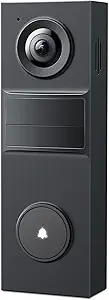 | Best for Local Storage and Person Alerts | Resolution: 2K (3MP) | Field of view: 160° | Battery: Built-in rechargeable lithium-ion; listed capacities differ between product details | VIEW ON AMAZON | See Our Full Breakdown |
| Arlo Video Doorbell 2K (2nd Gen) – Wireless or Wired |  | Best for Flexible Power and Smart Home Integration | Resolution: 2K | Field of view: 180° head-to-toe | Power options: Rechargeable battery or hardwired trickle charging | VIEW ON AMAZON | See Our Full Breakdown |
| Ring Battery Doorbell 2K with 6x Enhanced Zoom, Two-Way Talk, and Built-In Battery, Speckled White |  | Best for Zooming in on Visitors | Video: Retinal 2K | Zoom: Up to 6x enhanced zoom | Field of view: 140° horizontal and 140° vertical | VIEW ON AMAZON | See Our Full Breakdown |
| BOIFUN Wireless Video Doorbell Camera, 2K HD, No Subscription Required | 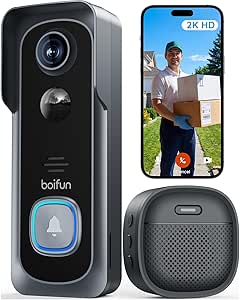 | Best for Subscription-Free Essentials | Resolution: 2K HD (3MP) | Field of view: 166° | Battery capacity: 5200mAh | VIEW ON AMAZON | See Our Full Breakdown |
| Ring Battery Doorbell 2K (2nd Gen), Matte Mocha | | Best for Zoomed-In Battery Video | Video resolution: Retinal 2K | Enhanced zoom: Up to 6x | Field of view: 140° horizontal, 140° vertical | VIEW ON AMAZON | See Our Full Breakdown |
| Arlo Video Doorbell 2K (2nd Generation) – Wireless or Wired with Chime |  | Best for Wide Coverage and Indoor Alerts | Resolution: 2K | Field of view: 180° | Power options: Rechargeable battery or wired trickle charging | VIEW ON AMAZON | See Our Full Breakdown |
| Blink Wired Doorbell 2K+ |  | Best for Hardwired, Subscription-Linked Detection | Video resolution: 2K (1920 × 1920) | Field of view: 140° horizontal, 140° vertical | Aspect ratio: 1:1 | VIEW ON AMAZON | See Our Full Breakdown |
| Orbitell 1080p Wireless Video Doorbell Camera with Two-Way Audio and Night Vision |  | Best Basic 1080p Wireless Pick | Resolution: 1080p | Connectivity: 2.4 GHz Wi-Fi | Audio: Two-way audio | VIEW ON AMAZON | See Our Full Breakdown |
| Chamberlain myQ Video Doorbell with 2K Camera |  | Best for Flexible Power and Color Night Vision | Resolution: 2K | Field of view: 150° | Night vision: Color | VIEW ON AMAZON | See Our Full Breakdown |
| video doorbells on amazon | Connectivity | Field of view | Resolution |
|---|---|---|---|
| Blink Video Doorbell with Sync | Blink app; compatible with Alexa-enabled devices | — | — |
| aosu 5MP Ultra HD Wireless & W | — | 166° | 5MP Ultra HD |
| Ring Wired Doorbell Pro | Wi-Fi 6, dual-band 2.4 GHz/5 GHz | 140° horizontal x 140° vertical | — |
| Blink Battery Doorbell 2K+ wit | 2.4 GHz 802.11b/g/n Wi-Fi | 140° horizontal, 140° vertical | — |
| Wyze Battery Video Doorbell wi | — | 150° x 150° | 1536 x 1536 |
| Tapo 2K Wireless Smart Video D | 2.4GHz Wi-Fi | 160° diagonal | 2K |
| Tapo D205 2K Wireless Smart Vi | 2.4GHz Wi-Fi | 160° | 2K (3MP) |
| Arlo Video Doorbell 2K | 2.4GHz Wi-Fi | 180° head-to-toe | 2K |
| Ring Battery Doorbell 2K with | Wi-Fi 4, 2.4GHz single band | 140° horizontal and 140° vertical | — |
| BOIFUN Wireless Video Doorbell | 2.4GHz Wi-Fi | 166° | 2K HD (3MP) |
| Ring Battery Doorbell 2K | Wi-Fi 4, 2.4 GHz single band | 140° horizontal, 140° vertical | — |
| Arlo Video Doorbell 2K | 2.4 GHz Wi-Fi | 180° | 2K |
| Blink Wired Doorbell 2K+ | 2.4 GHz Wi-Fi (802.11b/g/n) | 140° horizontal, 140° vertical | — |
| Orbitell 1080p Wireless Video | 2.4 GHz Wi-Fi | — | 1080p |
| Chamberlain myQ Video Doorbell | Wi-Fi, Bluetooth | 150° | 2K |
More Details on Our Top Picks
Blink Video Doorbell with Sync Module Core, Black
The Blink Video Doorbell with Sync Module Core is the battery-life-focused pick for buyers who want a straightforward way to see and speak with visitors. Its included three AA lithium batteries are rated for up to two years, a much longer stated interval than the Wyze Battery Video Doorbell’s up-to-six-month estimate. Head-to-toe HD video and infrared night vision cover everyday doorstep checks, while wire-free or wired installation gives it some flexibility if your doorbell setup changes.
The tradeoff is that its most useful extras are not all included: cloud storage and person detection require a subscription, and an indoor chime requires a separately sold Blink Mini 2. Compared with the higher-resolution Blink Battery Doorbell 2K+, this model gives up 2K video and color night vision in favor of a simpler HD setup and longer stated battery life.
Pros:- Included batteries are rated for up to two years of life
- Head-to-toe HD video with infrared night vision
- Two-way talk works through the Blink app
- Supports wire-free or existing-wiring installation
Cons:- Cloud storage and person detection require a separately sold subscription
- Blink Mini 2 is sold separately for use as an indoor chime
- HD resolution lacks the extra detail and color night vision of the Blink Battery Doorbell 2K+
Best for: Households seeking a low-maintenance battery doorbell for basic visitor alerts and two-way conversations
Not ideal for: Buyers who want subscription-free person detection, included local video storage, or a built-in indoor chime
- Video:Head-to-toe HD
- Night vision:Infrared
- Audio:Two-way talk
- Battery life:Up to two years with included three AA Energizer lithium batteries
- Connectivity:Blink app; compatible with Alexa-enabled devices
- Installation:Wire-free or connected to existing doorbell wiring
- Included:Video Doorbell, Sync Module Core, USB-C cable, indoor power adapter, mounting kit, corner mount
Our verdict“Choose this Blink if long stated battery life and basic app-based monitoring matter more than higher resolution or subscription-free detection.”
aosu 5MP Ultra HD Wireless & Wired Video Doorbell Camera
The aosu 5MP Ultra HD Video Doorbell stands out for buyers who want detailed footage and local recording without depending on a cloud plan. Its 8GB built-in storage holds up to 60 days of loop recording, and triple-sensor detection combines radar, PIR infrared, and AI human recognition to help limit irrelevant alerts. That makes it a stronger fit for people who want their doorbell to distinguish visitors from routine movement than the more basic Blink Video Doorbell with Sync Module Core.
The wide 166° field of view helps cover more of the approach and package area, and battery or wired power offers installation flexibility. The compromises are its reliance on Wi-Fi for full functionality and finite onboard storage. At 930 g, it is also a substantial unit compared with compact battery models such as the Blink Battery Doorbell 2K+. Buyers facing especially severe weather should check the stated IP66 rating against their installation conditions.
Pros:- 5MP video and a broad 166° field of view
- Triple-sensor detection combines radar, PIR, and AI human recognition
- Built-in 8GB storage supports up to 60 days of loop recording without a required subscription
- Supports battery or wired installation and Alexa or Google Assistant
Cons:- Full functionality depends on a Wi-Fi connection
- Built-in storage is limited to 8GB
- At 930 g, it is heavier than compact options such as the Blink Battery Doorbell 2K+
Best for: Homeowners who want local loop recording, broad coverage, and human-focused alerts without a required storage subscription
Not ideal for: Buyers with unreliable Wi-Fi, very limited mounting space, or a need for expandable built-in storage
- Resolution:5MP Ultra HD
- Field of view:166°
- Storage:8GB built-in; up to 60-day loop recording
- Detection:Triple-sensor radar, PIR infrared, and AI human recognition
- Power:Battery or wired
- Weather resistance:IP66
- Dimensions and weight:6.1 x 2.4 x 5.4 inches; 930 g
- Compatibility:Alexa and Google Assistant
Our verdict“Pick the aosu if local recording and broad, detailed coverage are priorities and your Wi-Fi can support a connected doorbell.”
Ring Wired Doorbell Pro (3rd Gen), 4K, Deep Silver
The Ring Wired Doorbell Pro (3rd Gen) is the detail-first choice for a home with compatible doorbell wiring. Its 4K video and up to 10x enhanced zoom can make distant visitor details easier to inspect than the 2K footage from the Blink Battery Doorbell 2K+. Adaptive night vision, including color in low light, adds visibility after dark, while 3D motion detection and customizable zones let owners focus alerts on selected areas rather than every movement near the entrance.
This is a more involved choice than battery-powered models: it requires compatible hardwired power, and some features need a Ring subscription. Its 140° by 140° view is broad, but not as wide horizontally as the aosu’s 166° view. Wi-Fi 6 dual-band connectivity is a useful fit for compatible networks, though Ring recommends at least 15 Mbps upload speed. Choose it for detail and motion controls, not installation simplicity.
Pros:- 4K video with up to 10x enhanced zoom
- Adaptive night vision supports color in low light
- 3D motion detection offers customizable motion zones
- Dual-band Wi-Fi 6 and two-way talk with Audio+
Cons:- Requires compatible hardwired doorbell power
- Some features require a compatible Ring subscription
- Recommended upload speed is at least 15 Mbps
Best for: Homeowners with compatible wiring and strong upload speeds who want high-resolution footage and configurable motion zones
Not ideal for: Renters or households without compatible hardwired power, and buyers who want all features without a Ring subscription
- Model:Wired Doorbell Pro (3rd Gen)
- Video:4K with Low-Light Sight and Adaptive Night Vision
- Zoom:Up to 10x Enhanced Zoom
- Field of view:140° horizontal x 140° vertical
- Motion detection:3D Motion Detection with customizable motion zones
- Connectivity:Wi-Fi 6, dual-band 2.4 GHz/5 GHz
- Power:Hardwired; compatible with specified 16 or 24 VAC systems or 24 VDC
- Dimensions and warranty:1.95 x 1.02 x 5.45 inches; 1-year limited warranty
Our verdict“Choose the Ring Pro if your wiring and network are suitable and you value zoomed 4K detail over battery-powered installation.”
Blink Battery Doorbell 2K+ with Sync Module Core
The Blink Battery Doorbell 2K+ is a useful middle ground for shoppers who want sharper video than the standard Blink Video Doorbell but still prefer a battery-powered installation. Its 2K square image and 140° by 140° view are designed to show both visitors and the area below the camera, while color night vision and noise-canceling two-way audio add clarity for nighttime checks and conversations. The included Sync Module Core also comes with an indoor power adapter and mounting accessories.
Compared with the Ring Wired Doorbell Pro, this Blink trades 4K resolution, zoom, and customizable 3D motion zones for a simpler power setup. It uses three non-rechargeable AA lithium batteries, and person detection requires a separately sold compatible subscription. Its 2.4 GHz Wi-Fi support is narrower than the Ring’s dual-band Wi-Fi 6, so check your network coverage at the door before choosing it.
Pros:- 2K 1920 x 1920 video with a 140° horizontal and vertical field of view
- Color night vision and two-way audio with noise cancellation
- Battery-powered installation with Sync Module Core included
- IP65 weather resistance
Cons:- Person detection requires a separately sold compatible subscription
- Uses non-rechargeable AA lithium batteries
- Connects to 2.4 GHz Wi-Fi rather than dual-band networks
Best for: Households that want 2K video and color night vision in a battery-powered doorbell with included mounting accessories
Not ideal for: Buyers who need rechargeable batteries, subscription-free person detection, or dual-band Wi-Fi
- Video resolution:2K (1920 x 1920)
- Field of view:140° horizontal, 140° vertical
- Frame rate and aspect ratio:Up to 24/25 FPS; 1:1
- Power:Three AA 1.5V non-rechargeable lithium batteries
- Connectivity:2.4 GHz 802.11b/g/n Wi-Fi
- Wired chime compatibility:8–24 VAC
- Weather resistance and operating temperature:IP65; -5°F to 113°F (-20°C to 45°C)
- Dimensions and weight:5.19 x 1.89 x 1.34 inches; 4 oz (113 g)
Our verdict“Choose this Blink for battery-powered 2K coverage and color night vision, but skip it if you want subscription-free person detection.”
Wyze Battery Video Doorbell with 1536 × 1536 HD+ Video and Color Night Vision
The Wyze Battery Video Doorbell suits buyers who want a choice between battery and wired power, plus the option to save footage locally. Its 150° by 150° head-to-toe view is wider than the Blink Battery Doorbell 2K+’s 140° by 140° view, which can help capture visitors and parcels near the threshold. Color night vision and two-way audio cover the basic needs of doorstep monitoring, while a microSD card of up to 256GB provides local recording without a required subscription.
That flexibility comes with add-on requirements: the card and chime accessories are sold separately, and 24/7 local recording requires hardwired power. Its stated battery life is up to six months, shorter than the standard Blink Video Doorbell’s up-to-two-year estimate. Wyze is the better fit for buyers who value local storage options and a wider view, not those seeking the longest battery interval or an all-in-one kit.
Pros:- 150° by 150° head-to-toe field of view
- Battery or hardwired installation
- Color night vision and two-way audio
- Supports local recording to a separately purchased microSD card up to 256GB
Cons:- MicroSD card and chime accessories are sold separately
- 24/7 local recording requires hardwired power
- Stated battery life of up to six months is shorter than the standard Blink Video Doorbell’s estimate
Best for: Households wanting a wider head-to-toe view, flexible power, and the option to add local microSD recording
Not ideal for: Buyers who want local storage included, 24/7 recording on battery power, or a long interval between battery changes
- Resolution:1536 x 1536
- Field of view:150° x 150°
- Battery life:Up to six months
- Power options:Battery-powered or hardwired
- Night vision:Color
- Audio:Two-way audio
- Local storage:MicroSD card up to 256GB, sold separately
- Compatibility:Amazon Alexa, Google Assistant, and IFTTT
Our verdict“Pick the Wyze if you want a wide view and expandable local recording, and are comfortable buying the card separately or wiring the doorbell for continuous recording.”
Tapo 2K Wireless Smart Video Doorbell with Chime, 160° Wide View
The Tapo D210 is a strong fit for buyers who want a wide view and useful nighttime detail without stepping up to Arlo’s 180-degree framing. Its 2K video and 160-degree diagonal view cover more of the entry than a narrower camera, while the adjustable spotlight enables full-color night vision rather than relying only on infrared. Two-way audio and Alexa and Google Assistant support add everyday convenience. The tradeoff is that recording storage is not included: local microSD recording requires a separate card, and cloud storage runs through Tapo Care. Its indoor-only chime also limits placement. Compared with the BOIFUN doorbell, the Tapo offers spotlight color night vision and larger-capacity microSD support, while both require buyers to supply their own storage.
Pros:- 2K resolution provides more detail for checking visitors than basic HD video.
- 160-degree diagonal field of view covers a broad area around the entrance.
- Spotlight-assisted full-color night vision can show more nighttime detail than infrared-only cameras.
- Works with Alexa and Google Assistant.
Cons:- MicroSD card and Tapo Care cloud storage are sold separately.
- Battery life varies with activity, settings, and outdoor conditions.
- The included chime is intended for indoor use only.
Best for: Households that want a wide, color-lit nighttime view and already use Alexa or Google Assistant.
Not ideal for: Buyers who want included recording storage, an outdoor chime, or a doorbell that works on 5GHz Wi-Fi.
- Resolution:2K
- Field of view:160° diagonal
- Battery capacity:6400mAh
- Night vision:Full color with spotlight
- Local storage:MicroSD up to 512GB; card sold separately
- Cloud storage:Available through Tapo Care
- Connectivity:2.4GHz Wi-Fi
- Smart home compatibility:Alexa and Google Assistant
Our verdict“Choose the Tapo D210 if color night viewing and a wide frame matter more than included storage or an outdoor chime.”
Tapo D205 2K Wireless Smart Video Doorbell
The Tapo D205 suits buyers who want AI person detection and local recording options in a battery-powered doorbell. Its 2K image, 160-degree view, and customizable activity zones help capture visitors while limiting alerts from less relevant motion. Compared with the Tapo D210, the D205 uses infrared night vision instead of spotlight-assisted color footage, but it adds person detection and states a battery life of up to 180 days under some conditions. That figure is not guaranteed, and the product information gives conflicting battery capacities, so I would treat runtime as usage-dependent. A microSD card and indoor chime must be purchased separately. Like the BOIFUN model, it supports local recording, but its stated card capacity is much higher.
Pros:- 2K video and a 160-degree field of view provide detailed, broad entry coverage.
- AI person detection and activity zones help reduce alerts from irrelevant motion.
- Supports local microSD recording up to 512GB.
- Includes two-way audio, visitor call alerts, and infrared night vision.
Cons:- Indoor chime and microSD card are sold separately.
- Only connects to 2.4GHz Wi-Fi.
- Battery runtime varies by conditions, and the listed capacity is inconsistent.
Best for: Renters and homeowners who want person-focused alerts, local microSD recording, and Alexa or Google Assistant support.
Not ideal for: Buyers who need 5GHz Wi-Fi, included storage or chime hardware, or dependable battery life independent of traffic and settings.
- Resolution:2K (3MP)
- Field of view:160°
- Battery:Built-in rechargeable lithium-ion; listed capacities differ between product details
- Claimed battery life:Up to 180 days under some conditions
- Night vision:Infrared
- Storage:MicroSD up to 512GB, sold separately; optional cloud storage
- Weather resistance:IP54
- Connectivity:2.4GHz Wi-Fi
- Compatibility:Alexa, Google Assistant, and Tapo app
Our verdict“Pick the D205 if local recording and person alerts matter more than color night vision or an included chime.”
Arlo Video Doorbell 2K (2nd Gen) – Wireless or Wired
Arlo is the most flexible fit here for buyers deciding between battery installation and wired power. Its 2K video and 180-degree head-to-toe view give it a broader vertical frame than the 160-degree Tapo models, which can help show packages near the doorstep alongside visitors. It also offers detection for people, packages, and vehicles, plus compatibility with Alexa, Apple Home, Google Home, SmartThings, and IFTTT. That wider smart-home reach is a clear advantage over the BOIFUN and Tapo options. The tradeoff is that advanced detection and extended video history require a paid subscription after the trial. It also uses only 2.4GHz Wi-Fi, and its IP65 rating is below BOIFUN’s listed outdoor rating only if comparing specs is not relevant—both are IP-rated, but Arlo’s stated protection is IP65.
Pros:- 180-degree head-to-toe framing captures more of the doorstep vertically than the Tapo models’ 160-degree views.
- Can run on a rechargeable battery or wired power.
- Smart detection covers people, packages, and vehicles.
- Supports Alexa, Apple Home, Google Home, Samsung SmartThings, and IFTTT.
Cons:- Advanced detection and 60-day history require a paid subscription after the trial.
- Only supports 2.4GHz Wi-Fi.
- Its broader feature set may be unnecessary for buyers seeking basic alerts and two-way talk.
Best for: Homeowners who want a head-to-toe view, a choice of battery or wired power, and broad smart-home compatibility.
Not ideal for: Buyers who want advanced detection and video history without an ongoing subscription, or who need 5GHz Wi-Fi.
- Resolution:2K
- Field of view:180° head-to-toe
- Power options:Rechargeable battery or hardwired trickle charging
- Connectivity:2.4GHz Wi-Fi
- Weather resistance:IP65
- Detection:People, packages, and vehicles
- Audio:Two-way audio
- Smart home compatibility:Alexa, Apple Home, Google Home, Samsung SmartThings, and IFTTT
- Additional feature:Built-in siren
Our verdict“Choose Arlo if you want flexible power and broad smart-home support and accept a subscription for its advanced features.”
Ring Battery Doorbell 2K with 6x Enhanced Zoom, Two-Way Talk, and Built-In Battery, Speckled White
Ring’s standout here is not the broadest view but its up-to-6x enhanced zoom, which can help inspect details farther from the camera. The 140-degree horizontal and vertical field of view is narrower than the Arlo’s 180-degree head-to-toe framing and the Tapo models’ 160-degree views, so buyers choosing Ring are trading coverage for the ability to magnify the captured image. Its built-in rechargeable battery and USB-C charging keep installation simple, while two-way talk and motion alerts cover daily doorbell needs. Select Alexa devices are supported, but the smart-home options listed here are less extensive than Arlo’s. Some video history and AI features require a compatible Ring subscription, and the charging cable is not included.
Pros:- Retinal 2K video and up to 6x enhanced zoom help inspect captured details.
- Built-in rechargeable battery avoids a required wired connection.
- Two-way talk and real-time motion alerts support everyday visitor checks.
- Works with select Alexa-enabled devices.
Cons:- Its 140-degree horizontal and vertical view is narrower than the Arlo and Tapo options listed here.
- Some video history and AI features require a compatible paid subscription.
- USB-C charging cable is not included, and video quality can vary with internet bandwidth.
Best for: Alexa households that want a battery-powered doorbell and the option to magnify visitor details from the camera view.
Not ideal for: Buyers who prioritize the widest possible doorstep coverage, broad smart-home compatibility, or subscription-free video history and AI features.
- Video:Retinal 2K
- Zoom:Up to 6x enhanced zoom
- Field of view:140° horizontal and 140° vertical
- Power:Built-in lithium-ion battery
- Charging:USB-C; cable not included
- Connectivity:Wi-Fi 4, 2.4GHz single band
- Audio:Two-way talk
- Operating temperature:-4°F to 120°F (-20°C to 48.5°C)
- Dimensions:2.11 × 5.78 × 1.41 inches
Our verdict“Choose this Ring if zoom is more useful to you than the wider framing offered by Arlo and Tapo.”
BOIFUN Wireless Video Doorbell Camera, 2K HD, No Subscription Required
BOIFUN is the value-minded choice for buyers who want core doorbell functions without a required subscription. It pairs 2K video with a 166-degree view, human detection, two-way audio, and local microSD support, giving it a wider stated angle than the Tapo D205 or D210. Its invisible infrared night vision avoids a visible red glow, while the IP65 rating and anti-theft alarm suit exposed outdoor mounting. The tradeoff is a lower microSD capacity ceiling than either Tapo model, and the card is not included. Its battery claim of up to 60 days comes from lab conditions, so frequent motion events may shorten it. Unlike Arlo, BOIFUN does not list broad smart-home support beyond Alexa, and optional cloud storage or advanced AI features may still carry a subscription.
Pros:- 2K video and a 166-degree field of view provide detailed, broad coverage.
- Essential alerts and two-way audio do not require a mandatory subscription.
- Invisible 940nm infrared night vision avoids a visible red glow.
- IP65 water resistance, no-drill mounting, and an anti-theft alarm suit outdoor installation.
Cons:- MicroSD card is not included, and local storage supports up to 128GB rather than the Tapo models’ 512GB.
- Only supports 2.4GHz Wi-Fi.
- The up-to-60-day battery claim is based on lab conditions; cloud storage and advanced AI features may require payment.
Best for: Buyers seeking a no-drill wireless doorbell with essential alerts and two-way audio that do not require a mandatory subscription.
Not ideal for: Households needing 5GHz Wi-Fi, a larger local-storage capacity, or the broader smart-home support and detection options listed for Arlo.
- Resolution:2K HD (3MP)
- Field of view:166°
- Battery capacity:5200mAh
- Claimed battery life:Up to 60 days under lab conditions
- Night vision:940nm infrared, up to 10 meters (33 feet)
- Storage:MicroSD up to 128GB; card not included
- Water resistance:IP65
- Connectivity:2.4GHz Wi-Fi
- Compatibility:iOS, Android, and Amazon Alexa
Our verdict“Pick BOIFUN if subscription-free essentials and discreet infrared night vision matter more than expanded smart-home support or higher-capacity local storage.”
Ring Battery Doorbell 2K (2nd Gen), Matte Mocha
The Retinal 2K video and up to 6x Enhanced Zoom make this Ring a strong fit for buyers who want detail they can inspect, rather than just a broad view of the doorstep. Its 140° horizontal and vertical field of view captures head-to-toe activity, while the built-in battery avoids a required wired connection. Compared with the Arlo Video Doorbell 2K (2nd Generation), this Ring offers more specified zoom, while Arlo supplies a wider 180° view and an included indoor chime. Ring provides Live View, Two-Way Talk, and Alexa compatibility, but some video history and AI features depend on a Ring Protect subscription. The 2.4 GHz-only Wi-Fi and missing USB-C cable are practical limits; buyers seeking local independence or bundled indoor alerts should look elsewhere.
Pros:- Retinal 2K video with up to 6x Enhanced Zoom
- 140° horizontal and vertical view captures head-to-toe activity
- Built-in rechargeable battery avoids required doorbell wiring
- Live View, Two-Way Talk, and Alexa compatibility
Cons:- Some video history and AI features require a Ring Protect subscription
- USB-C charging cable is not included
- Wi-Fi is limited to 2.4 GHz
Best for: Renters or homeowners who want battery-powered installation, Alexa compatibility, and the ability to zoom in on visitors or deliveries.
Not ideal for: Buyers who need a bundled indoor chime, 5 GHz Wi-Fi, or subscription-free access to all video history and AI features.
- Video resolution:Retinal 2K
- Enhanced zoom:Up to 6x
- Field of view:140° horizontal, 140° vertical
- Power:Built-in lithium-ion battery
- Connectivity:Wi-Fi 4, 2.4 GHz single band
- Dimensions:2.11 × 5.78 × 1.41 in
- Charging:USB-C; cable not included
- Weather resistance:Weather resistant
Our verdict“Choose this Ring if zoomable 2K detail and battery installation matter more than a bundled chime or subscription-free video features.”
Arlo Video Doorbell 2K (2nd Generation) – Wireless or Wired with Chime
The Arlo’s standout is its 180° field of view, which gives it broader doorstep coverage than the 140° Ring Battery Doorbell 2K and Blink Wired Doorbell 2K+. That wide perspective pairs with 2K video and AI alerts for packages, people, pets, and vehicles, helping households distinguish activity without treating every motion event alike. It also offers unusually flexible power: use its rechargeable battery or wired trickle charging, and the included Arlo Chime 2 provides an indoor alert without relying only on a phone. Basic live streaming is available without a subscription, but cloud video history and advanced detection require a paid plan after the trial. Battery runtime can also fall short in busy entryways, so this is less appealing for heavy traffic if frequent recharging is unwelcome.
Pros:- 180° field of view provides broader coverage than the 140° Ring and Blink options here
- Rechargeable battery or wired trickle charging supports flexible installation
- Arlo Chime 2 is included for indoor alerts
- AI alerts can identify packages, pets, people, and vehicles
Cons:- Cloud storage and advanced detection require a paid plan after the trial
- Battery may need frequent recharging in high-traffic locations
- Connectivity is limited to 2.4 GHz Wi-Fi
Best for: Households with a wide or busy entryway that want broad coverage, flexible power, varied AI alerts, and an included indoor chime.
Not ideal for: Buyers who want ongoing cloud history and advanced detection without a subscription, or who cannot accommodate battery recharging.
- Resolution:2K
- Field of view:180°
- Power options:Rechargeable battery or wired trickle charging
- Connectivity:2.4 GHz Wi-Fi
- Included accessory:Arlo Chime 2
- AI detection:Package, pet, person, and vehicle
- Video history:60 days after a one-month free trial; paid plan required
- Weather resistance:IP65-rated housing
Our verdict“Pick the Arlo if broad coverage and an included indoor chime are priorities, and you accept a subscription for full cloud features.”
Blink Wired Doorbell 2K+
The Blink Wired Doorbell 2K+ is the hardwired choice in this group for buyers who want a square 2K image and noise-canceling two-way audio without managing a rechargeable doorbell battery. Its 1:1 aspect ratio and 140° horizontal and vertical view are geared to head-to-toe framing, while IP65 construction suits exposed outdoor mounting. Compared with the battery-powered Ring Battery Doorbell 2K, Blink requires existing wiring and does not offer battery-install flexibility; its trade is a permanently powered setup. Color night vision is available in low light, shifting to black and white in near darkness. Person detection requires a Blink subscription, and indoor alerts need a separately sold Blink Chime or Alexa device, so this is a better fit for an existing Blink or Alexa setup than a standalone package.
Pros:- 2K square-format video with 140° horizontal and vertical coverage
- Hardwired power removes the need to recharge a doorbell battery
- Two-way audio includes noise cancellation
- IP65 construction and color night vision in low light
Cons:- Requires compatible existing doorbell wiring
- Person detection requires a Blink subscription
- Blink Chime or Alexa is needed for in-home alerts and sold separately
Best for: Homeowners with compatible doorbell wiring who want a permanently powered 2K camera and already use Alexa or Blink devices for indoor alerts.
Not ideal for: Renters without doorbell wiring, buyers who want an included chime, or anyone seeking person detection without a subscription.
- Video resolution:2K (1920 × 1920)
- Field of view:140° horizontal, 140° vertical
- Aspect ratio:1:1
- Power:12–24V AC, 10–40 VA, 50/60 Hz, or 24V DC, 0.42A
- Connectivity:2.4 GHz Wi-Fi (802.11b/g/n)
- Weather resistance:IP65
- Audio:Two-way audio with noise cancellation
- Operating temperature:-5°F to 113°F (-20°C to 45°C)
Our verdict“Choose Blink if you have compatible wiring and an Alexa or Blink alert setup, but skip it if you need a chime included or subscription-free person detection.”
Orbitell 1080p Wireless Video Doorbell Camera with Two-Way Audio and Night Vision
Orbitell is the straightforward option for buyers who need wireless installation, motion alerts, and two-way audio without prioritizing 2K detail. Its 1080p resolution sits below the 2K Ring, Arlo, Blink, and myQ models in this roundup, so it makes more sense for routine visitor checks than close inspection of a delivery label. AI person detection is designed to separate people from vehicles and animals, and four infrared LEDs support night vision. Like the Ring Battery Doorbell 2K, it connects only on 2.4 GHz Wi-Fi, but the supplied product details do not specify its battery capacity or a wired power alternative. Encrypted cloud storage and pre-capture recording are listed, though pre-capture requires a subscription. Buyers wanting confirmed 2K video or more detail about power arrangements should compare alternatives first.
Pros:- Wireless installation avoids a stated hardwired requirement
- AI person detection is designed to filter vehicles and animals
- Two-way audio and real-time motion alerts support quick responses
- IP65 weather resistance and infrared night vision
Cons:- 1080p resolution provides less image detail than the 2K models in this roundup
- Pre-capture recording requires a cloud subscription
- Supports 2.4 GHz Wi-Fi only
Best for: Buyers seeking a basic wireless doorbell for person alerts, two-way conversations, and infrared night vision on a 2.4 GHz network.
Not ideal for: Shoppers who want 2K footage, a confirmed wired-power option, or pre-capture recording without paying for a cloud subscription.
- Resolution:1080p
- Connectivity:2.4 GHz Wi-Fi
- Audio:Two-way audio
- Night vision:Infrared LEDs
- Storage:Encrypted cloud storage
- Weather resistance:IP65
- Dimensions:1.77 × 1.34 × 5.4 in
- Weight:6.08 oz
Our verdict“Consider Orbitell for basic wireless monitoring and person alerts, but choose one of the 2K alternatives if footage detail is a priority.”
Chamberlain myQ Video Doorbell with 2K Camera
The myQ doorbell balances 2K video with a 150° view, making it a middle ground between the Arlo’s wider 180° coverage and the 140° Ring and Blink models. Its useful distinction is battery or wired installation, paired with color night vision for a more recognizable nighttime image than a basic infrared-only feed. Motion alerts and two-way talk cover everyday visitor checks, while Wi-Fi and Bluetooth are listed for connectivity. Compared with the Arlo Video Doorbell 2K (2nd Generation), myQ offers a narrower view and does not list an included indoor chime; its product details also do not specify AI detection without a separately sold video monitoring plan for recognized-face and unknown-person alerts. Wired setups pair with an existing chime, and a wireless chime is listed as coming soon, so check your alert needs before choosing it.
Pros:- 2K camera with a 150° wide-angle view
- Battery or wired installation accommodates different entry setups
- Color night vision supports more recognizable nighttime footage
- Motion alerts and two-way talk cover common doorbell needs
Cons:- Recognized-face and unknown-person AI alerts require a separately sold monitoring plan
- Wired setup pairs with an existing chime; wireless chime is listed as coming soon
- 150° view is narrower than the Arlo model’s 180° field of view
Best for: Homeowners who want either battery or wired installation, color night vision, and a 150° view for routine doorstep monitoring.
Not ideal for: Buyers who need a bundled wireless chime, broad AI alerts without a monitoring plan, or the wider 180° view offered by Arlo.
- Resolution:2K
- Field of view:150°
- Night vision:Color
- Power source:Battery or wired
- Connectivity:Wi-Fi, Bluetooth
- Video format:MP4
- Installation:Wall mount
- Use:Outdoor; water resistant
Our verdict“Choose myQ if flexible power and color night vision matter more than a bundled chime or the widest available view in this group.”

How We Picked
I ranked these 15 video doorbells around the decisions that affect daily use: wired or battery power, image detail, coverage of the entryway, night visibility, two-way communication, chime and hub requirements, and storage or subscription considerations. I also weighed setup demands and package contents, since an included chime or compatible power option can save buyers extra steps, while a wired-only model may not suit every home.
The order reflects fit across common buyer needs, not resolution alone. Models that combine useful coverage, practical installation choices, and clear package details rank ahead of products whose strengths serve a narrower setup. Premium video features earn a place when they answer a real need, but lower-flexibility options and listings with fewer stated details rank lower. I treat similarly named listings as distinct when the bundle or generation differs, and recommend checking the current listing for exact compatibility, storage terms, and included accessories before buying.
Factors to Consider When Choosing Video Doorbells On Amazon
Before choosing from this lineup, match the doorbell to the way your entry is powered and how you plan to use recorded footage. A few practical checks can prevent buying a model that needs wiring, a separate chime, or a paid storage plan you did not expect.
Choose Battery or Wired Based on Your Door, Not Just Convenience
A battery model is often easier to place and can suit renters or homes without existing doorbell wiring, but it needs periodic charging and may be less convenient if the entry gets frequent motion. Wired models avoid routine battery charging, yet installation depends on compatible wiring and may involve checking transformer requirements. A common mistake is assuming that a doorbell-shaped existing button means the wiring will support every camera model. If you cannot verify the wiring, choose a model with battery operation or confirm the installation requirements before ordering. Also check whether the product supports both power modes or whether the listing refers to separate versions. The right choice depends on your home’s wiring and how much maintenance you are willing to handle.
Match the Camera View to Your Doorstep
Resolution figures are useful, but they do not tell you whether the camera can see a parcel near the ground or a visitor standing close to the door. Compare the stated field of view and think about the height and angle of your mounting point. A wide view can capture more of the porch, while a poorly placed wide-angle camera may still leave a blind spot beside a wall or railing. Night vision and lighting conditions matter too, especially at an unlit entrance. Avoid choosing on 2K, 5MP, or 4K labels alone; coverage and usable detail at your actual distance are the practical test. If package visibility matters, prioritize a view that includes the floor area near the threshold.
Check Storage and Subscription Terms Before You Buy
Live viewing and recorded clips are separate needs: a camera may let you answer the door while requiring a subscription or another storage method for event history. Read the listing and current manufacturer terms to learn whether clips are stored locally, in the cloud, or only with a paid plan. Do not treat a phrase such as “no subscription required” as proof that every feature or storage method is included at no cost. Consider how long you need footage retained and whether you want access when away from home. Cloud plans can simplify access, while local storage may reduce ongoing fees but add setup or capacity limits. Choose based on the recordings you expect to keep, not just the ability to receive alerts.
Account for Chimes, Hubs, and Existing Smart-Home Gear
A doorbell’s alert is only useful if you notice it, so check whether the package includes a plug-in chime or relies on a phone notification or existing chime. Bundles can differ even when model names are nearly identical, as seen in this roundup’s Arlo listings with different stated chime contents. Some options also include a Sync Module or require specific ecosystem components for certain features. Before ordering, confirm compatibility with your phone, Wi-Fi band, smart speaker, and any doorbell chime you already own. Buyers often overlook the cost and setup of a missing accessory. A slightly less feature-rich bundle can be the simpler choice if it includes everything needed for your entryway.
Weigh Resolution Against Alerts, Power, and Privacy
Higher resolution can make a face or package easier to inspect, but it does not guarantee that the camera will capture the right event or send a timely notification. Review motion-zone and sensitivity controls, since a camera facing a busy sidewalk may produce unwanted alerts. Battery users should pay attention to how recording frequency and motion activity affect charging intervals. Think through privacy as well: camera placement should cover your own entry without unnecessarily recording neighbors or shared spaces. Before paying more for enhanced zoom or sharper video, decide whether you need to identify distant visitors or mainly see who is at the door. For many homes, dependable alerts and a useful camera angle matter more than the largest resolution number.
Frequently Asked Questions
Can I use a battery video doorbell if my home has existing doorbell wiring?
Often, but compatibility depends on the specific model and how it handles wired power or charging. Some doorbells support battery and wired operation, while others are designed mainly for one power type. Check the product’s wiring requirements and whether connecting it to existing wiring changes battery behavior or available features. If the listing is unclear, confirm details with the manufacturer before installation. Do not assume that existing wiring automatically makes a battery model a wired doorbell.
Do I need a subscription to save video clips from these doorbells?
It depends on the model and the storage features you want. Some products may offer local storage or limited functions without a plan, while cloud recording, longer clip history, or other services can require a subscription. Check the current listing and manufacturer terms for recording limits, storage location, and plan requirements before choosing. A “no subscription required” claim may refer to basic use rather than every feature. If recorded evidence matters to you, confirm that your preferred storage method is available without unwanted ongoing fees.
Is a 2K or 4K video doorbell worth choosing over a 1080p model?
Higher resolution can provide more detail when you zoom in, but the benefit depends on camera angle, lighting, and the distance to the visitor. A sharp image cannot compensate for a view that misses packages or a porch corner. Higher-detail video may also mean more data use or different storage needs, depending on the product. If your main goal is seeing who is directly at the door, good coverage and reliable alerts may matter more than the resolution jump. Pay extra for sharper footage when you have a clear need to inspect faces, deliveries, or activity farther from the camera.
What should I check when two Amazon listings have nearly the same doorbell name?
Compare the generation, power options, included chime, hub or module, and exact accessories rather than relying on the headline name. This roundup includes two Arlo 2K listings, one of which specifies a chime, as well as multiple Ring and Blink models with different generations or bundles. Confirm whether the listing is for a single device or a kit and whether it works with equipment you already own. Check the manufacturer’s compatibility details if the product page uses abbreviated or inconsistent naming. Small bundle differences can change how quickly the doorbell is ready to install.
Which type of video doorbell is the better choice for a renter?
A battery-powered model is often easier for renters because it may avoid permanent wiring changes, but mounting rules and the door’s surface still matter. Look for an installation method that your landlord permits and that will not damage the frame or siding. Confirm how the doorbell charges and whether it includes the chime or other accessories you need. Also check whether the camera can be removed and reinstalled if you move. A wired model can still work in some rentals, but only when the wiring is compatible and the property owner approves the installation.
Conclusion
For most buyers, I’d start with the Tapo 2K Wireless Smart Video Doorbell with Chime as the best overall balance of video detail, broad coverage, and a useful included accessory. The Blink Video Doorbell with Sync Module Core is my value-minded and beginner-friendly pick for shoppers who want a straightforward battery option and are comfortable checking bundle and storage details. Choose the Ring Wired Doorbell Pro (3rd Gen) as the premium option if your home supports wired installation and you want its higher-end video features. For flexible wiring choices, compare the two Arlo Video Doorbell 2K listings closely, especially the included chime. If maximum stated resolution is your priority, the aosu 5MP or Ring 4K models merit a closer look; if you want a basic 1080p option, consider Orbitell while weighing its narrower feature set. Match the final choice to your power, recording, and entryway needs—not to resolution alone.
Fall Picks
fall essentials
As an affiliate, we earn on qualifying purchases.