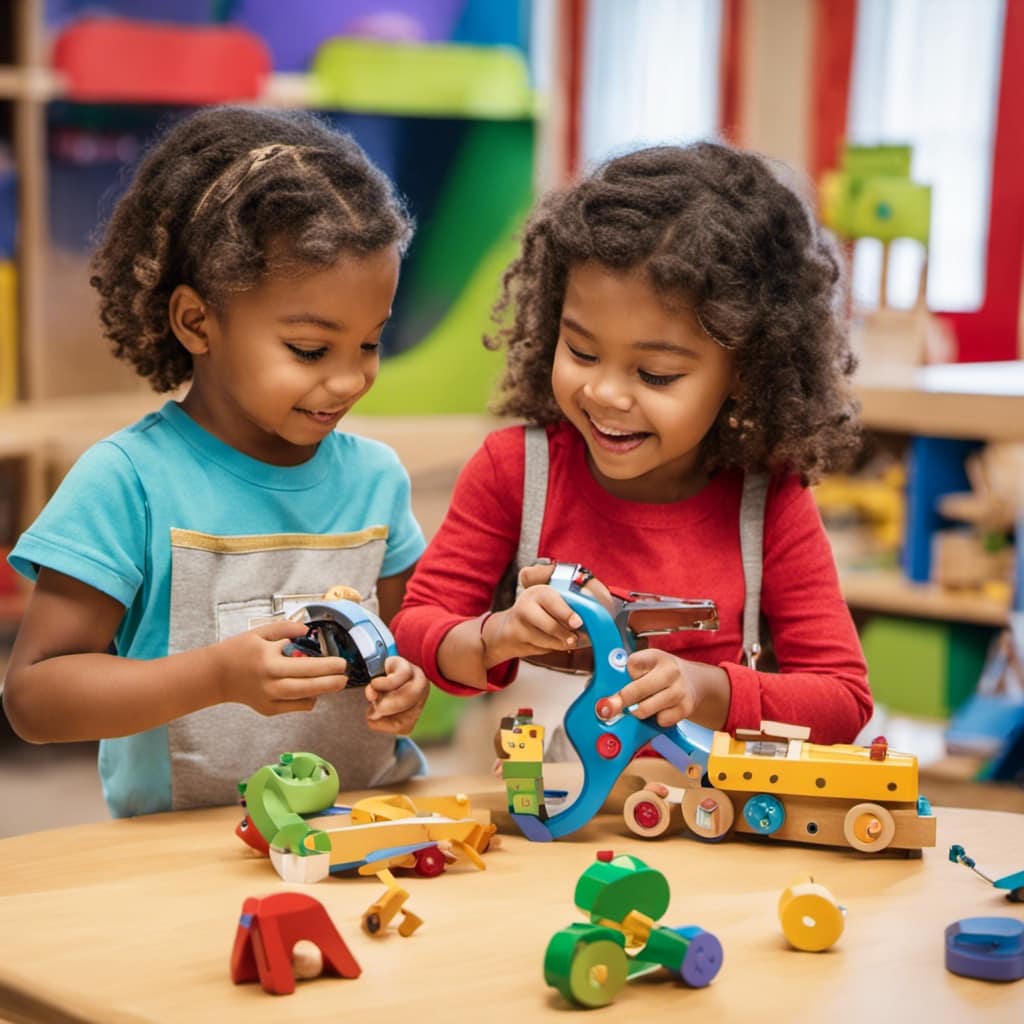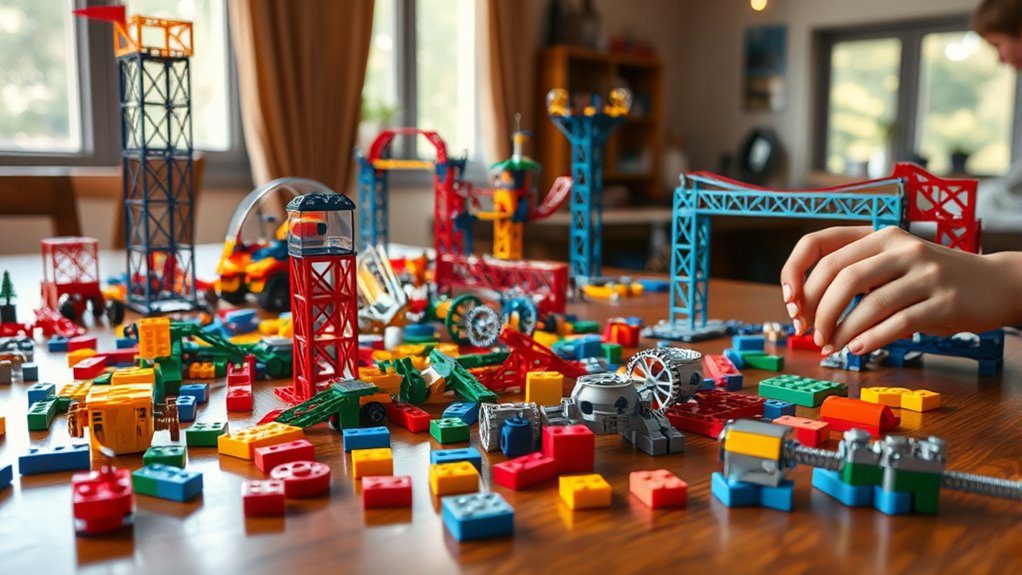

Building and engineering toys can spark your child’s creativity by encouraging hands-on assembly, problem-solving, and exploration of concepts like structural mechanics and robot design. These toys help kids develop skills such as critical thinking, planning, and experimentation while building confidence in their ideas. They foster curiosity and inspire inventive thinking through endless opportunities for tinkering. Keep exploring, and you’ll discover how these engaging tools support learning and nurture a lifelong passion for innovation.

Turn the school run and nap time into listening time
- Thousands of audiobooks, podcasts and originals
- Listen on your phone, tablet or Echo — also offline
- Cancel anytime
Key Takeaways
- Modular building sets like LEGO and K’NEX promote open-ended construction, encouraging imaginative designs and problem-solving skills.
- Robotics kits such as LEGO Mindstorms and VEX Robotics allow kids to assemble and program robots, fostering creativity and engineering thinking.
- Structural engineering toys like Tinkertoy and Magformers help children explore shapes, stability, and load distribution through hands-on experimentation.
- Incorporating concepts like tuning or customization in building toys inspires innovation, testing ideas to improve performance and stability.
- Hands-on, trial-and-error play with these toys develops persistence, logical reasoning, and a curious mindset essential for creative engineering.
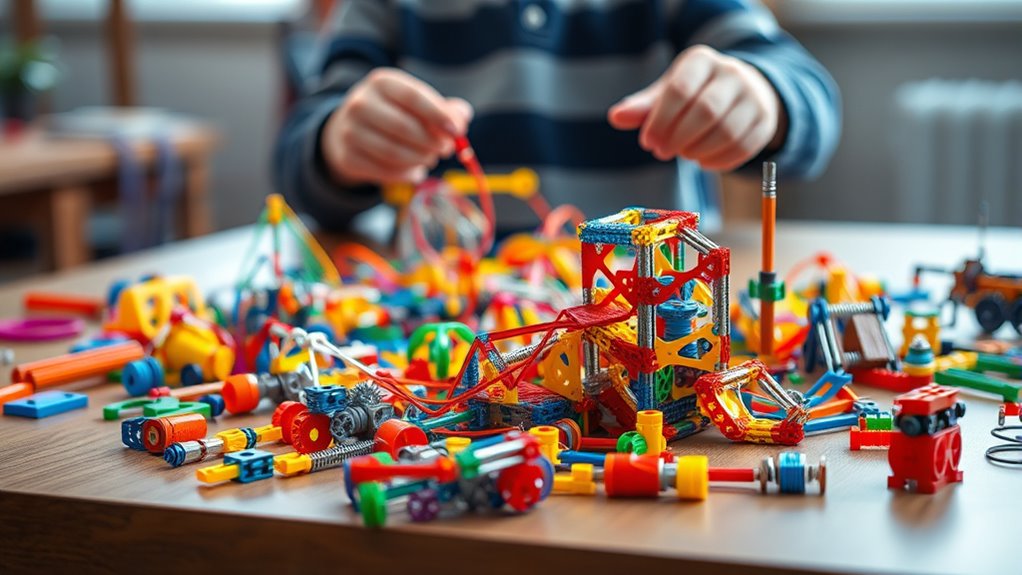
Have you ever wondered how building and engineering toys can ignite a child’s creativity? These toys aren’t just about stacking blocks or snapping pieces together; they serve as powerful tools to develop essential skills like problem-solving, critical thinking, and innovation. When kids engage with these toys, they immerse themselves in hands-on learning that sparks curiosity and encourages exploration. One of the most exciting aspects of these toys is their ability to introduce children to complex concepts such as robot design and structural mechanics in a fun, approachable way. By tinkering with robot kits, children learn how to combine different components, think about movement, and understand the fundamentals of mechanics—all while enjoying the process of creation.
Robot design is a fascinating area where children can experiment with engineering principles. They start by choosing parts, such as motors, sensors, and wheels, then figure out how to assemble them into a functioning robot. This process teaches them about the importance of planning, spatial awareness, and the relationships between different parts. As they build, they gain insight into how various elements work together, which nurtures their ability to troubleshoot and adapt. Plus, designing a robot from scratch pushes them to think creatively about how to solve problems and optimize their design. It’s not just about following instructions; it’s about imagining new possibilities and turning ideas into reality.
Experimenting with robot design fosters creativity, problem-solving, and understanding of engineering principles through hands-on assembly and innovation.
Structural mechanics plays a crucial role in these toys, helping kids grasp how structures bear weight, withstand forces, and stay stable. When children build bridges, towers, or vehicles, they get a firsthand look at how different shapes and materials influence strength and durability. They learn that a well-designed structure distributes stress evenly and that clever engineering can make even simple materials incredibly strong. This understanding encourages logical thinking and precision, as they experiment with different configurations and observe what works best. Building with structural mechanics in mind also boosts spatial reasoning skills, as children visualize how parts fit together and support each other. Additionally, incorporating concepts from Ford Tuning can inspire older children to explore how modifications affect performance and stability in real-world applications.
Through these engaging activities, children develop a deeper appreciation for engineering and design. They learn that innovation often starts with trial and error, and that persistence pays off. As they manipulate parts and see their ideas take shape, their confidence grows. Building and engineering toys act as a gateway for children to explore STEM fields, laying a foundation that can inspire future careers. So, when you introduce your child to these toys, you’re not just providing entertainment—you’re cultivating a curious mind enthusiastic to understand how the world works, one inventive project at a time.
Frequently Asked Questions
What Are the Best Age Groups for Engineering Toys?
You might wonder what the best age groups are for engineering toys. Generally, age appropriateness varies, but younger kids benefit from simpler, colorful sets that enhance their fine motor skills and problem-solving abilities. Older children can handle more complex kits that develop critical thinking and engineering skills. Selecting toys suited to their developmental stage guarantees they stay engaged, learning, and having fun, maximizing developmental benefits at every age.
How Do These Toys Enhance Problem-Solving Skills?
You can boost your child’s problem-solving skills by giving them engineering toys that encourage creative thinking and spatial reasoning. These toys challenge them to figure out how pieces fit together, fostering critical thinking. As they experiment and build, they learn to analyze situations, develop solutions, and think outside the box. This active engagement helps sharpen their problem-solving abilities, setting a strong foundation for future learning and innovation.
Are There Eco-Friendly Building Toy Options Available?
While many building toys focus on fun, you can find eco-friendly options too. Look for sustainable materials like bamboo, recycled plastics, or biodegradable components. Eco-conscious brands prioritize reducing their environmental impact, offering toys that are safe for kids and the planet. These alternatives prove that creativity and sustainability can go hand-in-hand, helping you teach kids about caring for the environment while inspiring their engineering skills.
How Can Parents Encourage Creative Play With These Toys?
You can encourage creative play by setting up opportunities for imaginative scenarios and collaborative play. Offer open-ended toys that inspire kids to invent their own stories and structures. Join in their activities, ask open-ended questions, and suggest new ideas to spark their creativity. Creating a supportive environment where they feel free to experiment helps them develop problem-solving skills and confidence, making playtime both fun and educational.
What Safety Standards Should I Look for in Engineering Toys?
Think of safety standards as the sturdy foundation of a towering castle. You should look for engineering toys with clear safety certification, ensuring they meet strict quality benchmarks. Make sure they’re made from non-toxic materials, so your child’s health stays protected while they explore and create. These standards act like guardians, shielding your little builder from potential hazards and allowing their imagination to flourish safely.
Conclusion
Don’t let the idea that building toys are just for kids hold you back. These toys ignite creativity and problem-solving skills that benefit all ages. Whether you’re helping your child or exploring your own imagination, building and engineering sets are valuable tools for innovation. So go ahead—grab a kit, start building, and watch your ideas come to life. Creativity knows no age limit, and these toys are perfect for revealing it anytime.
Fall Picks
fall essentials
As an affiliate, we earn on qualifying purchases.