
To create a fun tinker tray for preschoolers, include small manipulatives like beads, buttons, and pasta shapes for fine motor skills. Add sensory materials such as textured fabrics, squishy objects, or water to stimulate tactile exploration. Incorporate open-ended items like craft supplies, miniature figures, and natural elements to spark creativity and imagination. Rotate items regularly to keep things engaging. Keep exploring to discover more tips for setting up an exciting and educational tinker tray.
Key Takeaways
- Include a variety of tactile and textured materials like shells, fabrics, and sensory balls for sensory exploration.
- Add small manipulatives such as beads, buttons, and pasta for fine motor skill development.
- Incorporate open-ended items like craft supplies, natural objects, and themed figures to foster creativity.
- Use rotating and themed objects to maintain interest and stimulate curiosity.
- Combine natural, everyday, and educational items to enhance sensory, imaginative, and conceptual play.
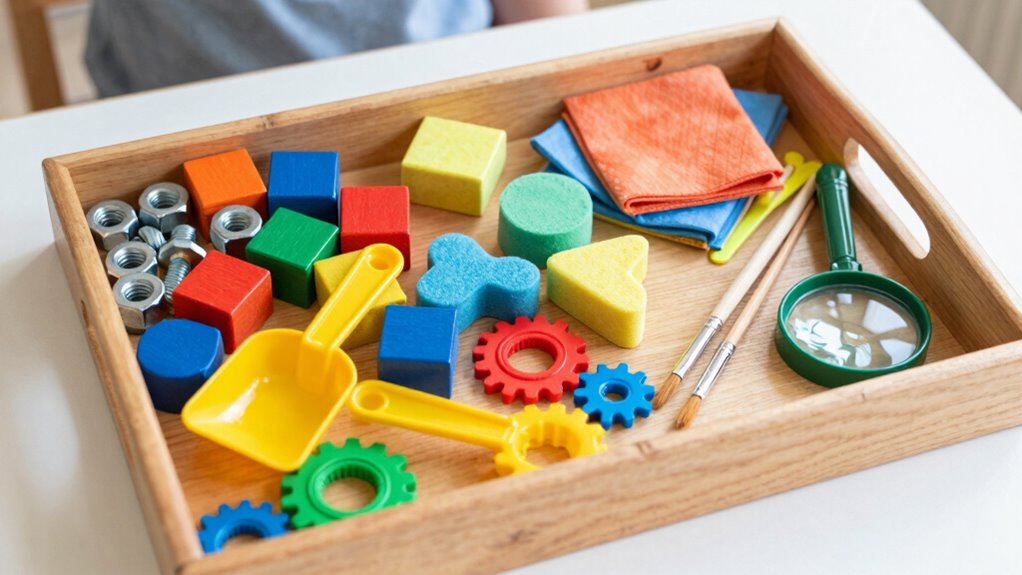
A Tinker Tray is a simple yet powerful tool that encourages preschoolers to explore, create, and develop fine motor skills. When you prepare a tray, you’re opening a world of opportunities for your child to engage in creative play and sensory exploration. The key is to include items that invite curiosity, inspire imagination, and provide tactile experiences. Think about how different textures, shapes, and materials can stimulate your child’s senses and spark their creativity.
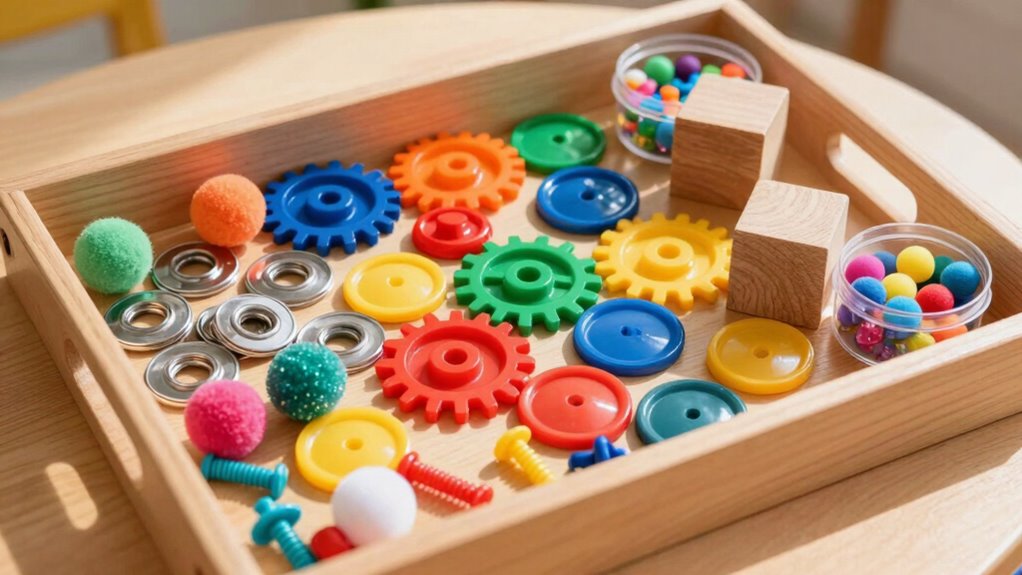
Start with small manipulatives like buttons, beads, or pasta shapes. These items are perfect for developing fine motor skills as your preschooler picks, sorts, and strings them. Incorporating natural elements such as shells, stones, or leaves adds an earthy, sensory dimension that encourages tactile exploration. These objects can also serve as prompts for storytelling or imaginative scenarios, fueling creative play. For example, your child might build a miniature garden with leaves and stones or pretend the shells are treasures from an ocean adventure.
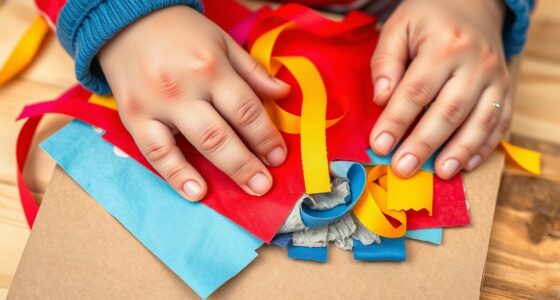
To enhance sensory exploration, include items with varied textures and temperatures. Soft fabric scraps, rubbery pieces, or foam shapes can provide different tactile sensations. Some trays might also feature items like textured sponges or sensory balls, which your child can squish and manipulate. These materials help your preschooler become more aware of different sensory inputs while refining their grasp and hand-eye coordination. Adding a small container of water or kinetic sand can deepen sensory engagement, allowing for more hands-on exploration and calming activities. Engaging multiple senses simultaneously enhances sensory development, making the experience more enriching. Incorporating variety in materials can further stimulate their curiosity and exploration.
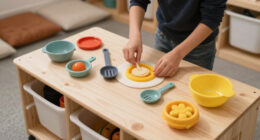
Incorporate everyday objects that inspire creative play, like small toy figures, pretend tools, or craft supplies such as pipe cleaners and pom-poms. These items encourage your child to invent stories, role-play, and problem-solve. For instance, a few miniature animals and trees can turn the tray into a mini zoo or forest scene. Combining open-ended materials with more structured items allows your preschooler to experiment and use their imagination in limitless ways. Including sensory-rich materials can further stimulate their curiosity and exploration.
Finally, keep the tray versatile by rotating items regularly to maintain your child’s interest. Use themes or seasonal elements, like mini pumpkins for fall or seashells for a beach scene, to inspire new stories and sensory experiences. Incorporating educational concepts into the tray setup can further enhance learning and development. A well-curated tinker tray becomes a dynamic space where your preschooler can enjoy creative play and sensory exploration, fostering their curiosity, fine motor skills, and love for discovery.
preschool manipulative toys set
As an affiliate, we earn on qualifying purchases.
As an affiliate, we earn on qualifying purchases.
Frequently Asked Questions
How Do I Ensure the Materials Are Age-Appropriate?
You guarantee materials are age-appropriate by choosing safe, non-toxic, and sturdy creative materials that match preschoolers’ developmental stages. Look for items like large beads, chunky crayons, and simple tools to promote fine motor skills and creativity. Prioritize safety and ease of use to maximize educational benefits. Regularly inspect materials for wear or hazards, and adapt the tray contents as children grow to support their evolving skills and interests.
What Safety Precautions Should I Take?
Did you know that most childhood injuries happen during play? To prevent this, you should follow safety guidelines and use creative storage solutions to keep materials organized and out of reach when not in use. Always supervise children closely, guarantee materials are non-toxic, and check for sharp edges. Regularly inspect items for damage, and teach kids safe handling practices. This approach keeps playtime fun and safe for everyone.
How Often Should I Change the Items on the Tray?
You should change the items on the tinker tray weekly to keep interactive play and creative exploration fresh and engaging. Regular updates prevent boredom and encourage new skills. Observe how children interact with the materials; if they’re no longer interested or the items are worn out, it’s time for a refresh. Rotating items also helps you introduce different themes, fostering ongoing curiosity and development in preschoolers.
Can Tinker Trays Support Sensory Development?
Yes, tinker trays can support sensory development by encouraging creative exploration and sensory engagement. When you include diverse textures, colors, and materials, children actively explore through touch, sight, and sound. This hands-on interaction helps develop their fine motor skills, boost curiosity, and foster sensory processing. By thoughtfully selecting items, you create a rich environment that promotes meaningful sensory experiences, essential for preschoolers’ overall growth and development.
What Are Some Budget-Friendly Tinker Tray Ideas?
Imagine a treasure chest of DIY materials waiting to spark your child’s imagination. You can craft creative themes using everyday household items like buttons, pasta, or bottle caps. Repurpose old toys or kitchen odds and ends to fill the tray. These budget-friendly ideas turn simple supplies into endless exploration, encouraging hands-on learning without breaking the bank. Your preschooler’s curiosity will flourish through these imaginative, cost-effective tinkering adventures.
sensory play materials for preschoolers
As an affiliate, we earn on qualifying purchases.
As an affiliate, we earn on qualifying purchases.
Conclusion
In wrapping up, remember that a well-prepared tinker tray opens the door to endless gentle discoveries and quiet moments of wonder. It’s like offering a tiny adventure in everyday materials, inviting preschoolers to explore and create at their own pace. By thoughtfully choosing simple, safe items, you create a cozy space where curiosity blooms naturally. Trust in these simple treasures to nurture their imagination and help them find joy in the quiet magic of hands-on play.
tinker tray open-ended craft supplies
As an affiliate, we earn on qualifying purchases.
As an affiliate, we earn on qualifying purchases.
natural elements for sensory play
As an affiliate, we earn on qualifying purchases.
As an affiliate, we earn on qualifying purchases.